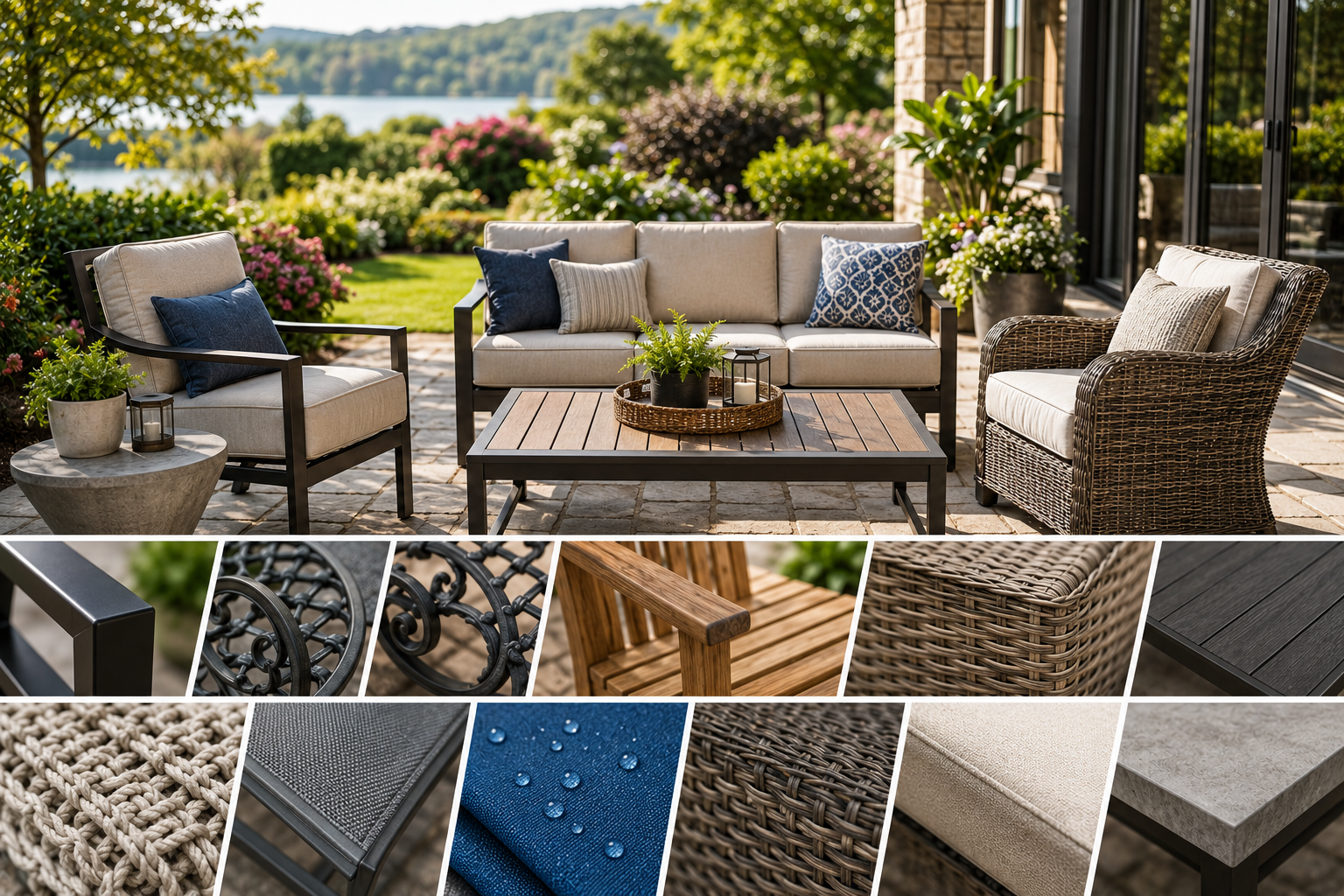
Patio furniture shopping involves a genuinely wider range of materials than most people expect, well beyond the classic wood, metal, and wicker categories. Rope weave, sling fabric, concrete, and various fiberglass-reinforced composites have all become legitimate options in recent years, each with distinct strengths for specific outdoor conditions and design styles.
This guide serves as a complete reference for understanding patio furniture materials, covering frame materials, weaving and fabric options, and tabletop surfaces, so you can make an informed choice regardless of which specific style or brand you’re considering.
A Quick Overview
For genuinely all-weather patio furniture that holds up with minimal maintenance across most American climates, powder-coated aluminum frames paired with solution-dyed acrylic fabric or synthetic resin weave consistently perform best. Teak remains the strongest natural wood option for lasting outdoor durability. Beyond these reliable standards, newer materials like rope weave and sling fabric offer strong performance for specific style preferences, while natural materials like rattan and untreated wood require considerably more care or covered protection to last outdoors.
Frame Materials Explained
1- Aluminum
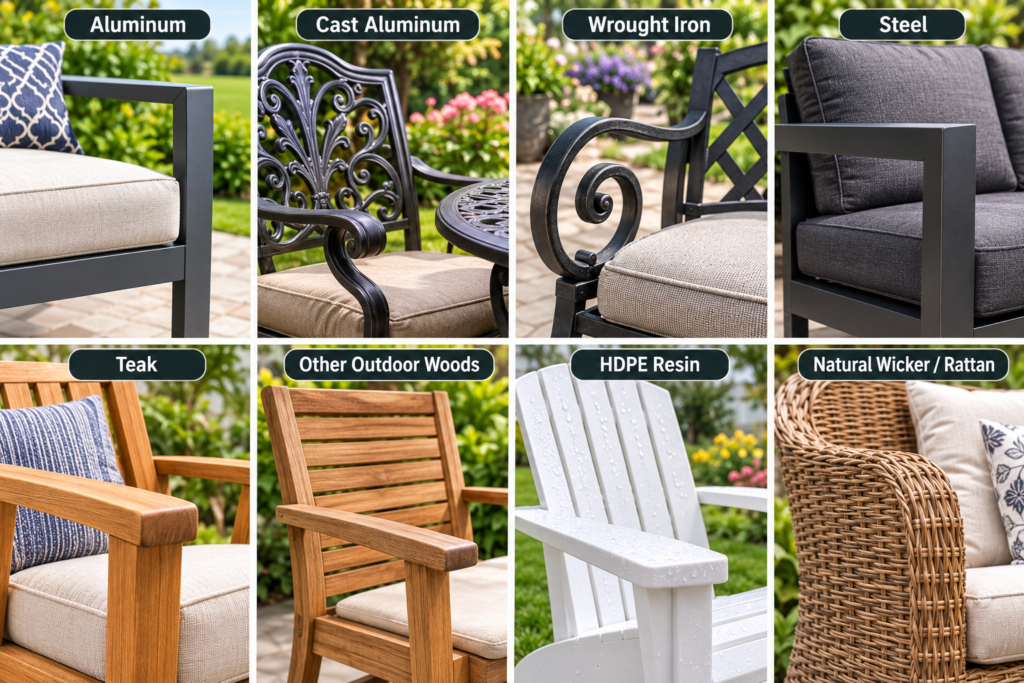
Aluminum is naturally rust-resistant (unlike iron or steel, which can rust without protective coating) and notably lightweight, making it easy to rearrange, clean underneath, or move for seasonal storage. Powder-coated finishes add color options along with an extra protective layer against UV and moisture exposure. Its lightweight means furniture built from thinner aluminum can be prone to shifting in strong wind unless specifically weighted or anchored.
2- Cast Aluminum
A heavier, more substantial variant of standard aluminum, cast aluminum is formed by pouring molten metal into molds, creating detailed, often more ornate designs while retaining aluminum’s core rust resistance. It’s generally more stable in wind than lighter extruded aluminum, though it comes at a higher price point.
3- Wrought Iron
Wrought iron offers significant weight and excellent stability in exposed, windy locations, along with a classic, substantial aesthetic. It requires a quality protective coating and ongoing vigilance, since exposed metal will rust, and any chips need prompt touch-up before rust spreads.
4- Steel
Similar to wrought iron in its rust vulnerability without protective coating, steel furniture is generally more budget-friendly while offering solid structural durability, provided the coating is properly maintained over the furniture’s lifespan.
5- Teak
Teak’s naturally high oil content provides genuine built-in resistance to rot, insects, and water damage without chemical treatment, making it the most durable common wood option for direct outdoor exposure. Left untreated, it weathers to a silvery-gray patina, a natural process many homeowners specifically prefer.
6- Other Outdoor Woods (Eucalyptus, Cedar, Acacia)
These offer more budget-friendly alternatives to teak with reasonable natural weather resistance, though they generally require more regular maintenance, periodic sealing or oiling, to maintain both appearance and structural longevity over time.
7- HDPE (High-Density Polyethylene) Resin
Used both as a structural frame material in some furniture (particularly Adirondack-style chairs) and as the basis for synthetic wicker weaving, HDPE resin offers strong UV resistance, doesn’t rot or splinter, and requires minimal maintenance beyond basic cleaning.
8- Wicker/Rattan (Natural)
Natural wicker offers a genuinely beautiful, classic woven texture, but it isn’t weather-resistant and deteriorates relatively quickly with consistent sun and moisture exposure, making it suitable primarily for covered porches or furniture regularly brought indoors.
Frame Material Comparison
| Material | Weather Resistance | Weight | Maintenance | Style |
| Aluminum | Excellent | Light | Very low | Modern, versatile |
| Cast aluminum | Excellent | Moderate to heavy | Very low | Ornate, traditional |
| Wrought iron | Good (with coating care) | Heavy | Moderate | Classic, substantial |
| Steel | Good (with coating care) | Heavy | Moderate | Varies |
| Teak | Excellent (natural oils) | Moderate | Low to moderate | Classic, warm |
| Eucalyptus/cedar/acacia | Moderate to good | Moderate | Moderate to high | Natural, budget-friendly |
| HDPE resin | Excellent | Light to moderate | Very low | Casual, colorful |
| Natural wicker/rattan | Poor (needs cover) | Light | High | Classic, textured |
Weaving and Sling Materials
1- Synthetic Resin Wicker (All-Weather Wicker)
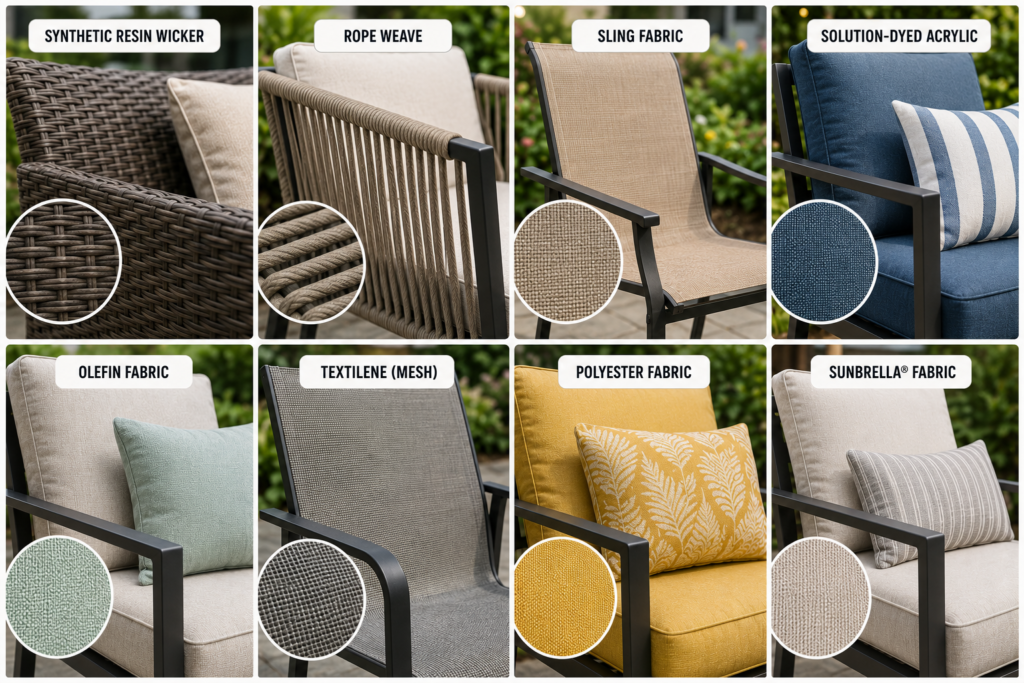
Woven from HDPE or similar synthetic fibers, resin wicker replicates natural wicker’s classic texture with dramatically improved weather resistance, resisting fading, cracking, and moisture damage across seasons of consistent outdoor exposure.
2- Rope Weave
A newer, increasingly popular option, rope weave uses thick, weather-resistant cord (often polyester or olefin-based) woven across a frame to create seating with a distinctive, textured, coastal-inspired look. It’s generally durable and comfortable, offering some natural give in the seating surface, though quality varies meaningfully by manufacturer and rope material used.
3- Sling Fabric
Common in more contemporary, minimalist outdoor furniture designs, sling fabric is a durable, tightly woven mesh material stretched across a frame to create the seating surface itself, rather than using cushions. It’s low-maintenance, dries quickly, and offers a distinctly modern aesthetic, though it generally provides less cushioned comfort than traditional upholstered seating.
Cushion and Fabric Materials
1- Solution-Dyed Acrylic
Widely considered the top choice for outdoor cushion fabric, solution-dyed acrylic has color woven directly into each fiber rather than applied as a surface coating, providing significantly better fade and stain resistance than standard fabric options.
2- Outdoor-Rated Polyester
A more budget-friendly alternative, modern outdoor polyester fabrics have improved considerably in weather resistance in recent years, though they generally don’t match solution-dyed acrylic’s long-term color retention under intense, consistent sun exposure.
3- Quick-Dry Foam
Purpose-built for outdoor cushions, this foam includes internal drainage channels that let water pass through rather than becoming absorbed and retained, reducing mildew risk and speeding up drying time considerably compared to standard indoor cushion foam.
4- PVC and Vinyl-Coated Mesh
Used in certain sling and strap-style furniture, PVC-coated mesh offers excellent water resistance and easy cleaning, suited particularly to poolside furniture that experiences frequent, direct water exposure.
Tabletop and Surface Materials
1- Tempered Glass
Common in outdoor dining and side tables, tempered glass resists shattering better than standard glass and provides an easy-to-clean, weather-resistant surface, though it can become notably hot in direct summer sun and requires regular wiping to manage fingerprints and water spots.
2- Ceramic and Porcelain Tile Tops
Increasingly popular for their genuine heat and scratch resistance, along with a wide range of style and pattern options, ceramic tile tabletops resist fading and staining considerably better than many other surface materials, though they add meaningful weight to furniture.
3- Concrete and Cast Stone
Extremely durable and weather-resistant, concrete and cast stone surfaces suit modern, minimalist outdoor designs particularly well, though their substantial weight makes furniture featuring these materials difficult to move or rearrange once placed.
4- Teak or Other Wood Tabletops
Wood tabletops bring warmth to outdoor dining spaces, requiring the same maintenance considerations as wood furniture generally, periodic oiling if color retention matters, or acceptance of natural graying over time.
5- Powder-Coated Metal
Common on more budget-friendly and modern outdoor tables, powder-coated metal surfaces resist rust and offer easy cleaning, though they can also become hot in direct, intense sunlight similar to glass and metal frame materials.
Choosing Materials by Climate Priority
1- Best for Coastal, Salt-Air Environments
Powder-coated aluminum and teak both handle salt air considerably better than untreated steel, wrought iron, or standard wood, making them the most reliable choices for homes near the ocean.
2- Best for Intense, Direct Sun
Solution-dyed acrylic fabric and UV-stabilized HDPE resin resist fading better than standard alternatives, important for patios without significant shade coverage.
3- Best for High Humidity
Materials that resist moisture absorption, aluminum, teak, and synthetic resin weave, all outperform natural wicker or unsealed wood in consistently humid climates, where moisture-related deterioration happens considerably faster.
4- Best for Harsh Winters
Materials genuinely rated for freeze-thaw resilience, aluminum and quality synthetic resin, generally handle winters left partially exposed better than wood, which is more prone to cracking from repeated moisture absorption and freezing cycles.
Matching Materials to Furniture Type
1- Dining Sets
Aluminum or teak frames paired with a weather-resistant tabletop (tempered glass, ceramic tile, or teak) offer a durable, practical combination for outdoor dining furniture that sees frequent use.
2- Lounge and Conversation Seating
Aluminum or resin wicker frames with solution-dyed acrylic cushions provide comfortable, durable seating suited to extended outdoor lounging and entertaining.
3- Poolside Furniture
Materials specifically suited to chlorine and consistent moisture exposure, aluminum frames with PVC-coated mesh or quick-dry cushion foam, perform best immediately adjacent to a pool.
4- Fire Pit Seating
Heavier, more stable materials like cast aluminum or wrought iron work well here, since fire pit seating tends to stay in a fixed arrangement rather than needing frequent rearrangement.
Understanding Material Certifications and Ratings
- UV Stabilization
Look for furniture and fabric specifically noted as UV-stabilized or UV-resistant, indicating the material has been treated or engineered to resist the color and structural degradation that comes from prolonged sun exposure.
- Marine-Grade Ratings
True marine-grade materials are specifically engineered to withstand salt air and constant moisture exposure at a higher standard than typical “outdoor-rated” products, worth prioritizing for homes in genuinely harsh coastal conditions.
- Fade Resistance Testing
Some outdoor fabric manufacturers reference specific fade-resistance testing standards on their product information, worth checking for buyers specifically prioritizing long-term color retention in intense sun climates.
Budget Planning by Material Choice
Budget-friendly material combinations generally include powder-coated steel frames with standard polyester cushions or basic resin wicker weave. Mid-range options typically feature quality aluminum frames paired with solution-dyed acrylic fabric or well-constructed synthetic resin wicker. Premium materials include teak, cast aluminum, genuinely marine-grade metal, and high-end fabric and weave combinations, representing a longer-term investment justified by superior durability and lower long-term replacement needs.
Common Mistakes to Avoid
- Choosing natural rattan or unsealed wood for full outdoor exposure, when these materials genuinely need covered protection to last
- Assuming all “outdoor fabric” performs identically, when solution-dyed acrylic significantly outperforms standard polyester in fade resistance
- Overlooking tabletop material heat retention, ending up with a glass or metal surface too hot to comfortably use in direct summer sun
- Ignoring climate-specific material needs, choosing standard steel for a coastal home where aluminum would resist corrosion considerably better
- Underestimating the weight of stone or concrete pieces, purchasing furniture too heavy to reasonably rearrange once placed
Frequently Asked Questions
1- What is the most durable material for outdoor furniture?
Powder-coated aluminum and teak are both widely regarded as among the most durable options, offering strong resistance to rust, rot, and general weather damage with relatively low ongoing maintenance.
2- Is rope weave patio furniture durable?
Quality rope weave, made from weather-resistant synthetic cord, offers good durability and a distinctive textured look, though performance varies by specific manufacturer and the rope material used.
3- What’s the difference between sling fabric and cushioned outdoor furniture?
Sling fabric is a tightly woven mesh material that forms the seating surface directly, offering a low-maintenance, quick-drying, modern look, while cushioned furniture uses separate foam cushions covered in outdoor fabric for a softer, more traditional seating experience.
4- Is tempered glass a good material for outdoor tables?
Yes, tempered glass resists shattering and is easy to clean, though it can become notably hot in direct summer sun and shows fingerprints and water spots more readily than some alternative surface materials.
5- What outdoor fabric resists fading the best?
Solution-dyed acrylic fabric offers the best overall fade resistance, since color is embedded throughout each fiber rather than applied as a surface treatment that can wear away over time.
6- Is concrete or cast stone furniture practical for a patio?
It offers excellent durability and a striking modern aesthetic, but its significant weight makes it impractical for spaces where furniture needs to be moved or rearranged regularly.
7- What does “marine-grade” mean for outdoor furniture materials?
Marine-grade materials are specifically engineered to withstand salt air and constant moisture exposure at a higher standard than typical outdoor-rated products, making them particularly well suited to genuinely harsh coastal environments.
Conclusion
Understanding the full range of patio furniture materials, from classic teak and aluminum to newer options like rope weave and sling fabric, gives you the ability to make a genuinely informed choice rather than guessing based on appearance alone. Prioritize materials matched specifically to your climate’s biggest challenges, whether that’s intense sun, coastal salt air, high humidity, or harsh winters, and pair durable frames with quality fabric or weave choices like solution-dyed acrylic or synthetic resin. With the right material combination in place, your outdoor furniture investment will hold up through years of real seasonal use rather than needing early replacement.