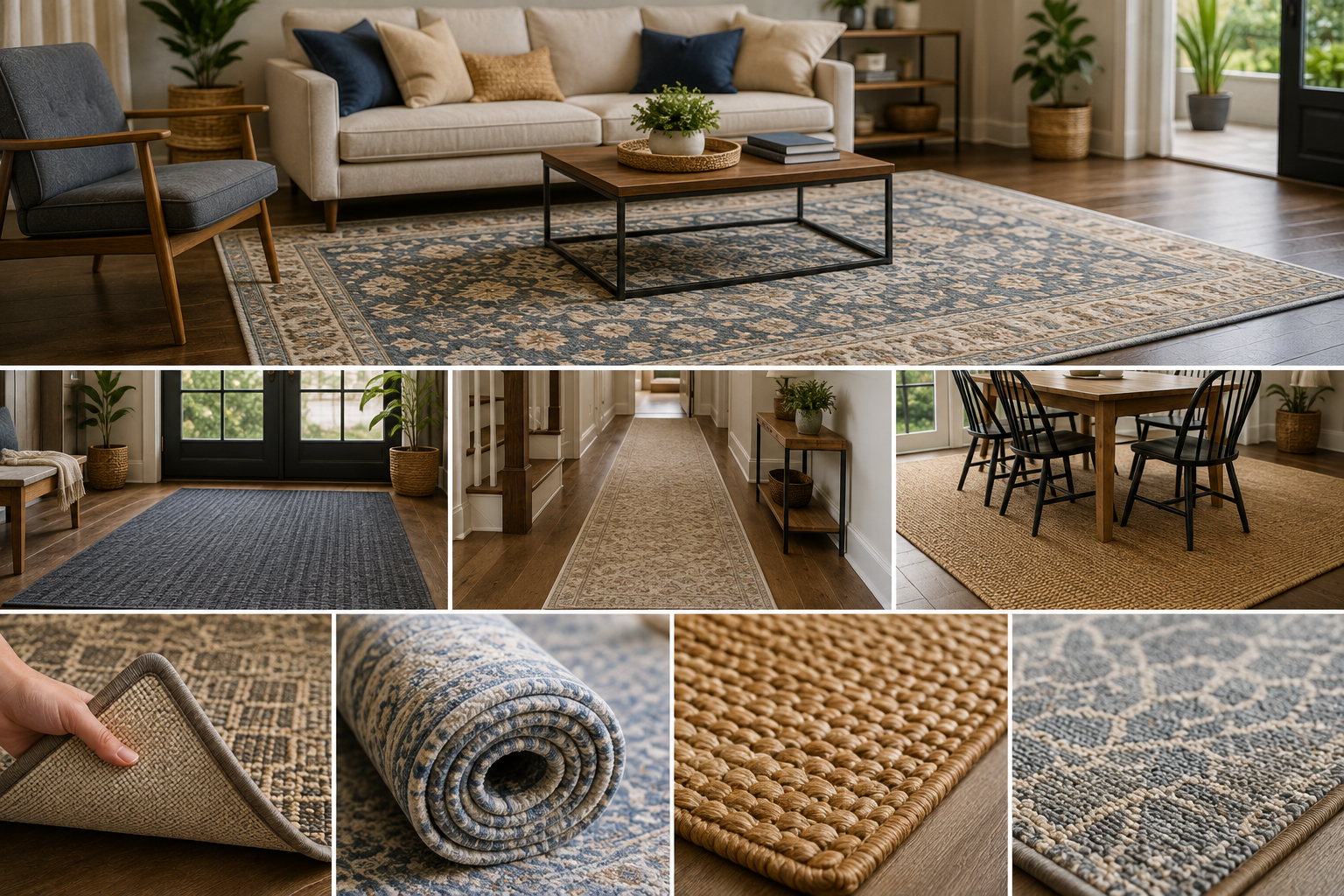
A rug placed in a hallway, entryway, or busy living room faces a genuinely different kind of daily punishment than one tucked under a coffee table in a formal sitting room, constant footsteps, dragged furniture, spilled drinks, and pet traffic all compound fast. Finding the best rugs for high-traffic areas comes down almost entirely to fiber type and construction, since the wrong material can look worn and flattened within a year, while the right one can genuinely hold its appearance for a decade or more of daily use.
This guide breaks down exactly which rug materials survive heavy foot traffic, how construction and pile height affect durability separately from fiber choice, and which specific combinations work best in the toughest rooms of your home, entryways, hallways, dining rooms, and stair runners.
Rugs for High-Traffic Areas
Wool remains the gold-standard natural fiber for high-traffic durability, thanks to its natural elastic memory that springs fibers back into shape after compression, plus a naturally stain-resistant, water-repellent coating from its own lanolin content. Nylon is the strongest synthetic all-around performer, highly resistant to crushing, staining, and fading, and typically the most budget-friendly option that still holds up genuinely well under heavy use. For entryways and mudrooms specifically, sisal offers exceptional toughness against dirt and grit, though its rough texture and tendency to absorb moisture mean it’s best kept away from spill-prone spaces. Whatever material you choose, pair it with a flat or low-pile construction and a darker, patterned colorway, both choices meaningfully extend how long any rug looks genuinely good in a busy space.
Why Fiber Type Matters More Than Anything Else
The Single Biggest Factor in Rug Longevity
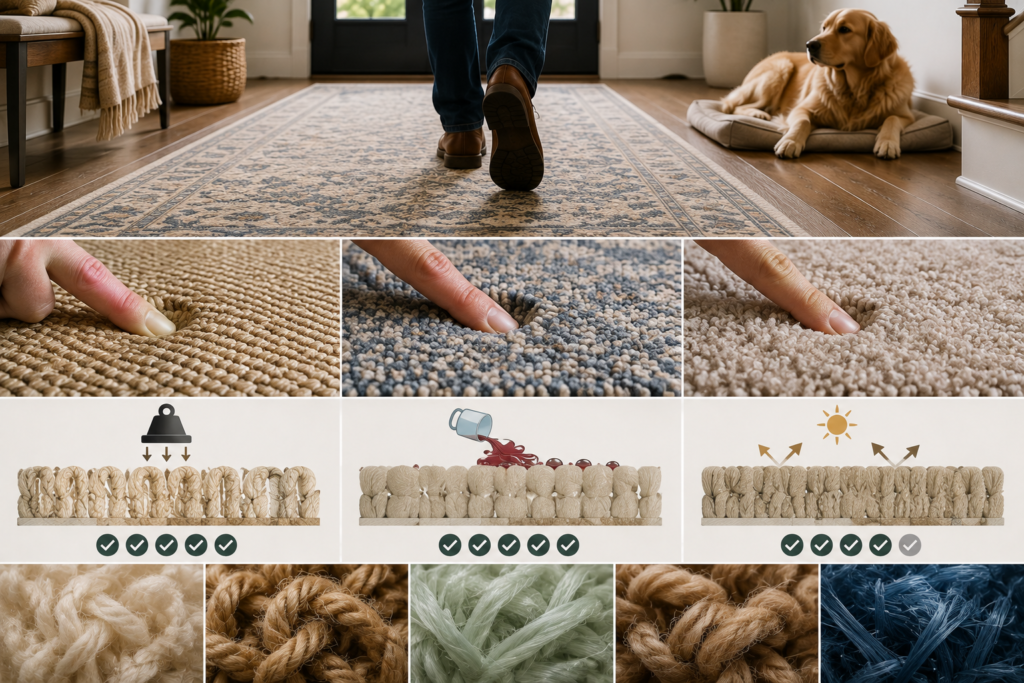
Fiber type is the single biggest factor determining how long a rug actually survives a busy hallway, a family living room, or a pet-friendly entryway. Two rugs that look nearly identical in a showroom can perform completely differently after a year of real use, purely based on what they’re actually made from.
What “Durable” Actually Means for a Rug
Durability isn’t one single quality, it’s really three separate properties working together: resistance to crushing (does the pile bounce back after weight and foot traffic), resistance to staining (does spilled liquid sit on the surface or soak in), and resistance to fading (does color hold up under sun exposure and repeated cleaning). The strongest high-traffic rugs perform well across all three, not just one.
Wool: The Gold Standard for Natural Durability
Why Wool Outperforms Most Natural Fibers
Wool’s natural crimp gives each individual fiber a kind of elastic memory, springing back into shape after being compressed by footsteps or furniture, exactly the quality a high-traffic space genuinely needs. Lanolin, a natural wax coating the fibers, also makes wool naturally stain-resistant and water-repellent, helping spills bead on the surface rather than soaking straight through.
Wool’s Real Trade-Offs
Wool rugs carry a genuinely higher price tag than most alternatives, though their exceptional durability often justifies that investment over the rug’s much longer lifespan. Wool is also somewhat susceptible to mold and mildew if placed in consistently damp conditions, worth keeping in mind for humid climates or spaces prone to moisture.
Nylon: The Synthetic Powerhouse
Why Nylon Is the Strongest Synthetic Choice
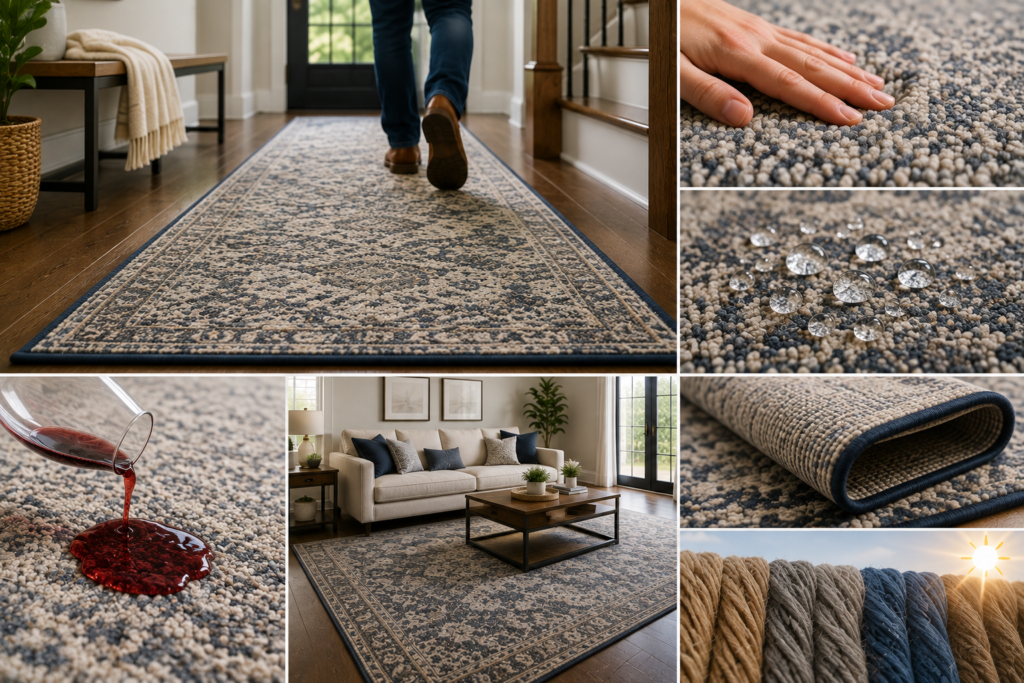
Nylon is widely considered one of the most durable rug materials available, genuinely resilient enough to maintain its appearance even in the busiest areas of a home. It resists both staining and fading considerably better than most alternatives, meaning the material degrades more slowly and continues looking good for years rather than months.
Why It’s Such a Popular Budget-Friendly Pick
Because nylon delivers this level of performance at a meaningfully lower price point than wool, it’s become one of the most frequently recommended options specifically for high-traffic areas where budget matters as much as longevity.
Sisal: Tough, but Know Its Limits
Where Sisal Genuinely Excels
Made from the agave sisalana plant, sisal is an exceptionally tough, naturally textured fiber that holds up well against heavy grit and dirt, particularly well suited to entryways and mudrooms where physical wear from shoes and outdoor debris is intense.
Where Sisal Falls Short
Sisal’s fibers are highly absorbent, making it genuinely prone to staining and considerably harder to clean once a spill does happen. It’s also rough underfoot compared to wool or synthetic alternatives, and while durable, it isn’t recommended for spaces experiencing truly constant, heaviest-possible use, moderate to high traffic is its practical sweet spot rather than the absolute busiest zone in your home.
Polypropylene: The Budget Alternative With Real Strengths
Polypropylene doesn’t quite match nylon’s overall durability, but in low-pile loop constructions specifically, it performs quite well, and its resistance to moisture absorption means stains generally don’t sink in as long as spills are cleaned up promptly. It’s also notably resistant to fading, making it a solid choice for sunnier rooms where UV exposure would otherwise degrade color over time.
Jute: Beautiful, but Not Built for Heavy Use
Jute offers a soft, natural look many homeowners love for a coastal or relaxed aesthetic, but it genuinely breaks down under constant, heavy traffic and absorbs moisture readily, making it a poor match for kitchens, entryways, or any consistently damp, spill-prone space. If you specifically want jute’s look in a busy area, look for a tightly woven construction and consider a topical stain-resistant treatment to help offset its natural limitations.
High-Traffic Rug Material Comparison
| Material | Crush Resistance | Stain Resistance | Fade Resistance | Best For |
| Wool | Excellent | Very good | Good | Living rooms, hallways, overall best natural option |
| Nylon | Excellent | Very good | Very good | Budget-friendly, all-around high-traffic use |
| Sisal | Very good | Poor | Good | Entryways, mudrooms (not spill-prone spaces) |
| Polypropylene | Good | Very good | Excellent | Sunny rooms, budget-conscious buyers |
| Jute | Poor | Poor | Moderate | Low-traffic, decorative accent use only |
Construction Matters Almost as Much as Fiber
Why Flatweave and Low Pile Win in Busy Spaces
Rugs with a compact pile or flat profile are the best option for areas more likely to experience spills, dragging furniture, and heavy foot traffic. A flatweave or tight, low-pile loop construction resists crushing far better than a plush, high-pile rug, and it keeps dirt sitting near the surface where a vacuum can actually reach and remove it, rather than trapping debris deep within longer fibers.
Why High Pile Struggles in High-Traffic Zones
Longer, plusher pile heights look and feel wonderful underfoot, but they crush and mat down considerably faster under constant footsteps, and they trap dirt, hair, and debris more readily than a tighter weave, requiring more frequent, more careful cleaning to stay looking good.
Dining Rooms Need Their Own Construction Logic
Dining rooms specifically benefit from flatweave or compact loop pile construction that can withstand dragging chair legs without showing permanent indentations or snagging, paired with a moisture-repelling fiber like wool or nylon given how frequently food and drink spills happen in this particular room.
Color and Pattern: The Overlooked Durability Trick
Why Dark Colors Genuinely Perform Better
Rugs with darker colors hide dirt and stains considerably better than lighter-colored ones, requiring fewer deep cleanings and less visible upkeep over the rug’s lifespan, even though the underlying material itself isn’t actually more durable.
Patterns Do Even More Work Than Solid Dark Colors
A patterned rug, particularly one combining darker tones, helps both stains and everyday dirt visually blend into the design rather than standing out starkly against a plain surface, meaningfully reducing how often the rug needs cleaning to still look presentable.
Watch for Fading With Strong Colors
If you specifically want a bold or dark solid color, prioritize a fiber known for genuine fade resistance, nylon, polypropylene, and wool all hold color well over time, since some materials fade unevenly under sun exposure regardless of how dark the original dye was.
Matching Material to Specific High-Traffic Rooms
Entryways and Foyers
These spaces are especially prone to moisture from wet shoes and umbrellas, making moisture resistance a genuine priority alongside sheer durability. Nylon or a stain-treated sisal in a low-pile, flatweave construction handles both the grit and occasional dampness entryways see daily.
Hallways
Stylish flatweaves or low-pile options in sisal or nylon enhance a hallway’s look while providing the lasting durability constant foot traffic through this narrow, frequently used space demands.
Dining Rooms and Kitchens
Prioritize flatweave or compact loop construction in wool or nylon specifically, both fibers repel moisture effectively enough to handle the food and drink spills these rooms inevitably see.
Living Rooms
Wool remains an excellent choice here, offering genuine sound-dampening properties and temperature insulation alongside its durability, a nice bonus in a room where comfort matters as much as toughness.
Stairs
Stair runners see some of the most concentrated, repetitive wear in any home, every step compresses the same narrow strip of fiber repeatedly. A tightly constructed wool or nylon runner in a low pile height holds up best here, since the elastic recovery both materials offer matters enormously in a space with zero room to rotate or reposition the rug to even out wear.
What to Look for Beyond Material Alone
Solution-Dyed Yarns
Many synthetic high-traffic rugs use solution-dyed yarns, where color is embedded directly into the fiber during manufacturing rather than applied afterward, offering meaningfully better fade and stain resistance than rugs using surface-applied dye.
UV Resistance for Sunny Rooms
If your high-traffic space gets significant direct sunlight, prioritize a fiber and dye process specifically noted as UV-resistant, since sun exposure accelerates fading considerably faster than foot traffic alone in these particular rooms.
Knot Density for Woven Rugs
For woven wool rugs specifically, knots per square inch is a genuine indicator of quality and durability, a higher knot count generally means a denser, more resilient weave that holds its pattern and structure through years of heavy use.
Practical Buying Tips
- Choose wool or nylon as your default starting point for genuinely heavy, constant traffic, reserving sisal specifically for drier, grit-heavy zones like entryways
- Prioritize flatweave or low-pile construction over plush, high-pile options in any space seeing daily foot traffic
- Choose darker colors or busy patterns specifically to hide the inevitable dirt and minor staining high-traffic areas accumulate
- Check for solution-dyed yarns if fade resistance matters, particularly in sunlit rooms
- Reserve jute and other soft natural fibers for low-traffic, decorative spaces rather than your busiest hallways or entryways
Common Mistakes to Avoid
- Choosing a plush, high-pile rug for an entryway or hallway, leading to premature crushing and matting under constant foot traffic
- Placing jute or an untreated natural fiber in a spill-prone space, resulting in staining and fiber breakdown far faster than expected
- Picking a light, solid color for a busy family room, requiring far more frequent cleaning to hide everyday dirt and marks
- Ignoring dining room chair movement when selecting pile height, ending up with a rug that snags or shows permanent indentations from dragged chairs
- Assuming all synthetic fibers perform equally, when nylon and polypropylene actually differ meaningfully in crush and stain resistance
Conclusion
Choosing the best rugs for high-traffic areas comes down to prioritizing fiber type and construction over pattern or price alone, wool and nylon lead the pack for genuine, all-around durability, sisal earns its place specifically in dry, grit-heavy entryways, and a flatweave or low-pile construction consistently outperforms plush alternatives no matter which fiber you choose. Pair the right material with a darker color or busy pattern to hide everyday wear, and you’ll end up with a rug that genuinely survives years of real, daily life rather than looking tired and flattened after a single busy season.
Frequently Asked Questions
1- What is the most durable rug material for high-traffic areas?
Wool and nylon are widely considered the top performers, wool for its natural elasticity and stain resistance, and nylon for its exceptional crush and fade resistance at a generally more budget-friendly price point.
2- Is wool or nylon better for a busy household?
Both perform excellently. Wool offers natural stain resistance, sound dampening, and a premium feel, while nylon offers comparable durability at a lower price point, making it a strong choice for budget-conscious households.
3- Are sisal rugs good for high-traffic areas?
Sisal is very durable against physical wear and works well in entryways and mudrooms, but its high moisture absorption makes it prone to staining, so it’s best kept away from spill-prone spaces despite its overall toughness.
4- Does pile height affect rug durability?
Yes, significantly. Flatweave and low-pile construction resist crushing and trap less dirt than high-pile rugs, making them the stronger choice for genuinely high-traffic areas regardless of the specific fiber used.
5- Do dark-colored rugs actually last longer?
The material itself isn’t more durable, but darker colors and patterns hide dirt and staining considerably better than light, solid colors, meaning they require less frequent deep cleaning and look presentable for longer between cleanings.
6- What rug material should I avoid for high-traffic areas?
Jute is generally not recommended for heavy traffic, since it breaks down under constant, heavy use and absorbs moisture readily, making it better suited to low-traffic, decorative spaces.
7- Is polypropylene as durable as nylon?
Not quite, polypropylene doesn’t match nylon’s overall crush resistance, but in low-pile loop constructions it performs well and offers strong stain and fade resistance at a typically lower price point.