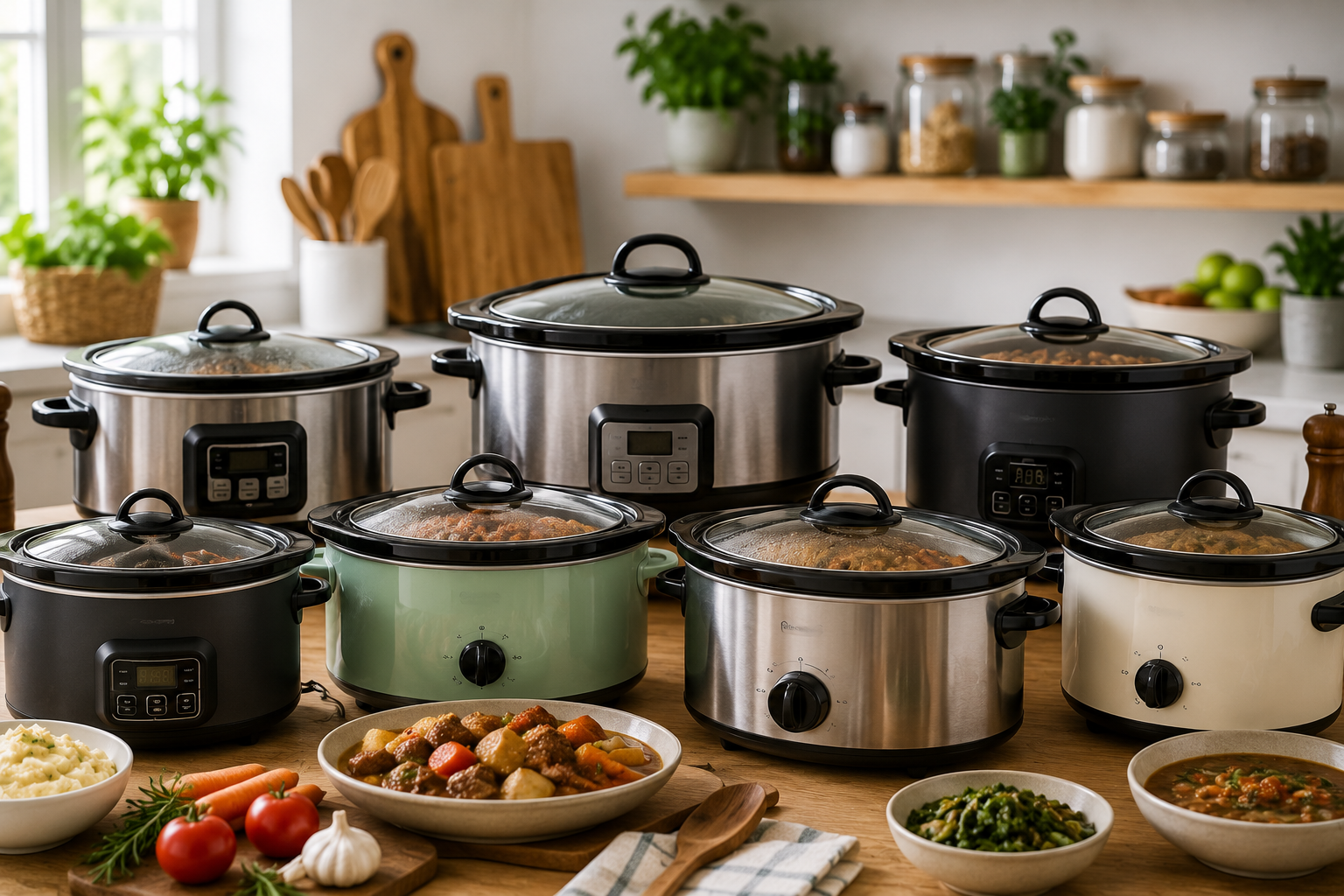
For busy families, a slow cooker isn’t just a nice kitchen extra, it’s often what makes a genuine home-cooked dinner possible on a weeknight. Load it in the morning, walk away, and come home to a finished meal, no last-minute scrambling required. Finding the best slow cookers for busy families, though, means looking past basic dial-and-timer models toward features that actually matter for a household juggling school runs, work schedules, and everything in between.
This guide covers well-regarded slow cookers across capacity, programmability, and safety features, along with a complete buying guide to help you choose the right size, settings, and functions for your family’s actual routine.
What Makes a Slow Cooker Genuinely “Family-Friendly”?
Not every slow cooker is built with busy households in mind. A few features consistently separate a genuinely practical family slow cooker from a basic model:
- A programmable timer that lets you set exact cooking time rather than guessing
- An auto warm function that switches to keep-warm once cooking finishes, so food doesn’t overcook if you’re running late
- A locking lid for safe transport to potlucks, school events, or a relative’s house
- Dishwasher-safe components, since cleanup time matters just as much as cook time for busy households
- Enough capacity to actually feed your household in one batch, with leftovers if that’s part of your routine
A Quick Comparison Table
| Slow Cooker | Capacity | Programmable Timer | Locking Lid | Best For |
| Crock-Pot 6-Quart Cook & Carry | 6 quarts | Up to 20 hours | Yes | Best overall for most families |
| Crock-Pot 8-Quart | 8 quarts | Up to 20 hours | Yes | Large families, holiday cooking |
| Crock-Pot 7-Quart Portable Programmable | 7 quarts | Adjustable cycle timing | Yes | Gatherings and batch cooking |
| Hamilton Beach Set & Forget | Varies (family-sized) | Yes, with temperature probe | No | Precision cooking, meat doneness |
| GreenPan Elite 14-in-1 | 6 quarts | Multi-function programmable | No | Households wanting sear/sauté/steam options |
| Ninja Multi-Function Cooker | Varies | Yes | Varies | Beyond-basic slow cooking versatility |
| GreenLife 6QT Ceramic | 6 quarts | Yes | Varies | Non-toxic, ceramic-coated cooking |
| Elite Gourmet MST-900D | Large | Yes | Varies | Very large households, bulk cooking |
Top Slow Cooker Picks for Busy Families
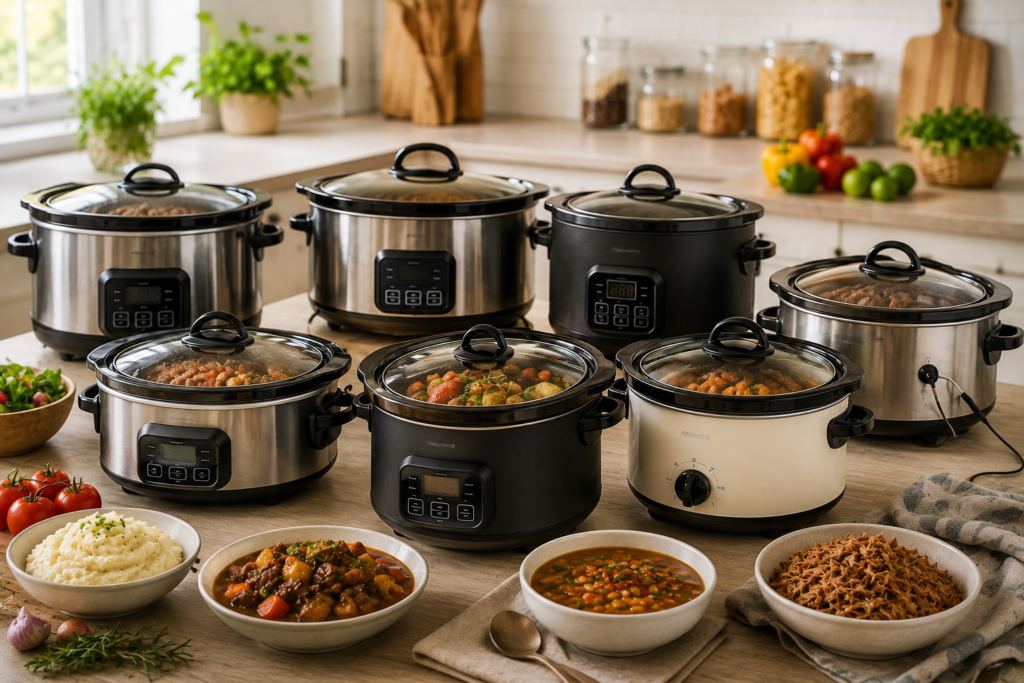
1- Crock-Pot 6-Quart Cook & Carry
This model is widely recommended as the best overall pick for most families, combining a locking lid, a reliable 20-hour programmable timer, and a large base of positive owner reviews. It notably resumes cooking after a brief power interruption rather than resetting entirely, which matters for anyone who’s ever come home to guess how much cooking time remained after a storm. Both the stoneware insert and glass lid are dishwasher-safe, simplifying cleanup after sticky dishes like barbecue pulled pork.
2- Crock-Pot 8-Quart
For larger families, holiday cooking, or households that regularly host, the 8-quart Crock-Pot offers substantially more capacity, comfortably feeding six to ten people and handling everything from thick stews to a whole chicken with even heat distribution and no notable hot spots. The dishwasher-safe ceramic insert and glass lid keep cleanup manageable even after heavier, stickier meals.
3- Crock-Pot 7-Quart Portable Programmable
This model includes an adjustable cooking cycle feature that lets you fine-tune timing so a meal finishes exactly when you want it, along with a leak-proof locking lid built for transport to gatherings. It’s a strong choice for families who frequently bring dishes to potlucks or host guests regularly.
4- Hamilton Beach Set & Forget
Hamilton Beach’s Set & Forget model has been a long-recommended pick for its included temperature probe, which lets you cook to a precise internal temperature rather than relying on time alone, particularly useful for larger cuts of meat where doneness matters more than exact cook time.
5- GreenPan Elite 14-in-1 Slow Cooker
This model pairs nontoxic, ceramic-coated cookware with a backlit display showing both timer and temperature, plus additional functions like sear, sauté, and steam beyond basic slow cooking. Its more elaborate programmability comes at a higher price point, making it a good fit for families wanting to upgrade from a basic model rather than a first-time buyer on a tight budget.
6- GreenLife 6QT Ceramic Slow Cooker
This ceramic slow cooker is positioned as a stylish, toxin-free option, appealing to households specifically prioritizing non-toxic cookware materials alongside standard programmable slow cooking functionality.
7- Elite Gourmet MST-900D
Recognized as one of the largest slow cookers available, this model suits very large households, big batch meal prep, or families who regularly cook for extended gatherings beyond what a standard 6-to-8-quart model comfortably handles.
Choosing the Right Capacity
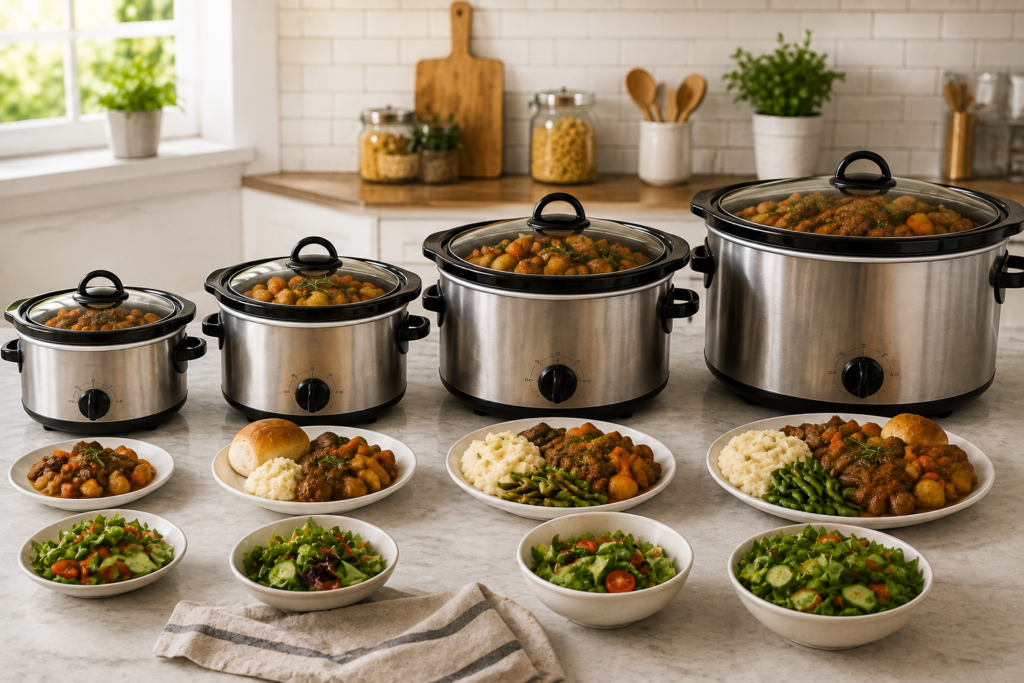
Slow cooker capacity is measured in quarts, and matching it to your household size prevents both undercooking for a hungry family and wasted energy running a half-empty large cooker.
| Household Size | Recommended Capacity |
| 1–2 people | 1.5–3 quarts |
| 3–4 people | 4–6 quarts |
| 5–6 people | 6–7 quarts |
| 7+ people or frequent entertaining | 7–8+ quarts |
Families who regularly meal prep for the week or want leftovers built into every dinner should generally size up within their range rather than choosing the smallest option that technically fits their household.
Programmable Timers: What to Look For
A programmable timer is one of the single most valuable features for busy families, letting you set an exact cook time and walk away without babysitting the pot.
Most family-friendly models offer timer ranges up to 20 hours, giving enough flexibility for both a quick weeknight dish and a longer, low-and-slow weekend meal. Look specifically for an auto warm function, which automatically switches the cooker to a lower keep-warm setting once the timed cooking cycle ends. This prevents overcooking or drying out food if you’re running late getting home, a genuinely common scenario for busy households.
Some higher-end models, like those with built-in temperature probes, go a step further by cooking to a specific internal temperature rather than a fixed time, which can be particularly useful for larger cuts of meat where exact doneness matters more than the clock.
Locking Lids and Portability
For families who transport slow-cooked meals to potlucks, school events, or relatives’ homes, a locking lid is worth prioritizing specifically. This feature seals the lid to the base during transport, preventing spills in the car. Not every slow cooker includes this feature, so it’s worth confirming before buying if portability is a regular part of your routine.
Materials and Cleanup
Cleanup ease matters considerably for busy households, where a slow cooker that’s a hassle to clean is less likely to get regular use.
Most current models use a ceramic or stoneware insert, both of which retain heat well and are typically dishwasher-safe, along with a glass lid that also generally goes straight into the dishwasher. Some models use a nonstick-coated aluminum insert instead, which can heat up faster and clean easily with just warm water and a sponge. For families specifically avoiding certain cookware coatings, ceramic options marketed as non-toxic are worth prioritizing.
Additional Features Worth Considering
Multi-Function Cooking
Some slow cookers now include additional cooking modes beyond basic low, medium, and high settings, such as sear, sauté, or steam functions. This adds versatility for families wanting one appliance that can brown meat before slow cooking, rather than needing a separate pan for that step.
Digital vs Dial Controls
Digital control panels generally offer more precise timing and temperature options, though some users find dial-based, manual models simpler and less prone to accidental setting changes from an overly sensitive touchscreen.
Cool-Touch Handles
For families transporting a full, heavy slow cooker, cool-touch handles make a meaningful safety difference, allowing safe carrying even when the cooker is full and hot.
Safety Considerations
Before purchasing any slow cooker, it’s worth checking the Consumer Product Safety Commission website and the manufacturer’s recall page for current safety information, since recalls do occasionally occur across various brands and models. Choosing a well-established brand with a long track record of reliability, and verifying current production status, adds an extra layer of confidence for a household appliance that will run unattended for hours at a time.
Matching a Slow Cooker to Your Family’s Routine
Weeknight Dinners for a Standard Family
A 6-quart programmable model with an auto warm function offers enough capacity for most families of four while keeping cleanup and counter space reasonable.
Large Families or Regular Entertaining
An 7-to-8-quart model provides enough capacity for six or more people, along with enough size for holiday sides or batch meal prep for the week ahead.
Households Prioritizing Precision
A model with a built-in temperature probe offers more control over doneness, particularly valuable for larger roasts or cuts of meat where timing alone isn’t a reliable indicator.
Families Who Travel With Their Slow Cooker
A locking lid and cool-touch handles become genuinely important features for anyone regularly bringing dishes to gatherings, potlucks, or relatives’ homes.
Budget Planning
Slow cooker prices vary based on capacity, programmability, and included features. Basic programmable models with a locking lid and dishwasher-safe components represent solid mid-range value for most families. Premium multi-function models, offering additional cooking modes like sear and sauté alongside slow cooking, occupy the higher end of the price range. Larger-capacity models, generally 7 quarts and above, also tend to cost more than compact or mid-sized options, reflecting their increased size and typically more robust construction.
Common Mistakes to Avoid
- Buying too small a capacity, resulting in a slow cooker that can’t comfortably feed your household in one batch
- Skipping the auto warm feature, risking overcooked or dried-out food on days when you’re running late
- Overlooking locking lid availability, particularly for families who regularly transport dishes to gatherings
- Ignoring safety and recall information, particularly for older or lesser-known models
- Choosing features you won’t use, paying extra for multi-function modes like sauté or steam that go unused in daily routines
Conclusion
Finding the best slow cookers for busy families comes down to matching capacity, programmability, and safety features to your household’s actual weekly routine, not simply choosing the model with the most functions. A reliable programmable timer with auto warm, a locking lid for transport, and the right capacity for your family size will do more for your daily routine than any amount of extra multi-function bells and whistles. Consider how your family actually cooks and eats throughout the week, and you’ll land on a slow cooker that earns a permanent spot on your counter rather than one that gathers dust after the first few uses.
Frequently Asked Questions
1- What size slow cooker is best for a family of four?
A 6-quart programmable model generally offers enough capacity for a family of four, with some room for leftovers depending on the specific recipe.
2- Is a programmable slow cooker worth the extra cost over a basic dial model?
For most busy families, yes. A programmable timer with auto warm function offers meaningful flexibility for households with unpredictable schedules, reducing the risk of overcooked food if you’re running late.
3- What is the benefit of a slow cooker with a temperature probe?
A temperature probe allows the slow cooker to cook to a precise internal temperature rather than relying solely on time, which is particularly useful for larger cuts of meat where exact doneness matters.
4- Are ceramic slow cooker inserts better than nonstick aluminum ones?
Both work well, though ceramic and stoneware inserts tend to retain heat more effectively, while nonstick aluminum inserts often heat up faster and can be easier to clean by hand.
5- How long can food safely stay on the warm setting in a slow cooker?
This varies somewhat by model and food type, but most manufacturers recommend limiting keep-warm time to around four hours for best quality, since lean meats in particular can dry out if left on warm for extended periods.
6- Do larger slow cookers use significantly more energy?
Slow cookers overall are generally energy-efficient regardless of size, though larger models do use somewhat more energy than smaller ones simply due to their bigger capacity and longer typical cook times for larger meals.
7- Is it safe to leave a slow cooker running while away from home?
Slow cookers are generally designed for extended unattended cooking, which is part of their core appeal, though it’s still worth choosing a well-reviewed model from an established brand and checking for any current safety recalls before regular unattended use.