
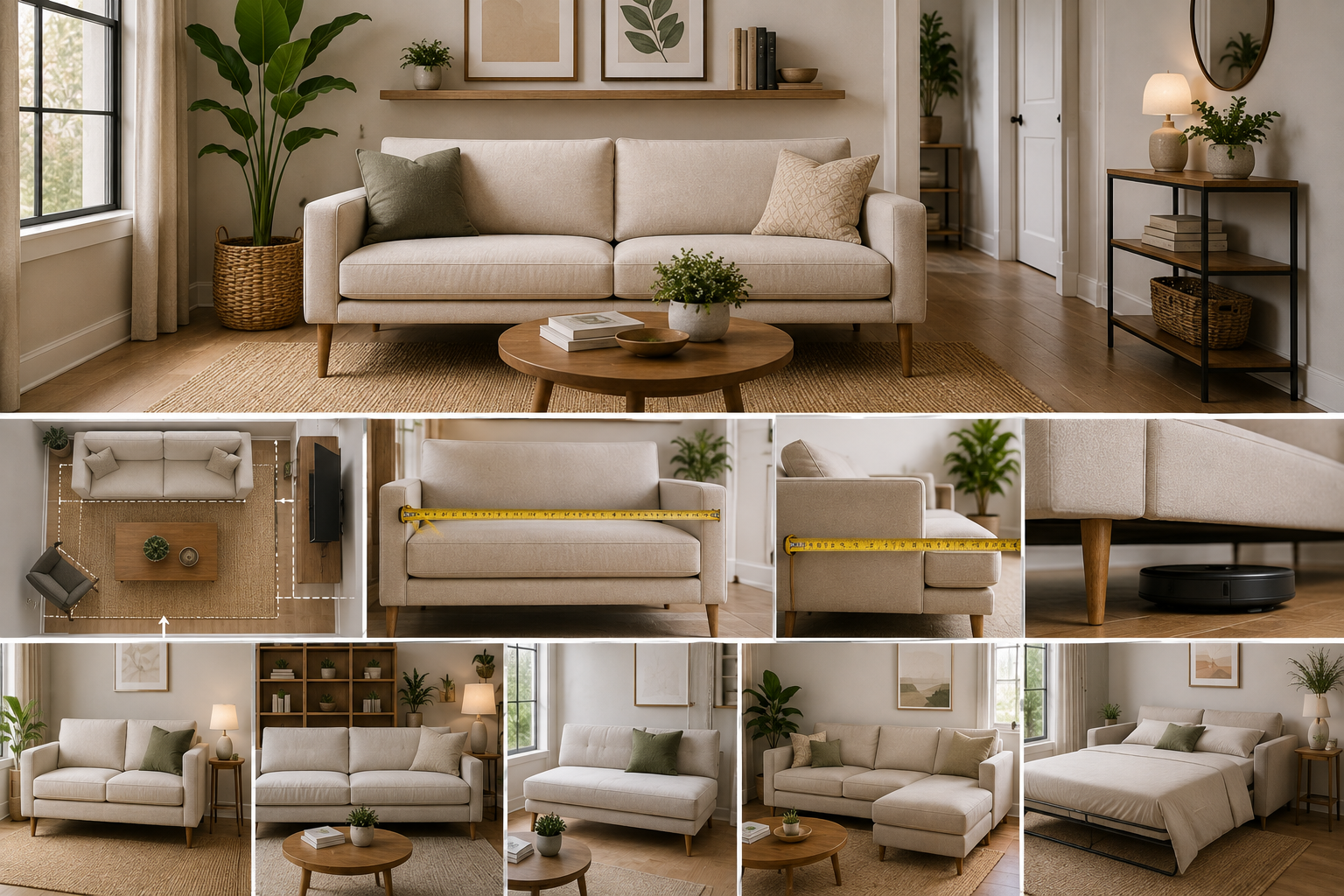
Furnishing a small living room often comes down to one tricky decision: the sofa. Get it right, and the room feels cozy and functional. Get it wrong, and even a “small” sofa can make the whole space feel cramped and hard to move through.
The short answer: For most small living rooms, look for a sofa between 65 and 84 inches wide, with a depth under 38 inches, paired with a low-profile silhouette, slim arms, and raised (visible) legs. These design details visually lighten the piece, so it doesn’t dominate the room even at a moderate size. Beyond sizing, apartment-friendly styles like loveseats, armless sofas, compact sectionals, and multi-functional sofa beds tend to work especially well in tighter layouts.
This guide walks through exactly how to size, style, and shop for a sofa that fits a small living room, without sacrificing comfort or making the room feel smaller than it already is.
Why Small Living Rooms Need a Different Shopping Approach
A sofa that looks “small” in a furniture showroom can feel completely different once it’s sitting in your actual room. Showrooms are large, open spaces designed to make furniture look proportionate — which is exactly why so many buyers end up with a sofa that overwhelms their smaller living room at home.
The fix isn’t just buying a shorter sofa. It’s understanding how width, depth, and visual weight — not just overall size — affect how a room feels once the sofa is in place.
Steps to Find Best Sofas for Small Living Rooms
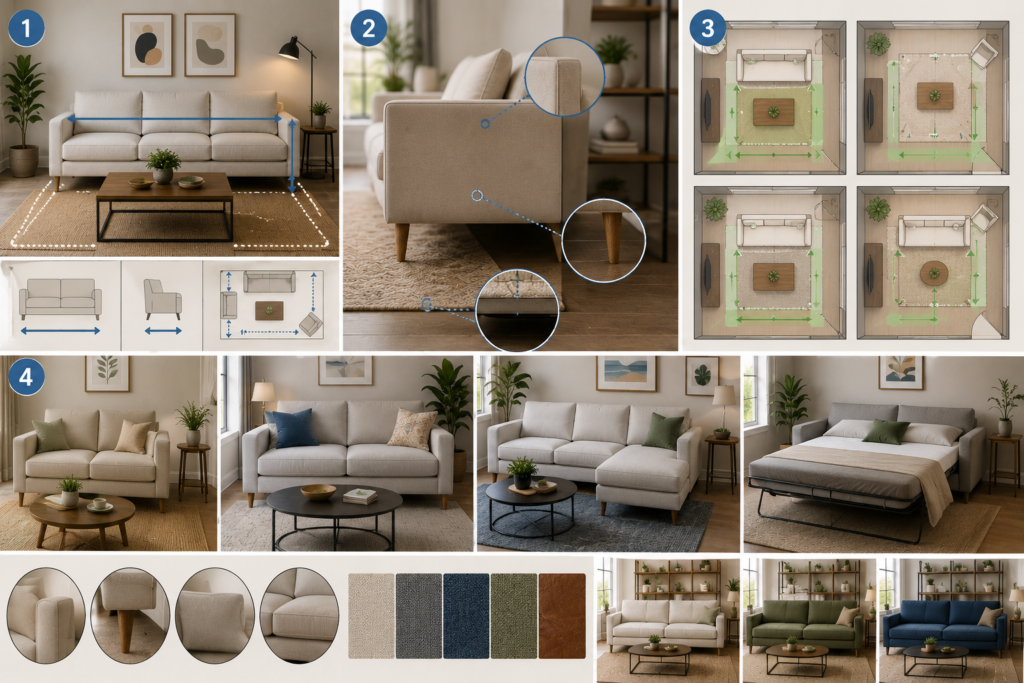
Step 1: Get the Right Sofa Size for Your Room
General Sizing Guidelines
| Room Type | Recommended Sofa Width | Recommended Depth |
| Small apartment/studio | 65–75 inches | Under 35 inches |
| Standard small living room | 70–84 inches | Under 38 inches |
| Compact sectional | 80–95 inches (L-shape) | 36–40 inches |
A useful guideline: For most small living rooms, a sofa under 75 inches wide is a safe starting point, while rooms with a bit more breathing room can often accommodate up to 84 inches without feeling crowded.
Depth Matters as Much as Width
It’s easy to focus only on how long a sofa is, but depth has a bigger impact on how “big” it feels in a tight room. A very deep sofa can visually dominate a small space even if its width is reasonable — sometimes described as the “elephant in the room” effect. Aim to keep sofa depth under about 38 inches for most small living rooms.
Leave Enough Walkway Space
Beyond the sofa itself, you need functional space to move around it comfortably.
- Leave at least 24 to 36 inches of walkway space around the sofa.
- Keep roughly 14 to 18 inches between the sofa and a coffee table.
- If your room has features like a fireplace, built-in shelving, or an off-center doorway, consider sizing down by an additional 6 to 10 inches to maintain comfortable clearance.
Step 2: Focus on Visual Weight, Not Just Dimensions
This is the detail most homeowners miss. A sofa’s actual footprint matters less than how heavy or light it looks in the room. Two sofas with nearly identical dimensions can feel completely different depending on their design details.
Design Features That Reduce Visual Bulk
- Slim, tapered arms instead of thick, rolled, or overstuffed arms
- Raised, visible legs instead of a skirted base that touches the floor — this creates a sense of open floor space underneath
- Low-profile backs rather than tall, boxy silhouettes
- Streamlined cushions rather than deep, overstuffed pillow-back designs
Practical example of the effect: Swapping a bulky rolled-arm sofa for a slimmer design with raised legs and tailored arms can make a room feel meaningfully more open, even when the actual floor footprint barely changes. The perception of space comes from visual weight, not just physical size.
Step 3: Choose a Sofa Style That Fits Small Spaces
Loveseats and Two-Seater Sofas
A loveseat (typically 60 to 75 inches wide) is one of the most reliable choices for very small rooms or as a secondary seating piece alongside a larger sofa.
Best for: Studio apartments, small dens, or rooms where full-size seating isn’t necessary.
Apartment-Size Sofas
Slightly larger than a loveseat but still compact, apartment-size sofas (roughly 65 to 80 inches wide) offer three-person seating without the bulk of a standard full-size sofa.
Best for: Small living rooms that need a bit more seating capacity than a loveseat provides.
Armless Sofas
Removing bulky arms entirely reduces both the physical footprint and the visual weight of the piece, often making the sofa feel noticeably more open in a tight room.
Best for: Minimalist small spaces, or rooms where every inch of width matters.
Compact Sectionals
A well-chosen sectional can actually work in a small living room, provided it’s sized correctly. Short L-shaped designs (often around 80 inches by 60 inches) tuck into a corner without dominating the space, offering more seating than a straight sofa in a similar footprint.
Best for: Small rooms that still need to seat several people regularly, especially when floor space allows for a corner configuration.
Modular Sofas
Modular designs allow individual sections to be rearranged or removed as needed, offering flexibility that’s especially valuable in small or awkwardly shaped rooms where your layout might need to adapt over time.
Best for: Renters or anyone who anticipates rearranging their space or moving to a different-sized room in the future.
Sofa Beds (Sleeper Sofas)
For studio apartments or multi-purpose rooms, a sofa bed combines seating and guest sleeping space in one piece — particularly useful when there isn’t room for a separate guest bed.
Best for: Studio apartments, frequent hosts, or any small living room that needs to serve more than one function.
Small Sofa Styles at a Glance
| Style | Typical Width | Best For |
| Loveseat | 60–75″ | Very small rooms, secondary seating |
| Apartment-size sofa | 65–80″ | Small living rooms needing 3-person seating |
| Armless sofa | Varies (reduced footprint) | Minimalist, tight-width spaces |
| Compact L-shaped sectional | ~80″ x 60″ | Corner layouts needing more seating |
| Modular sofa | Varies (reconfigurable) | Renters, flexible or changing layouts |
| Sofa bed | 65–84″ | Studio apartments, guest-ready multi-use rooms |
Step 4: Think About Color and Fabric for a Small Room
Beyond shape and size, color and material choices can also influence how spacious a room feels.
- Lighter colors tend to make a sofa feel less visually heavy in a small room compared to dark, saturated tones.
- Matching the sofa’s color closely to your walls or flooring can help it visually recede rather than stand out as a large block of contrast.
- Performance or stain-resistant fabrics are worth prioritizing in small living rooms that double as high-traffic, multi-purpose spaces.
Step 5: Consider Multi-Functional Features
In a small living room, furniture that does more than one job is especially valuable.
- Hidden storage built into the sofa or ottoman base helps offset limited closet or storage space, which is especially useful in apartments.
- Removable or reversible cushions make cleaning easier and can extend the life of a heavily used piece.
- Reconfigurable sectionals let you adjust the seating arrangement for different needs everyday use versus hosting guests — without buying additional furniture.
Common Small Living Room Sofa Mistakes to Avoid
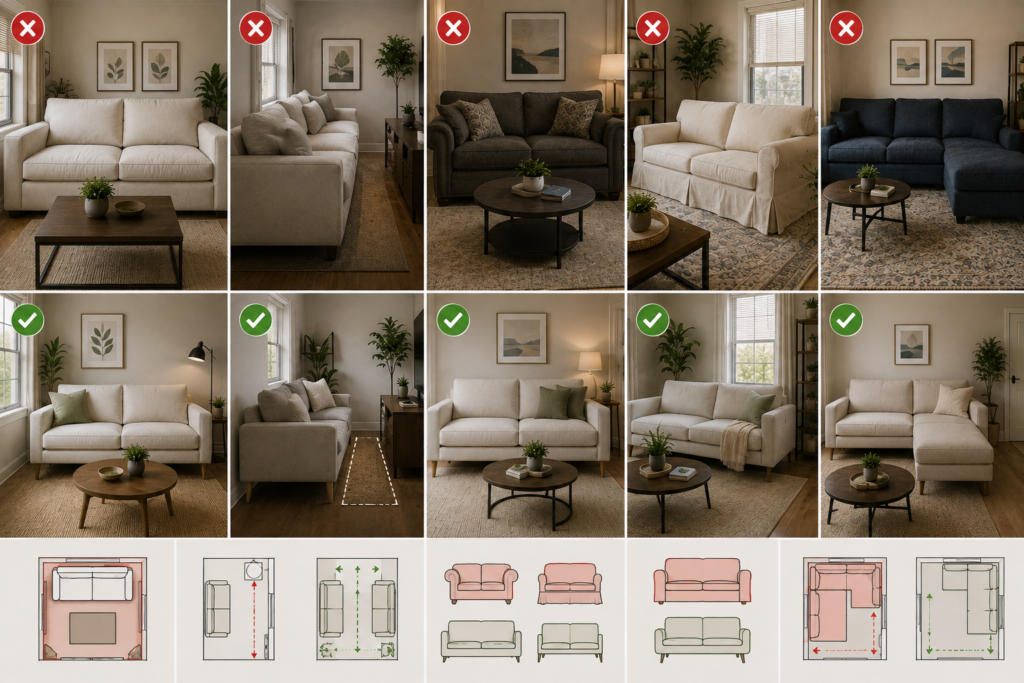
- Choosing based on width alone. Depth and visual weight matter just as much as how long the sofa is.
- Skipping the walkway measurement. A sofa can technically “fit” a room and still block comfortable movement if clearance space isn’t accounted for.
- Picking a sofa with thick arms and low, boxy proportions. These details make even a modestly sized sofa feel bulkier than it needs to.
- Choosing very dark or heavily patterned upholstery in an already tight room, which can visually shrink the space further.
- Buying based on showroom appearance alone. A sofa that looks reasonably sized in a large showroom can feel oversized once placed in an actual small room.
How to Measure Your Room Correctly Before Shopping
- Measure the full room dimensions, not just the wall where the sofa will sit.
- Map out where other furniture will go — TV stand, coffee table, chairs — so you know how much space is genuinely left for the sofa.
- Test the layout with painter’s tape on the floor to visualize the sofa’s actual footprint before buying.
- Measure doorways and hallways the sofa will need to pass through, especially for larger apartment-size or sectional pieces.
- Leave a printable measurement sheet (physical or on your phone) with your key numbers so you can quickly compare against sofas while shopping in person or online.
Practical Buying Advice
- Start with a tape measure, not a style preference. Know your realistic size range before falling in love with a specific sofa design.
- Prioritize slim arms and raised legs if visual openness matters as much as physical space to you.
- Consider a loveseat or armless sofa if your room is under 10×10 feet. These options leave meaningfully more open floor space than a standard three-seat sofa.
- Look into modular or reconfigurable designs if you rent or expect to move — they adapt more easily to different room sizes than a fixed-shape sofa.
- Choose lighter upholstery colors if your room already feels tight, since darker tones tend to visually add bulk.
- Don’t ignore depth. A sofa under the recommended width but with excessive depth can still overwhelm a small room.
Small Room, Smart Sofa — Not Just a Small Sofa
Choosing a sofa for a small living room isn’t just about finding the shortest option available it’s about balancing size, depth, visual weight, and functionality so the piece fits both your space and your daily life. A slightly larger sofa with slim arms and raised legs can often feel more open than a smaller one with bulky proportions.
Measure your room carefully, prioritize designs that visually lighten the space, and consider whether a loveseat, compact sectional, or multi-functional sofa bed better matches how you actually use the room. With the right combination of size and style, even a small living room can feel comfortable, open, and genuinely functional not cramped.
FAQ
1- What size sofa is best for a small living room?
For most small living rooms, a sofa between 65 and 84 inches wide, with a depth under 38 inches, offers a good balance of comfortable seating without overwhelming the space.
2- Is a loveseat better than a full sofa for a small room?
It depends on your seating needs. A loveseat is a strong choice for very small rooms or studio apartments, while an apartment-size sofa offers slightly more seating capacity while still remaining compact.
3- Can a sectional actually work in a small living room?
Yes, if sized correctly. A short L-shaped sectional (roughly 80 inches by 60 inches) can fit neatly into a corner and offer more seating than a straight sofa in a similar footprint, as long as the room has a suitable corner layout.
4- Does sofa color really affect how big a room feels?
Yes, to a meaningful degree. Lighter colors, and colors that closely match the walls or flooring, tend to help a sofa visually recede rather than stand out as a dominant block in the room.
5- How much walkway space should I leave around a small living room sofa?
A general guideline is 24 to 36 inches of clear walkway space, adjusted down slightly if your room has unusual features like a fireplace or an off-center entrance.
6- Are sofa beds a good option for small living rooms?
Yes, particularly for studio apartments or rooms that need to serve multiple purposes. A sofa bed combines everyday seating with guest sleeping space, which is especially valuable when a separate guest room isn’t an option.