
A tool collection that’s genuinely useful isn’t just about owning the right tools, it’s about being able to find them quickly when you actually need them. Without a proper storage system, even a well-chosen toolkit ends up scattered across drawers, shelves, and random corners of the garage, turning a five-minute repair into a frustrating search.
This guide covers the best tool storage solutions for homeowners at every collection size, from a basic starter kit to a growing garage workshop, along with practical advice on choosing the right system for your specific space and needs.
Best Tool Storage Solutions for Homeowners
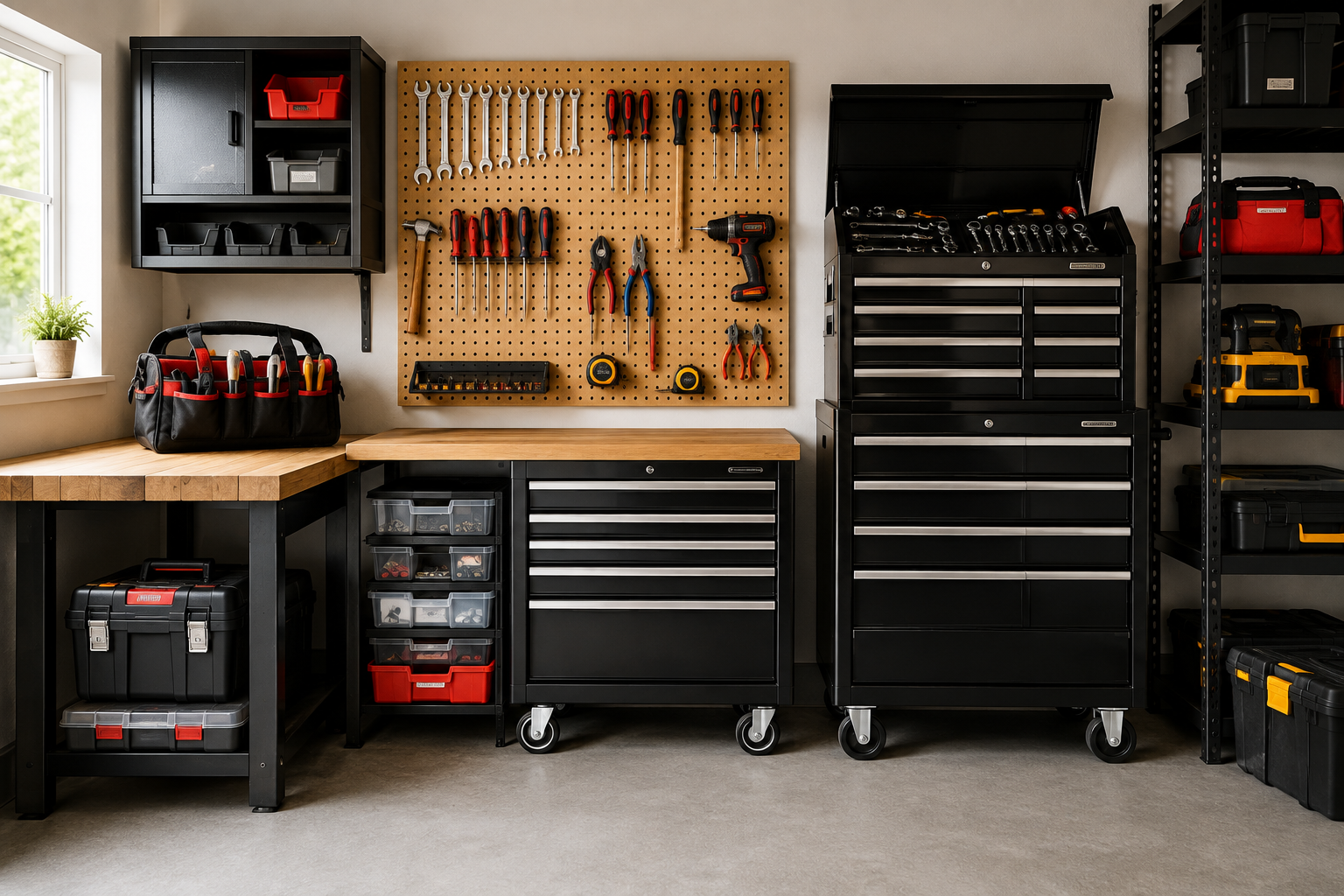
For a small, starter tool collection, a basic toolbox or tool bag offers simple, portable storage without requiring dedicated space. As your collection grows, a wall-mounted pegboard keeps frequently used tools visible and easily accessible in a garage or workshop area. For larger, more extensive collections, particularly for homeowners doing frequent or serious DIY work, a rolling tool chest with multiple drawers offers the most organized, mobile storage option. Most homeowners benefit from a combination of these solutions rather than relying on just one, matching storage type to how frequently and where specific tools get used.
Choosing Storage Based on Your Collection Size
Small Collections (Basic Hand Tools)
If your entire tool collection consists of a hammer, a few screwdrivers, pliers, a tape measure, and similar basics, a simple toolbox or tool bag is genuinely sufficient. There’s little practical benefit to investing in more elaborate storage until your collection actually grows beyond what fits comfortably in a compact container.
Moderate Collections (Hand Tools Plus a Few Power Tools)
Once you’ve added a cordless drill, a handful of other power tools, and an expanding hand tool selection, a mid-sized toolbox with multiple compartments, a larger tool bag, or a small wall-mounted storage solution starts to make more practical sense.
Larger Collections (Frequent DIY or Workshop Use)
For homeowners with an extensive, actively growing collection, particularly those doing frequent renovation, woodworking, or repair projects, a combination of pegboard wall storage and a rolling tool chest typically offers the most functional, organized system.
Toolboxes: The Starting Point for Most Homeowners
Hard-Sided Toolboxes
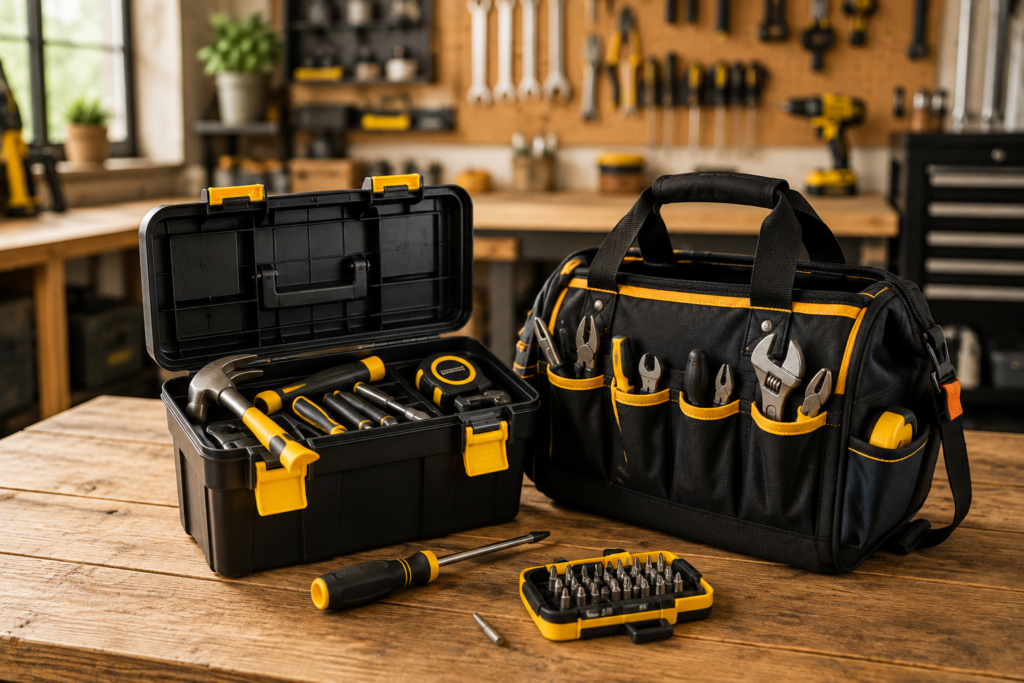
Traditional hard-sided toolboxes, typically plastic or metal, offer durable, protective storage for hand tools and small power tools. Many include a removable tray or compartments for organizing smaller items like screws, drill bits, and fasteners separately from larger tools.
Soft-Sided Tool Bags
More flexible than a hard toolbox, tool bags often include multiple exterior and interior pockets for organizing tools by type or frequency of use. They’re generally easier to carry and store in tight spaces, like a closet shelf, compared to a bulkier hard-sided box.
Choosing Between the Two
Hard-sided toolboxes offer better protection for tools during transport or storage in less controlled environments, like a garage or truck bed, while soft-sided bags offer more flexible organization and are often easier to carry comfortably over longer distances or up stairs.
Wall-Mounted Pegboards
Why Pegboards Work Well for Growing Collections
A pegboard mounted in a garage or workshop area lets you hang tools in clear view, using hooks and holders positioned exactly where you need them. This visibility considerably reduces the time spent searching for a specific tool compared to digging through a box or drawer.
Customization and Flexibility
Pegboard hook and holder positions can be rearranged easily as your collection changes, letting you reorganize your layout without needing new equipment, simply move the existing hooks to accommodate new tools or a more efficient arrangement.
Best Suited For
Pegboards work particularly well for frequently used hand tools and lighter power tools that benefit from quick visual access, though they’re less practical for very heavy items or tools better suited to drawer storage, like loose fasteners or small parts.
Rolling Tool Chests
Why They Suit Larger Collections
A rolling tool chest with multiple drawers offers substantial, organized storage capacity, letting you separate tools by category or project type across different drawer levels. The mobility factor, being able to wheel the entire chest directly to a project location, adds genuine convenience for larger or more involved home projects.
Top Chest vs Bottom Cabinet Combinations
Many rolling tool storage systems combine a top chest (often with smaller drawers suited to hand tools and hardware) with a larger bottom rolling cabinet (better suited to bulkier power tools and equipment), offering a comprehensive, tiered storage solution.
Best Suited For
Rolling tool chests make the most sense for homeowners with an extensive, actively used collection, or anyone doing frequent enough DIY or repair work that dedicated, substantial storage genuinely pays off in time saved and organization.
Tool Storage Comparison
| Storage Type | Best For | Portability | Capacity |
| Toolbox (hard-sided) | Small collections, protection during transport | High | Low to moderate |
| Tool bag (soft-sided) | Small to moderate collections, flexible carrying | High | Low to moderate |
| Wall-mounted pegboard | Frequently used hand tools, visual organization | None (fixed) | Moderate |
| Rolling tool chest | Larger, growing collections | Moderate (wheeled) | High |
| Wall cabinets/shelving | Bulk storage, less frequently used items | None (fixed) | High |
Organizing Tools by Category
- Group by Function
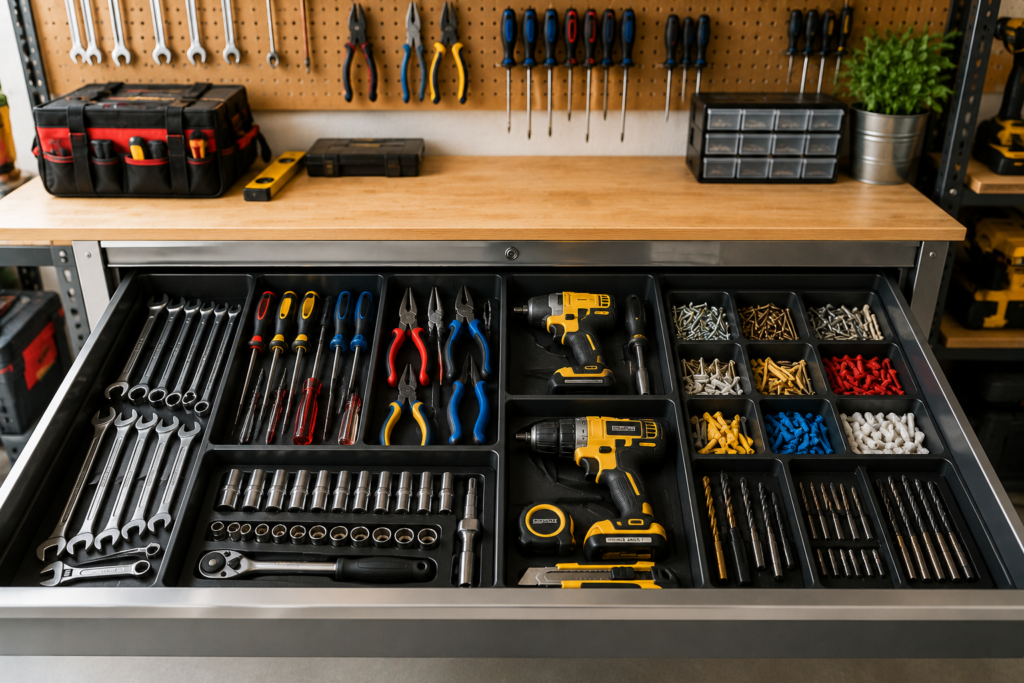
Keeping similar tools together, all screwdrivers in one section, all wrenches in another, makes it considerably faster to locate what you need compared to a disorganized mix, regardless of which storage system you’re using.
- Separate Frequently Used From Occasional Tools
Store your most commonly used tools, hammer, tape measure, screwdrivers, in the most easily accessible location, while less frequently used or specialty items can go in less convenient storage without slowing down your typical repair tasks.
- Keep Small Parts Contained
Screws, nails, drill bits, and other small hardware benefit from dedicated small parts organizers, either built into a toolbox or as a separate small drawer or bin system, preventing loose items from scattering throughout your storage.
Tool Storage for Small Spaces
- Apartment or Condo Living Without a Garage
For homeowners or renters without dedicated garage space, a compact toolbox or tool bag stored in a closet remains entirely practical for a basic hand tool collection, without needing more elaborate storage infrastructure.
- Wall-Mounted Solutions for Limited Floor Space
- A small pegboard or wall-mounted shelf can add meaningful storage capacity without using any valuable floor space, worth considering even in smaller garages, utility closets, or basement storage areas.
- Under-Stair or Closet Storage
Underutilized spaces like under-stair closets or the back of a utility closet can accommodate a moderate tool collection when paired with appropriately sized bins or a slim rolling cart, making efficient use of otherwise wasted space.
Labeling and Inventory Systems
- Why Labeling Matters
Clearly labeled drawers, bins, or pegboard sections make it considerably faster to locate a specific tool, particularly valuable in larger collections where visual scanning alone becomes less efficient.
- Simple Labeling Approaches
Basic adhesive labels, a label maker, or even simple handwritten tags on bins and drawers can meaningfully improve organization without requiring an elaborate system or significant additional cost.
- Tracking Larger Collections
For genuinely extensive collections, some homeowners find value in a simple written or digital inventory list, particularly useful for tracking tools that get borrowed or moved between storage locations, like a garage chest and a portable job-site bag.
Protecting Tools From Damage in Storage
- Moisture and Rust Prevention
Metal hand tools and certain power tool components can develop rust if stored in a consistently damp environment. A dry storage location, or added moisture-absorbing packets in enclosed toolboxes, helps protect tools in more humid garages or basements.
- Battery Storage for Cordless Tools
Cordless tool batteries generally last longer when stored at a moderate charge level in a moderate temperature environment, rather than left in extreme heat or cold, worth considering when placing a rolling tool chest or storage cabinet in an unheated or un-air-conditioned garage.
- Blade and Bit Protection
Sharp blades, drill bits, and similar cutting tools benefit from dedicated slots, cases, or sheaths that prevent them from knocking against other tools during storage, both protecting the tool’s edge and reducing the risk of accidental injury while reaching into a drawer or bag.
Choosing Storage for a Growing Collection
- Plan for Expansion Early
Even if your current tool collection is modest, choosing a storage system with some room for growth, an extra empty drawer, unused pegboard space, saves you from needing to replace your entire storage setup as your collection naturally expands over time.
- Modular Systems
Some storage systems are specifically designed to be modular, allowing you to add additional drawers, cabinets, or wall-mounted components as needed, offering more long-term flexibility than a fixed, single-piece storage unit.
Budget Planning for Tool Storage
Basic toolboxes and tool bags represent the most affordable entry point, suited to smaller collections and homeowners just starting to build their toolkit. Mid-range options, including quality pegboard systems and smaller rolling tool boxes, balance organization and cost for moderately sized collections. Larger rolling tool chests and comprehensive cabinet systems represent a bigger investment, best justified for homeowners with extensive, actively used collections where the organizational benefit genuinely pays off over time.
Common Mistakes to Avoid
- Buying storage sized for your current collection only, without accounting for how tool collections tend to grow over time
- Mixing loose small parts with larger tools, making both harder to locate efficiently
- Storing tools in consistently damp areas without moisture protection, risking rust and corrosion over time
- Choosing elaborate storage before your collection actually warrants it, spending more than necessary for a still-small toolkit
- Skipping labeling entirely, losing much of the organizational benefit that a dedicated storage system is meant to provide
Conclusion
The best tool storage solutions match your collection’s actual size and how frequently you use specific tools, rather than defaulting to the most elaborate system available. Start with a simple toolbox or tool bag for a small collection, add a pegboard as your frequently used tools expand, and consider a rolling tool chest once your collection genuinely warrants that level of organized, mobile storage. Whichever combination fits your space and needs, consistent labeling and thoughtful organization will save you far more time and frustration than the storage system itself.
Frequently Asked Questions
1- What is the best tool storage for a small starter collection?
A basic toolbox or tool bag is generally sufficient for a small collection of core hand tools, offering simple, portable storage without requiring dedicated space.
2- Is a pegboard or a tool chest better for organizing tools?
Neither is universally better, they serve different purposes. Pegboards offer visual, easily accessible storage for frequently used hand tools, while rolling tool chests provide substantial, organized capacity better suited to larger, growing collections.
3- How do I store tools if I don’t have a garage?
A compact toolbox or tool bag stored in a closet remains entirely practical for a basic collection, and small wall-mounted shelving or a slim rolling cart can add capacity in utility closets or other limited spaces.
4- How can I prevent my tools from rusting in storage?
Store tools in a dry location where possible, and consider moisture-absorbing packets in enclosed toolboxes for garages or basements with higher humidity levels.
5- Should I label my tool storage system?
Yes, clear labeling on drawers, bins, or pegboard sections meaningfully speeds up locating specific tools, particularly valuable as your collection grows larger.
6- What’s the best way to store cordless tool batteries?
Store batteries at a moderate charge level in a moderate temperature environment, avoiding extreme heat or cold, to help preserve their long-term capacity and lifespan.
7- When should I upgrade from a basic toolbox to a rolling tool chest?
Once your collection grows beyond what comfortably fits and stays organized in a toolbox or bag, particularly if you’re doing frequent DIY projects, a rolling tool chest generally becomes a worthwhile organizational upgrade.