
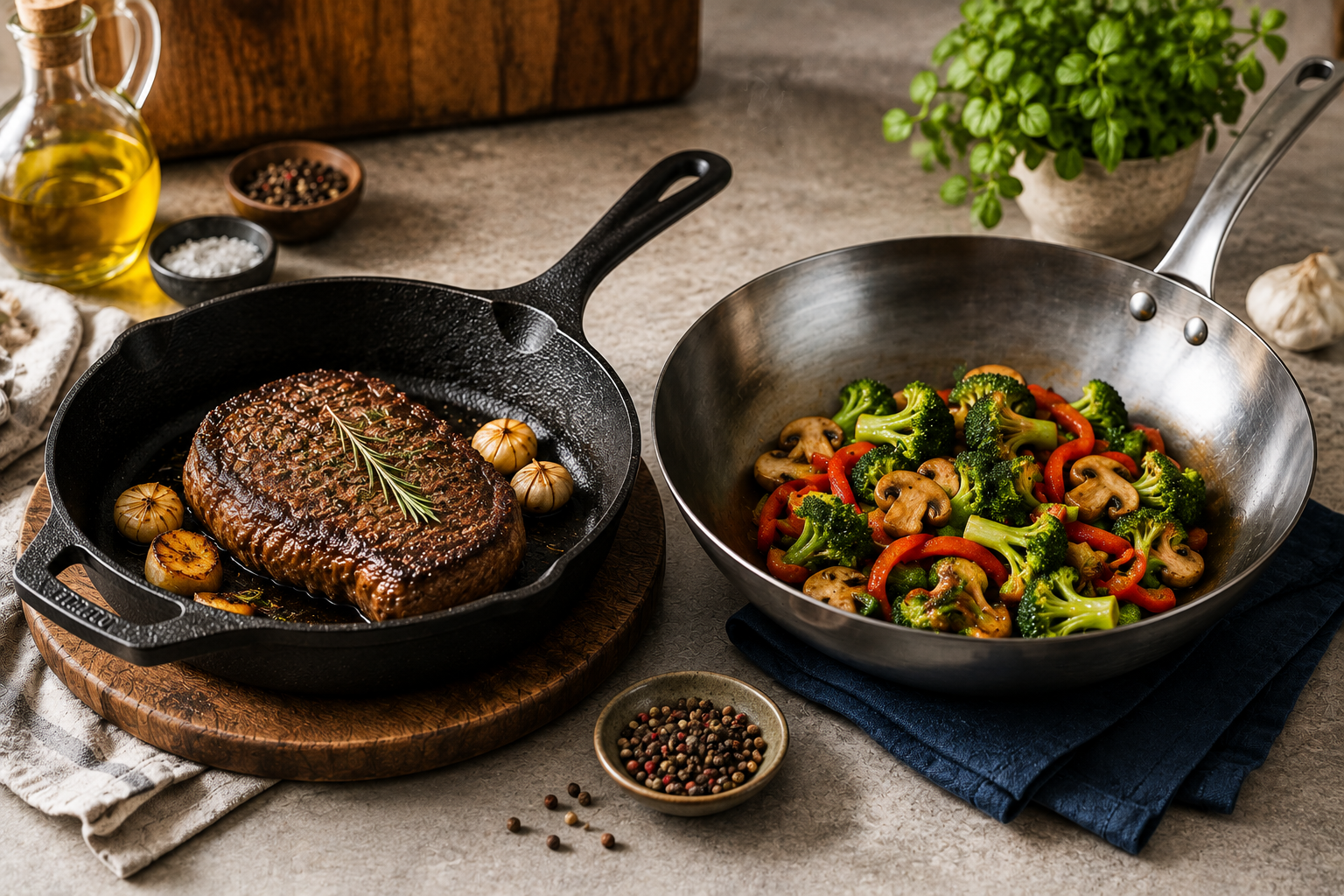
Both cast iron and carbon steel promise the same core appeal: a durable, naturally nonstick cooking surface that develops character over years of use, without any synthetic coating involved. But the cast iron vs carbon steel decision comes down to real, practical differences in weight, responsiveness, and how each material fits into your specific cooking routine.
This guide breaks down how these two materials actually compare, where each one performs best, and which one, or both, deserves a spot in your kitchen. Rather than declaring a single winner, we’ll walk through the genuine trade-offs so you can choose based on how you actually cook.
Cast Iron vs Carbon Steel Cookware
Cast iron offers superior heat retention and a thicker, more forgiving surface, making it ideal for long, slow searing and dishes that move from stovetop to oven. Carbon steel is meaningfully lighter and more responsive to temperature changes, closer in feel to traditional stainless steel cookware, making it better suited to techniques requiring quicker heat adjustments, like stir-frying or delicate sautéing. Both require similar seasoning and care, and many serious home cooks genuinely benefit from owning both, using cast iron for its heat retention and carbon steel for its responsiveness and lighter handling.
How Each Material Is Made
Cast Iron
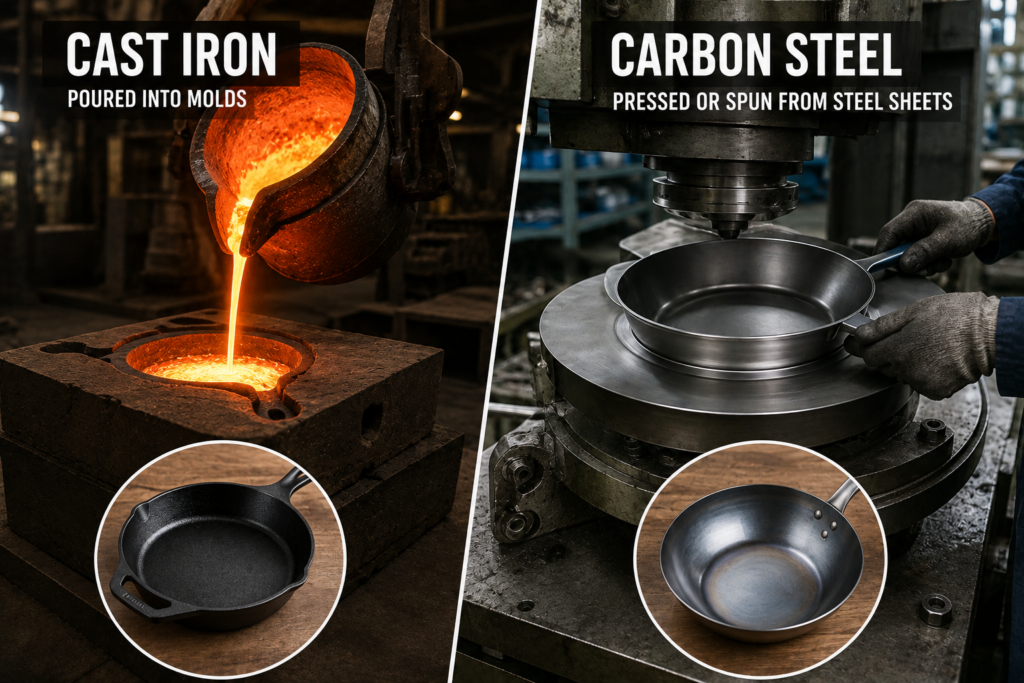
Cast iron cookware is made by pouring molten iron into a mold and allowing it to cool and solidify, creating a single, dense piece with a naturally slightly rough, porous surface texture. This casting process is why cast iron pans tend to be noticeably heavier and thicker than comparable carbon steel pans of the same diameter.
Carbon Steel
Carbon steel cookware is typically formed by pressing or spinning sheets of steel into shape, resulting in a thinner, lighter pan with a smoother surface than cast cookware. This manufacturing process is closer to how stainless steel cookware is made, which is part of why carbon steel tends to feel more familiar to cooks accustomed to standard stainless steel pans.
Cast Iron vs Carbon Steel: Key Differences
| Feature | Cast Iron | Carbon Steel |
| Weight | Heavy | Lighter, moderate |
| Surface texture | Slightly rough, porous | Smoother |
| Heat retention | Excellent, very high | Good, moderate to high |
| Heat responsiveness | Slower to heat/cool | Faster to heat/cool |
| Seasoning required | Yes | Yes |
| Durability | Very high (generational) | Very high |
| Oven-safe | Yes | Yes |
| Best suited to | Searing, baking, slow cooking | Stir-frying, sautéing, quick techniques |
| Typical thickness | Thicker | Thinner |
| Price range | Wide (budget to premium) | Generally moderate to premium |
Weight and Handling
- Cast Iron’s Heft
Cast iron’s significant weight is both a strength and a genuine practical consideration. That mass is directly responsible for its exceptional heat retention, but it also makes cast iron pans noticeably more tiring to maneuver, particularly for tasks requiring frequent tossing or flipping, and it can be a real factor for anyone with wrist or grip strength limitations.
- Carbon Steel’s Advantage
Carbon steel pans are typically lighter than a comparably sized cast iron skillet, closer in weight and balance to a standard stainless steel sauté pan. This makes carbon steel considerably easier to maneuver for techniques like tossing vegetables in a stir-fry or swirling a pan to redistribute sauce, tasks that feel noticeably more effortful with cast iron’s added heft.
Heat Retention and Responsiveness
- Cast Iron’s Thermal Mass
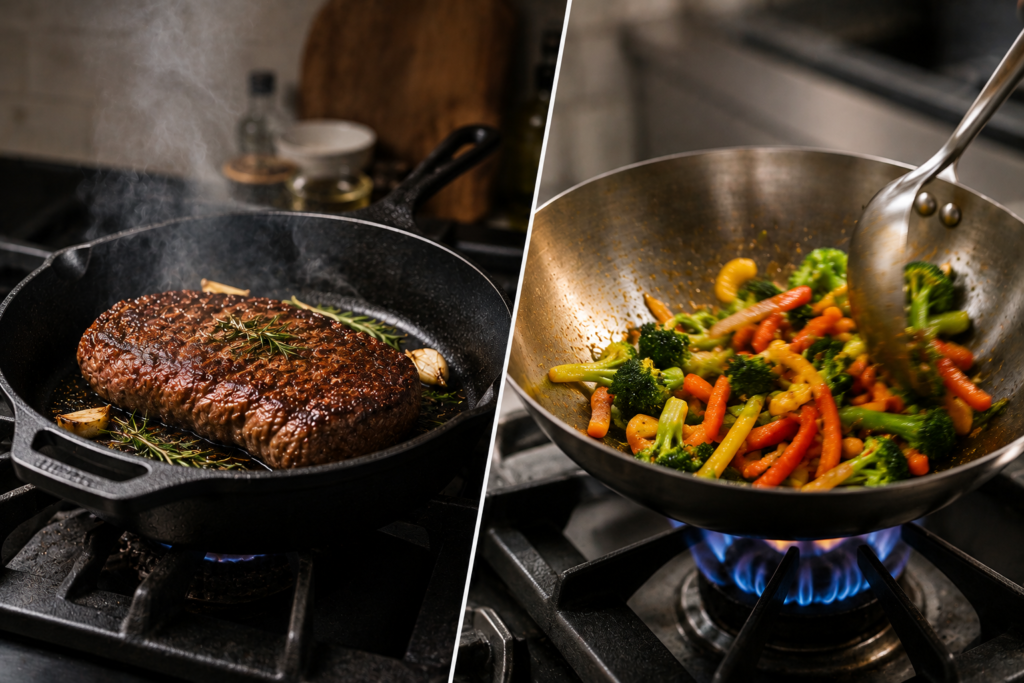
Cast iron’s thickness and density give it exceptional heat retention, once properly preheated, it holds that heat remarkably well even when cold food is added, which is exactly why it excels at searing, since the pan’s surface temperature doesn’t drop as dramatically when a cold steak hits the surface.
- Carbon Steel’s Responsiveness
Carbon steel’s thinner construction means it heats up and cools down more quickly than cast iron, giving cooks more immediate control over temperature changes mid-cooking. This responsiveness is particularly valued in techniques like stir-frying, where rapid, precise heat adjustments matter more than sustained thermal mass.
- Which Matters More for Your Cooking?
If you primarily sear steaks, bake cornbread, or cook dishes that benefit from sustained, even high heat, cast iron’s thermal mass works in your favor. If you frequently sauté, stir-fry, or cook dishes requiring quick heat adjustments, carbon steel’s responsiveness will likely feel more intuitive and controllable.
Seasoning: A Shared Requirement
Both cast iron and carbon steel develop their natural nonstick quality through seasoning, a process of building up thin, polymerized layers of oil on the cooking surface through repeated heating.
How to Season Cast Iron or Carbon Steel
- Wash the pan thoroughly with warm water and mild soap to remove any factory coating, then dry completely.
- Apply a very thin, even layer of a high-smoke-point oil (such as flaxseed, grapeseed, or vegetable oil) across the entire cooking surface, including the sides.
- Wipe off any excess oil, the layer should appear nearly dry to the touch, since too much oil creates a sticky, uneven finish rather than a smooth coating.
- Place the pan upside down in an oven preheated to a high temperature (typically 400–500°F), with a sheet pan or foil underneath to catch any drips, and bake for about an hour.
- Allow the pan to cool completely in the oven before removing.
- Repeat this process two to three times for a solid initial seasoning layer, building on it further through regular cooking with oil over time.
Maintaining Seasoning Over Time
Regular cooking with oil naturally reinforces seasoning over time, while cooking highly acidic foods (tomato sauce, wine-based dishes) too frequently can gradually strip it, requiring occasional reseasoning to restore the surface.
Cooking and Cleaning Care
After Each Use
Both materials should be cleaned promptly after cooking, ideally with hot water and a stiff brush rather than soap (though mild soap in moderation is generally fine on well-seasoned pans), then dried thoroughly and immediately, since lingering moisture is the primary cause of rust on both materials.
Avoiding Prolonged Soaking
Neither cast iron nor carbon steel should be left soaking in water, since prolonged moisture exposure strips seasoning and promotes rust far more aggressively than a quick wash and dry.
A Light Oil Coating After Cleaning
Applying a very thin coat of oil to the cooking surface after drying helps protect against rust during storage and reinforces seasoning over time for both materials.
Best Uses for Cast Iron
- Searing steaks and chops, where sustained high heat produces a deep, even crust
- Cornbread and other stovetop-to-oven baked dishes, taking advantage of even heat retention
- Long, slow braises, particularly in a Dutch oven variant of cast iron
- Frying, where consistent oil temperature benefits from cast iron’s thermal stability
Best Uses for Carbon Steel
- Stir-frying, where quick, responsive heat changes and lighter weight for tossing matter most
- Sautéing vegetables, benefiting from more immediate temperature control
- Omelets and delicate eggs, once well-seasoned, thanks to a smoother surface than cast iron typically develops
- Restaurant-style high-heat searing, where chefs often prefer carbon steel’s responsiveness and lighter handling during service
Durability and Longevity
Both materials are exceptionally durable when properly cared for, and both can genuinely last for decades, often passed down as heirloom pieces much like a well-maintained cast iron skillet from a previous generation. Neither material has a coating that wears out the way traditional nonstick does, since the cooking surface is the base metal itself, reinforced by seasoning rather than a separate manufactured layer.
The primary threat to longevity for both materials is rust from improper drying or storage, and both can typically be restored even after significant rust develops, through re-scouring the surface and reseasoning from scratch.
Price Comparison
Cast iron spans a wide price range, from very affordable basic skillets to premium enameled or specialty cast iron pieces costing considerably more. Carbon steel tends to sit in a somewhat narrower moderate-to-premium range overall, though quality options exist at accessible price points, particularly from cookware brands specializing specifically in carbon steel construction.
Which Should You Buy First?
Choose Cast Iron First If:
- You primarily sear meat and want maximum heat retention
- You cook dishes that move from stovetop to oven regularly
- You don’t mind the added weight in exchange for thermal stability
- You want the widest range of price points to choose from, including budget-friendly options
Choose Carbon Steel First If:
- You frequently stir-fry or sauté and want quicker, more responsive heat control
- You prefer a lighter pan that’s easier to maneuver, toss, and handle
- You’re comfortable with stainless steel cookware and want a similar feel with natural nonstick development
- You cook eggs or delicate foods often and want a smoother developing surface
Consider Both If:
Many serious home cooks eventually own both, using cast iron for searing and oven-finished dishes, and carbon steel for stir-fries, sautés, and anything requiring quick, responsive heat adjustments. Since both share similar seasoning and care routines, adding a second material doesn’t significantly increase your overall maintenance burden.
Common Mistakes to Avoid
- Skipping proper seasoning before first use, leading to sticking and uneven cooking early on
- Soaking either material in water, promoting rust and stripping seasoning
- Cooking highly acidic foods too frequently, gradually breaking down seasoning on both materials
- Assuming carbon steel doesn’t need seasoning because it’s smoother, when it requires essentially the same seasoning process as cast iron
- Choosing based on price alone, without considering how the material’s weight and heat responsiveness actually fit your cooking style
Conclusion
The cast iron vs carbon steel decision ultimately comes down to how you cook day to day, not which material is objectively superior. Cast iron rewards patience with unmatched heat retention for searing and oven-finished dishes, while carbon steel rewards active, responsive cooking techniques with its lighter weight and quicker heat adjustments. Both develop genuine character and nonstick performance over years of proper seasoning and care, and both can realistically become the kind of cookware you pass down for generations. Think honestly about your most frequent cooking techniques, and that will point you toward the material, or the combination of both, that will earn its place in your kitchen.
Frequently Asked Questions
1- Is carbon steel better than cast iron?
Neither is universally better, they suit different cooking styles. Carbon steel offers lighter weight and quicker heat responsiveness, ideal for stir-frying and sautéing, while cast iron offers superior heat retention, better suited to searing and oven-finished dishes.
2- Do I need to season carbon steel the same way as cast iron?
Yes, both materials require essentially the same seasoning process, building up polymerized oil layers through repeated heating, since neither comes with a factory nonstick coating.
3- Which is heavier, cast iron or carbon steel?
Cast iron is generally noticeably heavier than a comparably sized carbon steel pan, due to its thicker, cast construction versus carbon steel’s thinner, pressed or spun manufacturing process.
4- Can I use metal utensils on cast iron or carbon steel?
Yes, both materials generally tolerate metal utensils well, since there’s no separate coating layer to scratch away, unlike traditional nonstick cookware.
5- How do I remove rust from cast iron or carbon steel?
Scour the rusted area with steel wool or a stiff brush, wash and dry thoroughly, then reseason the entire pan following the standard seasoning process to restore its protective surface.
6- Is cast iron or carbon steel better for beginners?
Carbon steel’s lighter weight and closer resemblance to standard stainless steel cookware can make it feel more approachable initially, though both materials involve a similar learning curve for seasoning and care regardless of which you start with.
7- Can both materials go in the oven?
Yes, both cast iron and carbon steel are generally oven-safe at high temperatures, making them well suited to dishes that move between stovetop and oven, provided any non-metal handle components are checked for their specific heat tolerance.