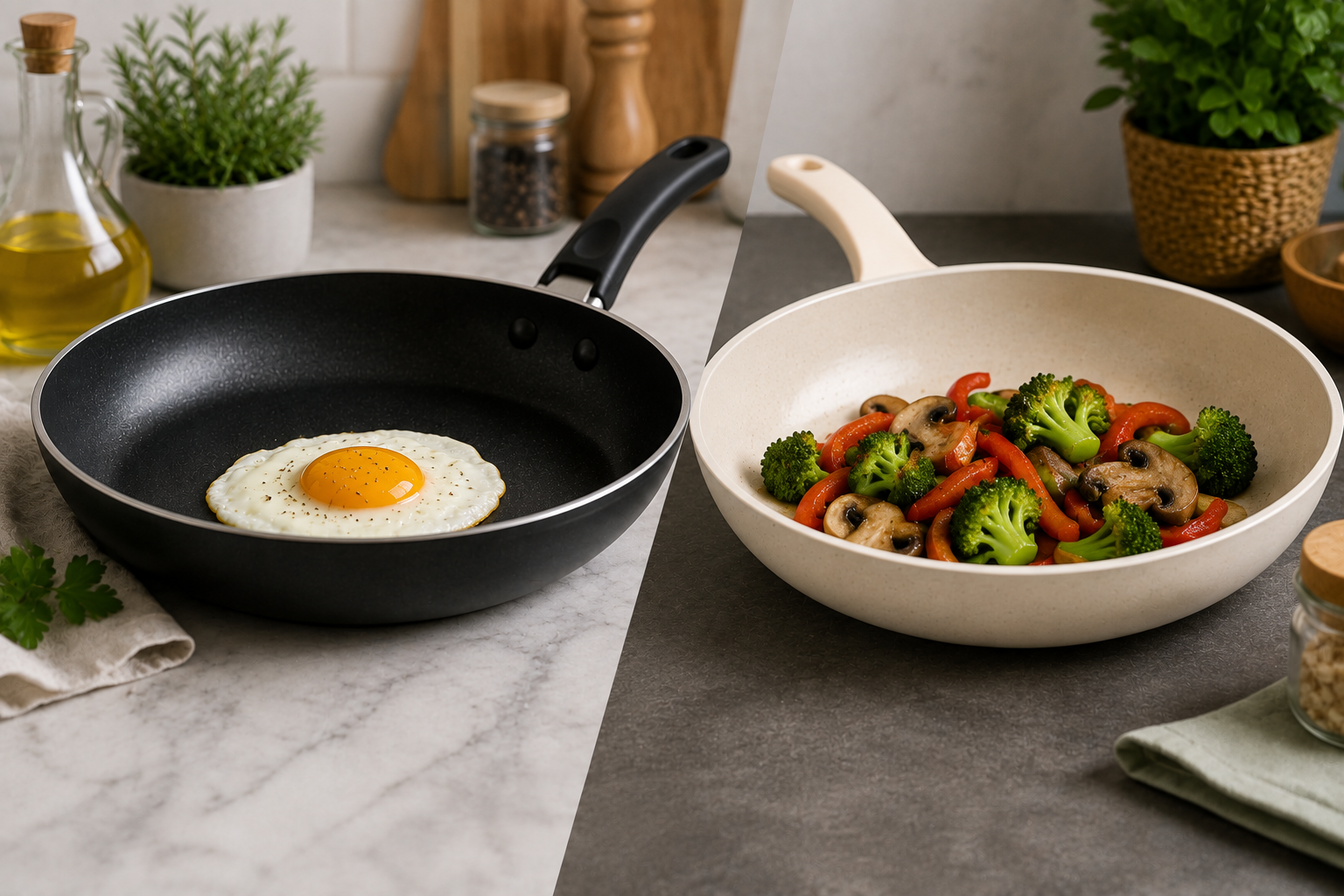
Both promise the same basic appeal, effortless food release and easy cleanup, but “nonstick” and “ceramic” aren’t actually different names for the same thing. The ceramic vs nonstick cookware decision comes down to genuinely different coating technologies, with real differences in longevity, heat tolerance, and the chemical composition that’s become an increasingly important consideration for many home cooks.
This guide breaks down exactly how these two coating types differ, what “ceramic” actually means on a cookware label, and which option better fits your specific cooking habits and priorities.
Ceramic vs Nonstick Cookware
Traditional nonstick cookware uses a PTFE-based coating (commonly known as Teflon) that offers the best overall food release and the longest track record of everyday reliability, though it requires lower cooking temperatures and gradually degrades over a few years of regular use. Ceramic-coated cookware uses a different, silica-based coating that’s free of PTFE and traditional PFAS, appealing to those specifically wanting to avoid those compounds, generally tolerating higher heat than traditional nonstick, but often showing reduced nonstick performance somewhat sooner in its lifespan compared to a well-maintained PTFE pan. Neither is universally “better,” the right choice depends on how much you prioritize PFAS-free materials specifically versus maximum nonstick longevity and performance.
What “Nonstick” Actually Means
The Traditional PTFE Coating
Traditional nonstick cookware is coated with polytetrafluoroethylene (PTFE), a synthetic polymer that creates an extremely low-friction surface, allowing food to release with minimal or no added oil. PTFE belongs to the broader PFAS (per- and polyfluoroalkyl substances) chemical family, which has drawn increasing regulatory attention in several states in recent years.
How It’s Applied
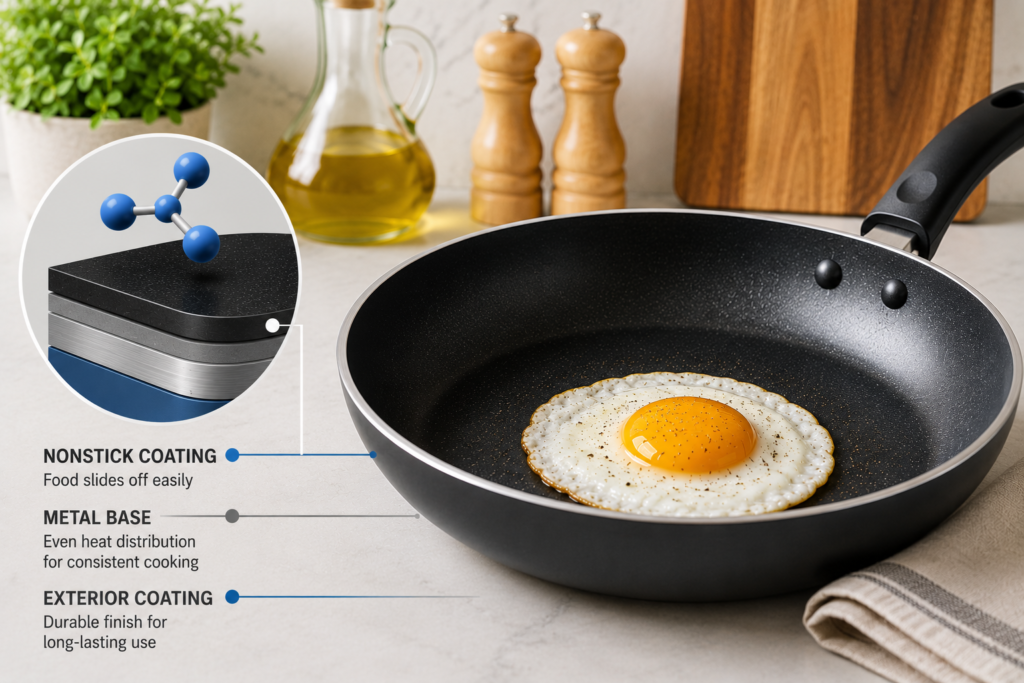
PTFE coating is typically sprayed onto an aluminum or stainless steel base and cured at high heat, creating a thin, durable, but ultimately non-permanent layer that sits on top of the pan’s actual metal structure.
What “Ceramic” Actually Means
The Sol-Gel Coating Process
Ceramic nonstick cookware uses a coating derived from silica (essentially a purified form of sand) applied through a process called sol-gel, creating a glass-like, nonstick surface without PTFE or traditional PFAS compounds. This is genuinely a different chemical technology from traditional nonstick, not simply a marketing rebrand of the same coating.
Why It’s Marketed as “Non-Toxic”
Because ceramic coatings avoid PTFE and the PFAS compounds associated with traditional nonstick manufacturing, they’re frequently marketed toward buyers specifically seeking PFAS-free cookware, an increasingly common priority given growing awareness and state-level regulation of these chemicals in cookware.
Ceramic vs Nonstick: Key Differences
| Feature | Traditional Nonstick (PTFE) | Ceramic (Sol-Gel) |
| Coating material | PTFE (a PFAS compound) | Silica-based, PFAS-free |
| Initial food release | Excellent | Excellent |
| Longevity of performance | Moderate (several years) | Often shorter, varies significantly by brand |
| Heat tolerance | Lower (typically under 500°F) | Generally higher, some rated to 600°F+ |
| Metal utensil tolerance | Poor, scratches easily | Varies by brand, some marketed as metal-safe |
| Oven safety | Limited | Often better, check specific product rating |
| PFAS content | Contains PFAS (PTFE) | PFAS-free |
| Price range | Generally lower to moderate | Moderate to premium |
| Dishwasher safe | Rarely recommended | Varies by brand, check specific care instructions |
Cooking Performance Compared
Food Release
Both coating types offer excellent initial food release when new, allowing eggs, pancakes, and delicate proteins to slide off the surface with minimal oil. The real difference shows up over time rather than on day one, since how each coating holds up to months and years of regular use varies more than their fresh-out-of-the-box performance.
Heat Tolerance
Ceramic coatings generally tolerate higher cooking and oven temperatures than traditional PTFE nonstick, with some ceramic products rated safe up to 600°F or higher, compared to PTFE’s typical recommended ceiling closer to 450–500°F, above which the coating can begin to degrade more rapidly.
Longevity
This is one of the more debated points between the two technologies. Traditional PTFE nonstick, when used properly (moderate heat, no metal utensils, hand washing), often maintains solid performance for several years. Ceramic coatings can sometimes show reduced nonstick performance somewhat sooner in their lifespan, though this varies considerably by specific brand and coating formulation, and some newer ceramic technologies specifically market extended durability and metal-utensil tolerance as key improvements over earlier ceramic products.
Safety and Health Considerations
PFAS and Traditional Nonstick
PTFE-based nonstick coatings have drawn increasing regulatory scrutiny in several states, with places like Minnesota, Colorado, and Maine implementing restrictions on the sale of new cookware containing certain PFAS compounds, on staggered timelines from 2025 through 2026 and beyond. If continuing to use traditional nonstick cookware, avoiding use once the coating becomes visibly scratched, flaking, or significantly worn is a reasonable precaution, since damage to the coating can increase the risk of material leaching into food.
Ceramic’s Appeal as a PFAS-Free Alternative
Ceramic cookware’s silica-based coating avoids PTFE and traditional PFAS compounds entirely, which is precisely why it’s become the go-to recommendation for buyers specifically prioritizing PFAS-free materials while still wanting nonstick convenience, rather than switching entirely to uncoated materials like stainless steel or cast iron.
Neither Option Is “Toxic” Under Normal Use
It’s worth noting that regulatory and health concerns around PTFE primarily relate to manufacturing processes and coating degradation from damage or extreme overheating, rather than suggesting normal, properly maintained nonstick cookware poses an acute daily risk. Ceramic coatings offer genuine peace of mind for those specifically avoiding PFAS, without necessarily meaning traditional nonstick is unsafe when used and maintained as directed.
Durability and Maintenance
Traditional Nonstick Care
PTFE coatings require gentler handling: avoiding metal utensils that can scratch the surface, using low to moderate heat, and generally hand washing rather than relying on dishwasher cycles, which can accelerate coating breakdown over repeated cycles.
Ceramic Care
Ceramic coatings vary more by specific brand regarding their tolerance for metal utensils and dishwasher use, some newer ceramic technologies are specifically marketed as metal-utensil-safe and more scratch-resistant than earlier ceramic products, while others require the same gentle handling as traditional nonstick. Always check the specific manufacturer’s care instructions rather than assuming all ceramic cookware behaves identically.
Neither Coating Lasts Forever
Regardless of which you choose, coated cookware, whether traditional nonstick or ceramic, isn’t a lifetime purchase the way stainless steel or cast iron can be. Both coatings will eventually need replacement as their nonstick performance diminishes with years of regular use, making this an ongoing cost consideration rather than a one-time investment.
Which Is Better for Different Cooking Needs?
Best for Maximum Nonstick Longevity
Well-maintained traditional PTFE nonstick, used at moderate heat with non-metal utensils, has the longest overall track record for sustained nonstick performance over several years of regular use.
Best for High-Heat and Oven Versatility
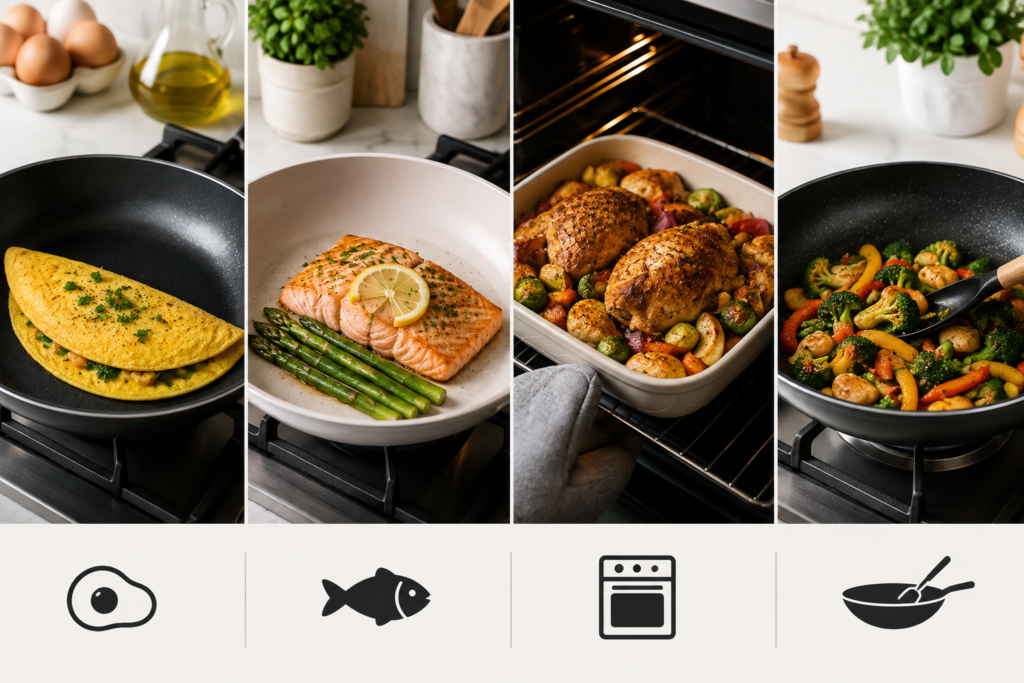
Ceramic coatings generally tolerate higher stovetop and oven temperatures, making them a better fit for recipes requiring higher heat searing or oven-finished dishes than traditional nonstick typically allows.
Best for PFAS-Conscious Buyers
Ceramic cookware is the clear choice for anyone specifically prioritizing PFAS-free materials while still wanting the convenience of a nonstick cooking surface, rather than switching entirely to stainless steel or cast iron.
Best for Metal Utensil Users
This depends heavily on the specific product rather than the coating category broadly, some newer ceramic lines are specifically engineered and marketed for metal utensil compatibility, while both older ceramic products and virtually all traditional PTFE nonstick pans should be used with wood, silicone, or nylon utensils only.
Price Comparison
Traditional nonstick cookware generally spans a wide range from very affordable budget sets to premium options, with a long-established manufacturing history keeping costs relatively accessible across the market. Ceramic cookware tends to sit in a somewhat higher moderate-to-premium range on average, reflecting both the sol-gel manufacturing process and its positioning as a specifically PFAS-free alternative, though budget-friendly ceramic options are increasingly available as the technology has become more widespread.
How to Choose Between Them
Questions to Ask Yourself
- Is avoiding PFAS specifically a top priority for your household? If yes, ceramic is the clear direction.
- Do you regularly cook at higher heat or move dishes from stovetop to oven? Ceramic’s generally higher heat tolerance may serve you better.
- Do you want the longest possible track record of consistent nonstick performance? Traditional PTFE, properly maintained, still has the more established longevity history.
- Are you budget-conscious above other considerations? Traditional nonstick generally offers more accessible entry-level pricing.
- Do you use metal utensils regularly? Check specific product ratings carefully, since tolerance varies significantly within both categories.
Practical Buying Tips
- Always check a specific product’s PFAS status directly, rather than assuming all “nonstick” cookware uses the same coating technology
- Compare maximum recommended cooking and oven temperatures before assuming either coating type will suit high-heat recipes
- Read care instructions carefully regarding metal utensil and dishwasher compatibility, since this varies meaningfully by specific brand and product line, not just coating category
- Consider your realistic replacement timeline, since both nonstick and ceramic coatings will eventually need replacing, and factor this ongoing cost into your decision
- If PFAS avoidance isn’t a specific priority for your household, base your decision primarily on heat tolerance and expected performance longevity instead
Common Mistakes to Avoid
- Assuming “ceramic” and “nonstick” always mean the same thing, when they represent genuinely different coating technologies
- Using metal utensils on cookware not specifically rated for it, accelerating coating wear regardless of category
- Continuing to use visibly damaged coated cookware, increasing the risk of coating material transferring into food
- Exceeding a coating’s recommended maximum temperature, which accelerates degradation in both traditional nonstick and ceramic products
- Choosing based on marketing language alone, rather than checking specific product care instructions and heat ratings
Conclusion
The ceramic vs nonstick cookware decision ultimately comes down to what matters most for your household: if avoiding PFAS specifically is a priority, ceramic is the clear direction, and if you want the most established track record of long-term nonstick performance at accessible pricing, traditional PTFE nonstick, properly maintained, remains a solid, well-understood option. Whichever you choose, check specific product care instructions carefully, respect recommended heat limits, and plan for eventual replacement as a normal part of owning coated cookware, rather than a sign that either technology has let you down.
Frequently Asked Questions
1- Is ceramic cookware actually safer than traditional nonstick?
Ceramic cookware avoids PTFE and traditional PFAS compounds specifically, which appeals to those wanting to avoid those chemicals. Properly maintained traditional nonstick is also generally considered safe under normal use, so “safer” depends largely on how much PFAS avoidance specifically matters to you.
2- Does ceramic cookware last longer than nonstick?
Not necessarily, this varies significantly by specific brand and product quality. Some ceramic coatings show reduced performance sooner than well-maintained PTFE nonstick, while newer ceramic technologies specifically marketed for durability may perform comparably or better.
3- Can I use ceramic cookware in the oven?
Many ceramic-coated pans tolerate higher oven temperatures than traditional nonstick, often up to 600°F or more, though it’s important to check the specific product’s rated maximum temperature rather than assuming this applies universally.
4- Is PFAS-free cookware the same as ceramic cookware?
Ceramic is one common PFAS-free coating option, but not the only one, uncoated materials like stainless steel and cast iron are also inherently PFAS-free, simply without the nonstick convenience ceramic coatings provide.
5- Why does my nonstick or ceramic pan lose its nonstick quality over time?
Both coating types gradually degrade through normal heat cycling, wear, and use, regardless of how carefully you maintain them, meaning eventual replacement is expected rather than a sign of product failure.
6- Can I use metal utensils on ceramic cookware?
This depends entirely on the specific product, some newer ceramic lines are specifically engineered and marketed as metal-utensil-safe, while others require the same gentle, non-metal utensil handling as traditional nonstick.
7- Is one coating type more expensive than the other?
Ceramic cookware tends to sit in a somewhat higher average price range than traditional nonstick, though both categories span from budget-friendly to premium options, and pricing varies considerably by specific brand.