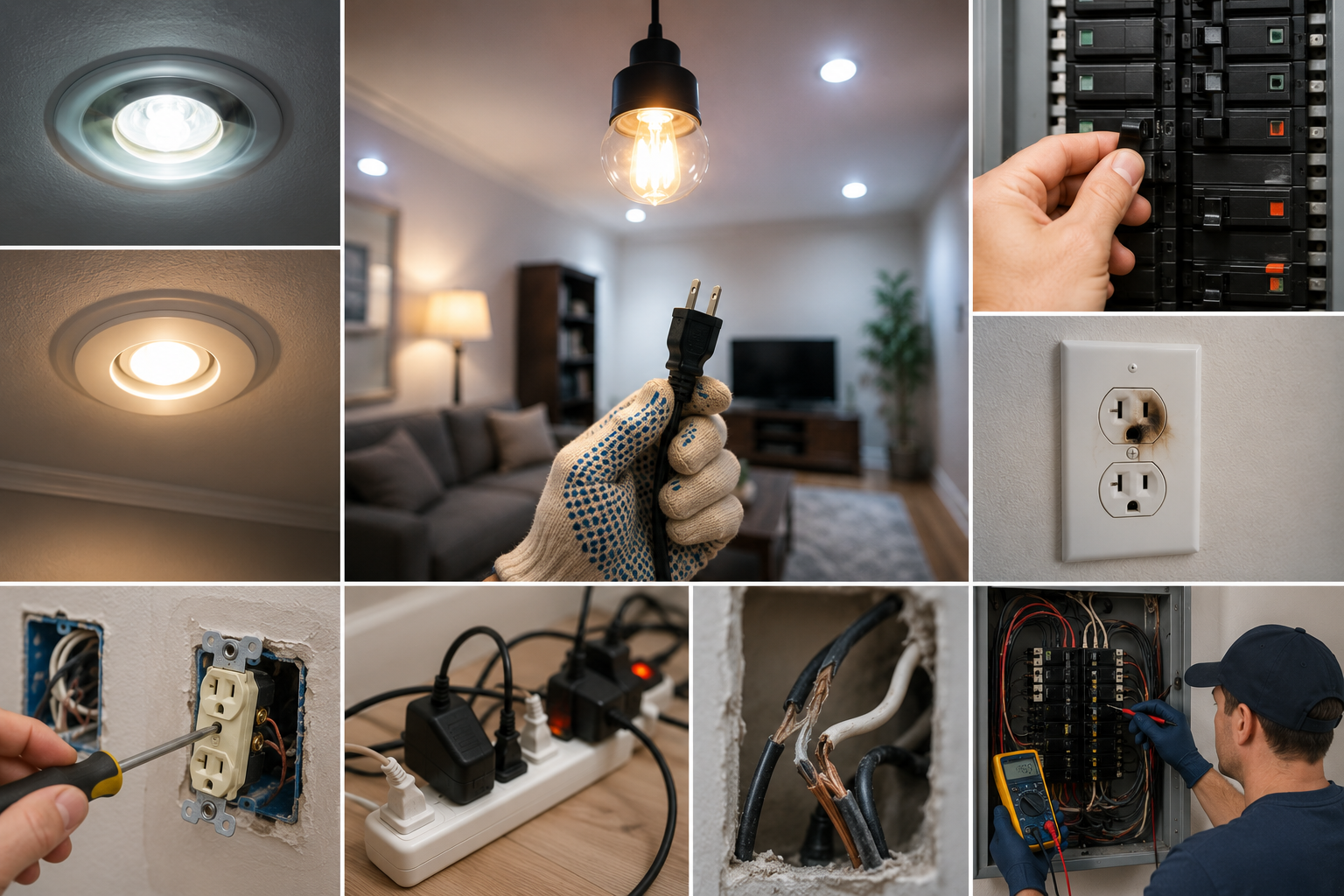
Flickering lights, a breaker that won’t stay reset, or an outlet that suddenly stops working- these everyday electrical annoyances are often trying to tell you something important. Most common household electrical problems stem from aging equipment, improper installations, outdated panels, or overloaded circuits, and recognizing the pattern helps you know whether it’s a simple fix or a genuine safety concern.
This guide covers the most common electrical problems homeowners encounter, their typical causes, practical troubleshooting steps, and clear guidance on when to call a licensed electrician. We’ll also cover flickering lights, tripped breakers, and outlet issues for American homeowners wanting to keep their homes safe and functional.
By the end, you’ll know what’s normal, what’s not, and exactly when a problem needs professional attention rather than a quick DIY fix.
What Causes Most Electrical Problems?
Most common electrical problems trace back to a handful of root causes: overloaded circuits, loose connections or wiring, aging equipment, faulty breakers, or high-demand appliances drawing more power than a circuit can safely handle. Occasional, minor flickering or an isolated tripped breaker is often harmless, but frequent or worsening symptoms typically signal something that needs professional attention.
Understanding which category your specific issue falls into is the first step toward deciding whether it’s safe to troubleshoot yourself or time to call a licensed electrician.
Flickering or Dimming Lights
Flickering lights are one of the most common electrical complaints homeowners report, and the cause can range from completely harmless to a genuine warning sign.
Loose Bulbs or Fixtures
A loose bulb or a poorly seated connection in the light fixture is often the simplest and most common cause of flickering. Tightening the bulb, or checking that the fixture itself is securely mounted, frequently resolves the issue without further investigation.
Bulb Type and Age
LED and fluorescent bulbs are more prone to brief flickering when they first turn on as they reach full brightness. If flickering continues well beyond startup, replacing the bulb is a reasonable next step before assuming a wiring issue.
Flickering When Appliances Turn On
If lights dim or flicker specifically when large appliances like air conditioners, space heaters, or refrigerators start up, this can indicate your electrical panel is struggling to handle current demand, sometimes signaling it’s time for a panel upgrade.
Loose Wiring
If a bulb is properly seated and the flickering persists, loose wiring connections may be the culprit. This is considered one of the leading causes of electrical fires in homes, making it worth having a professional inspect the issue promptly rather than continuing to live with it.
Circuit Breakers That Keep Tripping
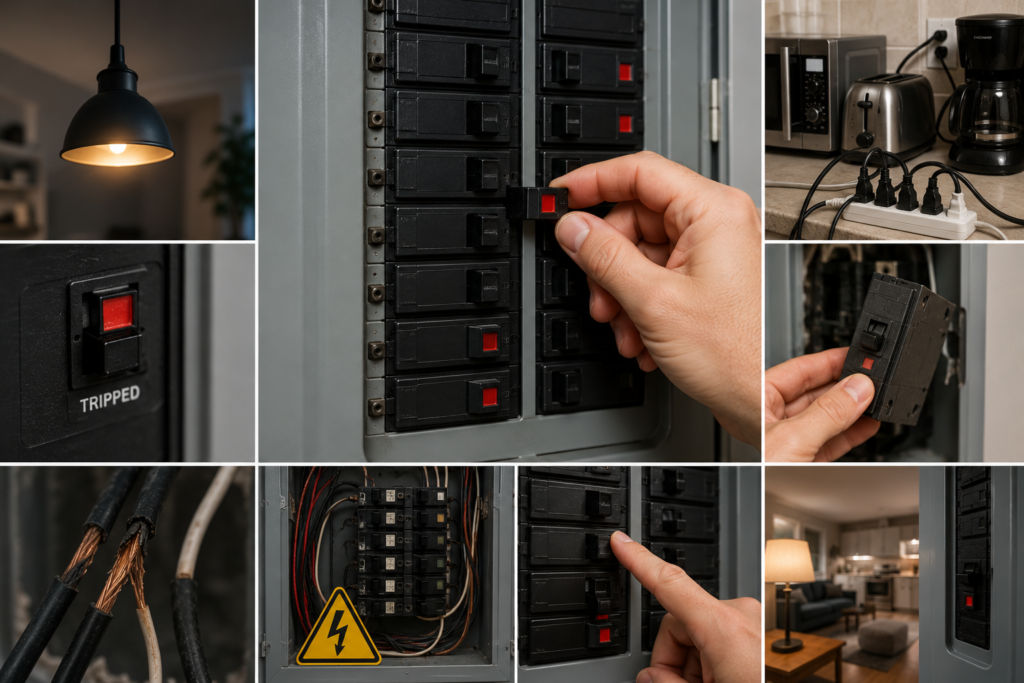
A breaker tripping occasionally under heavy load is normal and by design, but frequent or unexplained tripping deserves closer attention.
Overloaded Circuits
Modern homes often demand more electrical power than older wiring systems were designed to handle, and running multiple high-wattage appliances on the same circuit is one of the most common causes of tripped breakers. Distributing appliances across multiple circuits, rather than clustering them all on one, often resolves this issue.
Short Circuits
A short circuit occurs when a hot wire contacts a neutral wire, creating a dangerous surge that trips the breaker immediately as a protective measure. This is a more serious issue than a simple overload and typically requires professional diagnosis.
A Breaker That Won’t Stay Reset
If a breaker trips again immediately after being reset, this often indicates either a worn, damaged breaker mechanism or defective circuit wiring feeding that specific circuit. A breaker that consistently won’t hold after resetting is a clear signal to call an electrician rather than continuing to reset it repeatedly.
Outlets That Stop Working
A single outlet or a group of outlets losing power is a common issue with several possible explanations.
A Tripped GFCI Outlet
In bathrooms, kitchens, garages, and basements, a tripped GFCI outlet can cut power to several downstream outlets on the same circuit as a safety measure. Checking nearby GFCI outlets for a tripped reset button is often the quickest first step when several outlets in one area stop working simultaneously.
Loose or Damaged Wiring
Outlets that intermittently work, or that have stopped working without an obvious cause, can indicate loose wiring connections behind the outlet itself, which generally requires a professional to safely inspect and repair.
Complete Power Loss Without a Tripped Breaker
If power is out in part of your home but no breaker appears tripped, the issue could stem from a tripped GFCI elsewhere on the circuit, a failed outlet, or in some cases a problem further upstream that requires professional troubleshooting to properly diagnose.
Warm or Overheating Outlets and Switches
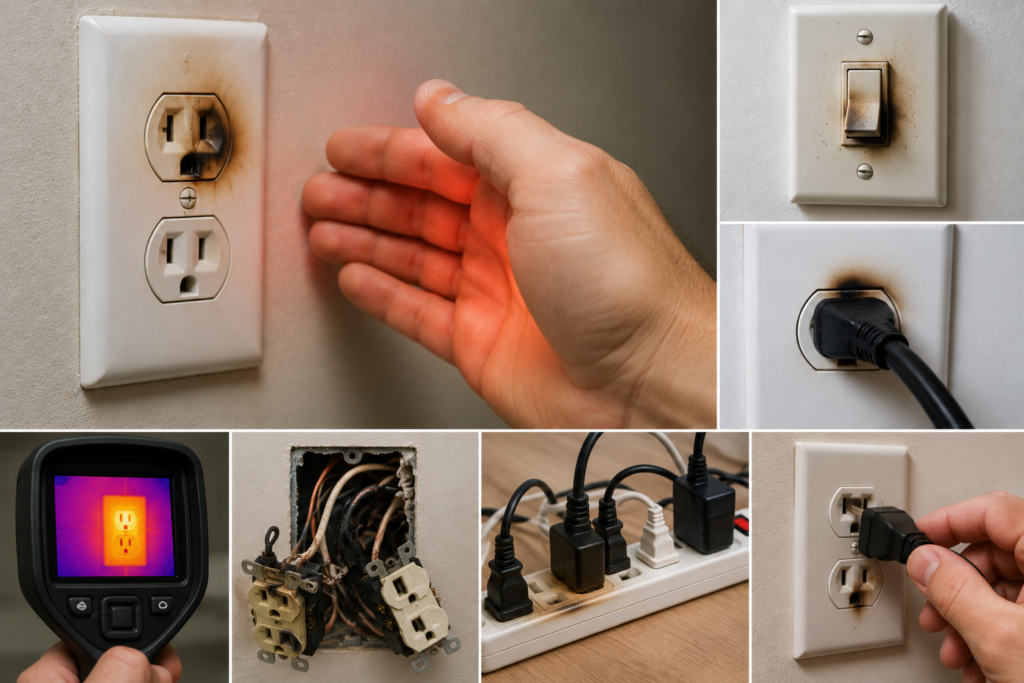
Feeling heat when touching an outlet or switch is never considered normal and shouldn’t be ignored.
Common Causes of Overheating
Loose or damaged wire connections create electrical resistance, and resistance generates heat, which can melt insulation and meaningfully increase fire risk over time. High-demand devices like space heaters, air fryers, or EV charging equipment plugged into outlets not properly rated for that load can also cause overheating.
What to Do If You Notice a Warm Outlet
Unplug any devices from the affected outlet immediately and avoid using it until a licensed electrician can inspect the wiring. This is not a situation where a temporary workaround is appropriate, given the genuine fire risk involved.
Comparing Common Electrical Problems
| Problem | Common Cause | DIY-Friendly? |
| Occasional light flickering | Loose bulb, bulb warming up | Yes |
| Flickering with large appliances | Panel struggling with demand | No, needs assessment |
| Persistent loose-wiring flickering | Loose wiring connections | No |
| Occasional tripped breaker | Circuit overload | Sometimes, redistribute load |
| Breaker won’t stay reset | Faulty breaker or wiring fault | No |
| Multiple outlets lose power | Tripped GFCI nearby | Yes, check GFCI first |
| Warm or hot outlet | Loose connection, overheating | No |
Buzzing or Crackling Sounds
Unusual sounds coming from outlets, switches, or your breaker panel are worth taking seriously, since healthy electrical systems generally operate silently.
A faint hum from certain electronics or dimmer switches can be normal, but buzzing, crackling, or popping sounds coming from outlets or the panel itself often indicate loose connections or arcing, both of which carry genuine fire risk and warrant prompt professional inspection.
Aging Electrical Panels
Many common electrical problems ultimately trace back to an electrical panel that’s no longer adequately sized for a home’s current demands.
Older homes were often wired for a fraction of the electrical load modern households now require, given the number of electronics, appliances, and devices in a typical home today. Signs that a panel upgrade may be needed include frequent breaker trips, flickering when large appliances run, warm panel components, or a panel that’s still using outdated fuse technology rather than modern circuit breakers.
Seasonal Electrical Issues
- Electrical problems sometimes spike during specific seasons, and understanding why can help you anticipate and address issues proactively.
- After winter: Temperature swings, power fluctuations during storms, and settling in the home can loosen wiring connections, contributing to an uptick in tripped breakers and flickering lights once warmer weather arrives.
- During summer heat: Air conditioning units draw significant power, and running them alongside other appliances on shared circuits can increase the likelihood of overloaded circuits and tripped breakers.
- During holiday seasons: Additional lighting displays and decorations plugged into existing circuits can push older wiring systems beyond their comfortable capacity, particularly in homes without updated panels.
When to Attempt a DIY Fix
Certain electrical issues are genuinely safe and appropriate for homeowners to address themselves, provided basic safety precautions are followed.
- Tightening a loose bulb in a flickering fixture
- Resetting a tripped GFCI outlet using the reset button
- Redistributing appliances across different circuits to prevent overload
- Resetting a tripped breaker that trips only occasionally under heavy load
- Replacing an aging or incompatible bulb causing minor flickering
Always turn off power at the breaker before doing any hands-on inspection near outlets or switches, since working on live electrical components significantly increases the risk of shock or arc flash injury.
When to Call a Licensed Electrician
Other situations genuinely require professional expertise, both for safety and for a lasting resolution.
- Loose or visibly damaged wiring: This should never be a DIY repair, given both the complexity and the fire risk involved.
- A breaker that won’t stay reset: This typically indicates a deeper wiring fault or a failing breaker that needs professional diagnosis.
- Warm outlets or switches: Overheating components present a genuine fire hazard requiring prompt professional inspection.
- Persistent flickering tied to appliance use: This often signals your panel can’t adequately support your home’s current electrical demands.
- Buzzing, crackling, or burning smells: These are all signs of a serious, active electrical hazard requiring immediate professional attention.
- Any issue that recurs after a DIY fix: If a problem returns despite your troubleshooting efforts, an underlying cause likely remains unaddressed and needs expert diagnosis.
Practical Buying Advice for Electrical Upgrades
If your troubleshooting reveals a need for upgrades, a few considerations help you make informed decisions.
- Get a professional panel assessment: Before assuming you need a full panel upgrade, have an electrician assess your actual capacity needs and current wiring condition.
- Prioritize safety devices during upgrades: If you’re already having electrical work done, it’s often cost-effective to add GFCI or AFCI protection to relevant circuits at the same time.
- Choose licensed, insured electricians: Verify credentials before hiring, since electrical work performed incorrectly creates genuine safety risks that outweigh any potential cost savings from unlicensed work.
- Ask about warranty coverage: Reputable electrical contractors typically offer warranties on their work, providing peace of mind for significant panel or wiring upgrades.
Conclusion
Common household electrical problems, from flickering lights to tripped breakers and warm outlets, almost always trace back to a specific, identifiable cause, whether that’s a loose bulb, an overloaded circuit, or aging wiring that’s reached the end of its safe service life. Learning to recognize which symptoms are minor and DIY-friendly versus which ones signal a genuine safety concern helps you respond appropriately rather than either overreacting or ignoring a real hazard. When in doubt, particularly for warm outlets, persistent breaker issues, or loose wiring, calling a licensed electrician remains the safest and most reliable path to resolving the problem for good.
Frequently Asked Questions
1- Is it normal for lights to flicker occasionally?
Occasional, brief flickering, particularly from LED bulbs warming up, is generally normal. Frequent or worsening flickering, especially tied to appliance use, warrants further investigation.
2- Why does my breaker trip every time I use my microwave and toaster together?
This typically indicates circuit overload, where the combined power draw exceeds what that specific circuit is designed to handle. Distributing appliances across different circuits often resolves this.
3- Is it safe to keep resetting a breaker that keeps tripping?
No, a breaker that trips repeatedly, especially if it won’t stay reset, indicates an underlying issue that needs professional diagnosis rather than continued resetting.
4- Why did several outlets in my bathroom stop working at once?
This often indicates a tripped GFCI outlet somewhere on that circuit, since GFCIs can cut power to downstream outlets as a safety measure.
5- Should I be worried about a warm outlet?
Yes, warm or hot outlets are never normal and can indicate loose connections or overheating that presents a genuine fire risk, warranting prompt professional inspection.
6- How do I know if my home needs a panel upgrade?
Frequent breaker trips, flickering when large appliances run, and an outdated fuse-based system are all signs it may be time for a professional panel assessment.