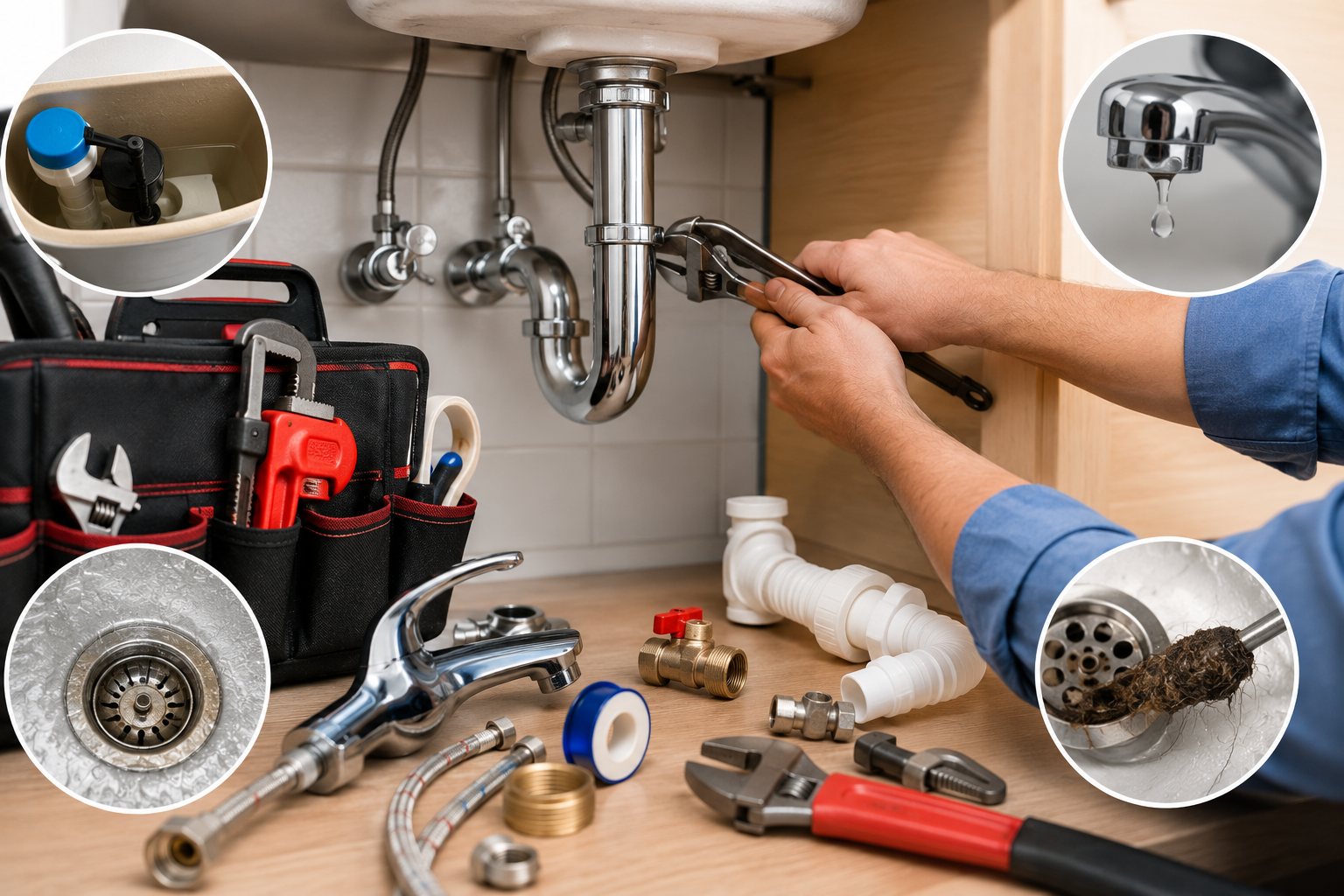
Most household plumbing headaches aren’t actually complicated once you know exactly what’s causing them. A running toilet, a slow drain, a dripping faucet, these are among the most common plumbing problems American homeowners encounter, and the majority have a straightforward, genuinely DIY-friendly fix that doesn’t require calling a professional or spending a fortune on parts.
This guide walks through the most frequent plumbing problems homeowners face, step-by-step instructions for fixing each one yourself, and clear guidance on which situations are safe to tackle alone versus when it’s time to bring in a licensed plumber.
Common Household Plumbing Problems
The vast majority of everyday plumbing problems, running toilets, dripping faucets, slow or clogged drains, low water pressure at a single fixture, can be diagnosed and fixed by a homeowner with basic tools and around thirty minutes to an hour of focused effort. The key is identifying the actual root cause before attempting a fix, rather than guessing, since the wrong fix wastes both time and money. Problems involving your main sewer line, gas connections, or significant leaks behind walls or under slabs genuinely require professional expertise and should be left to a licensed plumber.
Problem 1: Running Toilet
What’s Actually Happening
A toilet that continues running after flushing, or periodically refills on its own without being flushed, is almost always caused by one of two components inside the tank: a flapper valve that isn’t sealing properly against the flush valve seat, or a fill valve that isn’t shutting off water at the correct level.
How to Fix a Running Toilet Step by Step
- Remove the toilet tank lid and observe what’s happening while the toilet runs.
- Check if the flapper is sealing fully against the valve seat at the bottom of the tank, if it’s warped, cracked, or not sitting flush, this is likely your issue.
- If the flapper looks fine, check the fill valve, water should stop rising once it reaches the marked fill line; if it continues past this point, the fill valve likely needs adjustment or replacement.
- Replace a faulty flapper by disconnecting it from its mounting pegs and the flush chain, then installing a matching replacement (bring your old flapper to the store to ensure a proper match).
- If replacing the fill valve, shut off the toilet’s individual water supply valve first, then follow the specific replacement kit’s instructions.
Tools and Parts Needed
A replacement flapper or fill valve kit (both widely available and inexpensive), an adjustable wrench if needed for the fill valve, and a towel for any incidental water spillage.
Problem 2: Dripping Faucet
What’s Actually Happening
A persistent drip almost always comes down to a worn internal component, a rubber washer, O-ring, or cartridge, that no longer creates a complete seal when the faucet is turned off, allowing water to slowly leak through.
How to Fix a Leaky Faucet Step by Step
- Shut off the water supply to that specific fixture using the shutoff valve typically located beneath the sink.
- Plug the sink drain to avoid losing small parts, then remove the faucet handle (usually secured with a small screw, sometimes hidden under a decorative cap).
- Identify your faucet type, compression (older, separate hot/cold handles), cartridge, ball, or ceramic disc, since the internal repair differs by type.
- Remove the worn washer, O-ring, or cartridge, and replace it with a matching new part.
- Reassemble the faucet in reverse order, then turn the water supply back on and test for continued dripping.
Identifying Your Faucet Type
| Faucet Type | Common Features | Typical Repair |
| Compression | Separate hot/cold handles, older style | Replace rubber washer |
| Cartridge | Single or double handle, common in modern homes | Replace cartridge |
| Ball | Single handle, ball-shaped mechanism inside | Replace ball and seals |
| Ceramic disc | Single handle, smooth operation | Replace disc cylinder |
Problem 3: Clogged or Slow Drains
What’s Actually Happening
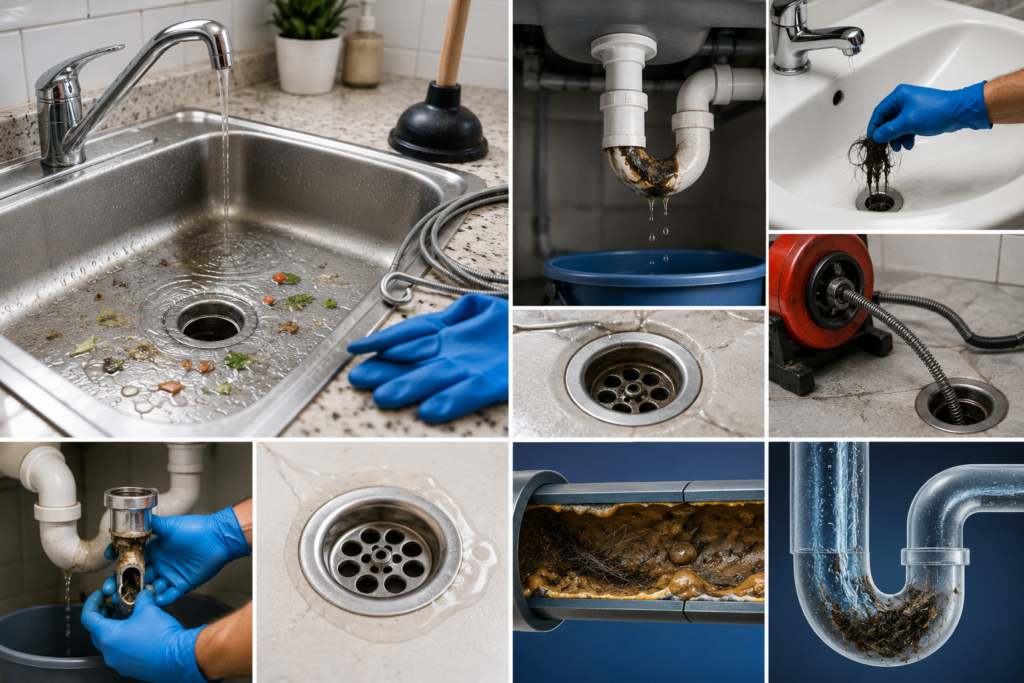
Sinks, tubs, and showers commonly slow down or clog completely from accumulated hair, soap scum, grease, or food debris building up gradually within the drain line, often at the trap or just beyond it.
How to Unclog a Drain Step by Step
- Start with a plunger, for sinks, use a cup plunger; for toilets, use a flange plunger specifically designed for that shape. Create a tight seal and plunge vigorously several times.
- If plunging doesn’t resolve it, try a drain snake (auger), feeding it into the drain until you feel resistance, then rotating to catch and pull out the blockage.
- For bathroom sink or tub clogs specifically, check for hair accumulated at or near the drain stopper itself, often a simple, quick fix once you remove and clean the stopper assembly.
- For kitchen sink clogs, check under the sink for a removable P-trap section, which can be unscrewed and cleared of trapped debris directly (place a bucket underneath first to catch residual water).
Why to Avoid Chemical Drain Cleaners as a First Response
Chemical drain cleaners can be harsh on pipes, particularly older galvanized or PVC plumbing, and they aren’t always effective against more substantial blockages. They can also make the problem more hazardous for a plumber to address later if the clog persists and professional help becomes necessary.
Problem 4: Low Water Pressure at a Single Fixture
What’s Actually Happening
When low pressure affects just one faucet or showerhead rather than your entire home, the cause is almost always local to that specific fixture, typically mineral buildup within the aerator or showerhead itself, particularly common in areas with hard water.
How to Fix Low Pressure at a Fixture
- Unscrew the faucet aerator (the small mesh screen at the tip of the faucet) or showerhead.
- Soak the component in a vinegar solution for several hours to dissolve mineral deposits, then scrub gently with an old toothbrush to remove any remaining buildup.
- Rinse thoroughly and reattach, then test water flow.
- If buildup is severe or the component is old and worn, replacing it entirely is often more cost-effective than repeated cleaning.
Problem 5: Garbage Disposal Jams
What’s Actually Happening
Garbage disposals commonly jam when fibrous foods, bones, or foreign objects get lodged against the internal grinding components, triggering the unit’s safety shutoff or simply preventing it from spinning.
How to Fix a Jammed Disposal
- Turn off power to the disposal at the switch and, if possible, unplug it or shut off the breaker for safety.
- Use the disposal’s manual reset button (usually a small red button on the underside of the unit) if it’s tripped.
- Insert an Allen wrench into the manual turning socket (usually located at the bottom center of the unit) and rotate back and forth to free the jam.
- Never put your hand into the disposal, even with power off, use tongs or pliers to remove any visible obstruction from above.
- Restore power and test the unit briefly before running water through it normally.
Problem 6: Water Hammer (Banging Pipes)
What’s Actually Happening
Water hammer refers to the loud banging or knocking sound pipes make when water flow is suddenly stopped, often when a faucet or valve closes quickly, causing a pressure shockwave through the pipes. This is commonly caused by air chambers (designed to cushion this shock) becoming waterlogged over time.
How to Address Water Hammer
- Shut off your home’s main water supply and drain the plumbing system by opening all faucets, starting with the highest point in your home and working down, to allow air to refill the affected air chambers.
- Turn the main water supply back on and check whether the banging has stopped.
- If the problem persists or recurs frequently, installing water hammer arrestors at problem fixtures can provide a more permanent solution.
Problem 7: Sump Pump Failure
What’s Actually Happening
Sump pumps, common in basements prone to water intrusion, can fail due to a stuck float switch, a clogged intake, power loss, or simply reaching the end of the unit’s service life.
How to Troubleshoot a Sump Pump
- Confirm the unit is receiving power, check the outlet, breaker, and that the pump is properly plugged in.
- Check the float switch for obstructions preventing it from rising and triggering the pump.
- Clear any debris blocking the pump’s intake screen.
- If the pump runs but doesn’t effectively remove water, or makes unusual grinding noises, the unit may need replacement rather than repair.
Problem 8: Toilet Won’t Flush Properly (Weak Flush)
What’s Actually Happening
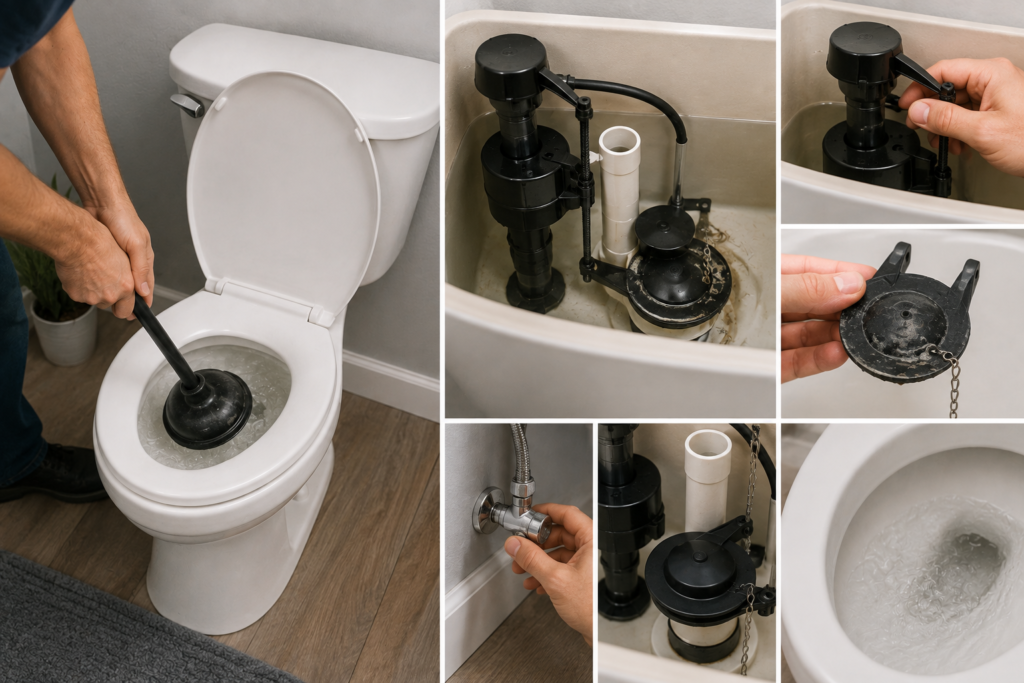
A weak or incomplete flush is often caused by low water level in the tank, a partially clogged rim (where small holes distribute water around the bowl), or a partial blockage further down the drain line.
How to Fix a Weak Flush
- Check the water level in the tank, it should sit at the marked fill line; if too low, adjust the fill valve accordingly.
- Clean the rim holes under the toilet bowl’s rim using a small wire or old toothbrush, since mineral buildup here can restrict water flow during flushing.
- If these steps don’t resolve it, a partial clog further in the drain line may require a toilet-specific auger to address.
Common Plumbing Problems and Fixes Summary Table
| Problem | Common Cause | DIY Fix | Time Needed |
| Running toilet | Faulty flapper or fill valve | Replace the specific component | 15–30 minutes |
| Dripping faucet | Worn washer, O-ring, or cartridge | Replace internal part | 30–60 minutes |
| Clogged drain | Hair, soap scum, grease buildup | Plunge, snake, or clean P-trap | 15–45 minutes |
| Low pressure at one fixture | Mineral buildup in aerator/showerhead | Clean or replace component | 15–20 minutes |
| Jammed garbage disposal | Foreign object or fibrous debris | Reset and manually free jam | 10–20 minutes |
| Water hammer | Waterlogged air chambers | Drain and refill system | 20–30 minutes |
| Sump pump failure | Power issue, stuck float, clogged intake | Check power, clear obstructions | 15–30 minutes |
| Weak toilet flush | Low water level or clogged rim holes | Adjust fill valve, clean rim | 15–20 minutes |
Essential Tools for Common Plumbing Fixes
- Plunger (separate cup and flange versions for sinks/tubs versus toilets)
- Drain snake (auger) for clogs beyond a plunger’s reach
- Adjustable wrench for various nuts, fittings, and connections
- Allen wrench set (often included with garbage disposals for manual jam-clearing)
- Plumber’s tape (Teflon tape) for sealing threaded connections
- Bucket and towels for containing water during any repair
When These Problems Signal a Bigger Issue
Recurring Clogs Despite Repeated Fixes
If the same drain clogs repeatedly despite regular clearing, this often points to a more significant issue further down the line, tree root intrusion, a partial pipe collapse, or a larger blockage, that requires professional camera inspection and equipment to properly diagnose and resolve.
Multiple Fixtures Affected Simultaneously
Low pressure or drainage issues affecting several fixtures at once, rather than a single, isolated one, generally indicate a broader system issue rather than something localized and DIY-fixable.
Water Damage or Unusual Smells
Any sign of water damage, staining, warping, or persistent musty smells near a plumbing fixture suggests a hidden leak that needs professional investigation, since the visible symptom often doesn’t reveal the full extent of the underlying problem.
Common Mistakes to Avoid
- Reaching for chemical drain cleaner before trying mechanical methods, risking pipe damage without necessarily solving a substantial clog
- Putting your hand into a garbage disposal, even with the power off, always use tools to remove obstructions
- Ignoring a slow drain until it fully clogs, when early attention often prevents the more stubborn blockage from developing
- Skipping the water shutoff step before faucet repairs, leading to unnecessary water spillage and a messier repair process
- Assuming every problem is a simple fix, without recognizing signs that point to a larger, professional-level issue
Conclusion
The majority of common plumbing problems homeowners encounter, running toilets, dripping faucets, clogged drains, and minor pressure issues, are genuinely manageable with basic tools, a bit of patience, and the right step-by-step approach. Taking the time to correctly diagnose the actual cause before attempting a fix saves both time and money, while recognizing the signs of a larger, recurring, or hidden issue helps you know exactly when it’s time to bring in a licensed plumber instead. With this practical troubleshooting knowledge in hand, you’ll handle the majority of everyday plumbing surprises with genuine confidence rather than immediate panic.
Frequently Asked Questions
1- How do I fix a running toilet myself?
Check the flapper valve first, replacing it if it’s not sealing properly, and if that doesn’t resolve the issue, check and adjust or replace the fill valve. Both repairs use widely available, inexpensive replacement kits.
2- What’s the best way to unclog a drain without chemicals?
Start with a plunger, then move to a drain snake if plunging doesn’t clear the blockage. For sink clogs specifically, checking and cleaning the P-trap directly often resolves stubborn clogs mechanical tools alone can’t reach.
3- Why does my faucet keep dripping after I tighten it?
A persistent drip is almost always caused by a worn internal component, a washer, O-ring, or cartridge, that needs replacement rather than simply tightening the handle further.
4- What should I do if my garbage disposal jams?
Turn off power first, then use the manual reset button and an Allen wrench in the unit’s turning socket to free the jam, never reaching into the disposal by hand even with power off.
5- Is water hammer (banging pipes) dangerous?
It’s not typically dangerous in the short term, but the pressure shockwaves can gradually stress pipe joints and connections over time, making it worth addressing rather than ignoring if it happens frequently.
6- When should I stop trying to fix a plumbing problem myself and call a plumber?
If a problem recurs despite repeated fixes, affects multiple fixtures simultaneously, or shows signs of hidden water damage, these generally indicate a larger issue that requires professional diagnostic tools and expertise.
7- How do I know if my sump pump needs replacing rather than repairing?
If the pump runs but doesn’t effectively remove water, makes unusual grinding noises, or has failed despite confirming power and clearing obstructions, replacement is often more reliable and cost-effective than continued troubleshooting.