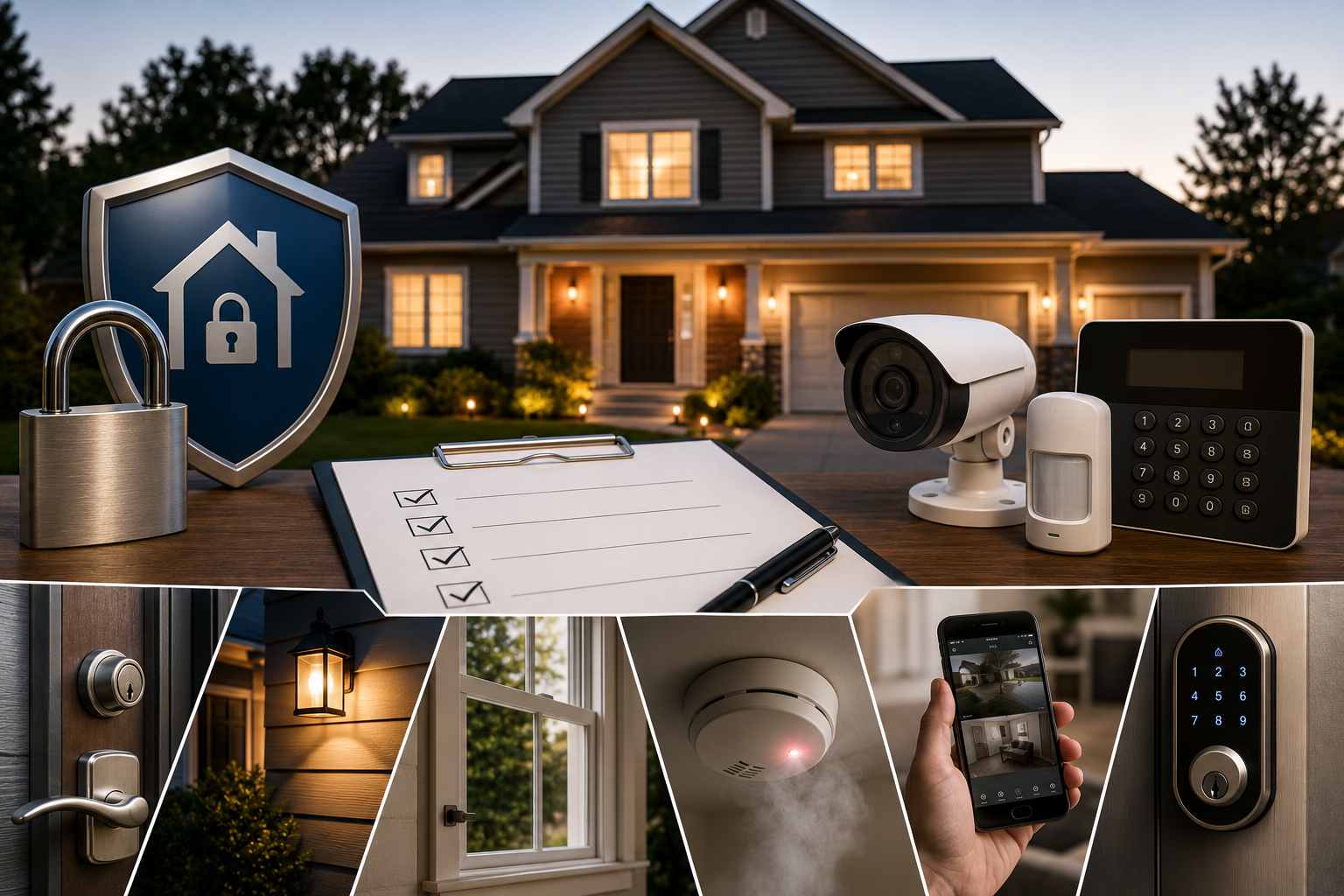
Home security isn’t one big project, it’s a series of small, specific habits and upgrades that work together. This checklist breaks the whole thing down into manageable categories, from entry points and lighting to vacation prep and fire safety, so you can work through it room by room rather than feeling overwhelmed by the whole task at once.
This guide covers a complete home security checklist organized by category, including entry points, lighting, alarms, fire safety, and vacation preparation. We’ll also cover smoke detector testing, neighborhood watch programs, and practical home security advice for American homeowners wanting a genuinely thorough, actionable plan.
By the end, you’ll have a checklist you can actually work through this weekend, not just a list of vague suggestions.
What Belongs on Every Home Security Checklist?
A genuinely complete checklist covers five core categories: securing entry points, improving exterior lighting, adding alarms and monitoring, maintaining fire and carbon monoxide safety, and preparing your home properly before extended absences. Most burglars are opportunists looking for the path of least resistance, so addressing these categories systematically closes the gaps they’re actively looking for.
Work through each section below at your own pace, treating this as an ongoing routine rather than a single one-time project.
Category One: Locking Down Entry Points
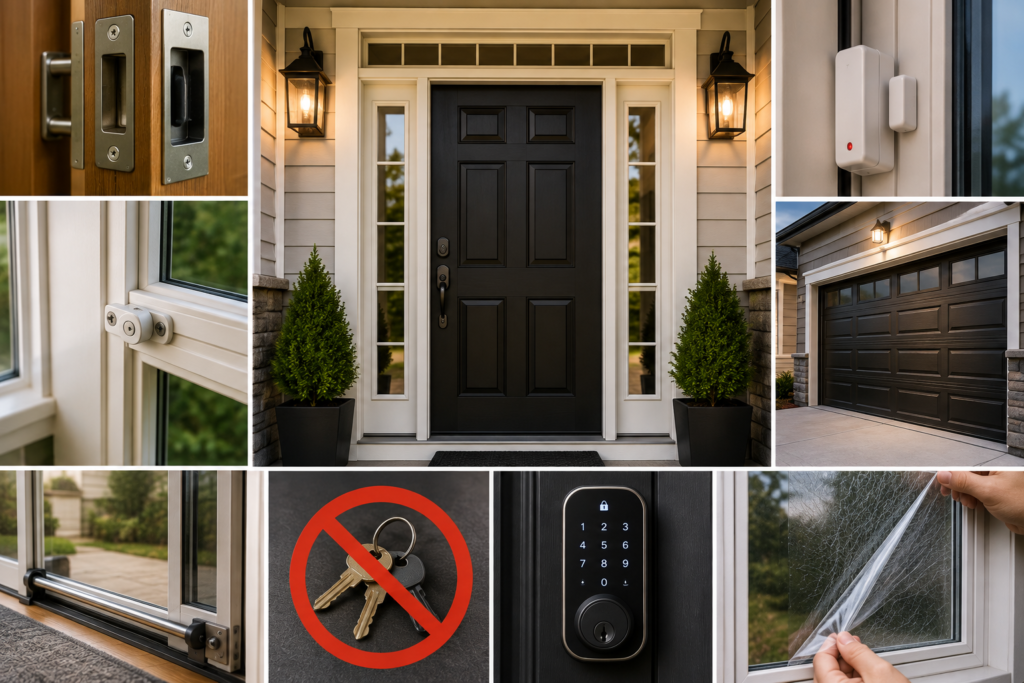
Doors and windows remain the most common way intruders gain access, making this the highest-priority category on any security checklist.
Entry point checklist:
- Lock all doors and windows every time you leave, even for short errands
- Reinforce door frames and strike plates with longer screws that reach into structural framing
- Upgrade weak flip-style window locks to sturdier turnbuckle locks
- Add a security bar, rod, or upgraded lock to sliding glass doors
- Install door and window sensors that alert you if opened while armed
- Keep your garage door closed and locked, including any interior door connecting the garage to your home
- Eliminate hidden spare keys entirely, switching to a keypad or smart lock instead
- Consider security window film on ground-floor windows and sliding doors
Category Two: Exterior Lighting That Actually Deters
Dark entry points and unlit yards give intruders cover, making adequate lighting one of the most cost-effective security upgrades available.
Lighting checklist:
- Install motion-activated lights at all entry points, including side and back doors
- Add lighting to dark corners, side yards, and any concealed approach to your home
- Use smart bulbs or timers to simulate occupancy with randomized on-off patterns when you’re away
- Trim landscaping that obscures light from reaching entry points or windows
- Consider pathway lighting to improve visibility and reduce hiding spots along walkways
A well-lit neighborhood benefits everyone, not just your own property, since burglars are generally more inclined to avoid areas that are consistently well-lit at night.
Category Three: Alarms, Sensors, and Cameras
Physical locks slow down an intruder, but alarms and cameras add detection and deterrence on top of that physical barrier.
Door and Window Sensors
Contact sensors are simple, affordable, and genuinely effective, triggering an alert the moment a monitored door or window opens while your system is armed. This gives you at least a head start to respond, whether that means checking a camera feed or contacting authorities.
Motion Detectors
Interior motion sensors add a second layer of detection beyond entry points alone, useful for catching movement in hallways or main living areas if an intruder does get past your first line of defense.
Security Cameras
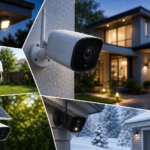
Convicted burglars have repeatedly reported avoiding homes with visible video surveillance, making cameras one of the more effective deterrents available, separate from their obvious value in documenting an incident after the fact. Position cameras at your front door, back entry, and any secondary entry points like a side door or garage.
Audible Alarms
An alarm’s loud, sudden noise draws unwanted attention to an intruder, often prompting them to flee before completing a break-in. Alarms are typically paired with a triggering device like a door sensor, motion detector, or camera rather than functioning as a standalone system.
Comparing Core Security Devices
| Device | Primary Function | Best Placement |
| Door/window sensors | Detects unauthorized opening | All entry points |
| Motion detectors | Detects interior movement | Hallways, main living areas |
| Security cameras | Deterrence and documentation | Front door, back entry, garage |
| Audible alarms | Startles intruder, draws attention | Paired with sensors/motion detectors |
| Smart lighting | Simulates occupancy, deters | Entry points, timed for absences |
Category Four: Fire and Carbon Monoxide Safety
Home security checklists often focus exclusively on burglary, but fire and carbon monoxide safety deserve equal attention as part of a genuinely complete plan.
Fire and CO safety checklist:
- Test smoke detectors monthly, using a battery tester rather than waiting for a chirp
- Replace smoke detector batteries annually, even if they haven’t started chirping
- Replace smoke detectors entirely after about 10 years, since sensor performance degrades with age
- Install and test carbon monoxide detectors monthly as well, since more than 150 people die annually from non-fire-related CO poisoning
- Keep a fire extinguisher accessible and check its expiration date periodically
- Practice a family emergency escape plan once or twice a year
Three out of five house fire deaths occur in homes without working smoke detectors, making this simple monthly test one of the highest-value habits on this entire checklist.
Category Five: Preparing Your Home Before Vacation
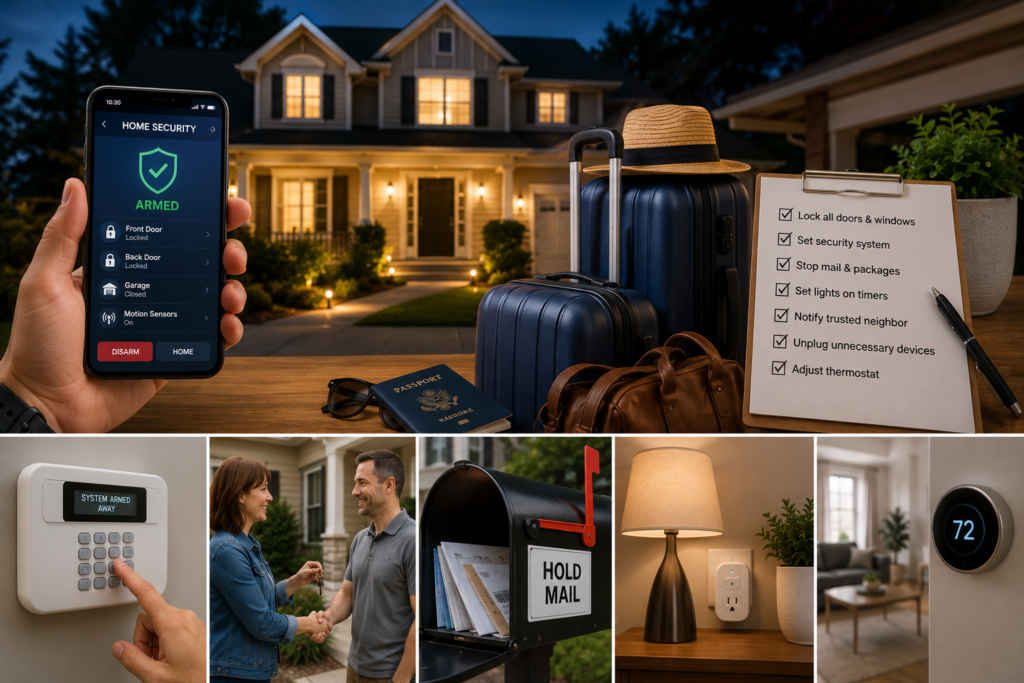
Extended absences require a more thorough version of your everyday security routine, since an unoccupied home has no one to notice or respond to problems in real time.
Before You Leave
Vacation prep checklist:
- Stop mail and package delivery, or arrange for a trusted neighbor to collect them regularly
- Pause newspaper delivery if applicable, since a pile of papers signals an unoccupied home
- Set timers or smart lighting to simulate normal occupancy patterns
- Ensure all doors, windows, and the garage are locked and secure
- Test your security system and confirm cameras and sensors are functioning properly
- Notify a trusted neighbor or join a neighborhood watch program so someone is watching your property
- Avoid posting real-time travel updates or location tags on social media
Fire and Utility Safety Before Departure
- Double-check smoke and CO detector batteries specifically before an extended absence
- Unplug small appliances and confirm the stove and oven are fully off
- In winter, keep the thermostat at a minimum of around 55 degrees Fahrenheit to prevent frozen pipes, and consider leaving a faucet slightly dripping
- Turn off inside valves for outdoor spigots and drain garden hoses before cold weather arrives
- Have a plan and emergency contact ready in case your security system detects an issue while you’re away
Practical Tidying Before You Go
- Clean out the refrigerator to prevent spoilage and pest issues during a longer trip
- Tidy the home generally, but avoid making it look unnaturally spotless, which can itself signal an empty house to anyone peering in
- Secure outdoor furniture and tools that could be used to gain entry or cause damage during severe weather
Category Six: Community and Neighborhood Habits
Individual home security works even better when paired with broader neighborhood awareness and cooperation.
Community security checklist:
- Join or start a neighborhood watch program in your area
- Introduce yourself to immediate neighbors so you can watch out for each other’s homes
- Share your travel plans with a trusted neighbor rather than broadcasting them publicly
- Report suspicious activity in your neighborhood promptly rather than assuming someone else will
- Advocate for well-maintained street lighting throughout your neighborhood, which benefits everyone’s security collectively
Category Seven: Protecting Valuables
Beyond keeping intruders out entirely, protecting what’s inside your home adds a meaningful additional layer of security.
- Store cash, jewelry, and important documents in a secured, ideally fireproof and bolted-down safe
- Avoid displaying valuable items, like expensive electronics or jewelry, visibly through windows
- Keep an updated inventory of valuables with photos, useful for insurance claims if the worst does happen
- Confirm your homeowner’s insurance policy adequately covers the value of items like jewelry, which often carry lower default coverage sublimits than you might expect
A Simple Monthly and Seasonal Security Routine
Rather than treating security as a one-time project, building these tasks into a recurring routine keeps your home consistently protected.
| Frequency | Tasks |
| Monthly | Test smoke and CO detectors, test alarm system, check door/window sensors |
| Quarterly | Inspect window film and security bars, trim landscaping near entry points |
| Before extended absences | Full vacation checklist, notify neighbors, hold mail |
| Annually | Replace smoke detector batteries, review insurance coverage, update valuables inventory |
| Every 10 years | Replace smoke detectors entirely |
Common Mistakes That Undermine an Otherwise Solid Checklist
- Skipping the “boring” fire safety items: Burglary prevention often gets more attention than smoke and CO detector maintenance, even though fire and gas hazards carry equally serious consequences.
- Making a home look too perfectly tidy before vacation: An unnaturally spotless home visible through windows can itself read as a signal that no one’s currently living there.
- Forgetting secondary entry points: Side doors, basement windows, and garage access doors are frequently overlooked in favor of focusing entirely on the front door.
- Treating security as a one-time project rather than a routine: Batteries die, landscaping grows back, and sensors need periodic testing, all of which require ongoing attention rather than a single setup effort.
- Not involving neighbors or a support network: Even the best individual home security setup benefits from having someone else who knows your routine and can notice if something looks wrong.
Work Through It Category by Category
A genuinely complete home security checklist covers far more than just a strong front door lock, spanning entry points, lighting, alarms and cameras, fire and CO safety, vacation preparation, and even your relationship with neighbors. Rather than trying to tackle everything at once, work through each category systematically, starting with the highest-impact items like consistent locking habits and working smoke detectors before moving on to cameras and advanced sensors. Treated as an ongoing routine rather than a single project, this checklist keeps your home consistently protected against both the everyday risks and the less obvious ones many homeowners overlook entirely.
Frequently Asked Questions
1- How often should I test my smoke detectors?
Test smoke detectors monthly using the test button or a battery tester, and replace batteries annually regardless of whether they’ve started chirping.
2- What’s the single most important item on a home security checklist?
Consistently locking doors and windows remains the most impactful habit, since a large share of break-ins involve simply unlocked entry points rather than forced entry.
3- Do I really need carbon monoxide detectors, not just smoke detectors?
Yes, carbon monoxide is odorless and invisible, and non-fire-related CO poisoning causes a meaningful number of deaths annually, making a dedicated detector essential alongside smoke alarms.
4- How far in advance should I start vacation security prep?
Start a day or two before departure for tasks like stopping mail and testing your security system, though ongoing habits like maintaining detectors and lighting should already be part of your regular routine.
5- Is a neighborhood watch program actually effective?
Yes, community awareness and cooperation genuinely add a layer of protection beyond individual home security measures, since more eyes on the neighborhood generally means suspicious activity gets noticed and reported sooner.
6- Should I avoid posting on social media entirely while traveling?
It’s safest to avoid real-time location tags or travel announcements while you’re actually away, saving those posts and photos for after you’ve returned home instead.