
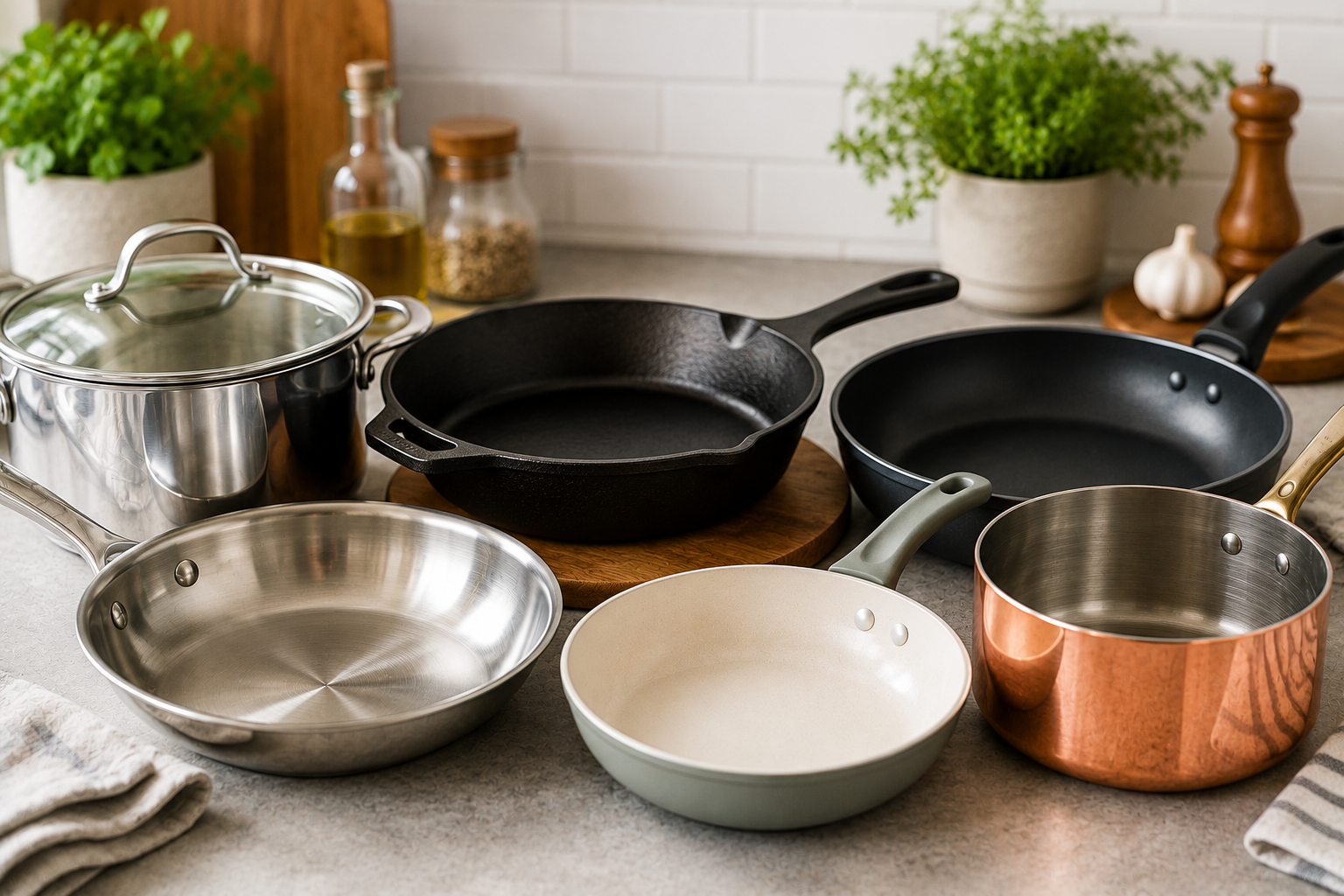
Walk down any cookware aisle and you’ll find stainless steel, cast iron, non-stick, ceramic, and copper pans all claiming to be the best option. The truth is, no single material is best for everything, since each comes with genuine trade-offs in performance, maintenance, and cost.
This guide breaks down the real pros and cons of the most common cookware materials, so you can match the right pan to the right job in your kitchen. We’ll cover stainless steel cookware, cast iron pans, non-stick cookware, and other popular materials for American homeowners.
By the end, you’ll understand exactly which materials suit your cooking style, budget, and maintenance preferences, helping you build a cookware collection that actually works for how you cook.
Which Cookware Material Should You Choose?
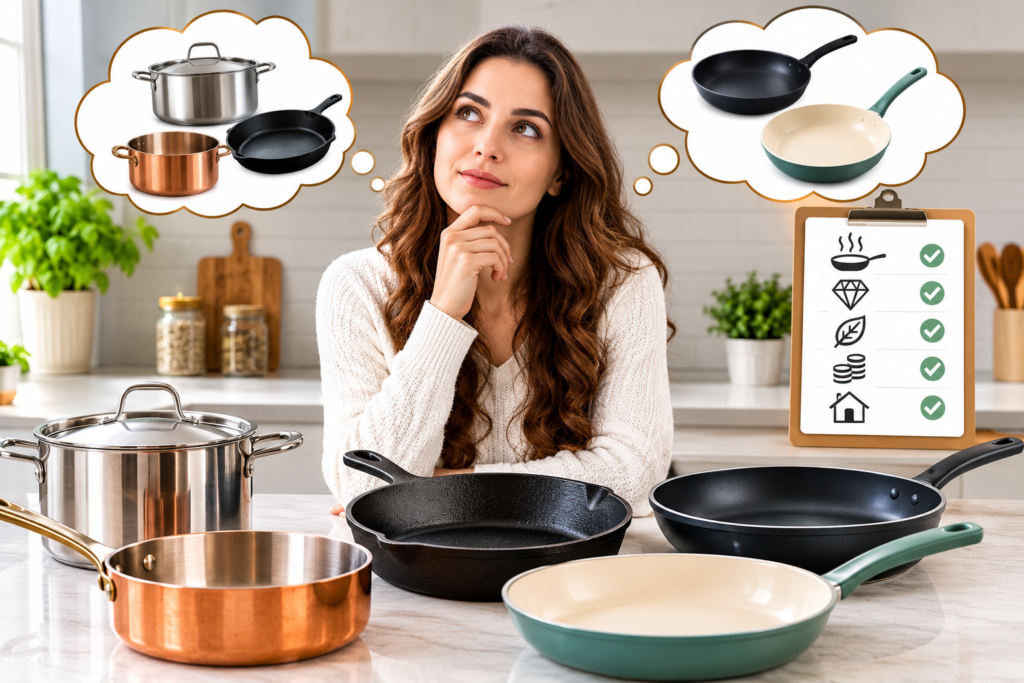
Most well-equipped kitchens benefit from a mix of materials rather than relying on just one. Stainless steel handles searing and sauces well, cast iron excels at high-heat cooking, non-stick is ideal for eggs and delicate foods, and copper offers the most precise temperature control for sauces and candy-making.
There’s no universally “best” cookware material, since the right choice depends on what you cook most often, how much maintenance you’re willing to do, and your budget. We’ll walk through each material’s strengths and weaknesses in detail below.
1- Stainless Steel Cookware
Stainless steel is one of the most popular cookware materials in American kitchens, valued for its durability and versatility across cooking styles.
- Pros of Stainless Steel
Stainless steel is highly durable and resistant to rust, corrosion, and staining, making it a long-term investment that can last decades with proper care. It doesn’t react with acidic foods like tomatoes or wine, unlike some reactive metals, which makes it safe for a wide range of recipes.
Stainless steel also browns and sears food exceptionally well once properly preheated, producing the flavorful crust that’s difficult to achieve with non-stick surfaces. It’s compatible with induction, gas, and electric stovetops, and most stainless steel cookware is oven-safe at high temperatures.
- Cons of Stainless Steel
Stainless steel isn’t naturally non-stick, requiring proper preheating technique to prevent food from sticking, which has a learning curve for newer cooks. It also conducts heat less evenly than materials like copper or aluminum on its own, though many stainless steel pans address this with an aluminum or copper core sandwiched between steel layers.
- Best Uses for Stainless Steel
Stainless steel performs best for searing meat, making pan sauces, sautéing vegetables, and any cooking where browning and deglazing matter. It’s a versatile all-purpose choice for most everyday cooking tasks.
2- Cast Iron Cookware
Cast iron has been a kitchen staple for generations, prized for its exceptional heat retention and durability.
- Pros of Cast Iron
Cast iron retains and distributes heat exceptionally well, making it ideal for high-heat searing, frying, and oven-to-stovetop cooking. When properly seasoned, it develops a naturally non-stick surface without relying on synthetic coatings, and this seasoning actually improves with regular use over time.
Cast iron is extremely durable, often lasting for generations with basic care, and it works on virtually any heat source, including open flames, induction, and ovens.
- Cons of Cast Iron
Cast iron is significantly heavier than most other cookware materials, which can make it difficult to handle for some users, particularly larger pieces like Dutch ovens. It also requires specific care, including regular seasoning and avoiding prolonged soaking, to prevent rust and maintain its non-stick surface.
Cast iron heats up slowly compared with thinner materials, and it’s not ideal for cooking highly acidic foods for extended periods, since acid can react with the seasoning layer, particularly on newer or thinly seasoned pans.
- Best Uses for Cast Iron
Cast iron excels at searing steaks, frying, baking cornbread, and any dish that benefits from oven-to-stovetop versatility. It’s also a favorite for outdoor and campfire cooking due to its durability.
3- Non-Stick Cookware
Non-stick cookware remains one of the most popular choices for everyday home cooking, prized for its convenience and easy cleanup.
- Pros of Non-Stick Cookware
Non-stick coatings require little to no oil for cooking, making it easier to prepare lower-fat meals and delicate foods like eggs, pancakes, and fish that tend to stick to other surfaces. Cleanup is also significantly easier than with other materials, often requiring just a quick wipe rather than extensive scrubbing.
- Cons of Non-Stick Cookware
Non-stick coatings have a shorter lifespan than most other cookware materials, generally needing replacement every one to five years depending on the coating type and care. The coating can also degrade with high heat, metal utensils, or abrasive cleaning, and damaged coatings should be replaced promptly rather than continued use.
Non-stick cookware also doesn’t achieve the same level of browning and searing as stainless steel or cast iron, since its slick surface limits the caramelization that creates deep flavor.
- Best Uses for Non-Stick Cookware
Non-stick pans are best suited for eggs, pancakes, delicate fish, and other foods prone to sticking. They’re also a practical choice for cooks prioritizing easy daily cleanup over maximum searing performance.
4- Ceramic Cookware
Ceramic-coated cookware has grown in popularity as a PFAS-free alternative to traditional non-stick coatings.
- Pros of Ceramic Cookware
Ceramic coatings are free from PTFE and PFOA, making them an appealing option for households prioritizing chemical-free cookware. Like traditional non-stick, ceramic surfaces require little oil and offer relatively easy cleanup for everyday cooking.
- Cons of Ceramic Cookware
Ceramic coatings generally degrade faster than PTFE-based non-stick coatings, often needing replacement within two to three years even with proper care. The coating is also more prone to losing its non-stick properties over time compared with traditional non-stick options.
- Best Uses for Ceramic Cookware
Ceramic cookware suits similar tasks to traditional non-stick, such as eggs and delicate foods, and appeals specifically to households wanting to avoid PTFE-based coatings.
5- Copper Cookware
Copper cookware is favored by professional chefs and serious home cooks for its unmatched heat conductivity and precision.
- Pros of Copper Cookware
Copper heats up and cools down faster than almost any other cookware material, offering exceptional temperature control that’s particularly valuable for sauces, candy-making, and delicate dishes requiring precise heat adjustments. It also distributes heat extremely evenly across the cooking surface, reducing hot spots.
- Cons of Copper Cookware
Copper cookware is significantly more expensive than most other materials, often placing it out of reach for budget-conscious buyers. It also requires more maintenance than stainless steel or cast iron, including periodic polishing if you prefer to maintain its shine rather than let it develop a natural patina.
Most copper cookware requires a tin or stainless steel lining, since cooking directly on copper isn’t food-safe, and this lining needs monitoring for wear over time.
- Best Uses for Copper Cookware
Copper excels at sauce-making, candy production, and any cooking requiring rapid, precise temperature adjustments. It’s less commonly used for everyday high-heat searing due to its cost and specific care requirements.
6- Carbon Steel Cookware
Carbon steel is less common in American kitchens but offers a compelling middle ground between cast iron and stainless steel.
- Pros of Carbon Steel
Carbon steel heats up faster than cast iron while offering similar seasoning and natural non-stick development over time. It’s also considerably lighter than cast iron, making it easier to handle for tasks like tossing vegetables or flipping delicate items.
- Cons of Carbon Steel
Like cast iron, carbon steel requires seasoning and specific care to prevent rust, including avoiding prolonged soaking and drying thoroughly after washing. It also isn’t naturally non-stick until properly seasoned, requiring some initial setup before it performs at its best.
- Best Uses for Carbon Steel
Carbon steel is popular for stir-frying, sautéing, and searing, offering a responsive alternative to cast iron for cooks who want similar performance in a lighter pan.
7- Aluminum Cookware
Aluminum is one of the most affordable and widely used cookware materials, prized for its excellent heat conductivity.
- Pros of Aluminum
Aluminum heats quickly and evenly, making it a popular core material in multi-clad stainless steel cookware as well as a standalone option for budget-friendly pieces. It’s also significantly lighter than cast iron or stainless steel, making it easy to handle.
- Cons of Aluminum
Uncoated aluminum can react with acidic foods, potentially affecting both taste and appearance, which is why most standalone aluminum cookware includes a non-stick or anodized coating. Aluminum is also softer and more prone to denting or warping than stainless steel.
- Best Uses for Aluminum
Aluminum works well for everyday cooking tasks like boiling, steaming, and general stovetop use, particularly in anodized or coated forms that address its reactivity concerns.
Comparing Cookware Materials at a Glance
| Material | Heat Retention | Maintenance | Durability |
| Stainless Steel | Moderate-High | Low | Very High |
| Cast Iron | Excellent | Moderate | Excellent |
| Non-Stick | Low-Moderate | Low | Low |
| Ceramic | Low-Moderate | Low | Low-Moderate |
| Copper | Excellent | High | High |
| Carbon Steel | Good | Moderate | High |
| Aluminum | Good | Low | Moderate |
How to Choose the Right Material for Your Kitchen
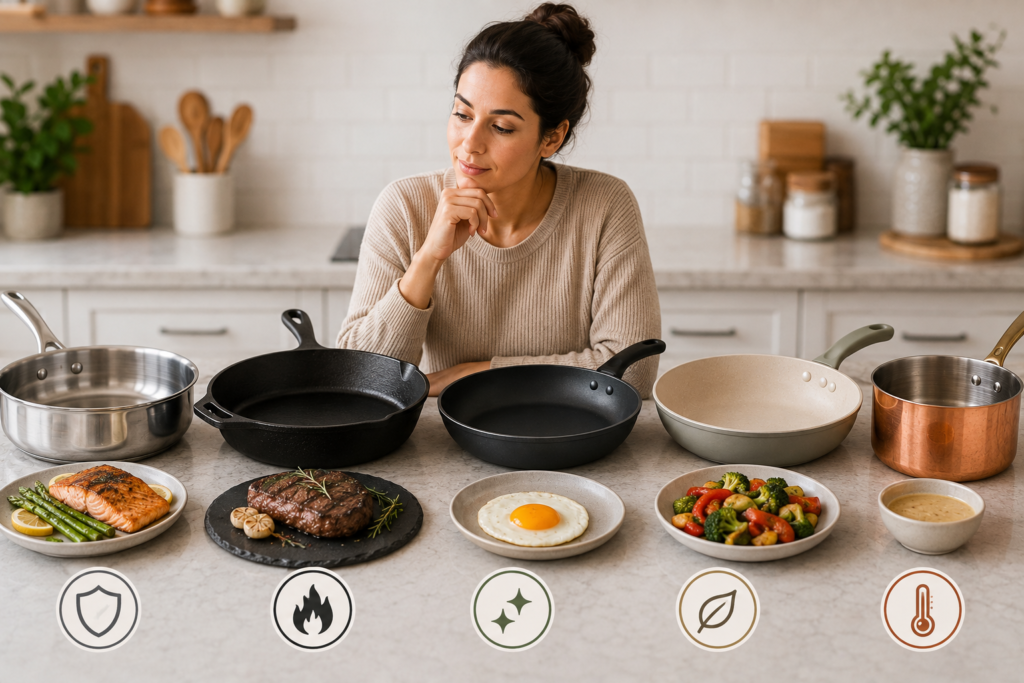
Rather than choosing a single “best” material, most experienced home cooks build a small collection matched to specific tasks.
- If you cook a lot of eggs and delicate foods: Non-stick or ceramic cookware offers the easiest results with minimal effort.
- If you prioritize searing and browning: Stainless steel or cast iron will give you the best crust and flavor development.
- If you want cookware that lasts decades: Stainless steel and cast iron are the most durable long-term investments.
- If precise temperature control matters most: Copper offers unmatched responsiveness for sauces and delicate temperature-sensitive dishes.
- If you’re on a tighter budget: Aluminum and basic non-stick options provide functional performance at accessible price points.
- If you want to avoid synthetic coatings entirely: Stainless steel, cast iron, and carbon steel are all coating-free options.
Building a Practical Cookware Collection
Rather than buying an entire matched set, many home cooks find better value in selecting individual pieces matched to specific needs.
A practical starting collection might include a stainless steel skillet for searing and sautéing, a cast iron skillet for high-heat cooking and oven use, a non-stick or ceramic pan for eggs and delicate foods, and a stainless steel or enameled cast iron pot for soups and sauces. This combination covers most everyday cooking needs without requiring every material in your kitchen.
Common Mistakes When Choosing Cookware Materials
- Buying an entire matched set without considering individual needs: Matched sets often include pieces you’ll rarely use, while missing others you need most.
- Choosing non-stick for high-heat searing: Non-stick coatings aren’t designed for the high temperatures needed for proper searing, and this can damage the coating faster.
- Ignoring stovetop compatibility: Not all cookware materials work with induction stovetops, so it’s worth confirming compatibility before buying, particularly for copper and aluminum pieces without a magnetic base layer.
- Overlooking maintenance requirements: Cast iron, carbon steel, and copper all require more hands-on care than stainless steel or non-stick, which is worth factoring into your decision if you prefer low-maintenance cookware.
Conclusion
Understanding the genuine pros and cons of each cookware material helps you build a collection that actually matches how you cook, rather than relying on marketing claims alone. Stainless steel and cast iron offer durability and excellent searing performance, non-stick and ceramic provide convenience for delicate foods, and copper delivers unmatched precision for sauce work at a premium price. Rather than searching for one perfect material, most well-equipped kitchens benefit from a thoughtful mix, chosen based on your specific cooking habits, maintenance preferences, and budget.
Frequently Asked Questions
1- What is the healthiest cookware material to use?
Stainless steel, cast iron, and carbon steel are generally considered the safest options, since they don’t rely on synthetic non-stick coatings that can degrade over time.
2- Is cast iron better than stainless steel?
Neither is universally better. Cast iron offers superior heat retention for searing and frying, while stainless steel is lighter, doesn’t require seasoning, and handles acidic foods without concern.
3- Why is copper cookware so expensive?
Copper is a more costly raw material than steel or aluminum, and copper cookware requires more complex manufacturing, including a food-safe interior lining, which adds to production cost.
4- Is ceramic cookware safer than traditional non-stick?
Ceramic coatings are free from PTFE and PFOA, making them appealing to households avoiding these specific chemicals, though ceramic coatings generally have a shorter functional lifespan.
5- Can I use metal utensils on all cookware materials?
No, metal utensils are safe for stainless steel and cast iron but can damage non-stick and ceramic coatings. Use wooden, silicone, or nylon utensils on coated cookware.
6- Do I need every cookware material in my kitchen?
No, most households do well with two or three core materials matched to their most common cooking tasks, rather than owning every available type.