
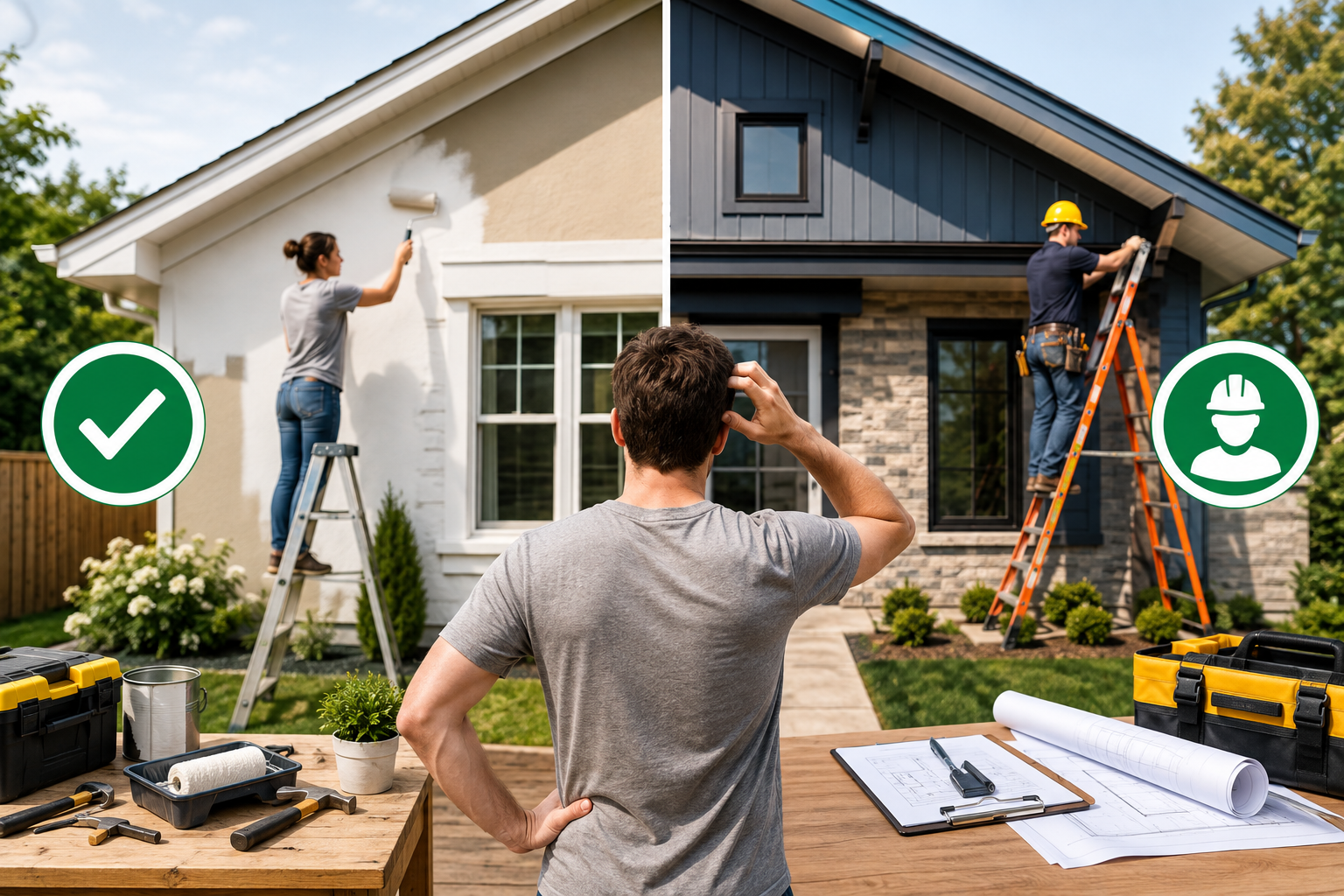
This guide covers how to decide between DIY and hiring a professional, covering safety risks, cost considerations, and specific project types where the right choice is clearer than others. We’ll also cover home improvement decisions, DIY safety, and practical hiring advice for American homeowners.
By the end, you’ll have a clear, practical framework for deciding which projects to tackle yourself and which ones genuinely call for professional expertise.
When Should You DIY and When Should You Hire a Professional: How to Decide
As a general rule, DIY is appropriate for cosmetic, low-risk projects like painting, basic shelving, or simple fixture swaps, while professionals should handle anything involving electrical wiring, gas lines, structural changes, or work that requires a permit. When in doubt, weigh the potential cost of a mistake against the money you’d save doing it yourself.
Beyond this general rule, several specific factors, including your skill level, available tools, project complexity, and local regulations, all play a role in making the right call for your specific situation.
Key Factors to Consider Before Deciding
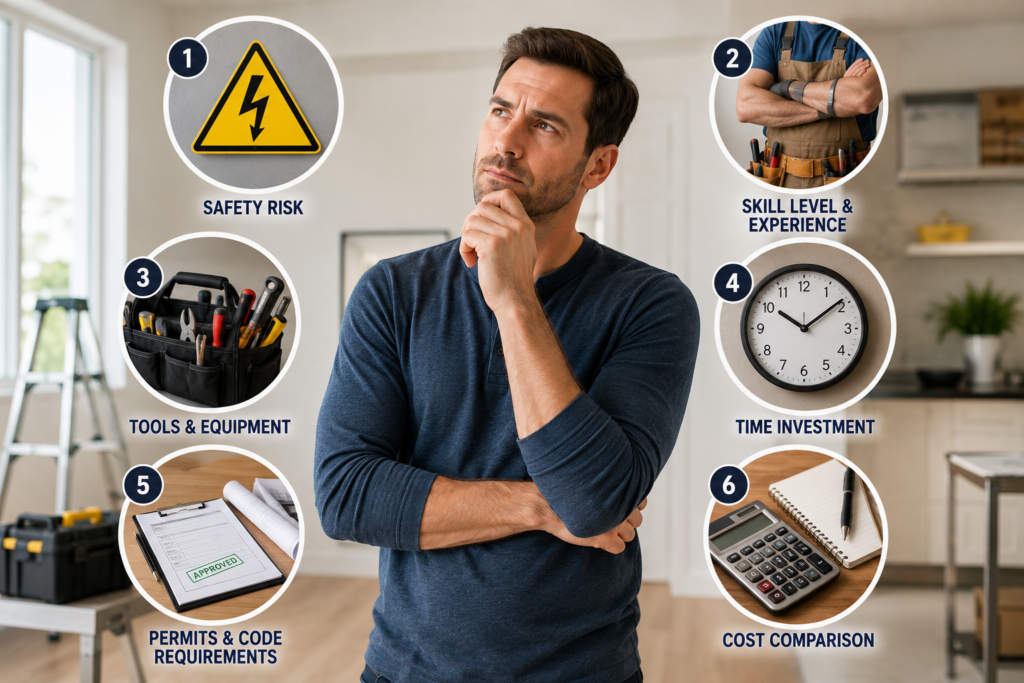
Before jumping into a project, it helps to run through a few practical considerations that apply across almost any home improvement decision.
1- Safety Risk
Some projects carry genuine safety risks if done incorrectly, particularly those involving electricity, gas, structural elements, or working at heights. If a mistake could result in injury, fire, or serious property damage, this weighs heavily toward hiring a professional.
2- Skill Level and Experience
Honestly assessing your own skill level matters more than enthusiasm alone. A project that’s straightforward for someone with prior experience can be genuinely risky for a complete beginner attempting it for the first time.
3- Tools and Equipment Needed
Some projects require specialized tools that aren’t worth purchasing for a single use, making professional help more cost-effective once you factor in tool rental or purchase costs.
4- Time Investment
DIY projects often take considerably longer than professional completion, particularly for anyone without prior experience. Consider whether the time investment is worth the potential savings, especially for projects with a tight deadline.
5- Permits and Code Requirements
Many structural, electrical, and plumbing projects require permits and must meet local building codes. Professionals are typically familiar with these requirements, while DIY attempts risk code violations that can cause problems when selling your home later.
6- Cost Comparison
While DIY often saves money upfront, factor in the cost of tools, materials, and your own time, plus the potential cost of professional repair if something goes wrong. Sometimes the total cost of DIY, including mistakes, approaches or exceeds professional pricing.
Projects You Can Safely DIY
Several categories of home improvement projects are generally well-suited for confident beginners and experienced DIYers alike.
1- Painting and Cosmetic Updates
Painting walls, refreshing trim, and similar cosmetic updates carry minimal risk and are highly forgiving of minor mistakes. These projects are among the most beginner-friendly home improvement tasks available.
2- Basic Fixture Replacements
Swapping cabinet hardware, replacing a showerhead, or installing a new faucet aerator are typically manageable DIY tasks that don’t require specialized licensing.
3- Simple Shelving and Storage
Installing floating shelves, closet organizers, or basic storage solutions is generally safe for DIY, provided you properly locate wall studs and use appropriate anchors for the weight involved.
4- Caulking and Weatherstripping
Sealing gaps around windows, doors, and bathroom fixtures is a low-risk, low-cost project that most homeowners can handle with basic tools and a bit of patience.
5- Furniture Assembly
Assembling flat-pack furniture, while sometimes tedious, doesn’t carry meaningful safety risk and is a reasonable DIY task for virtually any skill level.
6- Landscaping and Basic Yard Work
Planting, mulching, and basic yard maintenance are typically safe DIY projects, though larger tree removal or major grading work may benefit from professional equipment and expertise.
Projects That Should Go to a Professional
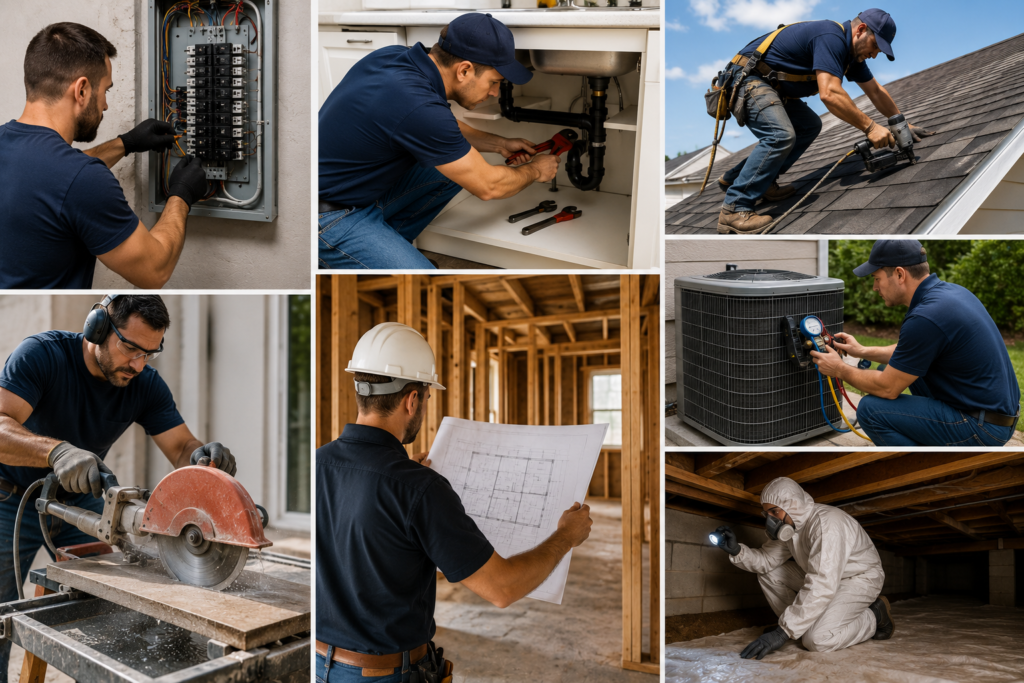
Certain project categories carry risks or requirements that make professional involvement the safer, and often more cost-effective, choice.
1- Electrical Work
Any project involving wiring, breaker panels, or new electrical circuits should be handled by a licensed electrician. Electrical mistakes can cause fires or serious injury, and many jurisdictions require licensed work for code compliance and insurance purposes.
2- Gas Line Work
Projects involving gas appliances, gas lines, or connections carry serious safety risks, including the potential for gas leaks or explosions if done incorrectly. This work should always be handled by a licensed professional.
3- Structural Changes
Removing or altering load-bearing walls, foundation work, or significant structural modifications require professional assessment and often engineering input, since mistakes here can compromise your home’s safety and structural integrity.
4- Roofing
Roof repairs and replacements involve genuine fall risk and require specific expertise to avoid leaks or structural issues. Professional roofers also typically carry insurance that protects you if something goes wrong during the work.
5- Major Plumbing
While basic fixture swaps are DIY-friendly, significant plumbing work like repiping, sewer line issues, or water heater installation generally requires professional expertise and, in many areas, licensing.
6- HVAC Systems
Installing or significantly repairing heating and cooling systems requires specialized knowledge and often certification, particularly for anything involving refrigerant handling.
7- Tree Removal
Large tree removal, particularly near structures or power lines, carries genuine safety risk and typically requires specialized equipment that most homeowners don’t have access to.
Comparing DIY vs Professional by Project Type
| Project | DIY-Friendly? | Why |
| Painting | Yes | Low risk, forgiving of mistakes |
| Basic shelving | Yes | Low risk with proper technique |
| Cabinet hardware | Yes | Simple, low-risk task |
| Electrical wiring | No | Fire and injury risk, code compliance |
| Gas line work | No | Serious safety risk |
| Structural changes | No | Requires professional assessment |
| Roof repair | No | Fall risk, specialized expertise |
| Basic fixture swaps | Yes | Manageable with basic tools |
| Major plumbing | No | Licensing often required |
| Furniture assembly | Yes | No meaningful safety risk |
How to Assess Your Own Skill Level Honestly
One of the biggest factors in the DIY-versus-professional decision is an honest assessment of your own abilities, separate from how confident you might feel.
- Consider your relevant experience: Have you completed similar projects before, even smaller versions of the task at hand?
- Research the full scope of the project: Watching a tutorial that makes a project look simple doesn’t always reflect the full complexity involved, particularly for anything with multiple steps or specialized knowledge.
- Be honest about your tools: Attempting a project without the right tools often leads to poor results or unsafe workarounds.
- Consider the consequences of a mistake: A painting mistake is easy to fix; a plumbing or electrical mistake can cause significant, costly damage.
When Cost Savings Aren’t Worth the Risk
DIY projects are often chosen primarily to save money, but it’s worth considering situations where the potential savings don’t outweigh the risk.
- When a mistake could cause injury: No amount of cost savings is worth a serious injury, making safety-critical projects clear candidates for professional help.
- When mistakes could cause expensive secondary damage: A DIY plumbing mistake, for example, can lead to water damage that costs far more to repair than the original professional job would have cost.
- When permits and inspections are required: Skipping required permits to save money can create serious problems when selling your home, including forced corrections or fines.
- When your time has significant value: If a project would take you many hours or days longer than a professional, factor in what that time is actually worth to you.
Finding and Hiring the Right Professional
When you do decide a project needs professional help, choosing the right contractor or specialist matters just as much as the decision to hire one.
- Verify licensing and insurance: Confirm any contractor holds appropriate licensing for their trade and carries liability insurance to protect you if something goes wrong.
- Get multiple quotes: Comparing several quotes helps you understand fair pricing for your specific project and area.
- Check reviews and references: Look for a consistent track record of quality work and professionalism, rather than relying on a single review.
- Confirm permit responsibility: Clarify upfront who is responsible for pulling any required permits, since this affects both cost and legal compliance.
- Get everything in writing: A detailed written estimate or contract protects both parties and helps prevent misunderstandings about scope and cost.
A Simple Decision Framework
When facing a home improvement decision, running through these questions can help clarify whether DIY or professional help makes more sense.
- Does this project involve electrical, gas, or structural work? If yes, hire a professional.
- Do I have relevant experience with similar projects? If no, consider starting with a smaller version or hiring help.
- Do I have the necessary tools, or would I need to purchase or rent them? Factor this into your cost comparison.
- What’s the realistic cost of a mistake, both financially and in terms of safety? Weigh this against potential savings.
- Is a permit required for this project? If yes, professional involvement often simplifies compliance.
The Hidden Costs of DIY Mistakes
Beyond the immediate cost of materials or tools, DIY mistakes can carry hidden costs that aren’t always obvious upfront.
- Redoing the work: If a DIY attempt doesn’t turn out well, you may end up paying a professional to fix the mistake anyway, effectively paying twice for the same project.
- Voided warranties: Some appliances, systems, or materials specify that improper installation can void manufacturer warranties, meaning a DIY mistake could leave you without coverage for future issues.
- Insurance complications: Damage resulting from unlicensed or improperly performed work, particularly electrical or structural issues, can sometimes complicate homeowner’s insurance claims.
- Lost time: Time spent troubleshooting a DIY project that isn’t going as planned often ends up exceeding the time a professional would have needed, even before accounting for any actual repair work.
Weighing these hidden costs alongside the upfront savings gives a more complete picture of whether DIY genuinely makes financial sense for a specific project.
Building DIY Skills Gradually and Safely
For homeowners who enjoy DIY work but want to expand their skill set responsibly, a gradual approach works better than jumping straight into advanced projects.
- Start with low-risk projects: Building confidence and basic tool familiarity with cosmetic projects creates a foundation for more involved tasks later.
- Take relevant classes or workshops: Many hardware stores and community centers offer beginner-friendly workshops covering specific skills, from basic electrical safety to tiling techniques.
- Shadow a professional when possible: If you’re hiring a professional for one project, observing their process can build genuine understanding for similar future tasks.
- Know when to stop: If a project reveals unexpected complexity partway through, such as discovering outdated wiring behind a wall you’re renovating, it’s often better to pause and call a professional rather than pushing forward.
This gradual, safety-conscious approach allows you to genuinely expand your DIY capabilities over time without taking on unnecessary risk along the way.
Conclusion
Deciding between DIY and hiring a professional comes down to honestly weighing safety risk, your actual skill level, required tools, and the true cost of a potential mistake. Cosmetic and low-risk projects like painting, shelving, and basic fixture swaps are generally well-suited for confident DIYers, while electrical, gas, structural, and major plumbing work should always go to licensed professionals. By running through a simple decision framework before starting any project, you can make confident, informed choices that keep your home, budget, and safety protected.
Frequently Asked Questions
1- How do I know if a project is too advanced for DIY?
If a project involves electrical wiring, gas lines, structural changes, or requires a permit, it’s generally too advanced for DIY and should go to a licensed professional.
2- Is it cheaper to DIY or hire a professional?
It depends on the project. DIY often saves money upfront for simple tasks, but factoring in tools, time, and the cost of potential mistakes can make professional help more cost-effective for complex projects.
3- Can I do electrical work myself if I’m careful?
No, electrical work should always be handled by a licensed electrician due to serious fire and injury risks, along with code compliance requirements in most areas.
4- What DIY projects offer the best value for beginners?
Painting, basic shelving, cabinet hardware swaps, and caulking offer strong value, since they’re low-risk, affordable, and build genuinely useful skills.
5- Should I get multiple quotes before hiring a professional?
Yes, comparing multiple quotes helps you understand fair pricing for your project and ensures you’re not overpaying or underestimating the work involved.
6- What happens if I skip a required permit for a DIY project?
Skipping required permits can create significant problems later, including forced corrections, fines, or complications when selling your home.