If you’re standing in front of two very different appliances trying to decide which one deserves counter space, you’re not alone. The espresso machine vs coffee maker debate comes up constantly among American homeowners, and the honest answer is that it depends entirely on what kind of coffee you actually enjoy drinking, not which machine looks more impressive.
This guide breaks down the real differences between these two brewing methods, covering flavor, cost, convenience, maintenance, and which one suits which type of coffee drinker. By the end, you’ll have a clear, practical answer based on your own habits rather than a generic recommendation.
What Is A Coffee Maker?
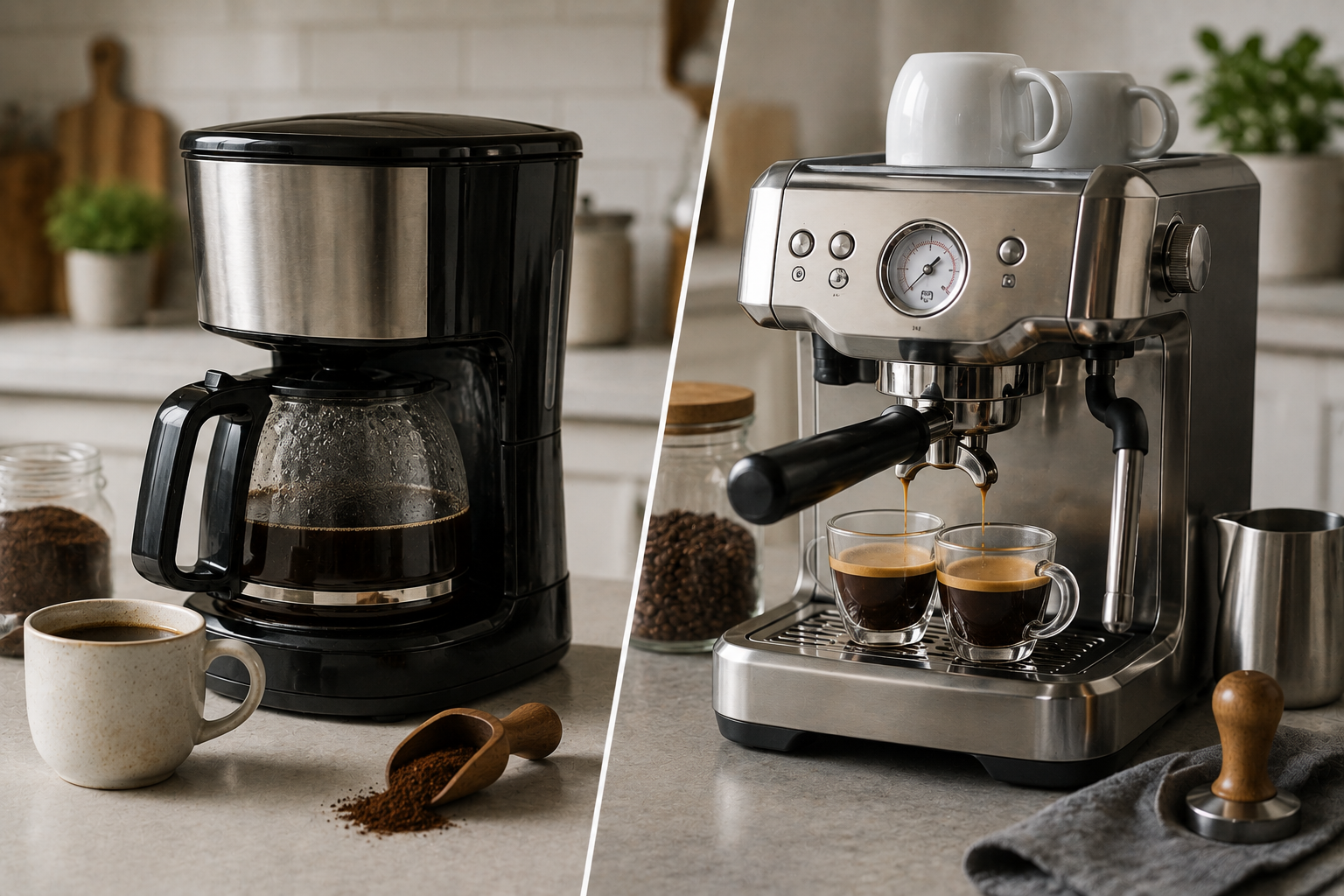
A coffee maker, referring here to a standard drip machine, is the better choice for anyone who drinks larger, milder cups of coffee, wants minimal daily effort, and doesn’t need café-style drinks like lattes or cappuccinos. An espresso machine is the better choice for anyone who prefers stronger, more concentrated coffee, enjoys milk-based drinks, and is willing to invest more time, and typically more money, into the process. Many coffee lovers eventually end up wanting both, but if you’re choosing just one, your typical order at a coffee shop is usually the best clue to which one fits your habits.
How Drip Coffee Makers Work
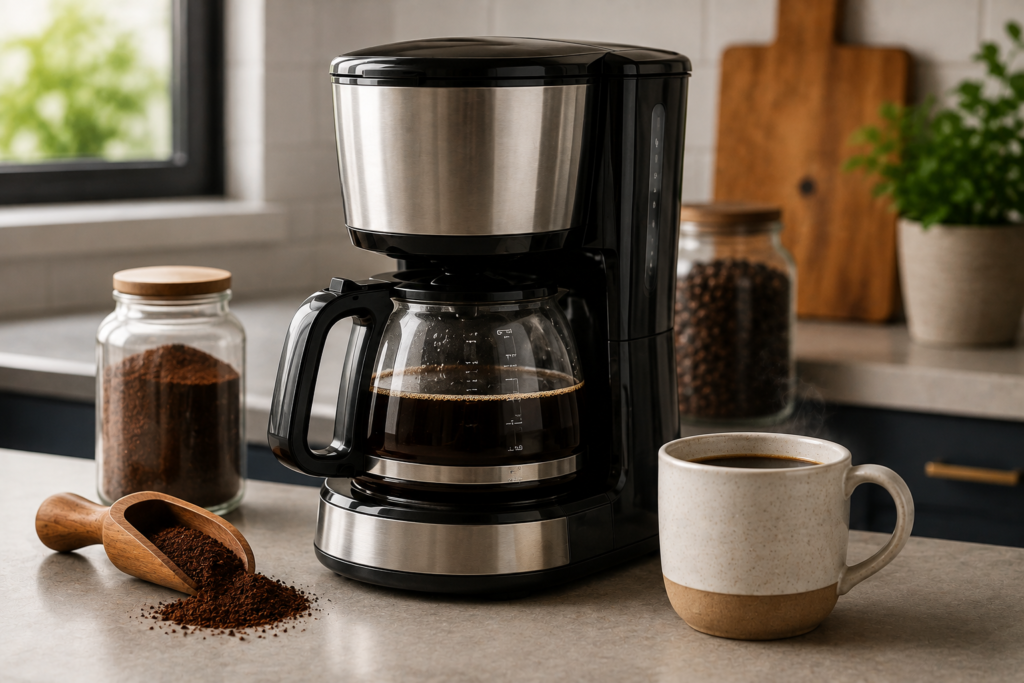
A drip coffee maker brews coffee by heating water and passing it through ground coffee held in a filter, typically paper or a reusable mesh basket. Gravity pulls the water through the grounds and into a carafe below, producing a full pot of coffee in one brewing cycle.
This method produces a lighter, cleaner-tasting cup compared to espresso, and it’s designed to brew larger quantities at once, making it a natural fit for households that drink multiple cups throughout the morning or serve coffee to several people at a time.
How Espresso Machines Work
An espresso machine forces hot water through very finely ground coffee at high pressure, typically around nine bars, producing a small, concentrated shot topped with a layer of crema. This pressurized brewing method extracts flavor much more intensely than gravity-fed drip brewing, resulting in a stronger, more robust cup in a much smaller serving size.
Espresso also serves as the base for popular café drinks like lattes, cappuccinos, and macchiatos, which require steamed or frothed milk in addition to the espresso shot itself.
Espresso Machine vs Coffee Maker: Key Differences
| Feature | Coffee Maker (Drip) | Espresso Machine |
| Brew Method | Gravity-fed, passive | Pressurized extraction |
| Serving Size | Full pot, larger cups | Small, concentrated shots |
| Flavor Profile | Milder, lighter | Bold, concentrated |
| Learning Curve | Minimal | Moderate to steep |
| Brewing Time | 5–10 minutes for a full pot | 25–30 seconds per shot |
| Milk-Based Drinks | Not supported | Lattes, cappuccinos possible |
| Upfront Cost | Lower | Higher |
| Maintenance | Simple, minimal | More involved |
| Counter Space | Moderate | Varies, often larger |
Flavor Differences Explained
The most fundamental difference between these two brewing methods comes down to flavor and strength. Drip coffee tends to have a milder, more diluted flavor, since it uses a higher ratio of water to coffee grounds and relies on gravity rather than pressure to extract flavor. This makes it well suited to larger servings and a smoother, more approachable taste for most everyday drinking.
Espresso, by contrast, uses a much smaller amount of water forced through finely ground coffee under significant pressure, producing an intensely concentrated shot with a distinctive layer of crema on top. This concentrated flavor is why espresso works so well as the base for milk-based drinks, since the strong coffee flavor holds up even when combined with steamed milk.
Neither flavor profile is objectively better, it comes down entirely to personal preference and how you like to drink your coffee day to day.
Convenience and Ease of Use
Coffee Makers
Drip coffee makers are generally the more convenient option for daily use. Most models require simply adding water and ground coffee, then pressing a single button, with many including programmable timers to have coffee ready automatically each morning. Minimal skill or technique is required to get a consistent, decent result every time.
Espresso Machines
Espresso machines, particularly semi-manual or manual models, require more hands-on technique to produce good results. Factors like grind size, tamping pressure, and extraction time all affect the final shot, and it typically takes some practice to consistently pull a good espresso shot. Fully automatic espresso machines simplify this process considerably, though often at a higher price point.
Cost Comparison
Upfront Cost
Basic drip coffee makers represent one of the most affordable ways to brew coffee at home, with quality options available at a modest price point. Espresso machines generally start at a higher price than drip machines, with cost increasing significantly for models with built-in grinders, automatic milk frothing, or advanced pressure control.
Ongoing Costs
Drip coffee makers typically use standard ground coffee and paper filters, both relatively inexpensive on an ongoing basis. Espresso machines generally require finely ground coffee, ideally fresh, and if you’re making milk-based drinks regularly, you’ll also go through more milk than a typical drip coffee drinker would. Some espresso machines also benefit from occasional professional descaling or maintenance, adding a modest ongoing cost.
Long-Term Value
For households that drink a lot of coffee daily, a quality drip machine often represents better long-term value due to its lower cost per cup and minimal maintenance needs. For those who would otherwise be spending money on café visits for espresso-based drinks, a home espresso machine can pay for itself over time, even with a higher upfront investment.
Maintenance Requirements
Coffee Maker Maintenance
Drip coffee makers require relatively simple maintenance: rinsing the carafe and filter basket after each use, and periodic descaling to remove mineral buildup from the water reservoir and internal components, particularly important in areas with hard tap water.
Espresso Machine Maintenance
Espresso machines generally require more involved maintenance. This includes cleaning the portafilter and group head after each use, periodic backflushing for machines that support it, regular descaling, and maintaining the steam wand if the machine includes milk frothing capability. Machines with built-in grinders add another component that needs periodic cleaning to prevent stale coffee oils from affecting flavor.
Counter Space and Kitchen Fit
Coffee makers vary in size, but most drip machines have a fairly compact, predictable footprint that fits easily on most counters. Espresso machines vary more widely in size, from compact models designed for smaller kitchens to larger, more elaborate machines with built-in grinders that take up considerably more counter space.
If kitchen space is limited, it’s worth measuring your available counter area before committing to a larger espresso machine, particularly one with an integrated grinder or a large water reservoir.
Which One Fits Your Coffee Habits?
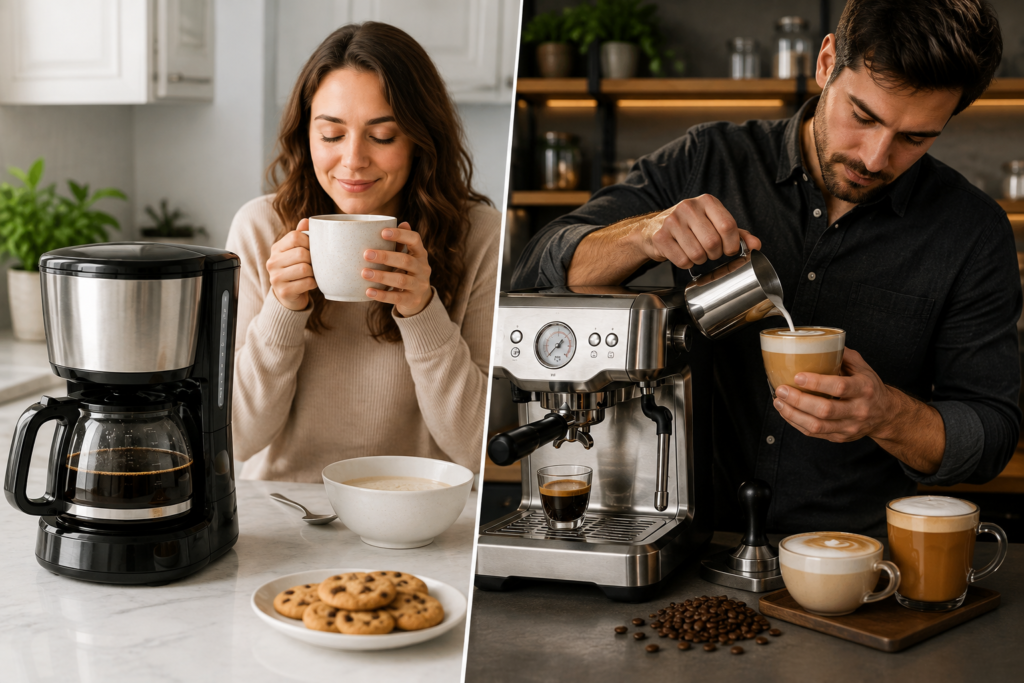
Choose a Coffee Maker If:
- You typically drink larger cups of milder coffee
- You want the simplest possible daily routine
- You often brew for multiple people at once
- Budget is a primary concern, both upfront and ongoing
- You don’t have much interest in milk-based espresso drinks
Choose an Espresso Machine If:
- You regularly order lattes, cappuccinos, or straight espresso shots
- You’re willing to invest time in learning proper brewing technique
- You want to reduce spending on regular coffee shop visits
- You have adequate counter space and budget for a quality machine
- You enjoy the more hands-on, ritual-like process of brewing
Consider Both If:
Some households genuinely benefit from owning both, using a drip machine for everyday larger cups and an espresso machine for weekend treats or milk-based drinks. This isn’t necessary for everyone, but for serious coffee enthusiasts with the space and budget, it offers the best of both brewing styles.
Types of Espresso Machines to Know
If you’re leaning toward an espresso machine, it helps to understand the different levels of automation available.
- Manual espresso machines require you to control every variable yourself, including water pressure in some cases, offering the most control but the steepest learning curve.
- Semi-automatic espresso machines handle water heating and pressure automatically but still require manual grinding, tamping, and shot timing, striking a balance between control and convenience.
- Automatic and super-automatic espresso machines handle most or all of the brewing process at the touch of a button, including grinding and milk frothing in many higher-end models, prioritizing convenience and consistency over hands-on control.
Types of Coffee Makers to Know
Drip coffee makers also come in a few distinct variations worth understanding before you buy.
- Standard programmable drip machines brew a full pot using a timer and basic settings, suited to most households’ everyday needs.
- Single-serve or pod machines brew one cup at a time using pre-portioned pods, prioritizing speed and convenience over batch brewing or flavor customization.
- Specialty Coffee Association certified drip machines are built to specific standards for water temperature and saturation time, appealing to coffee enthusiasts who want café-quality drip coffee at home.
Practical Buying Tips
A few practical considerations can help guide your final decision, regardless of which direction you’re leaning:
- Think honestly about your typical coffee order, since it’s usually the clearest signal of which brewing method fits your taste
- Factor in both upfront and ongoing costs, not just the initial purchase price
- Consider how much time you’re willing to spend on daily brewing and cleanup
- Measure your available counter space before choosing a larger espresso machine
- If undecided, consider starting with a more affordable entry-level machine in your preferred category before investing in a premium model
Common Mistakes to Avoid
- Buying an espresso machine without considering the learning curve, then feeling frustrated by inconsistent results early on
- Choosing a drip machine when you actually prefer strong, concentrated coffee, leading to disappointment with the flavor
- Underestimating ongoing maintenance requirements, particularly for espresso machines with more components
- Overlooking counter space, especially for larger espresso machines with built-in grinders
- Ignoring long-term costs, focusing only on the upfront price without considering coffee, milk, or maintenance expenses over time
Conclusion
The choice between an espresso machine vs coffee maker ultimately comes down to your everyday coffee habits, not which appliance seems more impressive on the counter. If you drink larger, milder cups and want minimal daily effort, a quality drip coffee maker will likely serve you well for years. If you crave stronger, café-style drinks and don’t mind investing time and a bit more money into the process, an espresso machine can genuinely transform your morning routine. Think honestly about what you actually order at a coffee shop, and let that guide you toward the machine that will genuinely fit into your daily life.
Frequently Asked Questions
1- Is an espresso machine better than a coffee maker?
Neither is universally better; it depends on your personal taste preferences. Espresso machines suit those who enjoy strong, concentrated coffee and milk-based drinks, while drip coffee makers suit those who prefer larger, milder cups with minimal daily effort.
2- Can an espresso machine make regular coffee?
Some espresso machines can produce an Americano, made by adding hot water to an espresso shot, which approximates regular coffee, though it’s not identical in flavor to true drip-brewed coffee.
3- Is it cheaper to make espresso at home than buying it at a coffee shop?
Over time, yes, for regular drinkers. While the upfront cost of an espresso machine is higher than a drip coffee maker, it typically becomes more cost-effective than frequent café visits within the first year or two of regular use.
4- Do I need a separate grinder for an espresso machine?
Yes, unless your machine includes a built-in grinder. Espresso requires a much finer, more consistent grind than drip coffee, and pre-ground coffee often doesn’t produce ideal results for espresso brewing.
5- How long does it take to learn to use an espresso machine well?
This varies by individual and machine type, but most people need some practice, often several weeks of regular use, to consistently produce a well-extracted shot, particularly with semi-manual machines.
6- Which is easier to clean, a coffee maker or an espresso machine?
Drip coffee makers are generally easier to clean, requiring just a rinse of the carafe and filter basket, while espresso machines have more components, like the portafilter and steam wand, that need regular attention.
7- Can I make lattes and cappuccinos with a regular coffee maker?
No. Milk-based espresso drinks require an espresso shot as their base, along with steamed or frothed milk, which a standard drip coffee maker isn’t designed to produce.