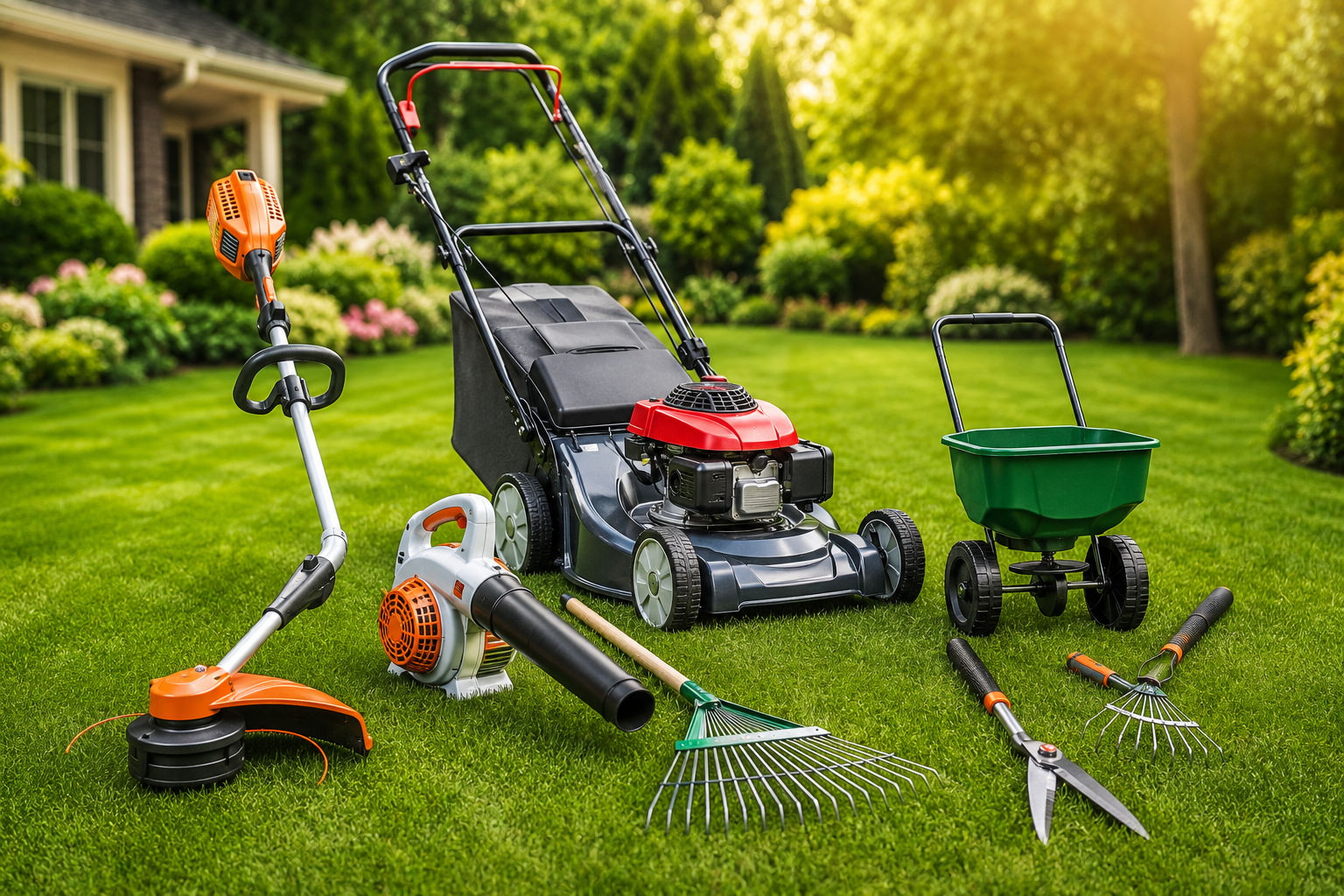
A healthy lawn doesn’t happen by accident. It takes the right combination of regular care, proper techniques, and reliable tools. Whether you’re maintaining a small front yard or a large backyard, having the right lawn care equipment makes every task easier and helps keep your grass looking its best throughout the year.
Many homeowners buy lawn tools without understanding what they actually need. This often leads to wasted money, cluttered garages, and tools that rarely get used. The good news is that you don’t need every lawn gadget on the market. A carefully selected set of essential tools can handle most lawn maintenance tasks while saving time and effort.
This guide explains the most important lawn care tools for homeowners, what each one does, how to choose the right option, and which features are worth considering before you buy.
Why Having the Right Lawn Care Tools Matters
A beautiful lawn is more than just attractive landscaping. Healthy grass can improve curb appeal, create a comfortable outdoor space for family activities, and even help reduce soil erosion.
Using the proper tools also offers several benefits:
- Makes lawn maintenance faster and easier
- Promotes healthier grass growth
- Helps prevent common lawn problems
- Saves money on professional lawn services
- Extends the life of your lawn
Instead of struggling with outdated or unsuitable equipment, investing in quality tools allows you to complete routine maintenance more efficiently.
Essential Lawn Care Tools Every Homeowner Should Own
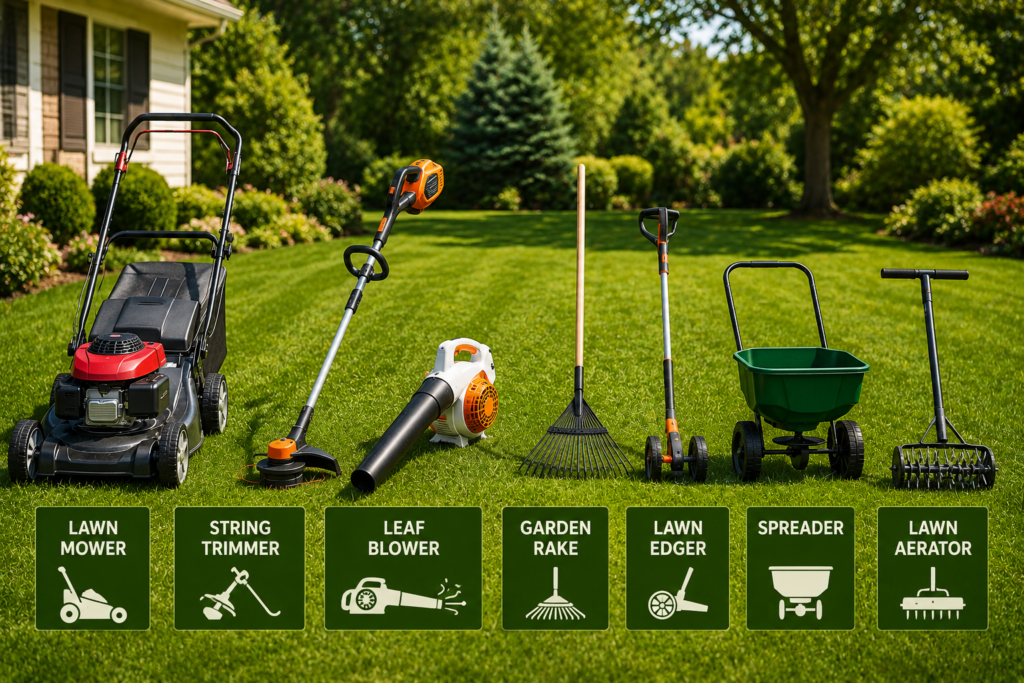
Every homeowner’s needs are different, but these tools provide a solid foundation for maintaining almost any residential lawn.
| Tool | Primary Purpose | Suitable For |
| Lawn Mower | Cutting grass | All homeowners |
| String Trimmer | Edge trimming | Medium to large lawns |
| Leaf Blower | Removing leaves and debris | All properties |
| Garden Rake | Cleaning and leveling soil | Seasonal maintenance |
| Lawn Edger | Clean lawn borders | Decorative landscapes |
| Watering Equipment | Keeping grass healthy | Every lawn |
| Spreader | Applying fertilizer and seed | Lawn improvement |
| Lawn Aerator | Improving soil health | Compact or heavy soils |
Each tool serves a specific purpose and contributes to a healthier lawn.
Lawn Mowers: The Most Important Tool
The lawn mower is the centerpiece of any lawn care routine. Choosing the right mower depends on your lawn size, terrain, and maintenance preferences.
Types of Lawn Mowers
Push Mowers
Push mowers work well for smaller yards and are generally more affordable. They require more physical effort but offer excellent control.
Best for:
- Small yards
- Flat lawns
- Budget-conscious homeowners
Self-Propelled Mowers
These mowers move forward on their own, reducing the effort needed to mow larger lawns.
Best for:
- Medium-sized yards
- Slightly uneven terrain
- Homeowners who mow frequently
Riding Lawn Mowers
For larger properties, riding mowers save significant time and reduce physical strain.
Best for:
- Large lawns
- Acreage
- Extensive landscaping
Robotic Lawn Mowers
Robotic mowers automatically cut grass on a schedule with minimal user involvement.
Best for:
- Busy homeowners
- Smart homes
- Smaller, well-defined lawns
Features to Consider
Before buying a lawn mower, compare:
- Cutting width
- Adjustable cutting height
- Grass collection bag
- Mulching capability
- Battery or gas power
- Storage space required
- Ease of maintenance
The right mower should match both your lawn size and your maintenance routine.
String Trimmers for Clean Edges
Even the best mower cannot reach every area of your lawn. Grass often grows around fences, trees, flower beds, and sidewalks.
A string trimmer creates clean edges that give your lawn a neat, finished appearance.
Common Types
- Corded electric
- Cordless battery-powered
- Gas-powered
Battery-powered trimmers have become increasingly popular because they are quieter, lightweight, and require less maintenance than gas models.
Lawn Edgers Create Professional Results
Many homeowners confuse edgers with string trimmers, but they serve different purposes.
An edger cuts a precise, vertical line between grass and hard surfaces such as:
- Driveways
- Sidewalks
- Patios
- Garden beds
This creates crisp borders that instantly improve curb appeal.
If appearance is important to you, a dedicated lawn edger is a worthwhile investment.
Leaf Blowers Save Time Throughout the Year
Leaves, grass clippings, and small debris can quickly make an otherwise healthy lawn look untidy.
A leaf blower helps remove:
- Fallen leaves
- Grass clippings
- Small twigs
- Dirt from sidewalks
- Debris from patios and driveways
Types of Leaf Blowers
| Type | Best For |
| Corded Electric | Small yards |
| Battery Powered | Most homeowners |
| Gas Powered | Large properties |
Battery-powered models provide a good balance between portability and convenience, making them suitable for many residential properties.
Garden Rakes Are More Versatile Than You Think
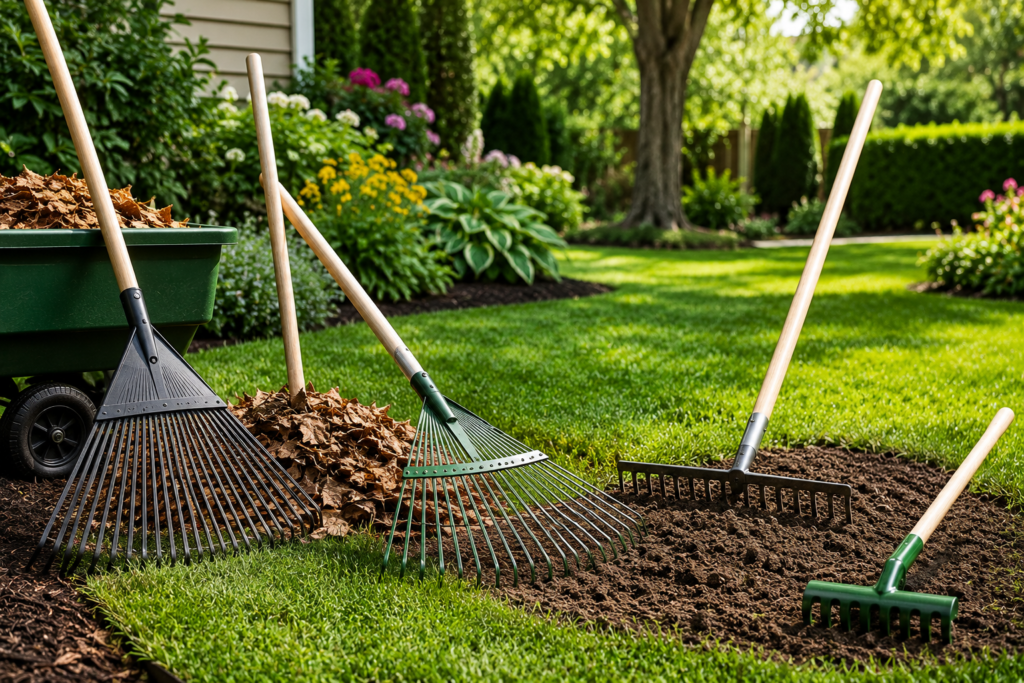
A rake isn’t only useful during the fall season.
It also helps:
- Remove dead grass
- Collect leaves
- Spread mulch
- Level soil
- Prepare garden beds
- Remove lawn debris after storms
Two common options include:
Leaf Rakes
Designed for lightweight materials like leaves and grass clippings.
Garden Rakes
Made with metal tines for leveling soil and preparing planting areas.
Having both types can make seasonal lawn care much easier.
Watering Equipment Keeps Grass Healthy
Water is one of the most important factors in maintaining healthy grass.
Choosing the right watering equipment depends on the size and shape of your lawn.
Popular options include:
- Oscillating sprinklers
- Impact sprinklers
- Stationary sprinklers
- Hose-end sprinklers
- Drip irrigation systems
A timer can also help automate watering schedules and prevent overwatering.
Generally, watering deeply but less frequently encourages stronger root growth than watering lightly every day.
Spreaders Help Apply Lawn Products Evenly
A spreader ensures fertilizer, grass seed, and weed control products are distributed evenly across your lawn.
Uneven application can lead to patchy growth or damaged grass.
Types of Spreaders
- Broadcast Spreaders
Cover large areas quickly by spreading material over a wide pattern.
- Drop Spreaders
Provide more precise application, making them suitable for smaller lawns and areas near flower beds or sidewalks.
Using the correct spreader helps improve lawn health while reducing product waste.
Lawn Aerators Improve Soil Health
Healthy grass starts below the surface. Over time, soil becomes compacted due to foot traffic, mowing, and weather. Compacted soil makes it difficult for air, water, and nutrients to reach the roots.
A lawn aerator creates small holes in the soil, allowing roots to grow deeper and stronger.
Types of Lawn Aerators
Spike Aerators
Spike aerators punch holes into the soil using solid spikes. They are affordable and suitable for light soil compaction but may not be as effective for heavily compacted lawns.
Core Aerators
Core aerators remove small plugs of soil from the ground. This method provides better airflow and is generally recommended for improving long-term lawn health.
Manual vs. Powered Aerators
Manual aerators work well for smaller lawns, while powered models are more practical for larger properties. If you only aerate once or twice a year, renting a powered aerator may be more cost-effective than buying one.
Lawn Dethatchers Help Grass Breathe
Thatch is a layer of dead grass, roots, and organic matter that builds up between the soil and healthy grass. A thin layer is normal, but excessive thatch blocks water and nutrients.
A dethatcher removes this buildup and helps grass grow more vigorously.
Signs your lawn may need dethatching include:
- Water pooling on the surface
- Thin or patchy grass
- Spongy ground
- Poor fertilizer absorption
Many homeowners dethatch in early spring or early fall, depending on their grass type.
Soil Testing Kits Make Lawn Care Smarter
One of the most overlooked lawn care tools is a soil testing kit.
Instead of guessing what your lawn needs, a soil test helps identify:
- Soil pH
- Nutrient levels
- Nitrogen deficiency
- Phosphorus levels
- Potassium levels
This information allows you to choose the right fertilizer and avoid applying unnecessary products.
Testing your soil every couple of years can improve lawn health while reducing maintenance costs.
Essential Hand Tools Every Homeowner Should Have
Power tools are important, but several simple hand tools make everyday lawn maintenance much easier.
These include:
- Garden trowel
- Pruning shears
- Hand cultivator
- Garden fork
- Weeding tool
- Hand shovel
- Garden gloves
These tools help with planting, removing weeds, trimming small plants, and maintaining flower beds around your lawn.
Choose hand tools with comfortable grips and durable materials that can withstand regular outdoor use.
Safety Equipment Should Never Be Overlooked
Lawn care often involves sharp blades, flying debris, loud equipment, and chemicals. Wearing the proper safety gear helps reduce the risk of injury.
Basic safety equipment includes:
- Safety glasses
- Hearing protection
- Work gloves
- Closed-toe shoes or boots
- Dust mask when needed
Always read the manufacturer’s instructions before operating any lawn equipment, and keep children and pets away from the work area.
How to Choose Quality Lawn Care Tools
Not every expensive tool is the best choice, and the cheapest option may not last long. Focus on value rather than price alone.
When comparing lawn tools, consider:
Build Quality
Look for durable materials such as stainless steel, reinforced plastic, or powder-coated steel.
Ease of Use
Comfortable handles, adjustable settings, and lightweight designs make tools easier to use during longer lawn care sessions.
Maintenance Requirements
Some equipment requires regular oil changes, blade sharpening, or filter replacements. Battery-powered tools generally require less maintenance than gas-powered alternatives.
Warranty and Customer Support
A good warranty provides additional peace of mind and may indicate better product quality.
Battery Compatibility
If you plan to buy several cordless tools, consider choosing products from the same battery platform. Using one interchangeable battery system can reduce costs and simplify storage.
Common Lawn Tool Buying Mistakes
Many homeowners make similar mistakes when purchasing lawn equipment. Avoiding these issues can save money and improve your overall experience.
- Buying More Than You Need
Start with the essentials. You can always expand your collection as your needs grow.
- Ignoring Lawn Size
Large equipment may be unnecessary for small yards, while compact tools can make maintaining a large property frustrating.
- Choosing Price Over Quality
The cheapest option isn’t always the most economical if it needs frequent replacement.
- Forgetting Storage Space
Before purchasing larger equipment, make sure you have enough room to store it safely and protect it from the weather.
- Overlooking Maintenance
Some tools require more maintenance than others. Consider how much time you’re willing to spend caring for your equipment.
Seasonal Lawn Care Tool Checklist
Different seasons require different maintenance tasks.
| Season | Recommended Tools |
| Spring | Lawn mower, spreader, rake, aerator, soil testing kit |
| Summer | Lawn mower, sprinkler, string trimmer, leaf blower |
| Fall | Leaf blower, rake, overseeder, spreader |
| Winter | Snow shovel (where applicable), pruning tools, equipment maintenance supplies |
Keeping your tools clean and properly maintained throughout the year helps extend their lifespan and ensures they are ready when needed.
Conclusion
Building a healthy lawn begins with choosing the right tools for your property and using them consistently throughout the year. A quality lawn mower, string trimmer, rake, watering equipment, spreader, and a few essential hand tools can handle most routine lawn care tasks while helping your grass stay healthy and attractive.
As your lawn care needs grow, you can gradually add equipment such as aerators, dethatchers, and soil testing kits to improve long-term results. Focus on buying durable, reliable tools that match your lawn size, maintenance routine, and budget instead of purchasing equipment you may rarely use.
With the right approach, lawn maintenance becomes simpler, more efficient, and more enjoyable. Investing in practical tools today can help you create an outdoor space that remains healthy, functional, and welcoming for years to come.
Frequently Asked Questions
1- What lawn care tools should every beginner own?
Most homeowners can start with a lawn mower, string trimmer, rake, watering equipment, spreader, and a few basic hand tools. These cover the majority of routine lawn maintenance tasks.
2- How often should lawn tools be maintained?
Maintenance depends on the type of equipment and how frequently it is used. Cleaning tools after each use, sharpening mower blades regularly, and following the manufacturer’s maintenance recommendations can help improve performance and extend tool life.
3- Are battery-powered lawn tools worth buying?
Battery-powered equipment has become a popular choice because it is quieter, easier to maintain, and produces no direct emissions during operation. They are suitable for many residential properties, although larger lawns may benefit from additional batteries or more powerful equipment.
4- Which lawn tool should I buy first?
A lawn mower is usually the first and most important purchase. Once regular mowing is covered, additional tools such as a string trimmer, leaf blower, and spreader can improve the overall appearance and health of your lawn.
5- Can I maintain a healthy lawn without expensive equipment?
Yes. Consistent mowing, proper watering, seasonal fertilization, and routine maintenance using a few well-chosen tools can keep most residential lawns in good condition. Expensive equipment is not always necessary.