
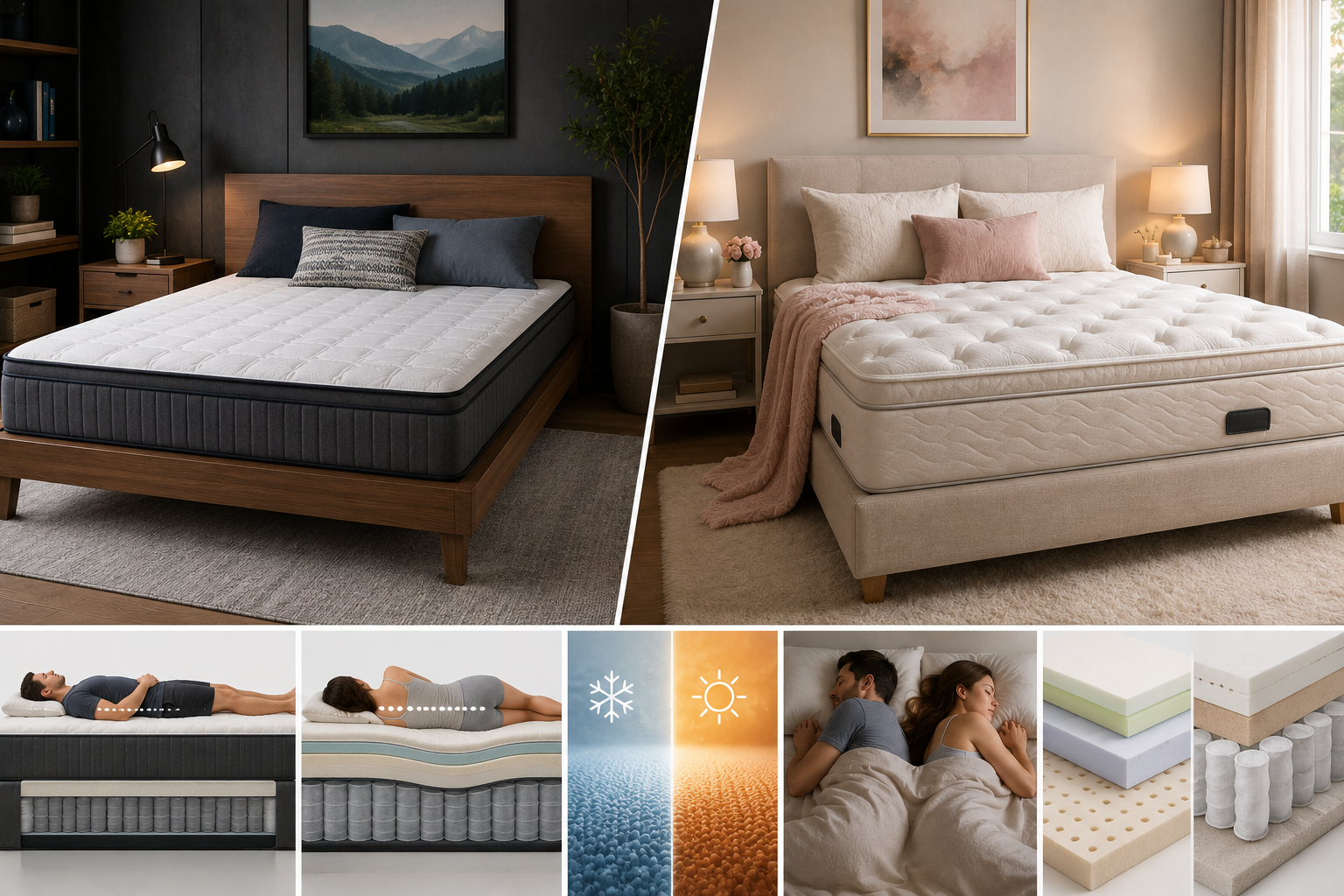
If you’ve been lying awake wondering whether your next mattress should feel like a cloud or a plank, you’re not alone. The firm vs soft mattress debate is one of the most common questions homeowners ask before buying a new bed, and honestly, there’s no single “correct” answer.
A soft mattress suits lighter sleepers, side sleepers, and anyone who wants a cushioned, sink-in feel. A firm mattress suits back sleepers, stomach sleepers, heavier body types, and people who prefer a supportive, “on top of the bed” feel. Most people, though, land happily in the middle with a medium-firm mattress.
But firmness isn’t just about personal taste. It affects your spinal alignment, your pressure points, your body temperature at night, and even how well you and your partner sleep together. This guide breaks down everything you need to know so you can choose with confidence not guesswork.
What Does “Firmness” Actually Mean?
Mattress firmness describes how much a bed resists your body weight versus how much it lets you sink in. It’s often confused with support, but they’re not the same thing.
- Support refers to how well a mattress keeps your spine aligned, regardless of firmness.
- Firmness refers to how the surface feels when you lie down plush, balanced, or hard.
A mattress can be soft and still supportive, or firm and still poorly built. The difference usually comes down to the materials inside it, especially the top comfort layer.
The Mattress Firmness Scale
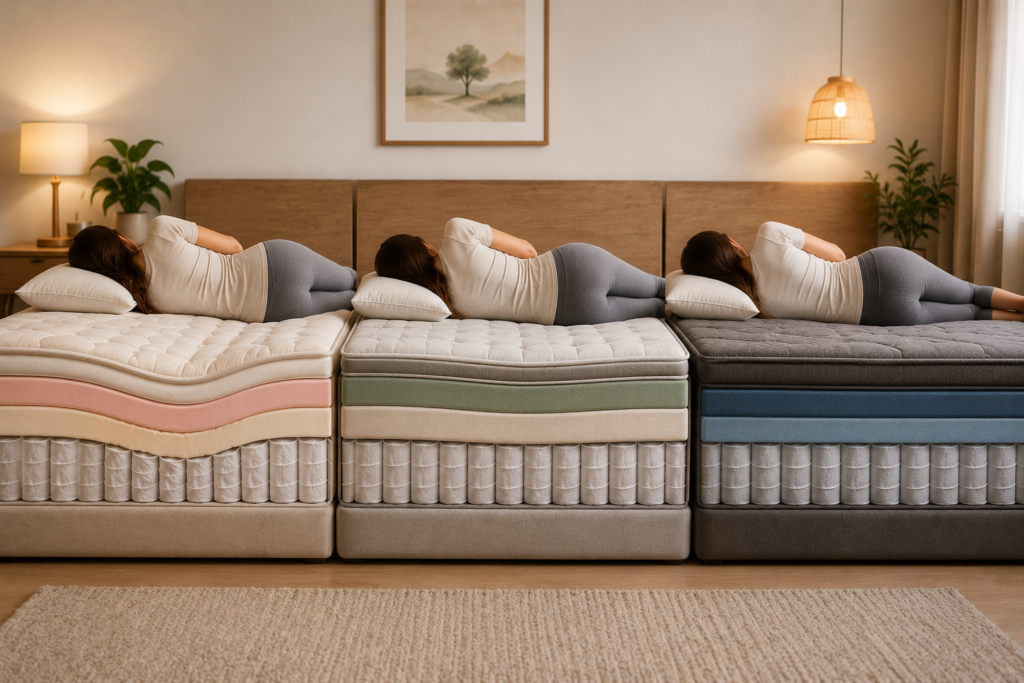
Most mattress brands rate firmness on a 1–10 scale:
| Firmness Rating | Feel | General Category |
| 1–3 | Very plush, deep sink-in | Soft |
| 4–6 | Balanced, moderate contouring | Medium / Medium-firm |
| 7–8 | Minimal sinkage, sturdy surface | Firm |
| 9–10 | Rock-solid, almost no give | Extra Firm |
Keep in mind, firmness is subjective. A 6 out of 10 might feel medium to one person and medium-firm to another, depending on body weight and sleep position. This is why testing a mattress in person or buying from a brand with a generous sleep trial matters more than the number on the label.
Firm Mattress: What It Feels Like and Who It’s Best For
A firm mattress has a thinner comfort layer, so you sleep “on” the bed rather than sinking “into” it. It typically ranges from a 7 to 9 on the firmness scale.
Benefits of a Firm Mattress
- Better spinal support for heavier bodies. More weight naturally compresses a mattress, so a firmer surface prevents excessive sinking.
- Easier to move around on. Less sinkage means less effort when changing positions.
- Cooler sleep surface. Less body contact with deep foam layers can mean better airflow.
- Long-term durability. Firmer beds, especially those with less foam, tend to show body impressions more slowly.
Who Should Consider a Firm Mattress
- Stomach sleepers — a firm surface keeps the hips from sinking too low, which prevents lower back strain.
- Heavier individuals (generally over 230 lbs) — extra body weight needs stronger pushback to avoid sinking too deep.
- Hot sleepers — firmer mattresses often use less memory foam, which can trap heat.
- People who sleep on their back with a strong preference for a “solid” feel.
Drawbacks to Know
- Can create pressure points at the shoulders and hips, especially for side sleepers.
- May feel uncomfortable for lightweight individuals who don’t sink in enough to get any cushioning.
- Not ideal for people with joint pain, as there’s less contouring around sensitive areas.
Soft Mattress: What It Feels Like and Who It’s Best For
A soft mattress has a thicker comfort layer usually memory foam, latex, or a plush pillow-top — that lets your body sink in and be cradled. Soft mattresses typically fall between 2 and 4 on the firmness scale.
Benefits of a Soft Mattress
- Pressure relief around joints. The cushioning reduces stress on shoulders, hips, and knees.
- Better for side sleepers. A soft surface allows the shoulder and hip to sink slightly, keeping the spine straight.
- Comfortable for lighter body types. Less weight means less natural compression, so softer beds still feel supportive.
- Cozy, hotel-like feel that many people simply enjoy more.
Who Should Consider a Soft Mattress
- Side sleepers — cushioning at the shoulders and hips prevents misalignment.
- Lightweight individuals (generally under 130 lbs) — they don’t sink deep enough into firmer beds to get proper contouring.
- People with joint or hip pain who need extra cushioning at pressure points.
- Sleepers who simply enjoy a plush, sink-in feel.
Drawbacks to Know
- Can lack support for heavier sleepers, causing the hips to sink too low and misalign the spine.
- May trap more heat due to thicker foam layers.
- Can feel harder to move on, especially for people who switch positions often.
- May wear down and lose shape faster than firmer beds.
Firm vs Soft Mattress: A Side-by-Side Comparison
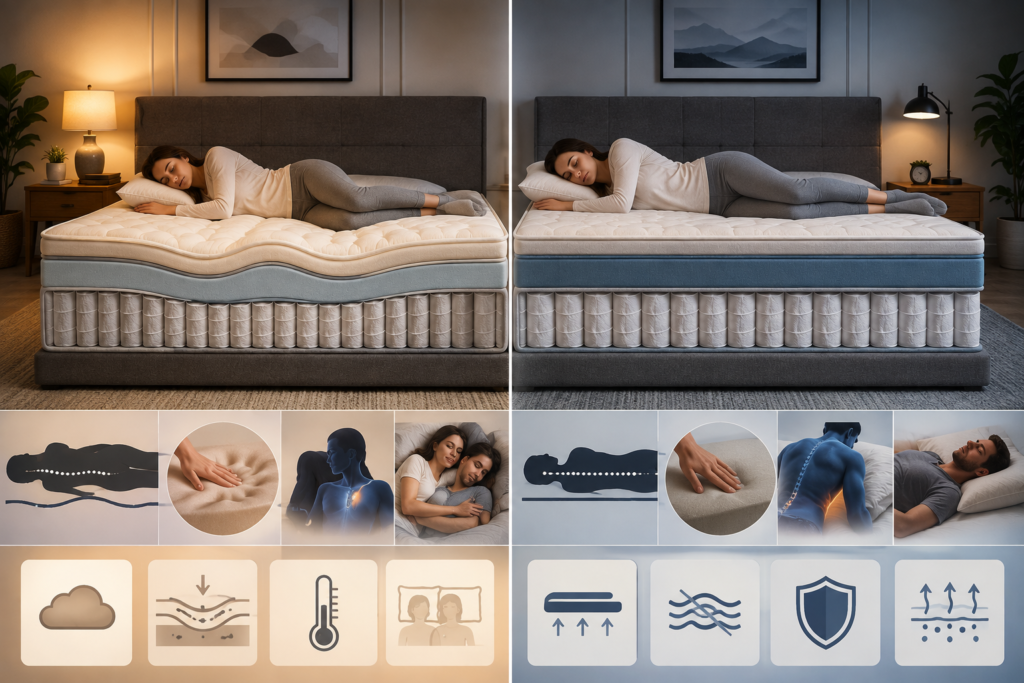
| Feature | Firm Mattress | Soft Mattress |
| Firmness Scale | 7–9 | 2–4 |
| Comfort Layer Thickness | Thin (1–2 inches) | Thick (2–4 inches) |
| Best Sleep Position | Back, Stomach | Side |
| Best Body Type | Average to Heavier | Lighter |
| Pressure Relief | Lower | Higher |
| Sleep Temperature | Cooler | Warmer |
| Ease of Movement | Easier | Harder |
| Spinal Support Risk | Overly flat for lighter bodies | Overly sunken for heavier bodies |
How Sleep Position Should Guide Your Choice
Your sleep position is one of the biggest factors in choosing the right firmness — even more than personal taste.
Side Sleepers
Side sleeping puts direct pressure on the shoulders and hips. A soft to medium-soft mattress helps these areas sink in slightly, keeping your spine in a straight line from neck to hips. A mattress that’s too firm can leave gaps under the waist and cause misalignment over time.
Back Sleepers
Back sleepers generally do best with a medium to medium-firm mattress. It needs enough give to support the natural curve of the lower back, but enough firmness to prevent the hips from sinking too deep.
Stomach Sleepers
This position benefits most from a firm mattress. Without firm support, the midsection sinks in, arching the lower back and creating strain. A firmer surface keeps the spine level.
Combination Sleepers
If you switch positions throughout the night, a medium-firm mattress is usually the safest middle ground — supportive enough for the back and stomach, with enough cushioning for side sleeping.
Does Body Weight Change the Answer?
Yes — significantly. The same mattress can feel completely different to two people of different weights.
| Body Weight | Ideal Firmness Range | Why |
| Under 130 lbs | Soft to Medium (3–5) | Not enough weight to sink into firmer beds |
| 130–230 lbs | Medium to Medium-Firm (5–7) | Balanced support and contouring |
| Over 230 lbs | Medium-Firm to Firm (6–8) | Needs stronger pushback to prevent sinking |
If you’re shopping for two people with different weights, this is where things get tricky — which brings us to couples.
Soft vs Firm Mattress for Couples
Choosing a mattress with a partner often means compromising, especially if your weights or preferred positions differ.
Practical solutions:
- Go medium-firm. It’s the most universally comfortable option and works reasonably well for most sleep positions and body types.
- Consider a hybrid mattress. These combine coil support systems with foam comfort layers, offering firmness with some pressure relief — a good middle ground for mismatched preferences.
- Look at split-firmness or adjustable beds. Some brands offer mattresses with different firmness levels on each side, or adjustable air chambers that let each partner customize their side.
- Prioritize motion isolation. Regardless of firmness, if one partner moves a lot, look for a mattress that absorbs movement so it doesn’t disturb the other.
Can Mattress Firmness Help with Back Pain?
This is one of the most common reasons people research firm vs soft mattresses. The truth is more nuanced than “firm is always better for back pain.”
- A mattress that’s too firm can leave gaps under the lower back, especially for side and back sleepers, leading to muscle strain.
- A mattress that’s too soft can let the hips sink too low, curving the spine unnaturally.
- This isn’t just general advice it’s backed by a well-known randomized controlled trial that assigned 313 adults with chronic lower back pain to sleep on either a firm or a medium-firm mattress for 90 days, without telling them which they’d received. The medium-firm group reported significantly less pain both lying in bed and on rising, along with less daytime disability. That study remains the most-cited research on mattress firmness and back pain, and a 2021 review pooling 39 separate studies reached the same conclusion.
If back pain is a serious or ongoing issue, it’s worth combining mattress firmness with advice from a physician or physical therapist, since mattress choice alone may not resolve underlying issues.
Buying Advice: How to Test Firmness Before You Commit
You can’t always tell how a mattress will feel from a showroom test or a firmness number online. Here’s how to buy smarter:
- Look for a sleep trial of at least 90–100 nights. Firmness feel changes once foam breaks in, so a short trial won’t tell you much.
- Check the return and exchange policy. Some brands let you exchange for a different firmness within the trial period — this is valuable if you’re unsure.
- Match firmness to your dominant sleep position, not the position you fall asleep in occasionally.
- Don’t rely only on the 1–10 number. Firmness scales aren’t standardized across brands, so a “6” from one company can feel different from a “6” elsewhere.
- Consider a mattress topper as a lower-cost adjustment. If your current mattress is close but not quite right, a topper can soften a firm bed or add support to a soft one before you invest in a full replacement.
Final Thoughts: There’s No Universal “Best” Firmness
The firm vs soft mattress question doesn’t have a one-size-fits-all answer — and that’s actually good news. It means you don’t have to follow trends or pick whatever’s popular; you just need to match the mattress to your body weight, sleep position, and comfort preferences.
If you’re a side sleeper or lighter-framed individual, a soft to medium-soft mattress will likely feel more comfortable and supportive. If you sleep on your stomach or carry more body weight, a firm to medium-firm mattress will probably serve you better. And if you’re unsure, or shopping with a partner, a medium-firm mattress remains the safest, most broadly comfortable starting point.
Whatever you choose, prioritize brands that offer a real sleep trial and a fair return policy. Firmness preference often takes a few weeks to settle into — and the right mattress should support your sleep, not just your first impression of it.
FAQ
1- Is a firmer mattress always better for your back?
Not necessarily. Firmness needs to match your body weight and sleep position. A mattress that’s too firm for a lighter side sleeper can cause pressure points and discomfort, which may actually contribute to poor sleep and stiffness.
2- How do I know if my mattress is too soft?
Signs include waking up with lower back pain, feeling like you’re sinking into a “bowl” shape, or noticeable body impressions forming in the mattress over time.
3- How do I know if my mattress is too firm?
You may notice pressure points at the shoulders or hips, difficulty falling asleep due to discomfort, or numbness in the arms if you’re a side sleeper.
4- Is medium-firm the safest option for most people?
Generally, yes. Medium-firm mattresses (around 5–7 on the firmness scale) tend to work reasonably well across different sleep positions and body types, which is why they’re the most commonly manufactured firmness level.
5- Does mattress firmness affect temperature?
Yes, to some degree. Softer mattresses with thick foam layers tend to retain more body heat, while firmer mattresses with less foam or more coils typically sleep cooler.
6- Can I change a mattress’s firmness after buying it?
To a limited extent. A mattress topper can add softness to a firm bed, and a firmer foundation or platform base can sometimes make a soft mattress feel slightly more supportive — but it won’t fully transform the core firmness.