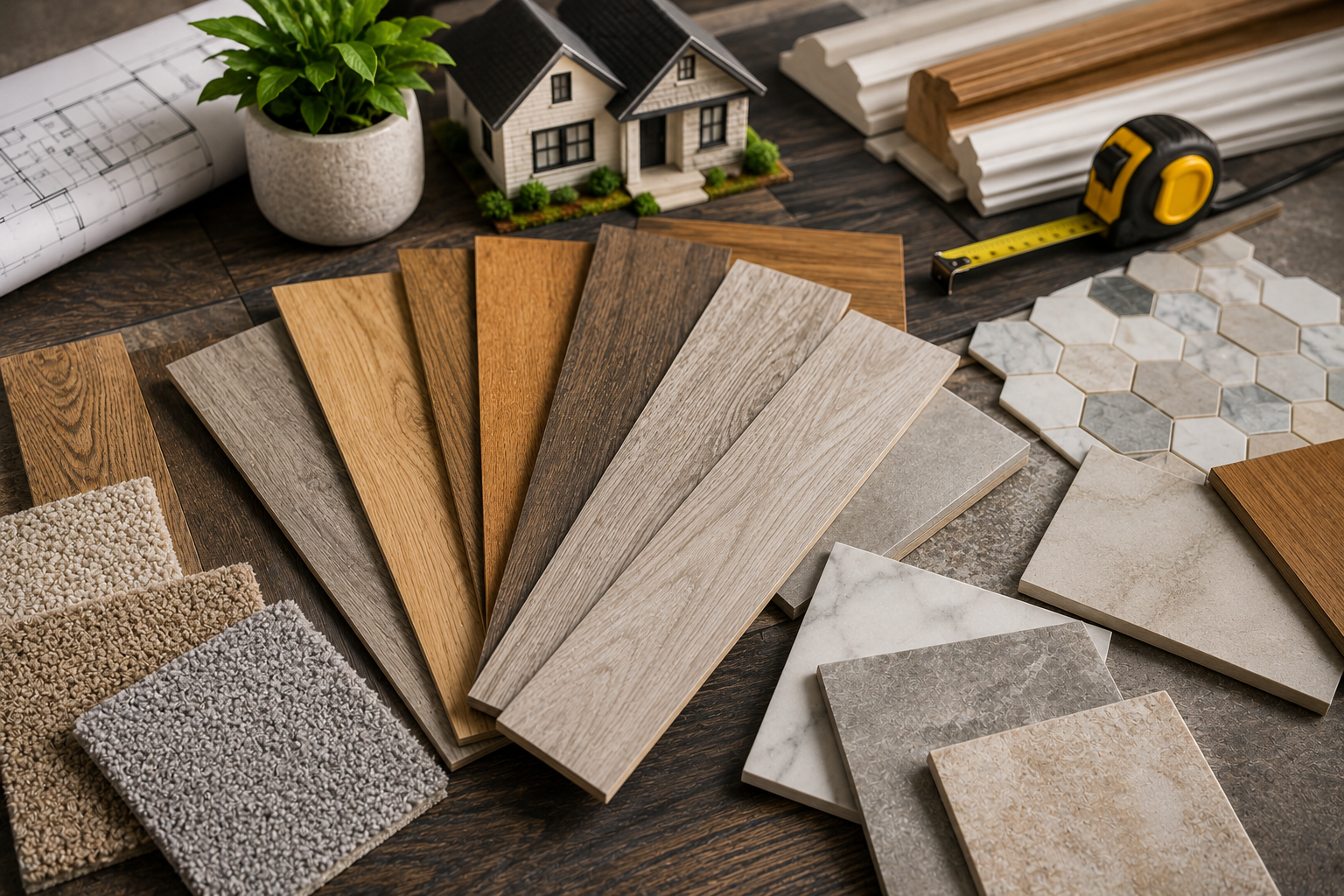
Flooring is one of the largest, most consequential purchases you’ll make for your home, affecting everything from daily comfort and maintenance to resale value years down the line. With so many materials genuinely competing for your attention, hardwood, laminate, vinyl, tile, and more, understanding how to choose flooring that fits your specific room, lifestyle, and budget matters far more than simply picking whatever looks best in a showroom.
This guide walks through every major flooring type, how to match materials to specific rooms and traffic levels, and practical buying advice to help you make a confident, informed decision.
Choosing the Right Flooring for Your Home
For most American homes, luxury vinyl plank (LVP) has become one of the most versatile, budget-friendly options, offering strong water resistance and durability suited to nearly any room, including kitchens and bathrooms. Solid or engineered hardwood remains the top choice for living rooms and bedrooms where a genuine natural material and long-term value matter most. Tile continues to be the standard for bathrooms and other consistently wet areas, thanks to its superior water resistance. The right choice ultimately depends on the specific room’s moisture exposure, foot traffic level, and how much maintenance you’re realistically willing to do.
Understanding Flooring Materials
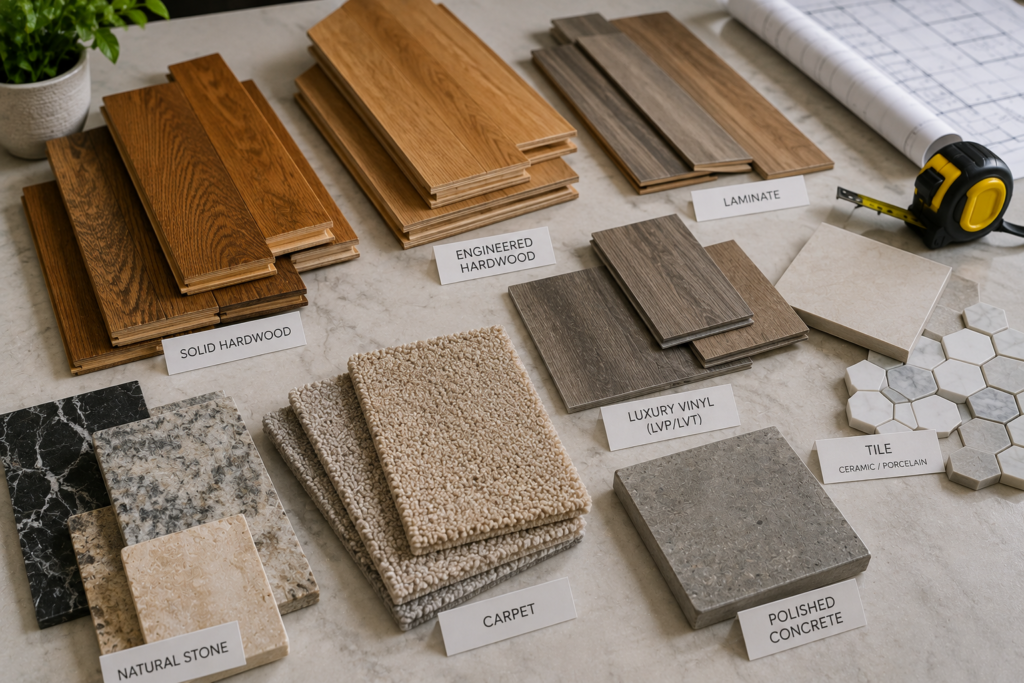
Solid Hardwood
Solid hardwood is milled from a single piece of wood, offering a genuine, timeless material that can be sanded and refinished multiple times over its lifespan, often lasting many decades with proper care. It’s vulnerable to moisture damage and generally isn’t recommended for bathrooms, laundry rooms, or basements, and it typically represents one of the higher-cost flooring options.
Engineered Hardwood
Engineered hardwood features a real hardwood veneer layer bonded over multiple layers of plywood or composite core, offering the genuine look of solid wood with improved dimensional stability against humidity and temperature changes. It can be refinished, though fewer times than solid hardwood, since the top veneer layer is thinner.
Laminate Flooring
Laminate consists of a high-resolution image layer (mimicking wood, stone, or tile) protected by a durable wear layer, all bonded over a composite core. It offers a budget-friendly, scratch-resistant option, though it generally can’t be refinished and has more limited moisture resistance than vinyl alternatives.
Luxury Vinyl Plank (LVP) and Luxury Vinyl Tile (LVT)
Vinyl flooring has advanced considerably, with luxury vinyl products offering realistic wood or stone visuals, genuine water resistance, and durability suited to high-traffic and moisture-prone areas alike. It’s generally among the most affordable flooring categories relative to its performance, making it a popular choice across nearly every room type.
Tile (Ceramic and Porcelain)
Ceramic and porcelain tile offer outstanding water resistance and durability, making them the traditional standard for bathrooms, kitchens, and entryways. Porcelain is generally denser and more water-resistant than ceramic, though both perform well in most residential applications. Tile can feel cold underfoot and is a harder, less forgiving surface for standing or dropped items compared to wood or vinyl.
Natural Stone
Materials like marble, granite, and travertine offer a genuinely premium, distinctive look, with excellent durability, though natural stone typically requires periodic sealing to maintain its water and stain resistance, and represents one of the higher-cost flooring investments.
Carpet
Carpet offers warmth, sound absorption, and comfort underfoot, making it a popular choice for bedrooms and other spaces prioritizing comfort over water resistance. It requires more regular maintenance (vacuuming, periodic professional cleaning) and generally has a shorter overall lifespan than hard flooring options.
Concrete (Polished or Stained)
Increasingly popular in modern homes, polished or stained concrete offers exceptional durability and a distinctive industrial or contemporary aesthetic, particularly suited to basements or homes with existing concrete slab foundations.
Flooring Material Comparison
| Material | Water Resistance | Durability | Maintenance | Typical Cost |
| Solid hardwood | Low | High (refinishable) | Moderate | Higher |
| Engineered hardwood | Low to moderate | High | Moderate | Moderate to higher |
| Laminate | Low to moderate | Moderate to high | Low | Lower to moderate |
| Luxury vinyl (LVP/LVT) | High | High | Low | Lower to moderate |
| Ceramic/porcelain tile | Very high | Very high | Low | Moderate |
| Natural stone | High (with sealing) | Very high | Moderate | Higher |
| Carpet | Low | Low to moderate | Moderate to high | Lower to moderate |
| Polished concrete | High | Very high | Low | Moderate to higher |
Choosing Flooring by Room
Kitchens
Prioritize water resistance and durability, given regular spills, dropped items, and heavy foot traffic. Luxury vinyl plank, tile, and engineered hardwood (with proper sealing) are all reasonable choices, with LVP and tile generally offering the strongest overall water resistance.
Bathrooms
This is the room where water resistance matters most. Tile remains the traditional standard, though luxury vinyl has become an increasingly popular, more budget-friendly alternative offering strong water resistance in a warmer, softer-underfoot material.
Living Rooms and Bedrooms
These lower-moisture, comfort-focused spaces offer the most flexibility. Hardwood, engineered hardwood, laminate, and carpet all work well here, with the choice largely coming down to aesthetic preference, comfort priorities, and budget.
Basements
Given the consistently higher humidity and moisture risk basements present, luxury vinyl plank, polished concrete, or tile are generally better choices than solid hardwood or carpet, which are considerably more vulnerable to moisture-related damage in below-grade spaces.
Entryways and Mudrooms
High-traffic, moisture-and-dirt-prone entry areas benefit from durable, easy-to-clean materials like tile or luxury vinyl, standing up well to the wear and tear these transitional spaces regularly experience.
Laundry Rooms
Given the risk of water exposure from washing machine connections, tile or luxury vinyl plank are the more practical choices over hardwood or carpet.
Best Flooring for High-Traffic Areas
High-traffic zones, hallways, entryways, living rooms in busy households, benefit most from materials that resist scratching, denting, and general wear over years of consistent use.
- Luxury vinyl plank offers strong scratch and dent resistance along with water resistance, making it particularly well suited to busy households with kids or pets
- Porcelain tile stands up exceptionally well to heavy foot traffic and is highly resistant to scratching
- Engineered hardwood with a durable wear layer handles moderate-to-high traffic well, though it’s more susceptible to scratches than vinyl or tile
- Laminate offers good scratch resistance for its price point, though it’s generally less durable overall than vinyl or tile in the highest-traffic zones
Flooring Considerations for Pets
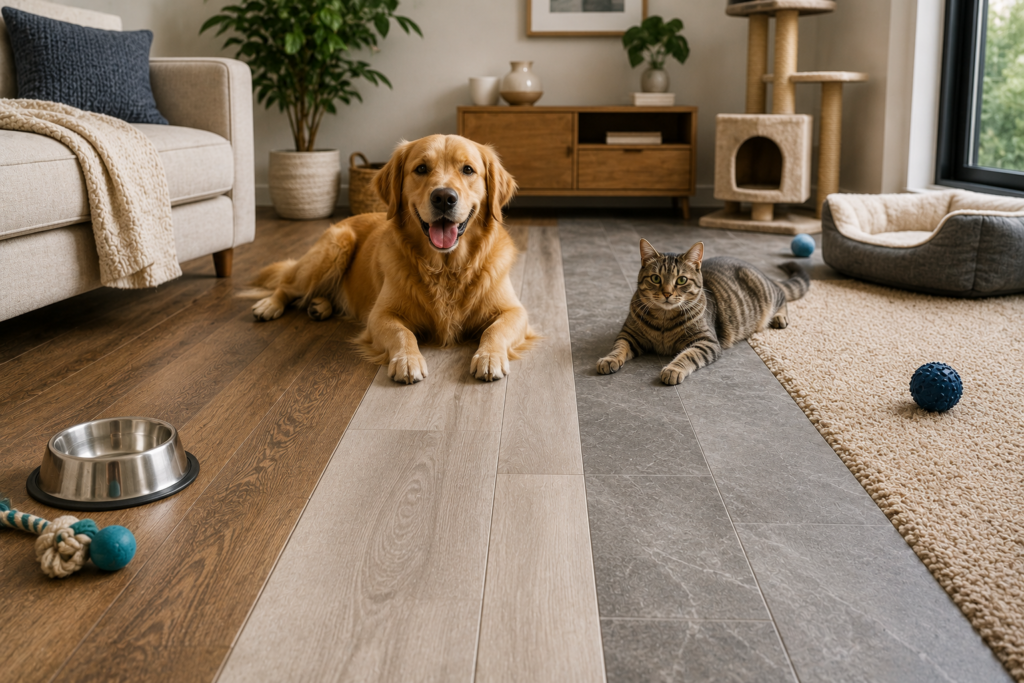
Households with pets should prioritize scratch-resistant, water-resistant materials, luxury vinyl plank and tile both perform well against pet claws and occasional accidents. Solid hardwood, while durable in many respects, is more prone to visible scratching from pet nails over time, and carpet can hold onto pet odors and stains more persistently than hard flooring alternatives.
Flooring Considerations for Allergies
For households managing allergies, hard flooring surfaces, vinyl, tile, hardwood, laminate, generally trap fewer allergens than carpet, since carpet fibers can hold onto dust, pet dander, and other allergens more readily than a smooth, easily cleaned hard surface.
Understanding Flooring Durability Ratings
AC Ratings for Laminate
Laminate flooring is rated using an AC (Abrasion Class) system, ranging from AC1 (light residential use) to AC5 (heavy commercial use). For most residential applications, AC3 or AC4 offers strong durability suited to typical household traffic.
Wear Layer Thickness for Vinyl
Luxury vinyl products are rated by wear layer thickness (measured in mils), with thicker wear layers generally offering better long-term scratch and dent resistance. For busy households or high-traffic areas, prioritizing a thicker wear layer is worth the modest additional cost.
PEI Ratings for Tile
Tile is rated using the Porcelain Enamel Institute (PEI) scale, from PEI 1 (suited to walls only) up to PEI 5 (suited to heavy commercial traffic). For most residential floor applications, PEI 3 or higher is appropriate.
Installation Considerations
DIY-Friendly Options
Luxury vinyl plank (particularly click-lock styles) and laminate flooring are generally the most DIY-friendly options, designed with straightforward installation systems that don’t require specialized tools or extensive experience.
Professional Installation Recommended
Solid hardwood, tile, and natural stone typically benefit from professional installation, given the precision required for proper substrate preparation, cutting, and finishing, particularly for larger rooms or complex layouts.
Subfloor Preparation
Regardless of material, proper subfloor preparation, ensuring it’s level, clean, and appropriately prepared for the specific flooring type, significantly affects both installation quality and the flooring’s long-term performance and appearance.
Budget Planning
Flooring costs vary considerably by material, quality tier, and whether installation is DIY or professional. Laminate and budget-tier luxury vinyl represent the most affordable entry point for most rooms. Mid-range options, including quality LVP, engineered hardwood, and standard ceramic tile, balance durability and cost for most households. Premium materials, solid hardwood, natural stone, and high-end porcelain tile, represent a longer-term investment, often justified by superior longevity and, in some cases, meaningful resale value benefits.
Long-Term Value and Resale Considerations
Materials That Tend to Add Resale Value
Hardwood flooring, particularly in main living areas, is frequently cited by real estate professionals as a flooring type that can positively influence buyer perception and, in some cases, home value, given its enduring popularity and perceived quality.
Practical Value Beyond Resale
Even flooring materials that don’t specifically boost resale value, quality luxury vinyl or well-installed tile, offer genuine practical value through durability and lower long-term maintenance costs, which matters considerably for homeowners not planning to sell in the near term.
Common Mistakes to Avoid
- Choosing flooring based on appearance alone, without considering the specific room’s moisture exposure and traffic level
- Installing solid hardwood in bathrooms or basements, where moisture risk makes it a poor material match
- Overlooking durability ratings, choosing a laminate or vinyl product not rated for your household’s actual traffic level
- Skipping subfloor preparation, undermining both installation quality and long-term flooring performance
- Underestimating maintenance requirements, particularly for carpet or natural stone, which require more ongoing care than some alternatives
Conclusion
Choosing the best flooring for home use comes down to matching material durability, water resistance, and maintenance requirements to each specific room’s actual conditions, rather than selecting one flooring type for your entire home based on appearance alone. Prioritize water-resistant options like luxury vinyl or tile for kitchens, bathrooms, and basements, while reserving hardwood, laminate, or carpet for lower-moisture living spaces where comfort and aesthetics can take priority. With the right material matched to each room, you’ll end up with flooring that looks good and genuinely performs well for years of everyday living.
Frequently Asked Questions
1- What is the best flooring for a home with kids and pets?
Luxury vinyl plank is generally the top choice, offering strong scratch and water resistance suited to the wear and occasional accidents common in busy households.
2- Is luxury vinyl plank as good as hardwood?
It depends on your priorities. LVP offers superior water resistance and durability at a generally lower cost, while solid hardwood offers a genuine natural material that can be refinished multiple times over a long lifespan.
3- What flooring is best for bathrooms?
Tile remains the traditional standard for bathrooms given its superior water resistance, though luxury vinyl has become a popular, more budget-friendly alternative offering strong water resistance as well.
4- Can I install flooring myself, or do I need a professional?
This depends on the material. Luxury vinyl plank and laminate are generally DIY-friendly, while solid hardwood, tile, and natural stone typically benefit from professional installation given the precision required.
5- What flooring is best for allergies?
Hard flooring surfaces, vinyl, tile, hardwood, and laminate, generally trap fewer allergens than carpet, making them a better choice for households managing allergy concerns.
6- How do I know if flooring is durable enough for my household?
Check the specific durability rating for your chosen material, AC rating for laminate, wear layer thickness for vinyl, or PEI rating for tile, and match it to your household’s actual traffic level and lifestyle.
7- Does flooring choice affect home resale value?
Hardwood flooring is frequently cited as a material that can positively influence buyer perception, though quality installation and good condition matter across all flooring types when it comes to resale considerations.