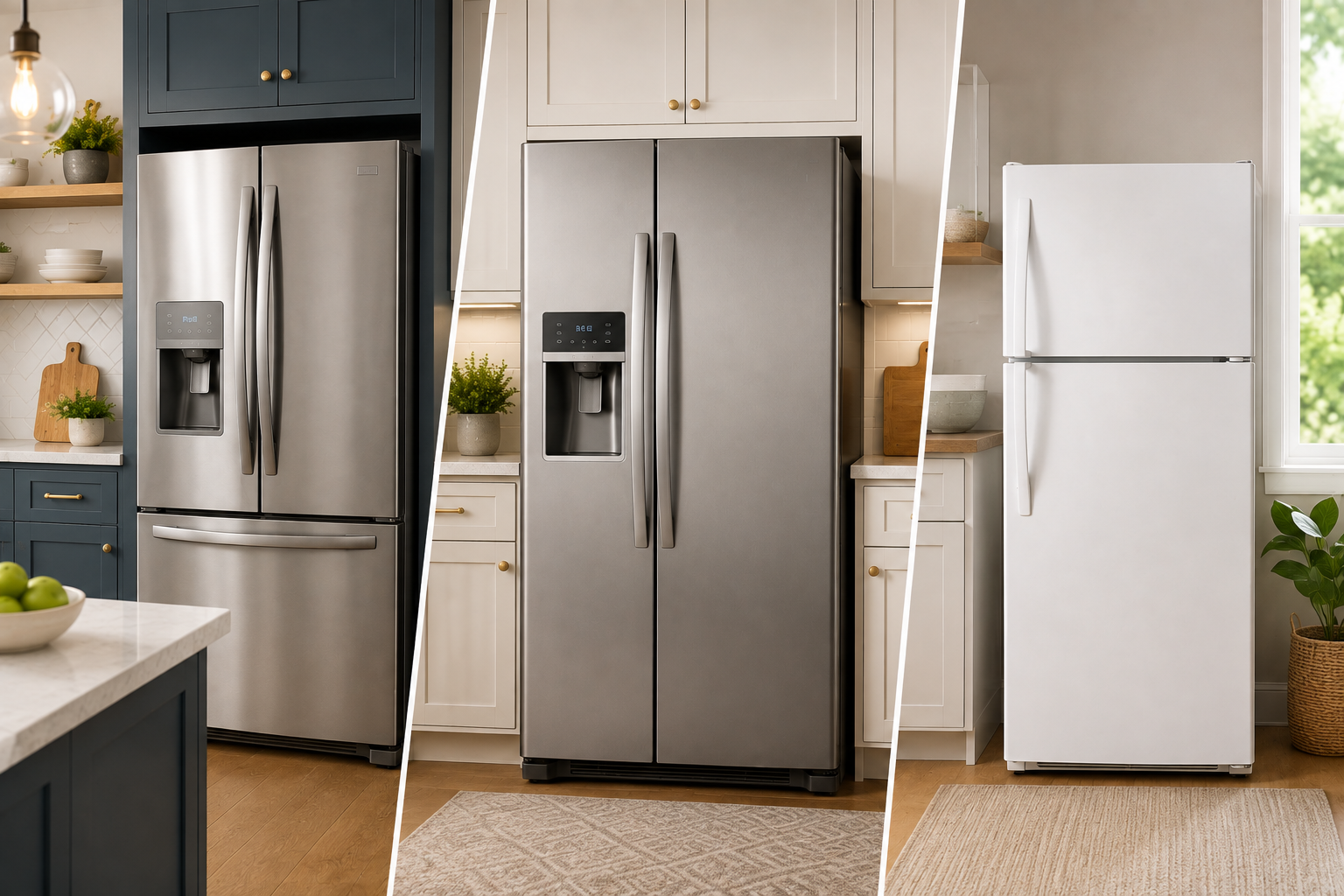
Choosing a new refrigerator often comes down to one central decision: which door configuration actually fits how your household cooks, shops, and lives. The French door vs side by side refrigerator debate, along with the more traditional top freezer option, represents the three most common configurations in American kitchens today, and each one comes with real trade-offs.
This guide breaks down the practical differences between these three refrigerator types, covering space requirements, price, accessibility, energy efficiency, and which option suits which kind of household. Rather than declaring one universally “best,” we’ll walk through the strengths and weaknesses of each so you can match the decision to your own kitchen and daily habits.
Which One Is Perfect?
For most American households today, a French door refrigerator offers the best overall balance of accessibility, storage flexibility, and modern kitchen design, which is why it has become the most popular configuration nationally. A side-by-side refrigerator works better for narrower kitchens with limited door swing clearance, while a top freezer refrigerator remains the most affordable and energy-efficient choice for budget-conscious buyers or smaller households. The right choice ultimately depends on your kitchen’s layout, your household size, and how you prioritize cost against convenience.
Understanding Each Configuration
What Is a Top Freezer Refrigerator?
A top freezer refrigerator places the freezer compartment above the main refrigerator section, a layout that’s been standard in American kitchens for decades. It typically uses a single wide door for the freezer and another for the fresh food compartment below.
This configuration remains popular for its simplicity, affordability, and energy efficiency, though it places everyday fresh food storage at a lower, less convenient height compared to newer designs.
What Is a Side-by-Side Refrigerator?
A side-by-side refrigerator splits the unit vertically, with the freezer on one side and the refrigerator on the other, each accessed through its own narrower door. This configuration became popular in the 1990s and 2000s and remains a common choice, particularly in kitchens with limited space for a door to swing fully open.
The narrower compartments on each side mean less width for large items, though the vertical split gives easy eye-level access to both fresh and frozen food simultaneously.
What Is a French Door Refrigerator?
A French door refrigerator combines two narrower doors for the refrigerator section on top, opening outward like traditional French doors, with a freezer drawer below. This configuration has become the most popular style in new American kitchens, offering wide, unobstructed shelving in the main compartment along with convenient drawer-based freezer access.
Side-by-Side Comparison Table
| Feature | Top Freezer | Side-by-Side | French Door |
| Average Price | Lowest | Mid-range | Mid to high |
| Energy Efficiency | Highest | Moderate | Moderate to good |
| Fresh Food Accessibility | Lower shelf height | Eye-level, narrow | Eye-level, wide |
| Freezer Accessibility | Eye-level | Eye-level, narrow | Lower, drawer-based |
| Door Clearance Needed | Full swing | Full swing (narrower doors) | Full swing (narrower doors) |
| Interior Shelf Width | Full width | Narrower per side | Full width |
| Popularity in New Homes | Declining | Moderate | Highest |
| Best Kitchen Type | Small to mid-size | Narrow kitchens | Open, modern kitchens |
1- Space and Layout Considerations
Door Swing Clearance
One of the most practical differences between these three types comes down to how much clearance each door configuration needs to open fully.
Top freezer models use one wide door per compartment, requiring a full swing radius that can be awkward in tight kitchens positioned near an island or adjacent counter. Side-by-side and French door models use narrower doors on each side, which require less swing clearance individually, making them better suited to kitchens where a wide-swinging door would bump into nearby cabinetry or furniture.
Footprint and Width
Side-by-side refrigerators tend to be wider overall than comparable top freezer or French door models with similar capacity, since the vertical split requires more total width to achieve the same storage volume. In narrow kitchen layouts, this added width can be a limiting factor.
Kitchen Style Fit
French door refrigerators have become closely associated with modern, open-concept kitchen design, often serving as a visual centerpiece alongside a kitchen island. Top freezer models tend to suit more traditional or budget-focused kitchens, while side-by-side units fit comfortably into a wide range of kitchen styles without standing out as strongly in either direction.
2- Storage and Accessibility
Top Freezer Refrigerators
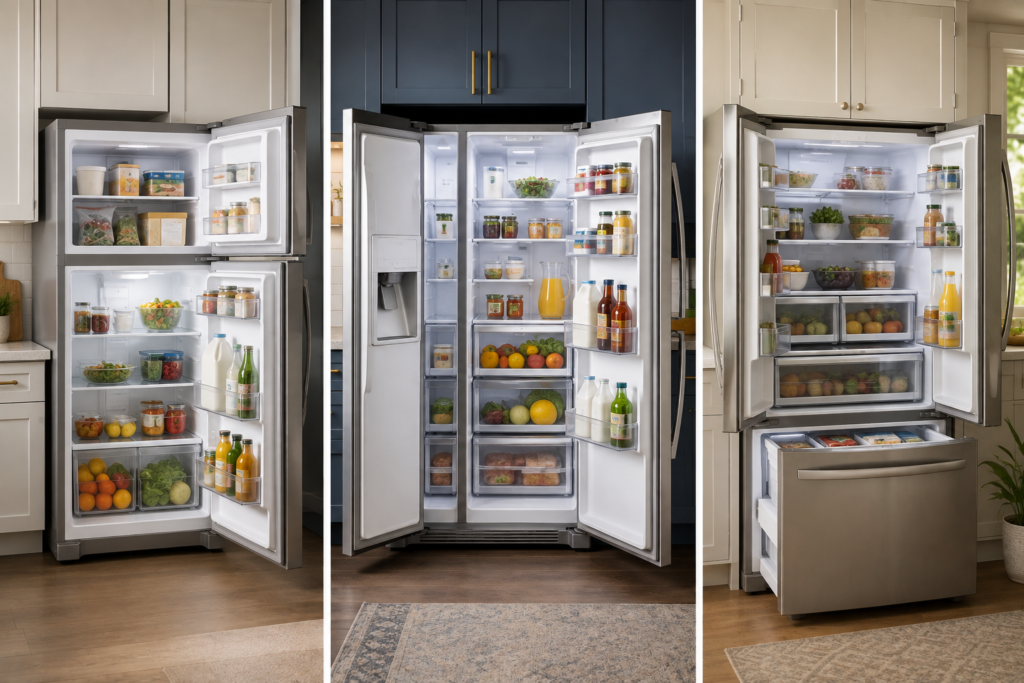
The freezer compartment sits at eye level, making frozen items easy to see and reach, but the fresh food section below requires more bending to access items on lower shelves. This layout works well for households that use their freezer more frequently than their refrigerator, though it’s become less common as daily habits have shifted toward more frequent fresh food access.
Side-by-Side Refrigerators
Both fresh and frozen food sit at eye level, offering convenient access to each without bending. However, the narrower compartments on each side can make it difficult to fit wide items, such as sheet pans, large platters, or a wide birthday cake, which won’t fit through the narrower door opening even if there’s technically room inside.
French Door Refrigerators
The wide, unobstructed refrigerator section offers the best shelving flexibility of the three configurations, easily accommodating large platters, wide containers, and bulk grocery hauls. The freezer sits in a lower drawer, which requires more bending than a side-by-side or top freezer’s eye-level freezer, though many French door models include organizational bins or a smaller flip-up drawer to reduce how often you need to fully bend down.
3- Energy Efficiency Comparison
Energy efficiency varies somewhat across these three configurations, though it’s also heavily influenced by the specific model, insulation quality, and whether it carries ENERGY STAR certification.
Top freezer refrigerators are generally the most energy-efficient configuration, since their simpler design and fewer components require less energy to maintain consistent temperatures. Side-by-side and French door models tend to use somewhat more energy, partly due to larger overall size and additional features like ice makers or dual cooling systems, though efficient, well-insulated modern models in either category can still perform reasonably well.
Regardless of configuration, checking for ENERGY STAR certification remains one of the most reliable ways to identify a genuinely efficient model, since certified refrigerators are required to meet specific federal efficiency standards.
4- Price Comparison
Price differences between these three configurations are fairly consistent across the market, though specific models and brands vary.
Top freezer refrigerators are typically the most affordable option, offering solid functionality without the added manufacturing complexity of more elaborate door configurations. Side-by-side models generally cost more than top freezer units of similar capacity, reflecting their more complex internal layout and typically larger overall footprint. French door refrigerators tend to occupy the mid-to-upper price range, with cost increasing further for models that include premium features like smart connectivity, dual ice makers, or panel-ready finishes.
Which Is the Best Refrigerator Type for Family Use?
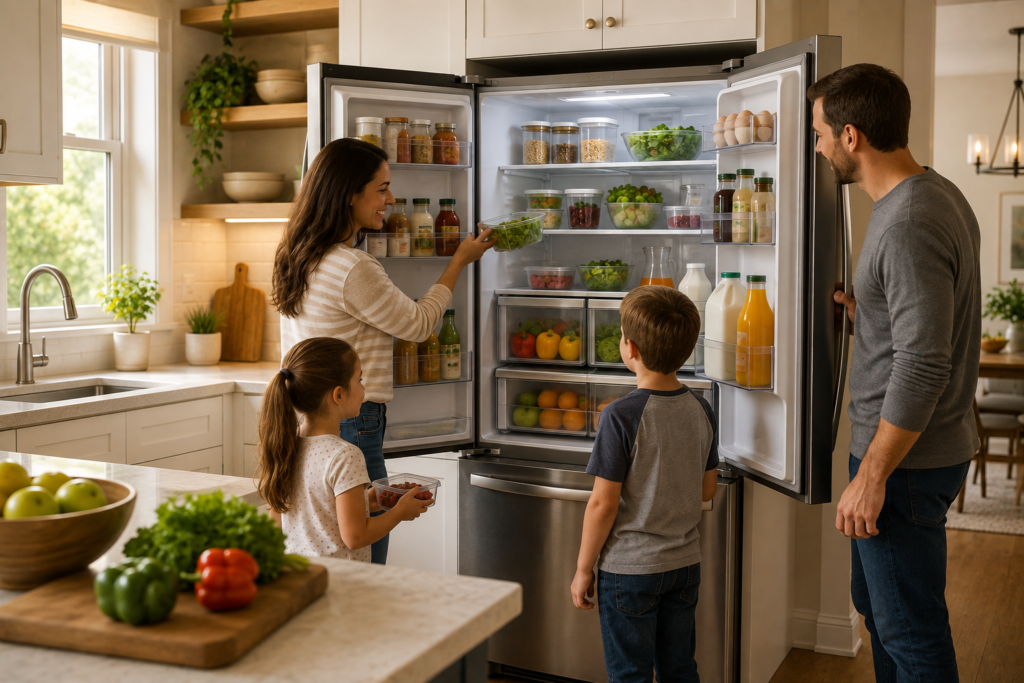
For households trying to determine the best refrigerator type for family use, the right answer depends heavily on family size and shopping habits.
Larger families that shop for groceries less frequently, buying in bulk every week or two, generally benefit most from a French door refrigerator’s wide shelving and larger typical capacity. This configuration accommodates bulk grocery hauls, large serving platters, and the kind of varied storage needs a bigger household tends to have.
Smaller households or those who shop more frequently in smaller quantities may find a top freezer model offers more than enough capacity at a lower price point, without paying for storage space that goes unused.
Households in narrower kitchens, regardless of family size, may find a side-by-side model offers the best practical fit, even if it’s not the first configuration they’d choose based on features alone.
Maintenance and Longevity
Maintenance requirements are broadly similar across all three configurations, though a few differences are worth noting.
Top freezer models, with their simpler design and fewer moving parts, generally have fewer components that can require repair over the refrigerator’s lifespan. Side-by-side and French door models, particularly those with features like dual ice makers, in-door water dispensers, or dual compressor systems, have more components that can potentially need servicing over time, though this doesn’t necessarily mean lower overall reliability, since modern appliances across all configurations are generally built to last a decade or more with proper care.
Regardless of configuration, basic maintenance, such as cleaning condenser coils periodically and checking door seals for wear, helps extend any refrigerator’s lifespan and maintain consistent energy efficiency.
Pros and Cons Summary
Top Freezer Refrigerators
Pros
- Most affordable option
- Best energy efficiency
- Simple, reliable design with fewer components
Cons
- Fresh food storage at a lower, less convenient height
- Less popular in modern kitchen design
- Typically less interior storage flexibility
Side-by-Side Refrigerators
Pros
- Eye-level access to both fresh and frozen food
- Narrower doors suit tighter kitchen layouts
- Moderate price point
Cons
- Narrower compartments limit storage of wide items
- Larger overall footprint for equivalent capacity
- Moderate energy efficiency compared to top freezer models
French Door Refrigerators
Pros
- Widest, most flexible fresh food storage
- Popular, modern kitchen aesthetic
- Convenient for large households and bulk shopping
Cons
- Freezer drawer requires more bending than eye-level designs
- Generally higher price point
- More components that can potentially require servicing over time
Practical Buying Tips
A few practical considerations can help narrow down the decision regardless of which configuration you’re leaning toward:
- Measure your kitchen space and door swing clearance before shopping, since this alone can eliminate certain configurations
- Think honestly about your household’s grocery shopping habits, since bulk shoppers benefit from different storage than frequent, smaller shoppers
- Consider how often you access frozen versus fresh food, since this affects which eye-level configuration suits you best
- Factor in long-term energy costs alongside the upfront purchase price
- Decide which features genuinely matter to your household before comparing specific models, rather than being swayed by premium features you may not use
Common Mistakes to Avoid
- Choosing based on trend alone, selecting a French door model simply because it’s currently popular, without considering whether it fits your kitchen’s clearance
- Ignoring door swing clearance, resulting in a refrigerator door that can’t open fully once installed
- Underestimating a side-by-side’s narrower compartments, then struggling to fit standard-sized platters or sheet pans
- Overlooking energy costs, focusing only on the upfront price rather than long-term operating expenses
- Buying more capacity than needed, paying for storage space that goes unused based on actual shopping habits
Conclusion
The choice between French door vs side-by-side refrigerator configurations, or a more traditional top freezer refrigerator, ultimately comes down to your kitchen’s layout, your household’s size and shopping habits, and how you weigh upfront cost against long-term convenience. French door models offer the most flexible, modern storage solution for larger households and open kitchens, side-by-side units suit tighter spaces with eye-level access to both compartments, and top freezer refrigerators remain a reliable, budget-friendly option for smaller households. Measuring your space carefully and thinking honestly about your daily habits will lead you to the configuration that genuinely fits your home, not just the one that’s currently trending.
Frequently Asked Questions
1- Which is better, French door or side-by-side refrigerators?
French door refrigerators generally offer more flexible, wider shelving for fresh food, while side-by-side models suit kitchens with tighter door clearance. The better option depends on your kitchen’s layout and storage priorities.
2- Are top freezer refrigerators outdated?
Not necessarily. While they’ve become less common in new home construction, top freezer models remain a practical, affordable, and energy-efficient choice, particularly for smaller households or budget-conscious buyers.
3- Which refrigerator type is most energy efficient?
Top freezer refrigerators are generally the most energy-efficient configuration due to their simpler design, though checking for ENERGY STAR certification matters more than configuration type alone.
4- Do French door refrigerators hold more food than side-by-side models?
French door refrigerators typically offer wider, more usable shelving in the fresh food section, though total capacity varies by specific model rather than configuration type alone.
5- Which refrigerator type is best for a small kitchen?
Top freezer or compact French door models generally suit small kitchens best, since side-by-side units tend to require more overall width for equivalent storage capacity.