
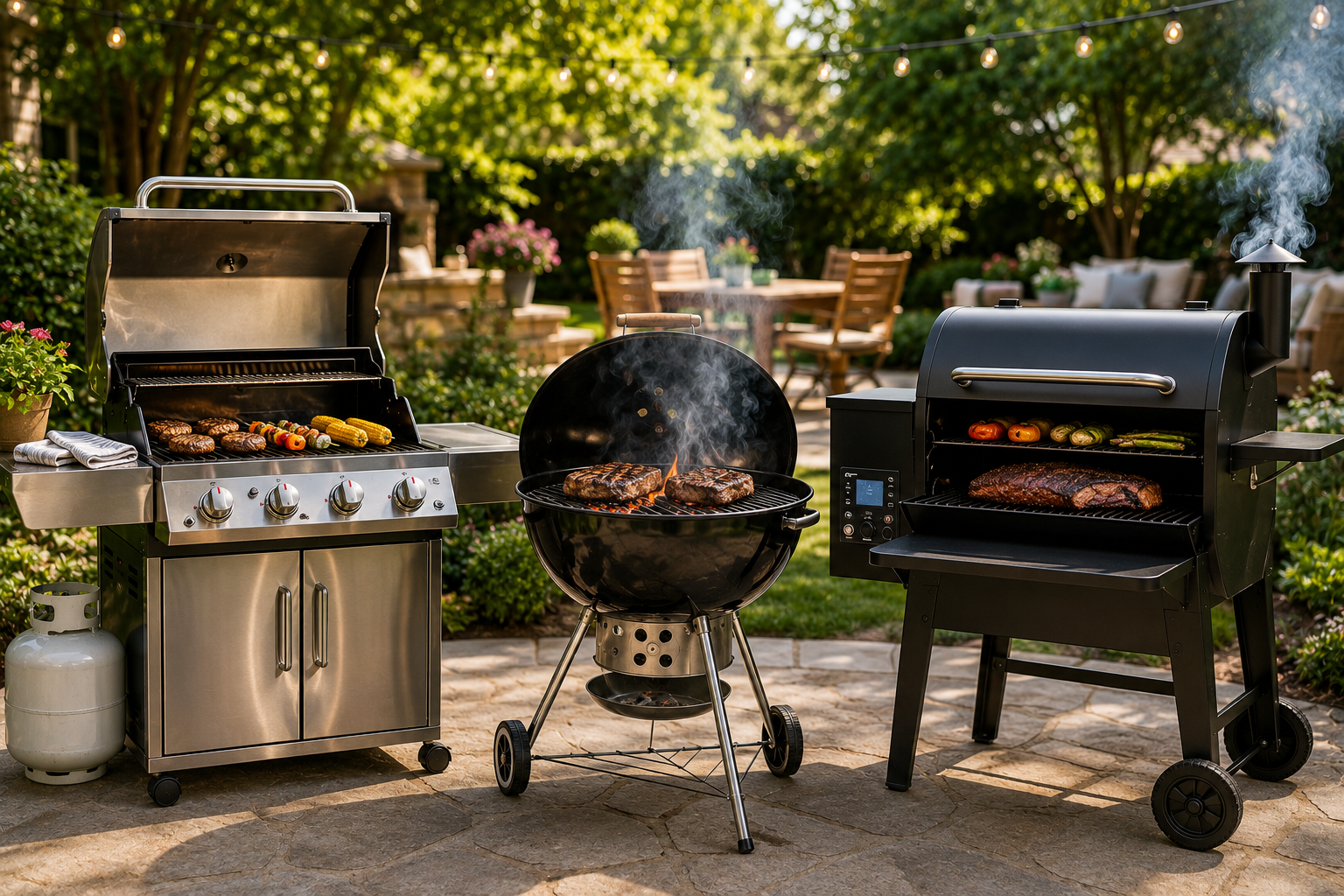
Buying a new BBQ grill is exciting, but it can also be confusing. With so many models and fuel types available, many homeowners find themselves asking the same question: Should I buy a gas grill, a charcoal grill, or a pellet grill?
Each type of grill offers a unique cooking experience. Some are built for speed and convenience, while others focus on delivering authentic smoky flavor or precise temperature control. The best choice depends on your cooking style, available outdoor space, budget, and how often you plan to grill.
If you frequently cook quick family dinners, a gas grill may be the most practical option. If you enjoy traditional backyard barbecue with rich smoky flavor, a charcoal grill could be the perfect fit. If you love slow-smoked brisket, ribs, and versatile outdoor cooking, a pellet grill offers impressive flexibility.
There is no single “best” grill for everyone. Instead, the goal is to find the one that matches your lifestyle and cooking preferences.
In this guide, we’ll compare gas, charcoal, and pellet grills in detail. You’ll learn how each grill works, where each one excels, and what factors you should consider before making your investment.
Why Choosing the Right Grill Matters
A quality BBQ grill can last for many years, provided it gets proper regular maintenance. Choosing the right one affects more than just your cooking it also impacts fuel costs, convenience, and the overall outdoor cooking experience.
The right grill should:
- Match your cooking habits
- Fit your available outdoor space
- Stay within your budget
- Be easy to maintain
- Produce the flavor you enjoy
- Handle the number of people you typically cook for
Taking time to compare your options now can help you avoid buyer’s remorse later.
Understanding the Three Main Grill Types
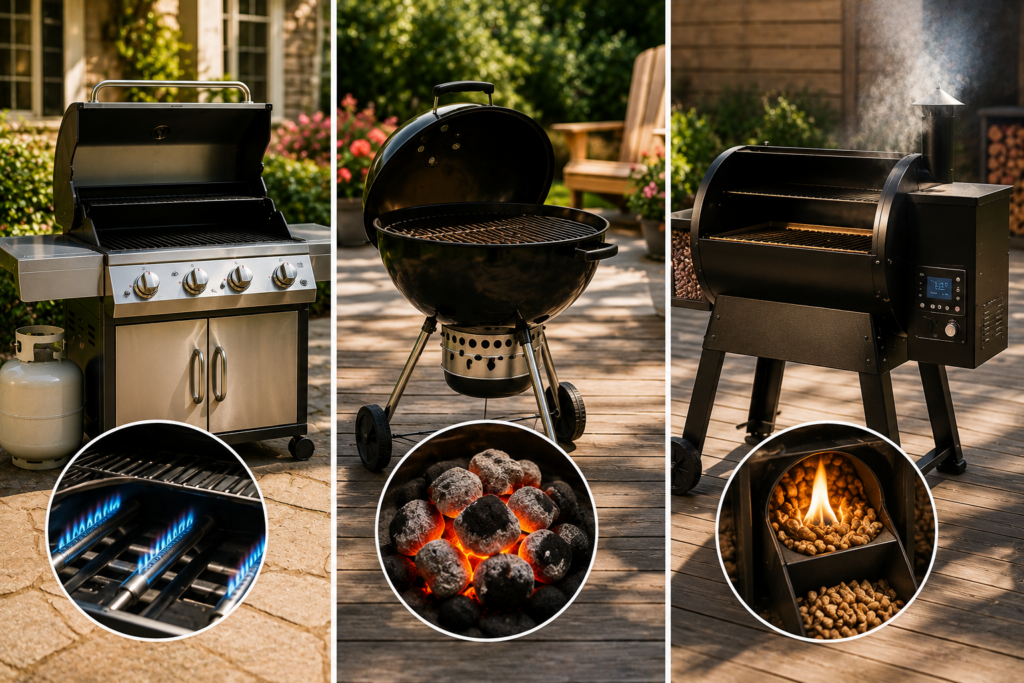
Before comparing features, it’s helpful to understand how each grill works.
Gas Grills
Gas grills cook using propane or natural gas.
Turning a control knob ignites the burners, producing heat almost instantly.
Gas grills are popular because they’re fast, convenient, and easy to operate.
Most homeowners can begin cooking within 10 to 15 minutes.
Charcoal Grills
Charcoal grills burn charcoal briquettes or lump charcoal to generate heat.
The burning charcoal also creates smoke, giving food its classic barbecue flavor.
Although charcoal requires more preparation and cleanup, many grilling enthusiasts believe the flavor is unmatched.
Pellet Grills
Pellet grills burn compressed hardwood pellets.
An electric auger automatically feeds pellets into the fire pot while digital controls regulate cooking temperature.
Pellet grills combine grilling, roasting, baking, and smoking in one appliance, making them one of the most versatile outdoor cooking options available.
Quick Comparison
| Feature | Gas Grill | Charcoal Grill | Pellet Grill |
| Heating Speed | Excellent | Slow | Moderate |
| Temperature Control | Excellent | Moderate | Excellent |
| Smoky Flavor | Good | Excellent | Excellent |
| Ease of Use | Excellent | Moderate | Excellent |
| Maintenance | Low | Moderate | Moderate |
| Fuel Cost | Moderate | Moderate | Moderate |
| Best For | Everyday grilling | Traditional BBQ | Smoking and versatility |
This table provides a quick overview, but the best choice depends on what matters most to you.
Gas Grills: Fast and Convenient
Gas grills are among the most popular choices for American homeowners because they simplify outdoor cooking.
Advantages of Gas Grills
Gas grills offer several benefits.
Quick Start
Simply turn the burners on and ignite the grill.
Within minutes, you’re ready to cook.
Easy Temperature Control
Adjusting heat is as simple as turning a knob.
This makes gas grills beginner-friendly and ideal for cooking multiple foods at different temperatures.
Faster Cleanup
Since there is no ash to remove, cleaning usually involves:
- Brushing cooking grates
- Emptying grease trays
- Wiping surfaces
Routine maintenance is relatively simple.
Great for Frequent Grilling
If you grill multiple times each week, convenience becomes an important factor.
Gas grills encourage more frequent outdoor cooking because setup is quick and hassle-free.
Potential Drawbacks
Gas grills also have limitations.
Some homeowners feel they produce less smoky flavor than charcoal or pellet grills.
You’ll also need access to propane refills or a natural gas connection, depending on the model you choose.
Fuel type also affects fire risk. According to the National Fire Protection Association’s home grill fires report, gas grills are involved in the large majority of home grilling fires each year, largely due to propane leaks and grease buildup, compared to charcoal or wood-pellet models. Checking gas connections regularly and keeping the grill clean reduces this risk significantly.
Charcoal Grills: Traditional BBQ Flavor
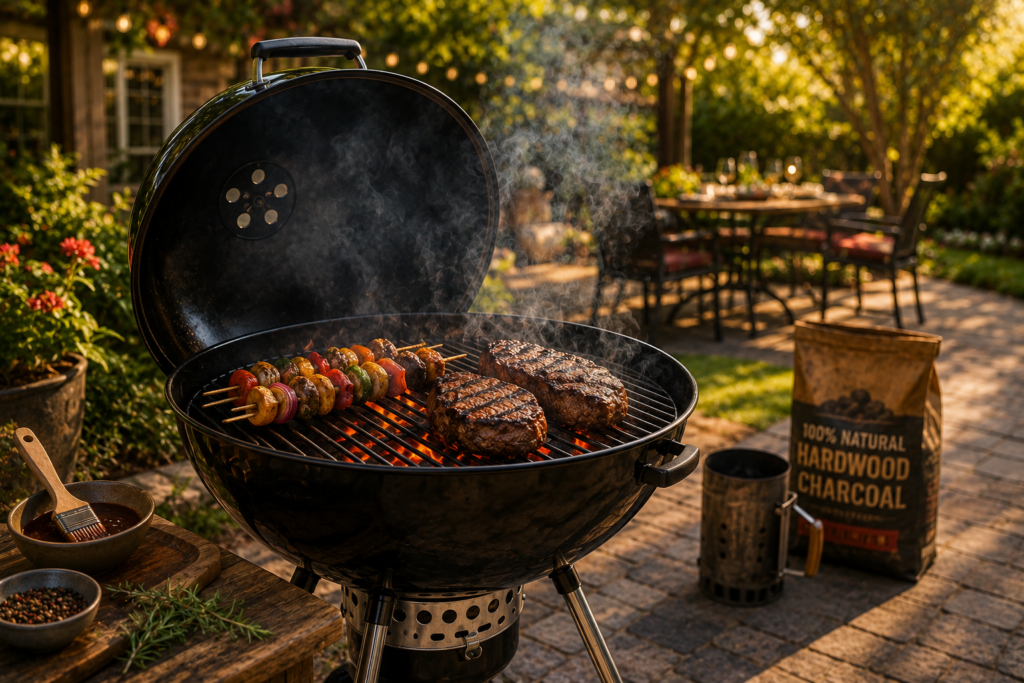
Charcoal grilling has remained popular for decades because of its distinctive taste and cooking style.
Advantages of Charcoal Grills
Rich Smoky Flavor
One of the biggest reasons homeowners choose charcoal is flavor.
Burning charcoal naturally creates smoke that enhances foods such as:
- Burgers
- Steaks
- Chicken
- Ribs
- Vegetables
Many barbecue enthusiasts believe charcoal delivers the most authentic outdoor cooking experience.
High Cooking Temperatures
Charcoal grills can reach very high temperatures, making them excellent for searing steaks and creating flavorful crusts.
Simple Construction
Most charcoal grills contain fewer moving parts than gas or pellet models.
This simplicity often means fewer mechanical repairs over time.
Potential Drawbacks
Charcoal grilling requires more patience.
You’ll need time to:
- Light the charcoal
- Wait for proper cooking temperature
- Dispose of cooled ash
- Clean the grill afterward
Temperature management also requires more practice compared to gas grills.
Pellet Grills: Maximum Versatility
Pellet grills have grown rapidly in popularity because they combine multiple cooking methods into one appliance.
They can be used for:
- Grilling
- Smoking
- Roasting
- Baking
- Slow cooking
Advantages of Pellet Grills
Excellent Temperature Control
Digital controllers automatically regulate cooking temperatures.
This consistency makes pellet grills ideal for long cooking sessions such as brisket or pulled pork.
Wood-Fired Flavor
Hardwood pellets create mild, natural smoke that enhances food without requiring constant attention.
Different wood pellets also provide different flavor profiles.
Set-It-and-Monitor Convenience
Unlike charcoal grilling, pellet grills require very little manual temperature adjustment during cooking.
This allows homeowners to spend more time with guests instead of constantly watching the fire.
Potential Drawbacks
Pellet grills usually cost more than gas or charcoal models.
They also require electricity to operate their electronic systems and pellet-feeding mechanism.
Additionally, homeowners must purchase hardwood pellets instead of propane or charcoal.
Cooking Performance: Which Grill Produces the Best Results?
Every grill can prepare delicious food, but the cooking experience differs significantly.
Gas Grills
Gas grills excel at everyday cooking.
They’re ideal for:
- Burgers
- Hot dogs
- Chicken breasts
- Vegetables
- Fish
- Quick weeknight meals
Because burners provide consistent heat, gas grills make it easy to cook multiple foods at the same time.
Charcoal Grills
Charcoal grills shine when flavor is the priority.
They’re particularly well suited for:
- Steaks
- Burgers
- Pork chops
- Ribs
- Chicken thighs
The combination of high heat and charcoal smoke creates the classic barbecue flavor many people associate with outdoor cooking.
Pellet Grills
Pellet grills are designed for versatility.
They perform exceptionally well when cooking:
- Brisket
- Pulled pork
- Whole chickens
- Turkey
- Smoked salmon
- Pizza
- Roasted vegetables
Because temperatures remain stable for long periods, pellet grills are excellent for slow cooking and smoking.
Fuel Costs and Long-Term Ownership
The purchase price is only one part of owning a BBQ grill. Fuel costs, maintenance, and replacement parts also affect the overall investment.
Gas Grills
Gas grills typically use propane tanks or natural gas.
Advantages include:
- Widely available fuel
- Fast cooking
- Efficient heating
Propane tanks require periodic refilling, while natural gas models need a permanent gas connection.
Charcoal Grills
Charcoal grilling requires:
- Charcoal briquettes or lump charcoal
- Fire starters
- Chimney starter (optional)
Fuel consumption depends on cooking time and grill size.
Pellet Grills
Pellet grills use hardwood pellets available in a variety of wood species.
Popular options include:
- Hickory
- Oak
- Apple
- Cherry
- Mesquite
Pellet consumption varies depending on cooking temperature and weather conditions.
Ease of Cleaning
Maintenance requirements differ between grill types.
| Task | Gas Grill | Charcoal Grill | Pellet Grill |
| Brush Cooking Grates | ✔ | ✔ | ✔ |
| Empty Ash | ✘ | ✔ | Small amount |
| Empty Grease Tray | ✔ | Sometimes | ✔ |
| Clean Burn Pot | ✘ | ✘ | ✔ |
| Deep Cleaning | Occasionally | Regularly | Occasionally |
Gas grills generally require the least routine maintenance, while charcoal grills require the most cleanup due to ash removal see our full grill cleaning and maintenance guide for the exact steps by grill type.
Which Grill Is Best for Different Homeowners?
Different lifestyles call for different grills.
Best for Busy Families
If you prepare outdoor meals several times each week, a gas grill is often the most practical choice.
Its quick startup and simple controls make weeknight grilling fast and convenient.
Best for BBQ Enthusiasts
If authentic smoky flavor is your top priority, a charcoal grill remains difficult to beat.
Although it requires more effort, many grilling enthusiasts enjoy the traditional cooking process.
Best for Weekend Entertainers
Homeowners who enjoy hosting family gatherings and experimenting with recipes often appreciate the versatility of a pellet grill paired with the right outdoor dining and lounge setup, it becomes the centerpiece of backyard entertaining.
It allows you to smoke, roast, bake, and grill using one appliance.
Best for Beginners
Gas grills are usually the easiest option for first-time grill owners because they provide reliable temperature control with minimal learning curve.
Features Worth Paying For
Regardless of which grill you choose, certain features improve both convenience and durability.
Look for:
- Stainless steel cooking grates
- Built-in thermometer
- Side shelves
- Storage cabinet
- Tool hooks
- Warming rack
- Grease management system
- Heavy-duty wheels
- Quality lid construction
- Long manufacturer warranty
Rather than choosing every available feature, prioritize those you’ll actually use.
Common Buying Mistakes
Avoiding these mistakes can help you choose a grill you’ll enjoy for years.
Buying Only Based on Price
A low purchase price doesn’t always provide the best value.
Higher-quality materials often last longer and require fewer repairs.
Choosing the Wrong Size
Buying a grill that’s too large wastes fuel and patio space.
Buying one that’s too small makes entertaining difficult.
Match the cooking area to your typical household size.
Ignoring Build Quality
Strong construction is just as important as cooking performance.
Look for:
- Heavy-duty frames
- Stainless steel components
- Powder-coated finishes
- Durable cooking grates
Quality construction generally results in longer service life.
Forgetting About Maintenance
Each grill requires different levels of care.
Before buying, consider whether you’re comfortable with:
- Cleaning ash
- Monitoring charcoal
- Refilling propane
- Cleaning pellet burn pots
Choosing a grill that matches your maintenance preferences increases long-term satisfaction.
Not Thinking About Storage
If your grill remains outdoors year-round, invest in a weather-resistant grill cover. If you don’t have covered patio space, a storage shed is a practical way to protect it from rain, snow, and UV exposure.
Helpful Accessories
A few accessories can improve both cooking performance and convenience.
Popular options include:
- Grill cover
- Instant-read meat thermometer
- Grill brush
- BBQ tool set
- Chimney starter (for charcoal grills)
- Pellet storage container
- Grill basket
- Rotisserie kit
- Smoker box
- Heat-resistant gloves
These accessories aren’t required immediately but can make outdoor cooking easier and more enjoyable.
BBQ Grill Comparison Checklist
Before choosing your next grill, ask yourself:
- ✓ Do I value convenience or traditional flavor?
- ✓ How often will I grill each week?
- ✓ How many people do I usually cook for?
- ✓ Do I enjoy slow smoking meats?
- ✓ Am I comfortable managing charcoal or pellets?
- ✓ Is there enough space for the grill I want?
- ✓ What’s my long-term budget for fuel and maintenance?
- ✓ Do I want advanced features or a simple design?
- ✓ Can I store the grill or protect it with a quality cover?
- ✓ Will this grill meet my needs several years from now?
Answering these questions will help you narrow your choices and select a grill that fits your lifestyle.
Conclusion
Choosing between a gas, charcoal, or pellet grill ultimately comes down to how you cook and what you value most. Gas grills are an excellent choice for homeowners who want fast heat, simple operation, and easy cleanup. Charcoal grills remain the favorite for those who enjoy traditional barbecue flavor and don’t mind spending extra time managing the fire. Pellet grills combine convenience with wood-fired flavor, offering exceptional versatility for grilling, smoking, roasting, and baking.
Before making your purchase, compare cooking capacity, build quality, maintenance requirements, available space, and long-term fuel costs. Investing in a grill that matches your cooking habits rather than simply following trends will help you enjoy backyard barbecues, family dinners, and outdoor gatherings for years to come.
Frequently Asked Questions
1- Which grill produces the best flavor?
Charcoal grills generally produce the strongest traditional barbecue flavor because burning charcoal creates natural smoke. Pellet grills also provide excellent wood-fired flavor, while gas grills focus more on convenience than smoky taste.
2- Are pellet grills better than gas grills?
It depends on your priorities. Pellet grills offer greater versatility and wood-fired flavor, while gas grills heat up faster, require less maintenance, and are ideal for everyday grilling.
3- Is charcoal difficult for beginners?
Charcoal grilling has a slightly steeper learning curve because temperature is controlled by airflow and charcoal placement rather than burner knobs. With practice, many homeowners become comfortable using charcoal grills.
4- Which grill requires the least maintenance?
Gas grills generally require the least maintenance because there’s no ash to remove and fewer cleaning steps after each cooking session.
5- Which grill lasts the longest?
Longevity depends more on construction quality, materials, maintenance, and weather protection than fuel type. Well-built grills that are cleaned regularly and protected with covers often provide many years of reliable service.