
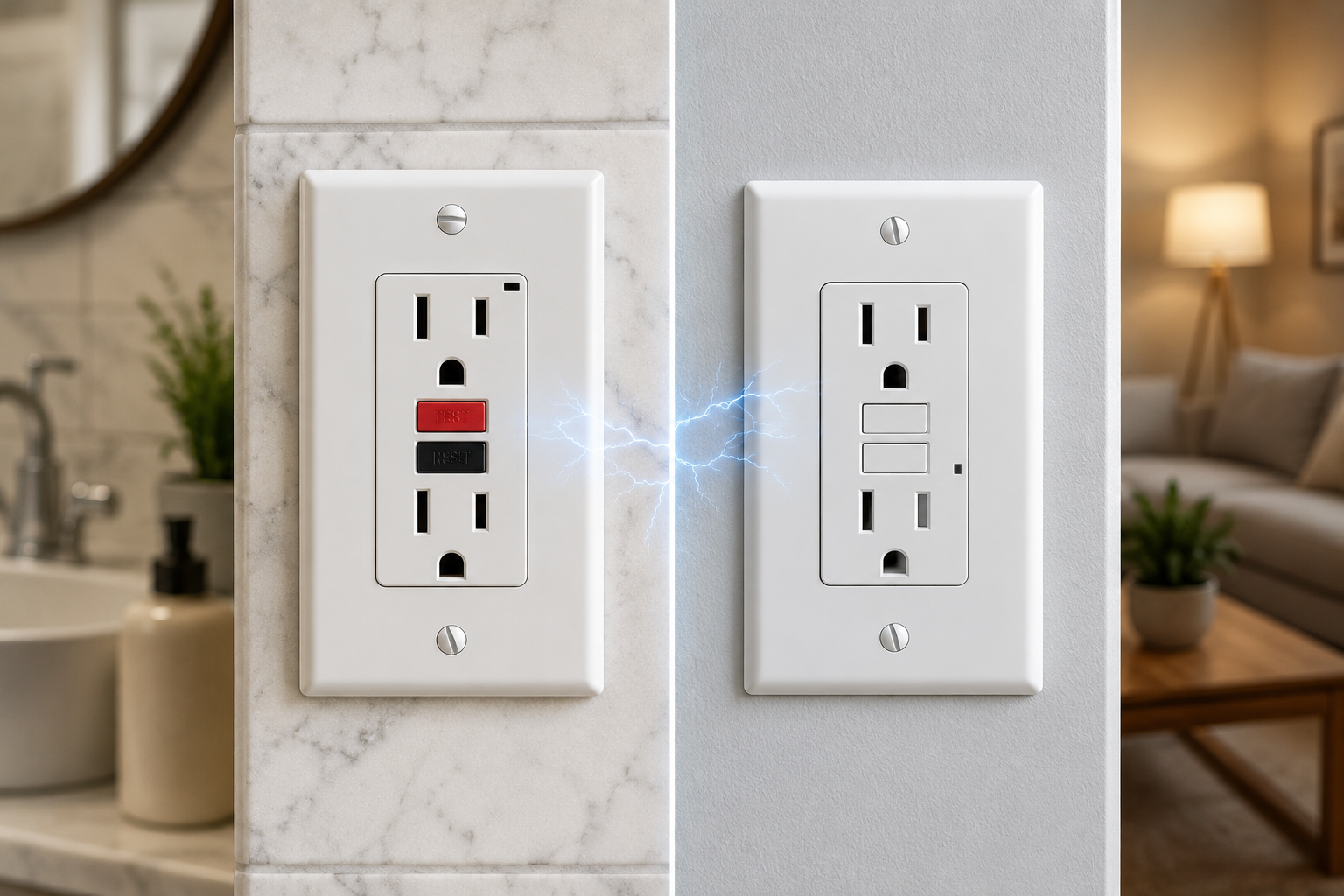
If you’ve ever looked at the outlets in your bathroom and noticed small “test” and “reset” buttons, or wondered why your bedroom outlets look slightly different from your kitchen ones, you’ve already spotted the difference between standard outlets and the two specialized safety types. GFCI vs AFCI outlets isn’t just about two similar-looking devices, they protect against genuinely different electrical hazards, and knowing which one belongs where matters for both safety and code compliance.
This guide focuses specifically on the outlet-level versions of this protection (rather than the breaker versions in your panel), covering exactly how each type works, where code requires them, how they differ from GFCI or AFCI circuit breakers, and how to test and maintain them properly.
GFCI vs AFCI Outlets
A GFCI outlet protects people from electric shock by detecting current leaking to ground, current that’s taking an unintended path, often through a person, rather than flowing normally through the circuit. It’s required in wet or damp locations: bathrooms, kitchens, garages, outdoor receptacles, and laundry areas. An AFCI outlet protects against electrical fires by detecting dangerous arcing, small sparks that can occur inside damaged or deteriorating wiring, and is required in most living-area circuits: bedrooms, living rooms, family rooms, and similar spaces. Neither device substitutes for the other, and in some rooms that fall under both requirements, dual-function GFCI/AFCI outlets or breakers are used to satisfy both protections at once.
Outlet-Level Protection vs Breaker-Level Protection
Two Ways to Get the Same Protection
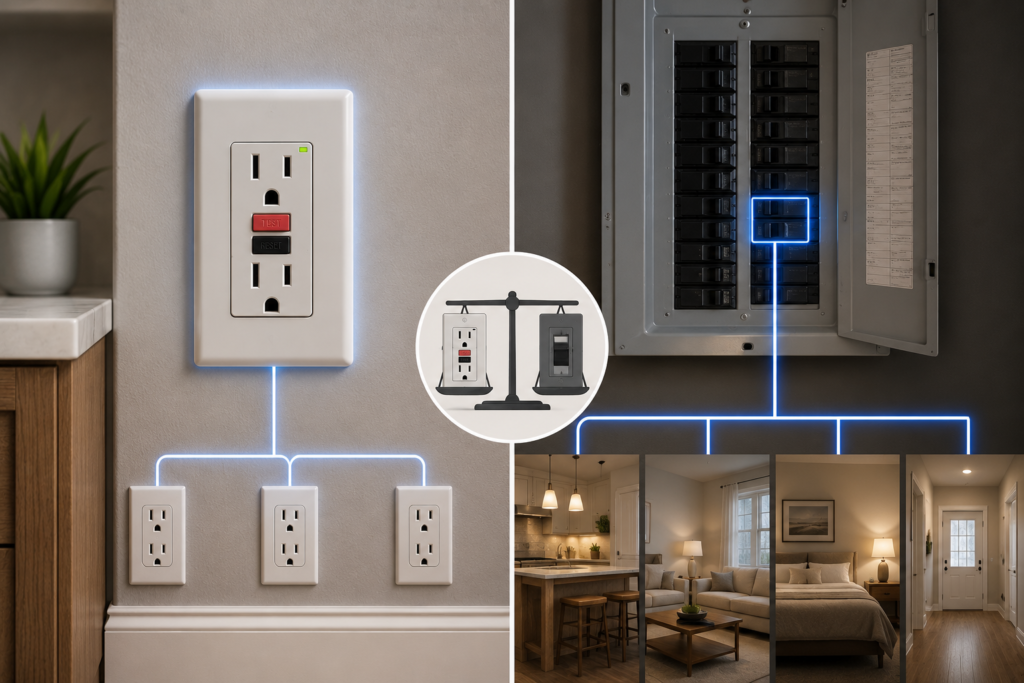
GFCI and AFCI protection can be installed in two different places: as a dedicated outlet (receptacle) directly in the wall, or as a breaker in your home’s electrical panel that protects an entire circuit. Both accomplish the same underlying safety function, detecting a ground fault or an arc fault, but they differ in where that protection physically lives and how far it reaches.
How GFCI/AFCI Outlets Protect “Downstream”
A GFCI or AFCI outlet has two sets of terminals inside it: “line” terminals (bringing power in from the panel) and “load” terminals (sending protected power onward to other outlets on the same circuit). When wired correctly, a single GFCI or AFCI outlet can protect every standard outlet installed “downstream” of it on that same circuit, meaning you don’t necessarily need a specialized outlet at every single location to achieve full protection.
Why Some Homes Use Outlets and Others Use Breakers
Breaker-level protection covers an entire circuit from the panel, simplifying wiring but requiring a trip to the breaker panel to reset after a trip. Outlet-level protection lets you reset directly at the outlet itself, often more convenient day to day, and can be a more practical retrofit option in older homes where updating panel wiring throughout would be more disruptive and costly.
GFCI Outlets Explained
How a GFCI Outlet Works
A GFCI outlet continuously compares the amount of current flowing out through the hot wire against the amount returning through the neutral wire. If it detects even a small imbalance, current escaping the circuit somewhere it shouldn’t, it assumes that “missing” current may be flowing through a person and cuts power almost instantly, often in a fraction of a second, fast enough to prevent a serious shock in most situations.
GFCI Outlet Locations Required by Code
Current electrical code requires GFCI protection in wet and damp locations throughout a home, including:
- Bathroom receptacles
- Kitchen countertop outlets
- Garage circuits
- Outdoor receptacles
- Laundry areas
- Unfinished basement and crawl space outlets
- Certain 240-volt receptacles, including specific appliance circuits in some jurisdictions
Identifying a GFCI Outlet
GFCI outlets are visually distinct from standard outlets, featuring visible “test” and “reset” buttons directly on the face of the device, usually positioned between the two outlet plugs.
AFCI Outlets Explained
How an AFCI Outlet Works
An AFCI outlet uses built-in microprocessor technology to continuously analyze the electrical waveform passing through it, distinguishing between normal, harmless arcing (like the small spark that happens when you unplug a lamp) and dangerous, sustained arcing that can occur from damaged, pinched, or deteriorating wiring inside a wall or cord. When it detects the dangerous pattern, it interrupts power before that arc has a chance to ignite surrounding material.
AFCI Outlet Requirements by Room
Current code requires AFCI protection on nearly all 120-volt living-area circuits, which in practice covers most of a typical home’s finished living space:
- Bedrooms
- Living rooms and family rooms
- Dining rooms
- Kitchens
- Sunrooms and recreation rooms
- Closets and hallways
- Laundry areas
Identifying an AFCI Outlet
AFCI outlets also feature visible test and reset buttons, similar in appearance to GFCI outlets, which is part of why the two are commonly confused at a glance. Checking the outlet’s label or markings (often printed directly on the device face) is the most reliable way to confirm which type of protection a specific outlet actually provides.
GFCI vs AFCI Outlets Side-by-Side
| Factor | GFCI Outlet | AFCI Outlet |
| Protects against | Electric shock (ground faults) | Electrical fire (dangerous arcing) |
| Detection method | Compares current between hot and neutral wires | Analyzes electrical waveform for dangerous arc patterns |
| Required rooms | Bathrooms, kitchens, garages, outdoors, laundry | Bedrooms, living rooms, family rooms, similar living spaces |
| Trip speed | Extremely fast, often within 1/40th of a second | Varies based on microprocessor analysis |
| Downstream protection | Yes, when wired to “load” terminals | Yes, when wired to “load” terminals |
| Interchangeable? | No | No |
When You Need Both: Dual-Function Outlets
Rooms That Overlap Both Requirements
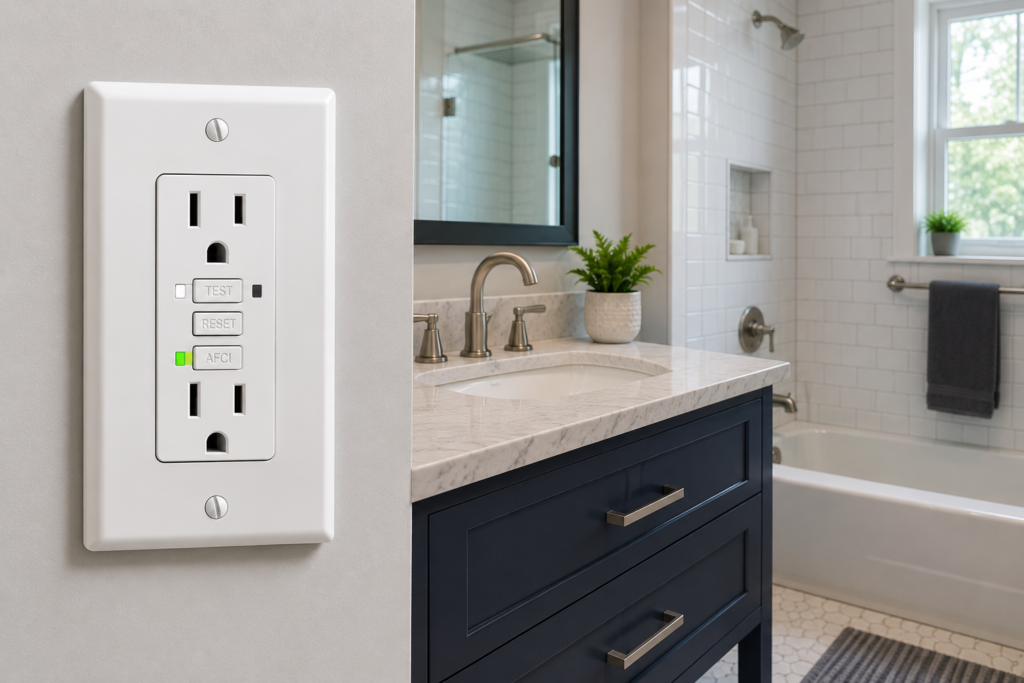
Some spaces genuinely fall under both GFCI and AFCI requirements simultaneously, a laundry area (both wet-location and living-space adjacent), a finished basement with a kitchenette, or a kitchen receptacle circuit that also falls under living-area fire protection rules.
Dual-Function GFCI/AFCI Outlets
For these overlapping situations, dual-function outlets combine both types of protection into a single device, satisfying both code requirements without needing separate outlets or a combination of outlet-and-breaker protection for the same circuit. This has become an increasingly common, cost-effective solution as code requirements in overlapping spaces have expanded.
How to Test a GFCI Outlet
Step-by-Step Testing Process
- Plug a small lamp or device into the outlet and turn it on to confirm power is flowing.
- Press the “test” button on the outlet face, the device should trip immediately, cutting power (your lamp should turn off).
- Press the “reset” button to restore power, confirming your test device turns back on.
- If the outlet fails to trip when tested, or won’t reliably reset afterward, it should be replaced.
How to Test an AFCI Outlet
The process is essentially identical, using the built-in test button to confirm the device trips and then reset properly, though AFCI devices may take slightly longer to fully trip given the microprocessor analysis involved compared to a GFCI’s near-instant response to current imbalance.
Why Monthly Testing Matters
Both GFCI and AFCI outlets can fail silently, continuing to supply normal power while no longer actually providing the protection they’re designed for. Testing monthly is the only reliable way to confirm a device is still functioning as intended rather than assuming it’s fine simply because outlets connected to it work normally.
Common Reasons a GFCI or AFCI Outlet Trips
GFCI Tripping Causes
A GFCI outlet tripping typically indicates a genuine ground fault, current escaping its intended path. Common causes include a damaged appliance cord, moisture intrusion into the outlet or a connected device (particularly relevant in bathrooms, kitchens, and outdoor locations), or a failing appliance component.
AFCI Tripping Causes
AFCI tripping can indicate a genuinely developing wiring hazard, but certain devices, older motors, some types of electronics, or specific wiring configurations, can occasionally trigger what’s sometimes called “nuisance tripping,” a false trip not caused by an actual dangerous arc. This has become considerably less common with newer combination-type AFCI technology, but it remains a recognized possibility worth ruling out through process of elimination if tripping seems disconnected from any obvious cause.
What to Do When Tripping Persists
If either type of outlet trips repeatedly without an obvious, easily identified cause (like a single faulty appliance), this warrants investigation by a licensed electrician rather than continued resetting, since repeated resetting without understanding the cause risks masking a genuine developing hazard.
Retrofitting Older Homes With GFCI and AFCI Protection
Why Older Homes Often Lack This Protection
Homes built before certain code updates were adopted may not have GFCI or AFCI protection in areas that would currently require it under present-day standards. Since building codes generally aren’t applied retroactively to existing homes, many older properties continue operating without this protection unless a homeowner proactively updates their wiring.
Is It Worth Updating an Older Home?
Even when not strictly required, adding GFCI protection to bathrooms, kitchens, and outdoor areas, and AFCI protection to bedrooms and living spaces, is a genuinely worthwhile safety upgrade in most older homes, particularly given how much more affordable and straightforward this type of electrical work has become compared to years past.
Outlet Replacement vs Panel Upgrade
For homeowners retrofitting an older home, replacing specific outlets with GFCI or AFCI versions is often a more accessible, lower-cost starting point than a full panel upgrade to breaker-level protection throughout, particularly for isolated rooms like a single bathroom or bedroom, though a licensed electrician can advise on the most cost-effective overall approach for your specific home’s wiring layout.
Choosing Between an Outlet and a Breaker for New Installations
When an Outlet Makes More Sense
For retrofitting a single room or a small number of specific locations without disturbing your entire panel, a GFCI or AFCI outlet is often the simpler, more targeted solution, particularly convenient since resetting happens right at the outlet rather than requiring a trip to the panel.
When a Breaker Makes More Sense
For new construction or a full electrical renovation where the panel itself is being updated or replaced, installing GFCI or AFCI breakers for entire circuits from the start is often more efficient than wiring individual outlets throughout, and ensures every outlet on that circuit is protected without needing to trace “load” wiring connections room by room.
Common Mistakes to Avoid
- Assuming GFCI and AFCI outlets are interchangeable, when they protect against entirely different electrical hazards
- Skipping monthly testing, missing silent device failures that leave you without actual protection
- Repeatedly resetting a tripping outlet without investigating the cause, potentially masking a genuine hazard
- Installing standard outlets in wet locations required to have GFCI protection, a code violation and genuine safety risk
- Not checking whether “load” terminals are wired correctly during a downstream installation, which can leave connected outlets unprotected despite appearing correctly wired
Conclusion
Understanding GFCI vs AFCI outlets comes down to recognizing that these two devices, despite looking nearly identical at a glance, protect against fundamentally different hazards: shock versus fire. Knowing which rooms require which type, testing your outlets monthly, and understanding how downstream “load” wiring lets a single device protect an entire circuit will help you make sense of your home’s electrical safety setup and know exactly when a tripping outlet is a quick reset versus a genuine reason to call a licensed electrician.
Frequently Asked Questions
1- What is the difference between GFCI and AFCI outlets?
GFCI outlets protect people from electric shock by detecting current leaking to ground, while AFCI outlets protect against electrical fires by detecting dangerous arcing in wiring, they address genuinely different hazards.
2- Where are GFCI outlets required in a home?
Current code requires GFCI outlets in wet or damp locations: bathrooms, kitchens, garages, outdoor receptacles, laundry areas, and unfinished basements.
3- Where are AFCI outlets required in a home?
AFCI protection is required in most living-area circuits, including bedrooms, living rooms, family rooms, dining rooms, kitchens, and similar finished living spaces.
4- Can one GFCI outlet protect multiple outlets?
Yes, when wired using the outlet’s “load” terminals, a single GFCI or AFCI outlet can protect every standard outlet installed downstream of it on the same circuit.
5- How do I know if my outlet is GFCI or AFCI?
Both types feature visible test and reset buttons on the device face, but checking the label or markings printed directly on the outlet is the most reliable way to confirm which specific type of protection it provides.
6- How often should I test GFCI and AFCI outlets?
Monthly testing is generally recommended, since these devices can fail silently while continuing to supply normal power, leaving you without the protection they’re designed to provide.
7- Do older homes need to be updated with GFCI and AFCI outlets?
Not strictly required retroactively in most cases, but updating older wiring, particularly in bathrooms, kitchens, and bedrooms, is a genuinely worthwhile safety upgrade many electricians recommend even when not legally mandated.