Buying a new BBQ grill is exciting, but one of the most important decisions isn’t the fuel type or brand it’s choosing the right size. Many homeowners focus on features like burners, cooking technology, or smart controls while overlooking grill size. Unfortunately, buying a grill that’s too small can make entertaining frustrating, while purchasing one that’s too large may waste money, fuel, and valuable patio space.
The ideal grill size depends on several factors, including how many people you typically cook for, how often you entertain guests, the size of your outdoor area, and the types of food you enjoy grilling. A couple preparing burgers once a week has very different needs than a family hosting neighborhood cookouts every weekend.
Choosing the correct size also improves cooking efficiency. You’ll have enough room to cook everything at once without overcrowding the grates, while avoiding unnecessary fuel consumption from heating cooking surfaces you rarely use.
This guide explains grill sizes, cooking surface measurements, burner configurations, and practical buying tips to help you confidently choose the right BBQ grill for your home.
Why Grill Size Matters
A grill is more than just another outdoor appliance. It’s the centerpiece of many family gatherings, holiday celebrations, and summer cookouts.
Choosing the right size affects:
- Cooking efficiency
- Fuel consumption
- Food quality
- Available patio space
- Convenience
- Future entertaining options
Rather than buying the biggest grill available, focus on finding one that matches your actual lifestyle.
Understanding Grill Size Measurements
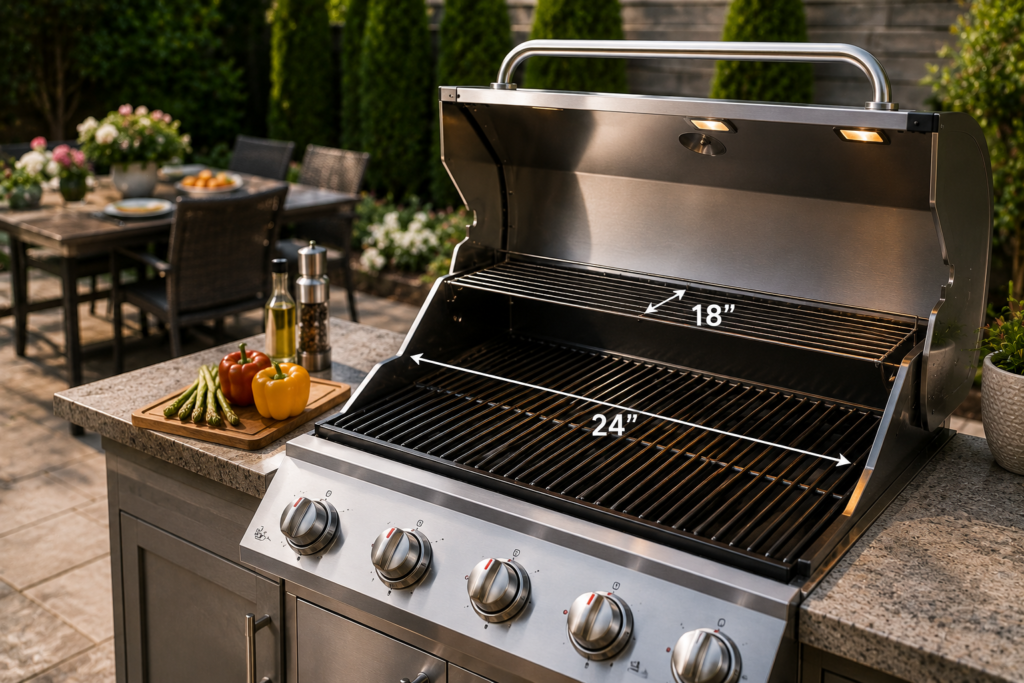
When shopping for grills, you’ll often see cooking surface measured in square inches.
This number represents the usable cooking area where food is placed.
Some manufacturers also include warming racks when advertising total cooking space.
Because warming racks are designed for keeping food warm rather than cooking, compare the primary cooking surface whenever possible.
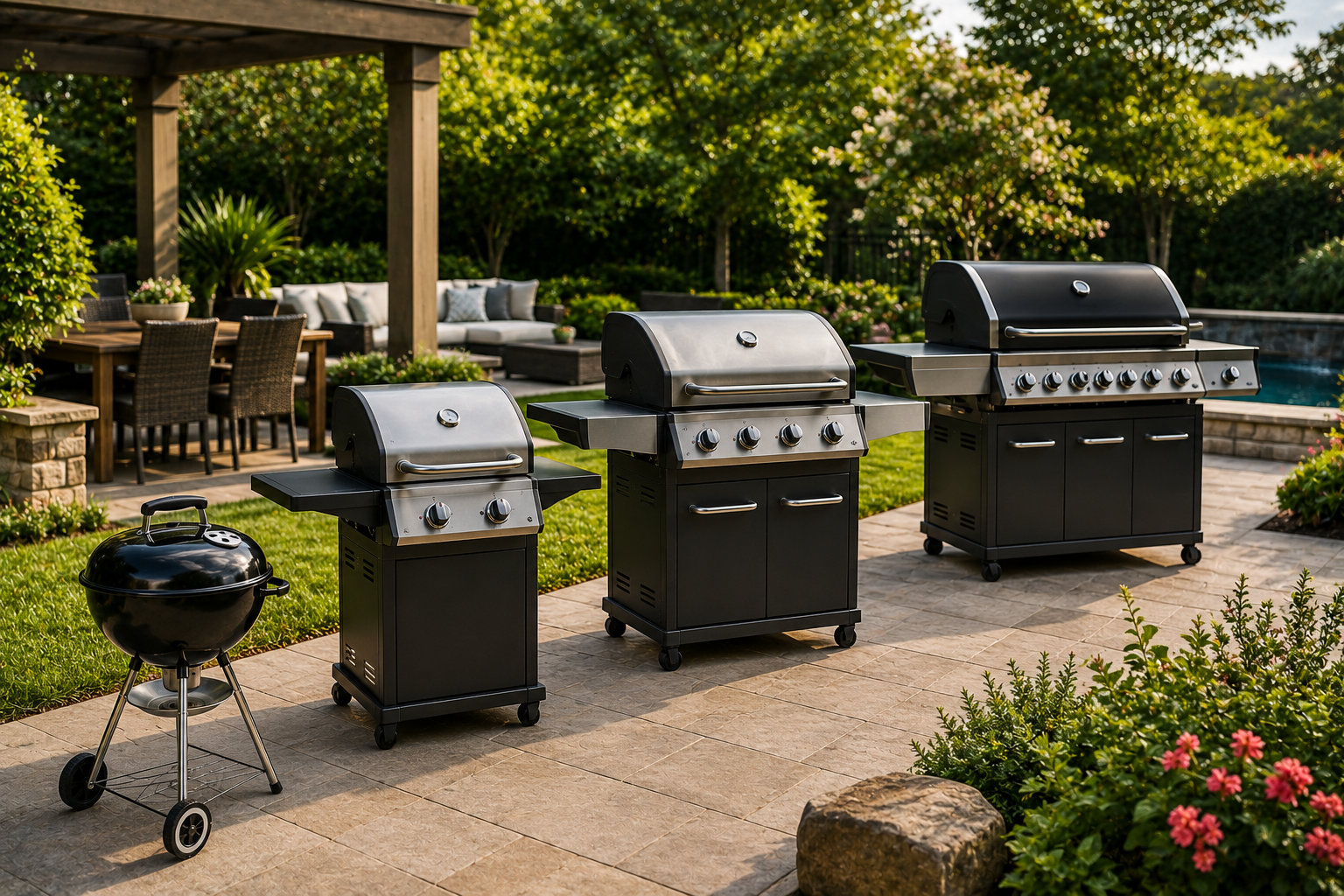
Common Grill Size Categories
Most residential BBQ grills fall into four general size categories.
| Grill Size | Primary Cooking Area | Best For |
| Small | Up to 400 sq. in. | Couples and small households |
| Medium | 400–600 sq. in. | Families of 3–5 |
| Large | 600–800 sq. in. | Large families and entertainers |
| Extra Large | 800+ sq. in. | Frequent parties and outdoor kitchens |
These ranges provide a helpful starting point, but your cooking style matters just as much as the measurements.
Small Grills
Small grills work well for homeowners with limited outdoor space.
They’re ideal for:
- Apartments
- Townhomes
- Small patios
- Balconies where permitted
- Couples
- Weekend grilling
Advantages
Small grills offer several benefits.
- Lower purchase cost
- Faster heating
- Lower fuel consumption
- Easier cleaning
- Simpler storage
Because the cooking surface is smaller, they also require less maintenance after each use.
Limitations
Cooking for larger groups may require preparing food in multiple batches.
If you frequently entertain guests, a larger grill may be more practical.
Medium Grills
Medium grills are among the most popular options because they balance cooking capacity with efficient use of space.
They work well for:
- Families
- Backyard dinners
- Weekend barbecues
- Small gatherings
Most homeowners find medium grills large enough for everyday use while remaining easy to manage.
Large Grills
Large grills provide additional cooking space for homeowners who regularly entertain.
They’re ideal for:
- Large families
- Holiday gatherings
- Neighborhood cookouts
- Outdoor kitchens
The larger cooking area allows multiple foods to cook simultaneously without overcrowding.
For example, you can prepare burgers, vegetables, and hot dogs all at once while maintaining proper heat circulation.
Extra-Large Grills
Extra-large grills are designed for serious outdoor cooking enthusiasts.
They’re commonly found in:
- Outdoor kitchens
- Luxury patios
- Large entertaining spaces
These grills often include:
- Multiple burners
- Rotisserie systems
- Side burners
- Warming racks
- Storage cabinets
Although impressive, they require more patio space and higher fuel consumption.
How Many Burners Do You Need?
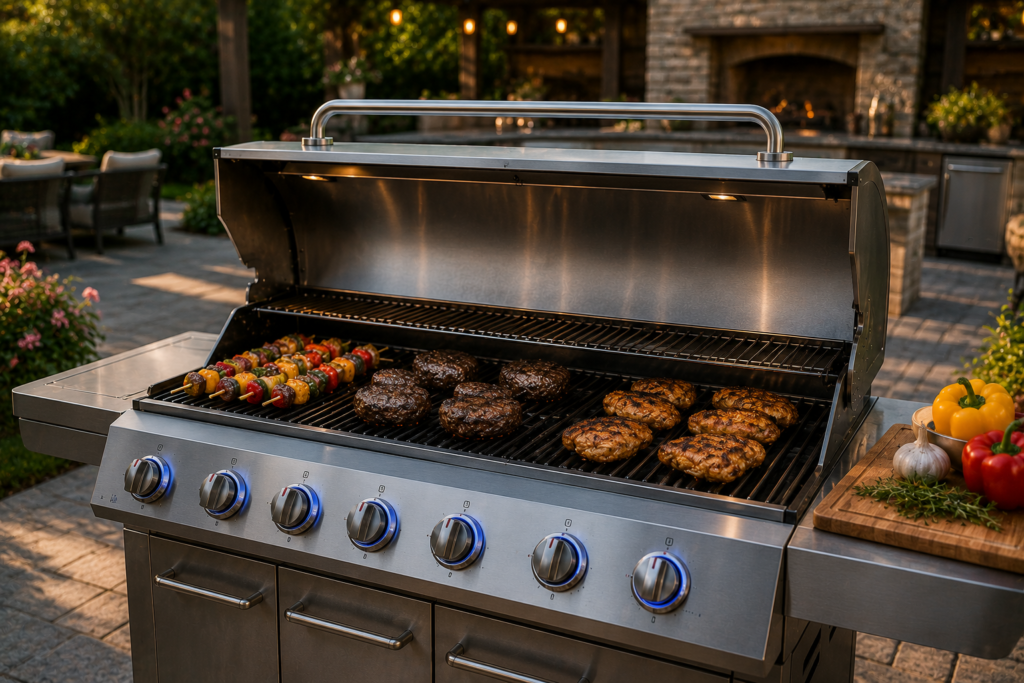
Burner count often increases with grill size.
However, more burners don’t automatically mean better cooking.
General recommendations include:
Two Burners
Best for:
- Couples
- Small households
- Compact patios
Suitable for everyday meals.
Three Burners
A versatile option for most homeowners.
Works well for:
- Families
- Weekend grilling
- Moderate entertaining
Four Burners
Recommended for homeowners who frequently cook for larger groups.
Provides greater flexibility for cooking different foods at different temperatures.
Five or More Burners
Usually found on premium grills designed for serious entertainers.
These models provide multiple cooking zones but require more space and fuel.
Cooking Capacity
Instead of thinking only about square inches, think about how much food you’ll prepare at one time.
Approximate cooking capacity:
| Grill Size | Typical Capacity |
| Small | 8–12 burgers |
| Medium | 15–20 burgers |
| Large | 24–30 burgers |
| Extra Large | 30+ burgers |
These estimates vary depending on food size and grill design but provide a useful comparison.
Think About Your Cooking Style
Different grilling habits require different amounts of cooking space.
If you mainly cook:
- Burgers
- Hot dogs
- Chicken breasts
A medium grill may be sufficient.
If you regularly prepare:
- Multiple steaks
- Vegetables
- Seafood
- Side dishes
Additional cooking space becomes much more valuable.
Likewise, homeowners who enjoy smoking brisket or whole chickens often benefit from larger grills with indirect cooking zones.
Measure Your Outdoor Space
Before purchasing any grill, carefully measure your patio, deck, or outdoor kitchen.
Leave enough room for:
- Opening the grill lid
- Walking safely around the grill
- Food preparation
- Nearby seating
- Safe clearance from walls and railings
A grill that barely fits your patio may become inconvenient to use.
Grill size isn’t just about convenience placement and clearance genuinely matter for safety. The National Fire Protection Association (NFPA) reports that U.S. fire departments respond to an annual average of over 12,000 home fires involving grills, causing millions in property damage each year nearly a quarter of these start on an exterior balcony or open porch. Whatever size grill you choose, NFPA recommends keeping it well away from the home, railings, and overhanging branches, and never leaving it unattended while in use.
Consider Future Needs
Many homeowners purchase a grill based only on their current situation.
Instead, think ahead.
Ask yourself:
- Will I entertain more often?
- Is my family growing?
- Am I planning an outdoor kitchen?
- Will I begin smoking meats?
- Do I expect to host holiday cookouts?
Buying slightly larger than your current needs may prevent another purchase within a few years.
Choosing the Right Grill Size Based on Household Size
One of the easiest ways to narrow your options is by considering how many people you usually cook for. While exact cooking capacity varies by manufacturer, the following recommendations work well for most homeowners.
For One or Two People
A compact grill with up to 400 square inches of primary cooking space is usually enough.
This size is ideal if you:
- Grill once or twice a week
- Live in an apartment or townhouse
- Have a small patio
- Rarely entertain guests
You’ll enjoy lower fuel consumption, faster preheating, and easier cleanup.
For Families of Three to Five
A medium-sized grill with 400 to 600 square inches of cooking space offers the best balance.
This size allows you to prepare:
- Burgers
- Chicken
- Vegetables
- Hot dogs
- Steaks
all at the same time without overcrowding the cooking surface.
For many American households, this is the most practical choice.
For Large Families
If your household includes six or more people, consider a grill with at least 600 square inches of primary cooking space.
The extra room makes it easier to cook complete meals without waiting for multiple batches.
For Frequent Entertainers
If you regularly host birthday parties, neighborhood cookouts, or holiday gatherings, a large or extra-large grill provides valuable flexibility.
You’ll appreciate the additional cooking zones when preparing different foods simultaneously.
Does a Bigger Grill Use More Fuel?
Generally, yes.
Larger grills require more energy to heat the cooking surface.
However, fuel efficiency also depends on:
- Construction quality
- Burner design
- Insulation
- Outdoor temperature
- Cooking habits
Buying an oversized grill that you rarely use at full capacity may increase operating costs without providing meaningful benefits.
Choosing the right size often results in better efficiency.
Grill Size and Heat Distribution
Many homeowners assume larger grills cook better, but proper heat distribution matters more than overall size.
A quality medium grill often provides more even heating than a poorly designed oversized model.
Look for features such as:
- Evenly spaced burners
- Heavy-duty cooking grates
- Quality heat diffusers
- Built-in temperature gauge
These features help create consistent cooking temperatures across the grilling surface.
Should You Choose Extra Cooking Space?
Some homeowners intentionally buy a slightly larger grill for flexibility.
Additional cooking space can be useful when preparing:
- Side dishes
- Vegetables
- Seafood
- Multiple proteins
- Food with different cooking times
However, buying dramatically larger than your needs may increase costs without adding real value.
A good rule is to choose a grill that comfortably handles your typical meals while leaving some room for occasional entertaining.
Portable Grills vs. Full-Size Grills
Not every homeowner needs a permanent backyard grill.
Portable Grills
Portable models work well for:
- Camping
- Tailgating
- RV travel
- Picnics
- Small patios
Advantages include:
- Lightweight design
- Easy transportation
- Compact storage
- Lower purchase cost
Full-Size Grills
Full-size grills are better suited for:
- Family dinners
- Backyard entertaining
- Outdoor kitchens
- Frequent grilling
They provide larger cooking surfaces, greater durability, and additional features.
Other Features That Influence Grill Size
Cooking surface isn’t the only measurement to consider.
Many grills also include:
Side Shelves
Side shelves provide convenient workspace for:
- Food preparation
- Plates
- Seasonings
- BBQ tools
Foldable shelves are helpful for smaller patios because they reduce storage space when not in use.
Warming Rack
A warming rack allows cooked food to stay warm while the remaining items finish cooking.
This feature increases usable space without increasing the primary cooking surface.
Storage Cabinets
Many larger grills include enclosed storage for:
- Propane tanks
- Grill tools
- Cleaning supplies
- Accessories
Integrated storage helps keep your outdoor cooking area organized.
Common Grill Size Buying Mistakes
Avoiding these mistakes can help you choose a grill you’ll enjoy for years.
Buying the Biggest Grill Available
Bigger isn’t always better.
An oversized grill:
- Costs more
- Uses more fuel
- Requires additional cleaning
- Takes up valuable patio space
Choose a grill based on how you actually cook rather than how impressive it looks.
Ignoring Patio Measurements
Before buying, measure:
- Width
- Depth
- Walking space
- Lid clearance
Also consider nearby furniture and traffic flow.
A grill should enhance your outdoor space—not overcrowd it.
Forgetting Future Storage
Think about where your grill will stay during the winter or severe weather.
If storage space is limited, a compact or foldable model may be the better choice.
Overlooking Cooking Style
Some homeowners only cook burgers and hot dogs.
Others regularly prepare:
- Whole chickens
- Ribs
- Brisket
- Seafood
- Vegetables
Your cooking style should influence grill size as much as family size.
Grill Size Buying Checklist
Before purchasing your next BBQ grill, ask yourself:
- ✓ How many people do I usually cook for?
- ✓ How often do I entertain guests?
- ✓ How much patio space do I have?
- ✓ Will the grill fit comfortably with enough clearance?
- ✓ Do I need multiple cooking zones?
- ✓ Am I willing to pay for additional fuel consumption?
- ✓ Will I use the extra cooking space regularly?
- ✓ Do I need storage cabinets or side shelves?
- ✓ Does the grill match my long-term needs?
- ✓ Is build quality more important than overall size?
Answering these questions will help you choose a grill that’s practical, efficient, and enjoyable to use.
Conclusion
Choosing the right BBQ grill size is about finding the best fit for your lifestyle rather than simply buying the largest model available. A compact grill may be perfect for couples with limited outdoor space, while medium-sized grills meet the needs of most families. Larger grills provide extra flexibility for entertaining and cooking complete meals, but they also require more space, fuel, and maintenance.
Before making your purchase, consider your household size, cooking habits, available patio space, and future entertaining plans. Pay attention to primary cooking surface, burner configuration, construction quality, and useful features like side shelves and warming racks. By selecting a grill that matches how you actually cook, you’ll enjoy better efficiency, easier maintenance, and more satisfying outdoor meals for years to come.
Frequently Asked Questions
1- What size grill is best for most families?
For many households of three to five people, a grill with approximately 400 to 600 square inches of primary cooking space offers an excellent balance between cooking capacity and efficiency.
2- Is a four-burner grill too large?
Not necessarily.
A four-burner grill works well for families who entertain regularly or enjoy preparing multiple foods simultaneously.
3- Can a small grill cook enough food for guests?
Yes, but you may need to cook in multiple batches.
If you frequently host gatherings, upgrading to a medium or large grill can make outdoor cooking much more convenient.
4- Does grill size affect food quality?
Grill size itself doesn’t determine food quality.
Proper temperature control, cooking technique, and quality construction have a greater impact on cooking results.
5- Should I buy a larger grill for future needs?
If you expect to entertain more often or your household is growing, purchasing a slightly larger grill can be a smart long-term investment. Just avoid buying significantly larger than you’ll realistically use.