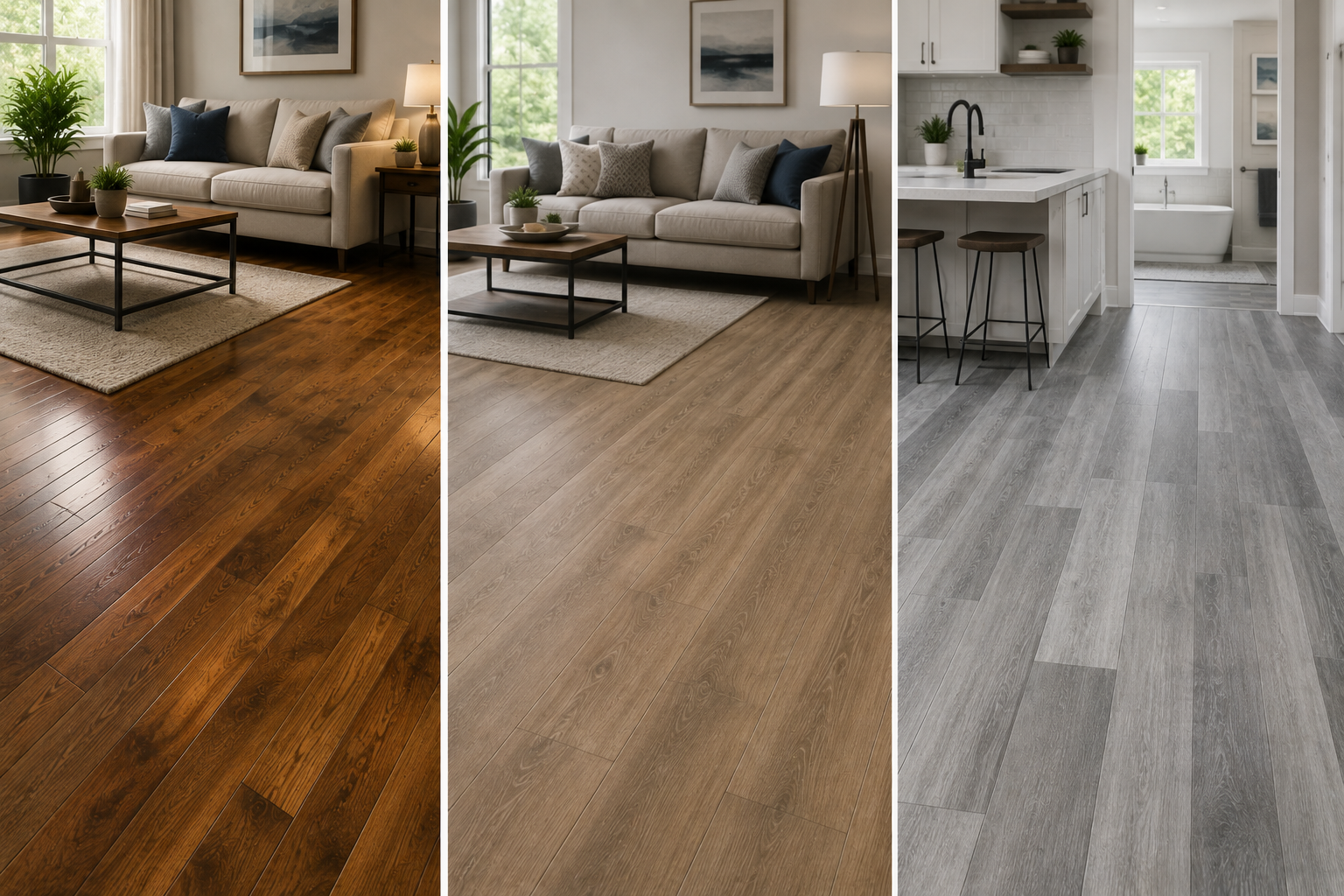
These three flooring types dominate American home renovations for good reason, each offers a genuinely different combination of look, cost, and performance. But hardwood vs laminate vs vinyl isn’t a question with one universal winner, the right choice depends heavily on which room you’re flooring, your budget, and how much water exposure and daily wear that space actually sees.
This guide compares these three materials in depth, covering appearance, durability, water resistance, cost, and maintenance, so you can confidently choose the right flooring for each specific space in your home.
Hardwood vs Laminate vs Vinyl Flooring
Hardwood offers the most genuine, timeless material and can be refinished multiple times over a long lifespan, making it the strongest choice for living rooms and bedrooms where resale value and lasting quality matter most, though it’s vulnerable to moisture and represents the highest cost of the three. Laminate offers a budget-friendly, scratch-resistant option that closely mimics hardwood’s appearance, suited to moderate-traffic living spaces, though it generally can’t be refinished and has limited water resistance. Vinyl, particularly luxury vinyl plank, has become the most versatile option overall, offering genuine water resistance and durability suited to kitchens, bathrooms, and basements alike, at a cost that’s often comparable to or lower than laminate.
What Each Flooring Type Actually Is
Hardwood
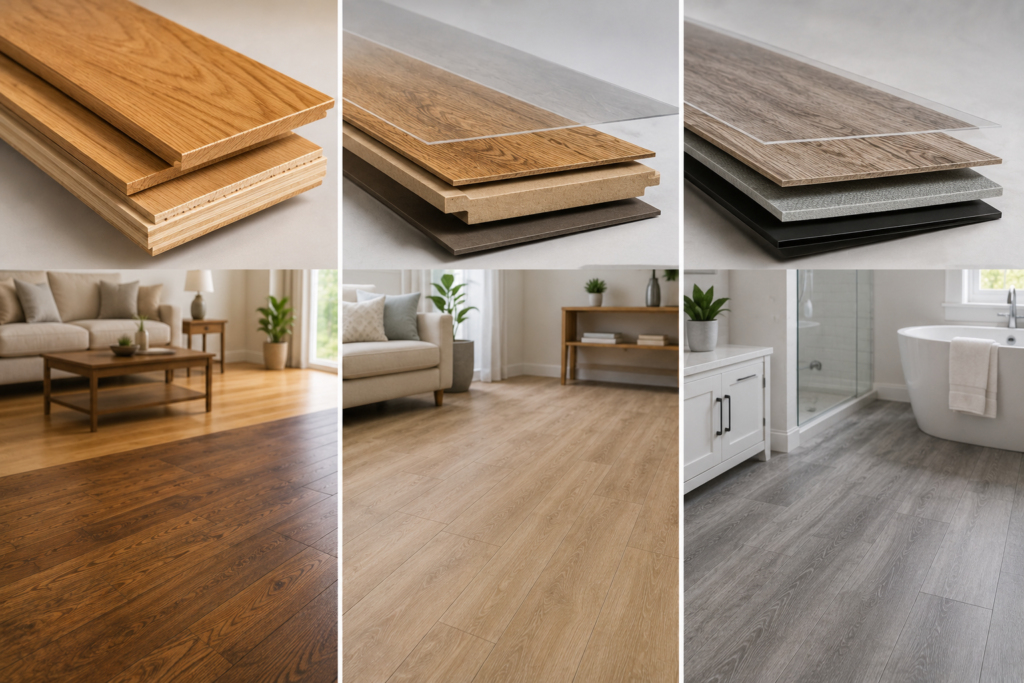
Hardwood flooring comes in two main forms: solid hardwood, milled from a single piece of wood throughout its full thickness, and engineered hardwood, featuring a genuine wood veneer layer bonded over a plywood or composite core. Both offer a real wood surface, though engineered hardwood provides better dimensional stability against humidity and temperature swings than solid hardwood.
Laminate
Laminate flooring consists of a high-resolution photographic layer, typically designed to mimic wood grain, protected by a clear, durable wear layer, all bonded over a dense fiberboard core. It’s an entirely synthetic product, despite its convincing wood-look appearance.
Vinyl (Including Luxury Vinyl Plank)
Vinyl flooring is made primarily from PVC (polyvinyl chloride) layers, with luxury vinyl plank (LVP) and luxury vinyl tile (LVT) featuring a realistic printed design layer beneath a protective wear layer, similar in concept to laminate but with genuinely different core materials that provide meaningfully better water resistance.
Side-by-Side Comparison
| Feature | Hardwood | Laminate | Vinyl (LVP/LVT) |
| Material | Real wood | Synthetic, wood-look image | Synthetic (PVC-based) |
| Water resistance | Low | Low to moderate | High |
| Durability | High (refinishable) | Moderate to high | High |
| Can be refinished | Yes | No | No |
| Comfort underfoot | Moderate | Moderate | Soft to moderate |
| Typical cost | Higher | Lower to moderate | Lower to moderate |
| Installation | Often professional | DIY-friendly | DIY-friendly |
| Best rooms | Living rooms, bedrooms | Living rooms, bedrooms, offices | Kitchens, bathrooms, basements, anywhere |
| Lifespan | Decades (with refinishing) | Moderate | Long, but not refinishable |
Appearance Comparison
Hardwood’s Genuine Character
Hardwood offers natural variation in grain, color, and texture that comes from being an actual wood product, a distinctive, organic character that manufactured products can approximate but not fully replicate. Over time, hardwood also develops a natural patina that many homeowners specifically value.
How Close Laminate Gets
Modern laminate has improved considerably in visual realism, using high-resolution imaging and embossed textures that closely mimic wood grain patterns, though close inspection or touch can still sometimes reveal its synthetic nature compared to genuine wood.
How Close Vinyl Gets
Luxury vinyl plank has similarly advanced in realism, often including embossed-in-register technology that aligns the visual wood grain pattern with the physical texture of the plank surface, creating a notably convincing wood-look appearance, particularly in higher-quality product lines.
Durability Comparison
Hardwood’s Long-Term Durability
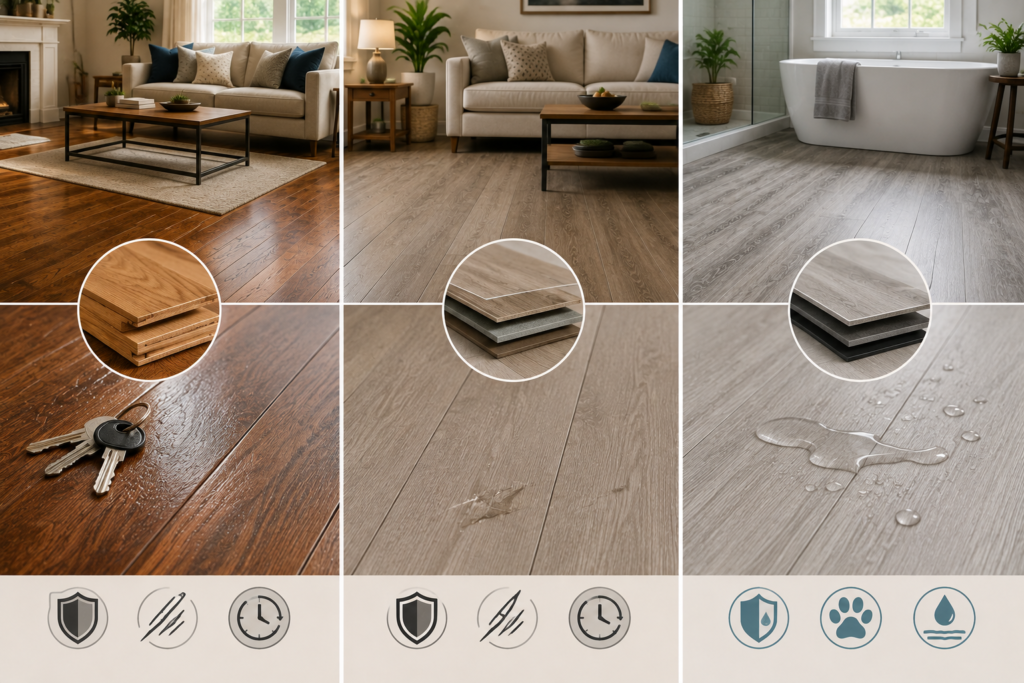
Hardwood’s key durability advantage is refinishing, since sanding down and reapplying a new finish can restore a worn hardwood floor’s appearance multiple times over its lifespan, something neither laminate nor vinyl can do. This gives hardwood genuine potential for a multi-decade lifespan, provided it isn’t exposed to significant moisture damage along the way.
Laminate’s Everyday Durability
Laminate performs well against everyday scratches and dents, particularly higher AC-rated products, but once its wear layer is damaged, the flooring generally can’t be repaired or refinished, meaning damaged planks typically need full replacement.
Vinyl’s Everyday Durability
Vinyl, particularly luxury vinyl with a thicker wear layer, offers strong resistance to scratches, dents, and general wear, performing well in high-traffic households. Like laminate, damaged vinyl planks generally require replacement rather than refinishing, though vinyl’s flexibility can make it somewhat more resistant to certain types of impact damage than laminate’s more rigid core.
Water Resistance: The Biggest Practical Difference
Hardwood’s Vulnerability
Hardwood is the most vulnerable of the three to water damage, since moisture can cause warping, staining, and long-term structural damage to the wood itself. This makes solid hardwood generally unsuitable for bathrooms, laundry rooms, and basements, and even engineered hardwood requires caution in consistently humid or wet environments.
Laminate’s Moderate Resistance
Standard laminate offers limited water resistance, with prolonged moisture exposure at seams or edges potentially causing the fiberboard core to swell or warp. Some newer water-resistant laminate products have improved this somewhat, though it still generally falls short of vinyl’s water performance.
Vinyl’s Strong Water Resistance
This is where vinyl clearly separates itself from the other two options. Luxury vinyl plank and tile are genuinely water-resistant, and many products are labeled fully waterproof, making vinyl the practical choice for kitchens, bathrooms, laundry rooms, and basements where moisture exposure is a regular concern.
Waterproof Flooring Options Explained
It’s worth understanding the distinction between “water-resistant” and genuinely “waterproof” flooring claims. Water-resistant products can handle moderate moisture exposure and occasional spills without significant damage, but aren’t necessarily designed for standing water or prolonged saturation. Genuinely waterproof vinyl products, including many rigid-core and SPC (stone plastic composite) luxury vinyl options, are specifically engineered to withstand standing water without warping or damage, making them particularly well suited to bathrooms and basements with elevated moisture risk.
Cost Comparison
Hardwood’s Higher Investment
Hardwood generally represents the highest upfront cost of the three, reflecting the cost of genuine wood material and, in many cases, professional installation. This higher cost is often offset over time by hardwood’s potential lifespan and refinishing capability, along with its frequently cited positive influence on home resale value.
Laminate’s Budget-Friendly Position
Laminate typically offers one of the most affordable entry points among wood-look flooring options, particularly appealing for larger rooms or budget-conscious renovation projects.
Vinyl’s Competitive Pricing
Luxury vinyl plank pricing varies by quality tier but often falls in a similar or sometimes lower range than laminate, while offering meaningfully better water resistance, making it an increasingly popular value choice across a wide range of budgets.
Comfort and Sound
Underfoot Feel
Hardwood offers a solid, moderately firm feel underfoot, without significant give. Laminate feels somewhat similar, given its rigid core, though some products include an attached underlayment for slightly improved comfort and sound dampening. Vinyl, particularly products with a cushioned backing layer, can offer a noticeably softer, more comfortable feel underfoot compared to the other two options.
Sound Considerations
Hard flooring materials generally transmit more sound than carpet, an important consideration for multi-story homes or condos with sound transmission concerns between floors. Vinyl with a cushioned backing layer tends to offer somewhat better sound dampening than hardwood or standard laminate, worth considering for upper-floor installations.
Maintenance Requirements
Hardwood Maintenance
Requires regular sweeping or vacuuming, prompt cleanup of spills to prevent water damage, and periodic refinishing (typically every several years to a decade or more, depending on traffic and wear) to maintain its appearance long-term.
Laminate Maintenance
Generally low-maintenance, requiring regular sweeping and occasional damp mopping, though standing water or excessive moisture should be avoided and cleaned up promptly given laminate’s more limited water resistance.
Vinyl Maintenance
Also low-maintenance, and its stronger water resistance makes it more forgiving of spills, splashes, and general moisture exposure compared to both hardwood and laminate, simplifying cleanup in kitchens and bathrooms specifically.
Is Hardwood Flooring Worth It?
This is one of the most common questions homeowners weigh when comparing these three options, and the honest answer depends on your specific priorities. Hardwood’s higher upfront cost is often justified for homeowners prioritizing long-term value, genuine material authenticity, and the flooring’s frequently cited positive influence on home resale value, particularly in main living areas.
For rooms with moisture exposure, kitchens, bathrooms, basements, hardwood generally isn’t worth the investment given its vulnerability to water damage, regardless of budget, making vinyl or tile the more practical choice in those specific spaces.
Choosing by Room
| Room | Best Choice | Why |
| Living room | Hardwood or laminate | Low moisture, comfort and appearance priority |
| Bedroom | Hardwood or laminate | Low moisture, comfort priority |
| Kitchen | Vinyl (LVP) | Water resistance, durability for spills |
| Bathroom | Vinyl (LVP) or tile | Water resistance essential |
| Basement | Vinyl (LVP) | Moisture resistance for below-grade spaces |
| Home office | Laminate or hardwood | Low traffic, aesthetic priority |
| Entryway/mudroom | Vinyl (LVP) | Durability and water resistance for high traffic |
Installation Differences
Hardwood Installation
Solid hardwood typically requires professional installation, given the precision needed for nailing or gluing individual boards and proper acclimation to the home’s humidity before installation. Engineered hardwood sometimes offers click-lock installation options that are more DIY-accessible than solid hardwood.
Laminate Installation
Laminate is generally one of the more DIY-friendly flooring options, using a click-lock floating floor system that doesn’t require nails, staples, or adhesive in most installations.
Vinyl Installation
Luxury vinyl plank similarly offers DIY-friendly click-lock or peel-and-stick installation options, making it accessible for homeowners without extensive flooring installation experience, though larger or more complex rooms may still benefit from professional installation for the best final result.
Environmental and Health Considerations
Hardwood
As a natural material, hardwood is generally considered a lower-VOC (volatile organic compound) option, particularly when finished with low-VOC or water-based finishes, and it’s a genuinely renewable resource when sourced from responsibly managed forests.
Laminate and Vinyl
Both are synthetic products, and it’s worth checking for low-VOC certifications on specific products if indoor air quality is a priority, since manufacturing processes and finishes vary across brands and product lines.
Common Mistakes to Avoid
- Installing hardwood in bathrooms or basements, where its vulnerability to moisture makes it a poor material match regardless of budget
- Assuming all vinyl or laminate products are equally durable, without checking wear layer thickness or AC ratings specific to each product
- Choosing laminate for consistently wet areas, when its water resistance falls meaningfully short of vinyl’s performance
- Overlooking installation complexity, attempting a DIY hardwood installation without adequate experience or preparation
- Ignoring subfloor preparation, which affects the final performance and appearance of all three flooring types
Conclusion
The hardwood vs laminate vs vinyl decision comes down to matching each material’s genuine strengths to your specific room and priorities, rather than choosing one flooring type for your entire home. Hardwood rewards homeowners prioritizing long-term authenticity and value in living spaces, laminate offers a budget-friendly middle ground for moderate-traffic rooms, and vinyl delivers the strongest overall water resistance and versatility across nearly any room in the house. Considering each room’s actual moisture exposure and traffic level, rather than appearance alone, will lead you to the flooring combination that genuinely serves your home well for years to come.
Frequently Asked Questions
1- Is vinyl plank flooring as good as hardwood?
It depends on your priorities. Vinyl offers superior water resistance and durability at a generally lower cost, while hardwood offers genuine material authenticity and refinishing capability over a potentially longer lifespan.
2- What’s the difference between laminate and vinyl flooring?
Laminate uses a fiberboard core with a photographic wood-look layer, while vinyl uses a PVC-based core, giving vinyl meaningfully better water resistance than laminate, an important distinction for kitchens and bathrooms.
3- Is hardwood flooring worth the extra cost?
For living rooms and bedrooms where long-term value, material authenticity, and potential resale benefit matter most, many homeowners find it worthwhile. For consistently moist rooms, the added cost isn’t justified given hardwood’s vulnerability to water damage.
4- Can laminate flooring get wet?
Standard laminate has limited water resistance and can swell or warp with prolonged moisture exposure, though some newer water-resistant laminate products have improved this somewhat. It still generally falls short of vinyl’s water performance.
5- What is the most durable flooring option between the three?
This depends on the specific measure of durability. Hardwood offers the longest potential lifespan through refinishing, while vinyl and higher AC-rated laminate offer strong everyday scratch and dent resistance without needing periodic refinishing.
6- Which flooring is best for a rental property?
Luxury vinyl plank is often favored for rental properties given its durability, water resistance, and relatively lower cost, holding up well to varied tenant use without the vulnerability hardwood presents to moisture and wear.
7- Can I install vinyl plank flooring myself?
Yes, in most cases. Luxury vinyl plank typically offers DIY-friendly click-lock or peel-and-stick installation systems, making it accessible for homeowners without extensive flooring experience.