Walk down the cleaning aisle at any store and you’ll find dozens of specialty sprays, gadgets, and single-use products all promising to be essential, and most homeowners end up either overbuying products they’ll use once, or missing the handful of genuinely versatile tools that actually get real cleaning done. A proper home cleaning guide cuts through that noise, you truly don’t need a closet overflowing with expensive, specialized products to keep your home genuinely clean, you need the right core essentials, organized well, and used consistently.
This guide walks through exactly what belongs in a starter cleaning kit, which specialty products are actually worth adding, room-by-room recommendations, and how to organize and store everything so you’re never hunting for a supply mid-task.
Home Cleaning Essentials
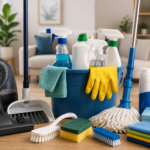
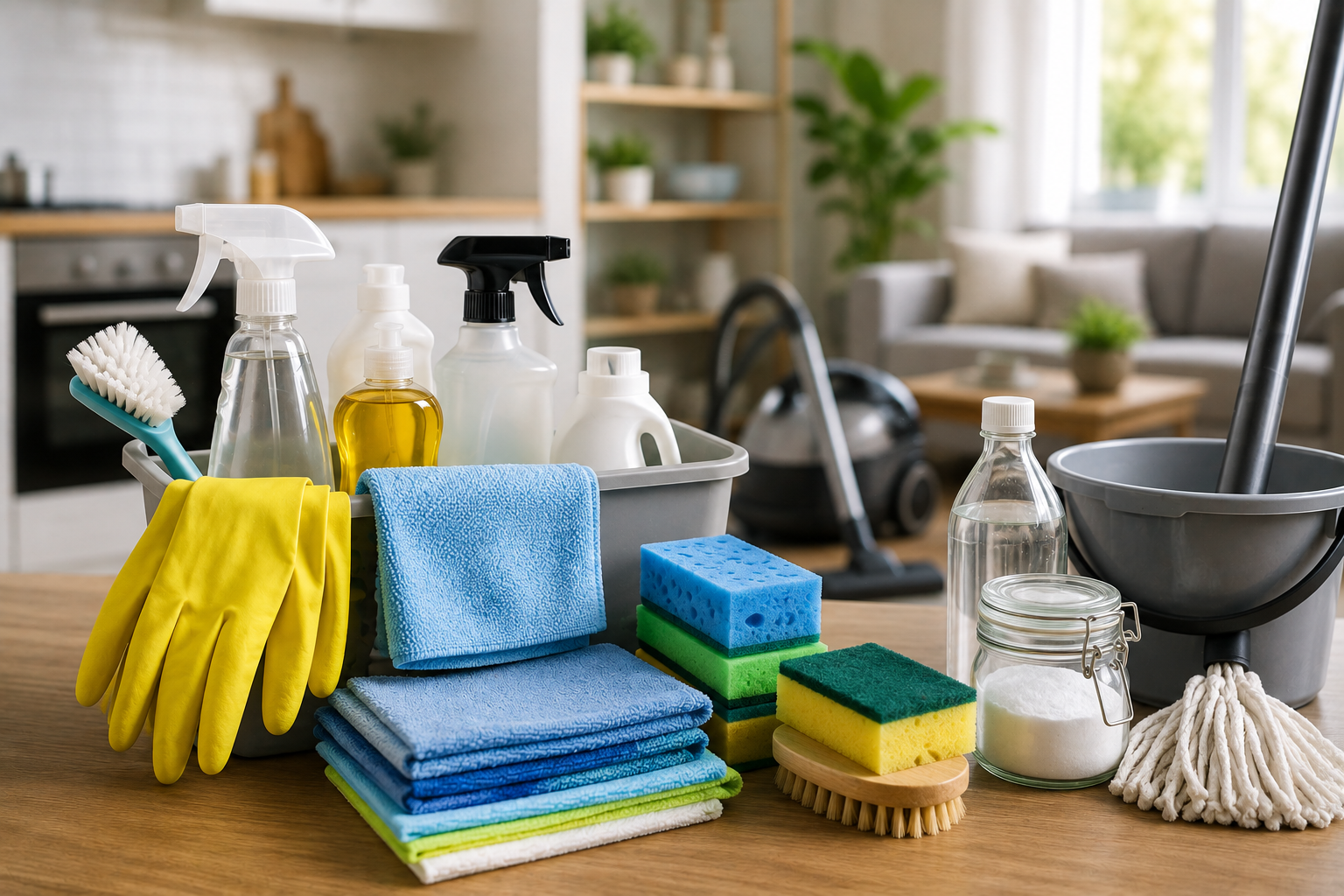
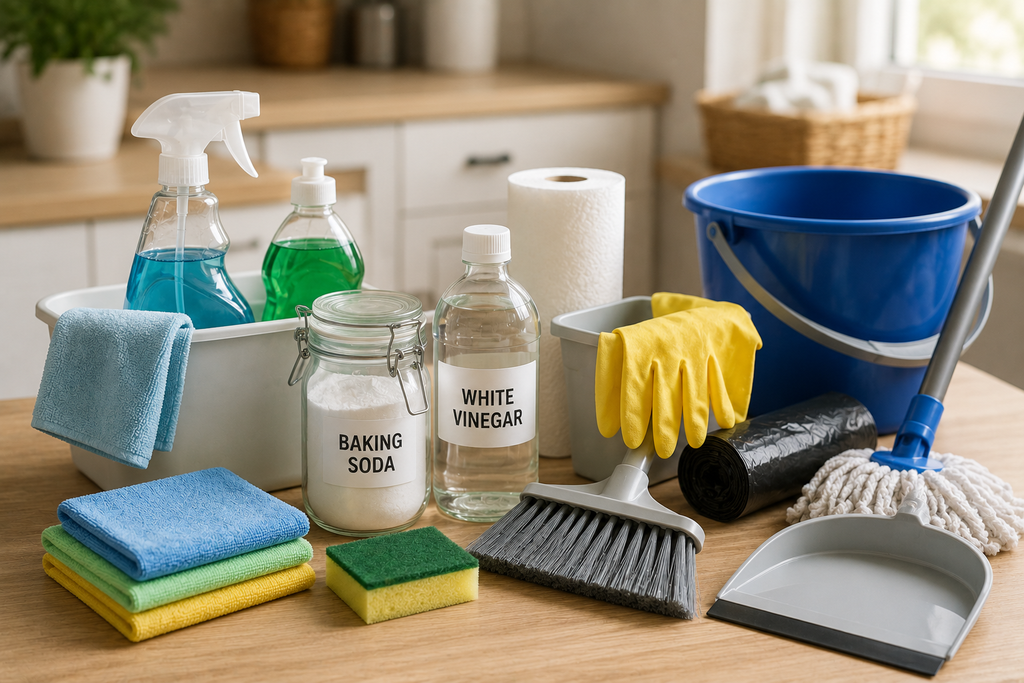
Every home genuinely needs a core kit built around a handful of versatile essentials: an all-purpose cleaner, dish soap (a genuinely powerful grease-cutter beyond just dishes), baking soda and white vinegar for natural deodorizing and scrubbing, microfiber cloths, a broom and dustpan, a mop and bucket, a vacuum, sponges, rubber gloves, and trash bags. Beyond this foundation, specialty items like a toilet bowl cleaner, glass cleaner with a squeegee, and an oven cleaner handle the specific jobs a general-purpose cleaner can’t. Organize supplies by room in a portable caddy for everyday use, with deep-cleaning tools stored separately, and you’ll spend far less time searching and far more time actually cleaning.
The Foundation: Your Core Cleaning Kit
The Products You’ll Reach for Constantly
These are the items you’ll use regardless of which room needs attention or what specific mess you’re facing, the true foundation of any home cleaning kit.
- All-purpose cleaner: Your go-to solution for countertops, sinks, hard surfaces, and fixtures throughout the home
- Dish soap: A genuinely powerful grease cutter useful well beyond dishes, effective on floors, cabinets, and even spot-cleaning upholstery
- Baking soda: Naturally deodorizes and gently scrubs away stains on sinks, tile, and fabric without harsh chemicals
- White vinegar: Disinfects, deodorizes, and works as the base for numerous DIY cleaning solutions, particularly effective for removing limescale and unclogging shower drains
- Trash bags: Stock multiple sizes for both everyday use and larger cleanup projects
- Rubber gloves: Protect your hands from harsh chemicals, bacteria, and general grime
The Essential Tools Beyond Solutions
Cleaning solutions alone can’t do the job without the right physical tools to apply them.
- Microfiber cloths: Reusable, lint-free, and gentle enough for dusting or wiping down nearly any surface
- Broom and dustpan: For quick daily sweeping and crumb cleanup
- Mop and bucket: Essential for hard flooring, tackling sticky spots and dirt that sweeping alone can’t fully remove
- Vacuum cleaner: Handles carpets, rugs, pet hair, and airborne allergens that other tools simply can’t reach
- Sponges: Useful for dishwashing and general surface scrubbing, with softer options for delicate surfaces and rougher ones for tougher grime
Core Cleaning Kit at a Glance
| Category | Essential Items |
| All-purpose solutions | All-purpose cleaner, dish soap, baking soda, white vinegar |
| Basic tools | Microfiber cloths, sponges, broom and dustpan |
| Floor care | Mop and bucket, vacuum cleaner |
| Protection and disposal | Rubber gloves, trash bags |
Choosing Between Cleaning Vinegar and Regular White Vinegar
Why the Distinction Matters
Not all vinegar on a store shelf is equally effective for cleaning. Cleaning vinegar specifically, or a white vinegar with a genuinely high acetic acid content, performs considerably better for tasks like removing limescale or unclogging a shower drain than a standard, lower-concentration cooking vinegar. This kind of vinegar also won’t leave sticky residue or sediment behind the way weaker versions sometimes can.
When to Reach for It
Vinegar-based solutions work particularly well on hard water buildup, glass, and as a natural deodorizer, though it’s worth noting vinegar shouldn’t be used on natural stone surfaces like marble or granite, since its acidity can etch and dull the finish over time.
Room-Specific Essentials Worth Adding
Kitchen
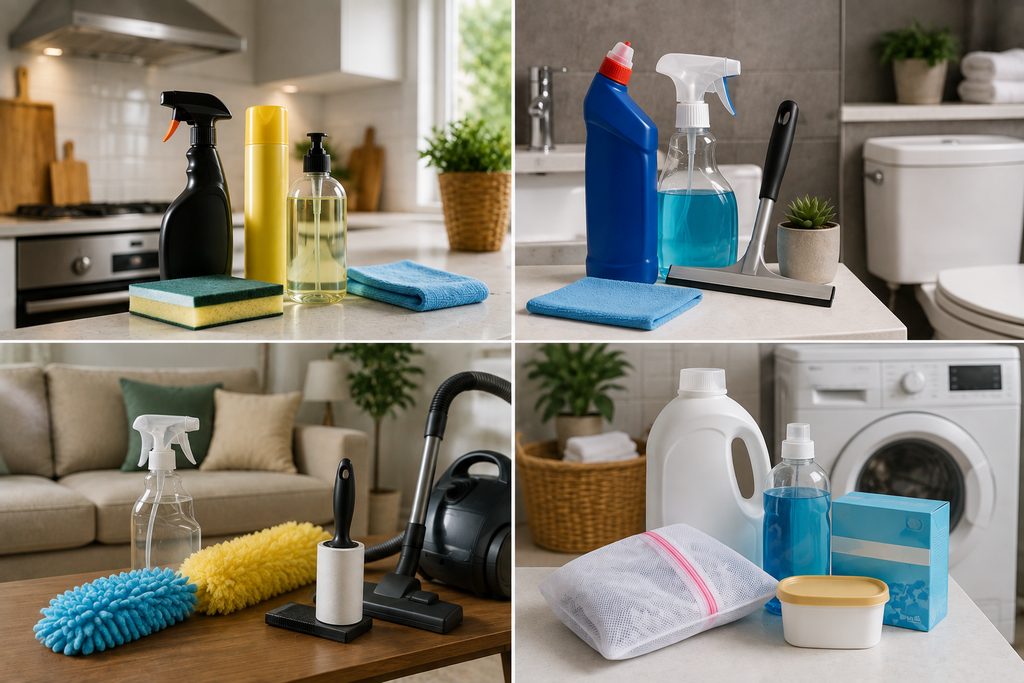
Beyond the core kit, kitchens genuinely benefit from a dedicated degreaser or oven cleaner for tackling the stubborn buildup that accumulates around stovetops and inside ovens, a job standard all-purpose cleaner simply isn’t formulated to handle effectively.
Bathroom
A dedicated toilet bowl cleaner is worth having on hand specifically, since while vinegar can handle a toilet tank reasonably well, a purpose-made bowl cleaner removes limescale and staining more effectively without requiring extensive scrubbing.
Windows and Glass
A squeegee paired with a microfiber cloth delivers genuinely streak-free results on windows and mirrors, considerably better than paper towels, which tend to leave lint and streaking behind on glass surfaces.
Wood Furniture
Furniture polish helps maintain wooden furniture’s finish and shine over time, a worthwhile specialty addition if your home includes real wood pieces that see regular dusting and cleaning.
Upholstery and Carpets
An upholstery cleaner handles stains and general refreshing for fabric furniture, while a dedicated carpet stain remover is genuinely indispensable for tackling spills before they set into carpet fibers permanently.
Specialty Additions Worth Considering
| Item | Best For |
| Oven/degreaser cleaner | Stovetop and oven grease buildup |
| Toilet bowl cleaner | Limescale and staining without heavy scrubbing |
| Squeegee | Streak-free windows and mirrors |
| Furniture polish | Wood furniture maintenance and shine |
| Upholstery cleaner | Fabric furniture stains and refreshing |
| Carpet stain remover | Spot-treating spills before they set |
| Disinfectant wipes | Quick germ-killing on high-touch surfaces |
| Magic eraser-style pad | Scuff marks and stubborn surface stains |
Building Your Own Natural Cleaning Solutions
Why Many Homeowners Prefer This Approach
Many homeowners increasingly prefer natural cleaning products, both for reduced chemical exposure around kids and pets, and for genuinely improved indoor air quality compared to some heavily scented commercial sprays.
A Basic DIY All-Purpose Spray
Combining equal parts water and white vinegar in a spray bottle creates a genuinely effective all-purpose cleaning spray for most hard surfaces, and adding a few drops of an essential oil like tea tree or lavender provides both a pleasant natural scent and some additional antibacterial properties.
An Important Safety Note About Mixing Cleaners
Never mix bleach with ammonia or with acidic products like vinegar, this combination produces genuinely dangerous toxic fumes. If you’re making your own cleaning solutions or combining commercial products, always check ingredient labels first and avoid mixing anything containing bleach with any other cleaning chemical.
Deep-Cleaning Tools for Occasional Use
When Your Everyday Kit Isn’t Enough
Some cleaning tasks come up only occasionally, spring cleaning, moving into a new home, or tackling a genuinely neglected area, and these situations call for tools beyond your everyday essentials.
- Steam cleaner: Deep-cleans grout, upholstery, and hard floors without relying heavily on chemical cleaners
- Carpet cleaner (rental or owned): Handles deep, ground-in stains standard vacuuming and spot treatment can’t fully remove
- Grout brush: Tackles the specific buildup that accumulates in tile grout lines over time
- Extension duster: Reaches ceiling fans, high shelves, and light fixtures without needing a ladder for every pass
How to Organize Your Cleaning Supplies
Create a Dedicated Cleaning Station
Storing all your cleaning products in one central, organized location, rather than scattered across multiple cabinets throughout the house, makes it considerably easier to find what you need quickly and avoid accidentally buying duplicates of products you already own.
Use a Portable Caddy for Everyday Tools
A portable cleaning caddy holding your most frequently used items, all-purpose cleaner, microfiber cloths, sponges, gloves, lets you carry everything you need from room to room in a single trip, rather than making repeated trips back to a central storage location.
Separate Deep-Cleaning Tools From Daily Essentials
Store occasional-use deep-cleaning tools in a separate bin or storage area from your everyday kit, this keeps your daily cleaning caddy lightweight and focused, while still keeping specialty tools accessible when you actually need them.
Store Chemicals Safely
Keep cleaning chemicals away from direct heat and sunlight, both of which can degrade some products or, in certain cases, create safety hazards. Always store products in their original, clearly labeled containers, and if you make DIY solutions, label those bottles clearly as well.
Avoiding Overbuying: A Genuinely Practical Approach
Why a Checklist Actually Saves Money
A clear cleaning supplies checklist isn’t just about efficiency, it genuinely helps you avoid overbuying and accumulating specialty products you’ll use once and then let sit unused for years, saving both money and valuable storage space over time.
Start With the Core Kit, Then Add Selectively
Rather than buying every specialty product available upfront, start with the core, versatile essentials, all-purpose cleaner, dish soap, baking soda, vinegar, microfiber cloths, and the basic tools, then add specialty items only once you identify a genuine, recurring need for them in your specific home.
Eco-Friendly and Budget-Conscious Alternatives
You Don’t Need Expensive Products for a Clean Home
Building a genuinely effective cleaning kit doesn’t require expensive, specialty products. Many of the most versatile cleaning essentials, baking soda, white vinegar, dish soap, are also among the most affordable options available, proving that effective cleaning and budget-conscious shopping aren’t mutually exclusive.
Choosing Eco-Friendly Options
If reducing your household’s chemical footprint matters to you, look specifically for products labeled non-toxic or plant-based, and lean on baking soda and vinegar-based DIY solutions for everyday cleaning tasks where they perform genuinely well, reserving stronger commercial chemical products for jobs that specifically require them, like disinfecting or heavy degreasing.
Practical Buying Tips
- Start with the core kit before adding specialty products, most everyday cleaning tasks are genuinely covered by all-purpose cleaner, dish soap, baking soda, and vinegar
- Choose a cleaning vinegar or high-acetic-content white vinegar specifically for tasks like limescale removal, rather than assuming any vinegar performs equally
- Invest in a genuinely portable caddy to speed up room-to-room cleaning rather than making repeated trips to a central storage area
- Add specialty items (oven cleaner, upholstery cleaner, carpet stain remover) only once you identify a real, recurring need for them in your home
- Store all chemicals away from heat and sunlight, and never mix bleach with ammonia or acidic cleaners
Common Mistakes to Avoid
- Overbuying specialty products before establishing your core kit, wasting money and storage space on items you’ll rarely use
- Mixing bleach with ammonia or acidic cleaners like vinegar, creating genuinely dangerous toxic fumes
- Using regular cooking vinegar for tough cleaning jobs, when a higher-acetic-content cleaning vinegar performs considerably better
- Storing cleaning chemicals in direct sunlight or near heat sources, risking product degradation or safety hazards
- Using vinegar on natural stone surfaces, since its acidity can etch and dull marble or granite finishes over time
Conslusion
Building a genuinely effective home cleaning kit doesn’t require an overflowing closet of specialty products, it requires the right versatile foundation, all-purpose cleaner, dish soap, baking soda, vinegar, and a handful of essential tools, organized in a way that actually gets used consistently. Start with this essential cleaning supplies checklist, add specialty items only as genuine, recurring needs arise in your specific home, and keep everything organized in a dedicated station with a portable caddy for daily tasks. With this foundation in place, keeping your home genuinely clean becomes considerably less overwhelming, and considerably more sustainable, than chasing every new product on the shelf.
Frequently Asked Questions
1- What are the absolute essential cleaning supplies every home needs?
An all-purpose cleaner, dish soap, baking soda, white vinegar, microfiber cloths, a broom and dustpan, a mop and bucket, a vacuum, sponges, rubber gloves, and trash bags cover the vast majority of everyday household cleaning needs.
2- Is regular vinegar as effective as cleaning vinegar?
Not quite. Cleaning vinegar or a white vinegar with high acetic acid content performs noticeably better for tougher jobs like limescale removal, while standard cooking vinegar works fine for lighter, general cleaning tasks.
3- What cleaning products should never be mixed together?
Never mix bleach with ammonia or with acidic products like vinegar, this combination creates dangerous toxic fumes and should always be avoided regardless of how effective either product seems individually.
4- How should I organize my cleaning supplies at home?
Create a dedicated central cleaning station for storage, use a portable caddy for your most frequently used everyday items, and store occasional-use deep-cleaning tools separately to keep your daily kit lightweight and focused.
5- Do I need specialty cleaning products for every room?
Not necessarily. Your core kit handles most everyday tasks across every room, specialty products like oven cleaner, toilet bowl cleaner, and upholstery cleaner are worth adding only for specific, recurring needs particular to certain rooms.
6- Are natural cleaning products as effective as commercial chemical cleaners?
For many everyday tasks, yes, baking soda and vinegar-based solutions handle general cleaning, deodorizing, and light scrubbing genuinely well, though stronger commercial products still have a place for tasks like heavy degreasing or disinfecting.
7- Where should I store cleaning chemicals safely?
Keep them away from direct heat and sunlight, in their original, clearly labeled containers, and store them somewhere kids and pets can’t access, ideally within your dedicated cleaning station rather than scattered across multiple locations.