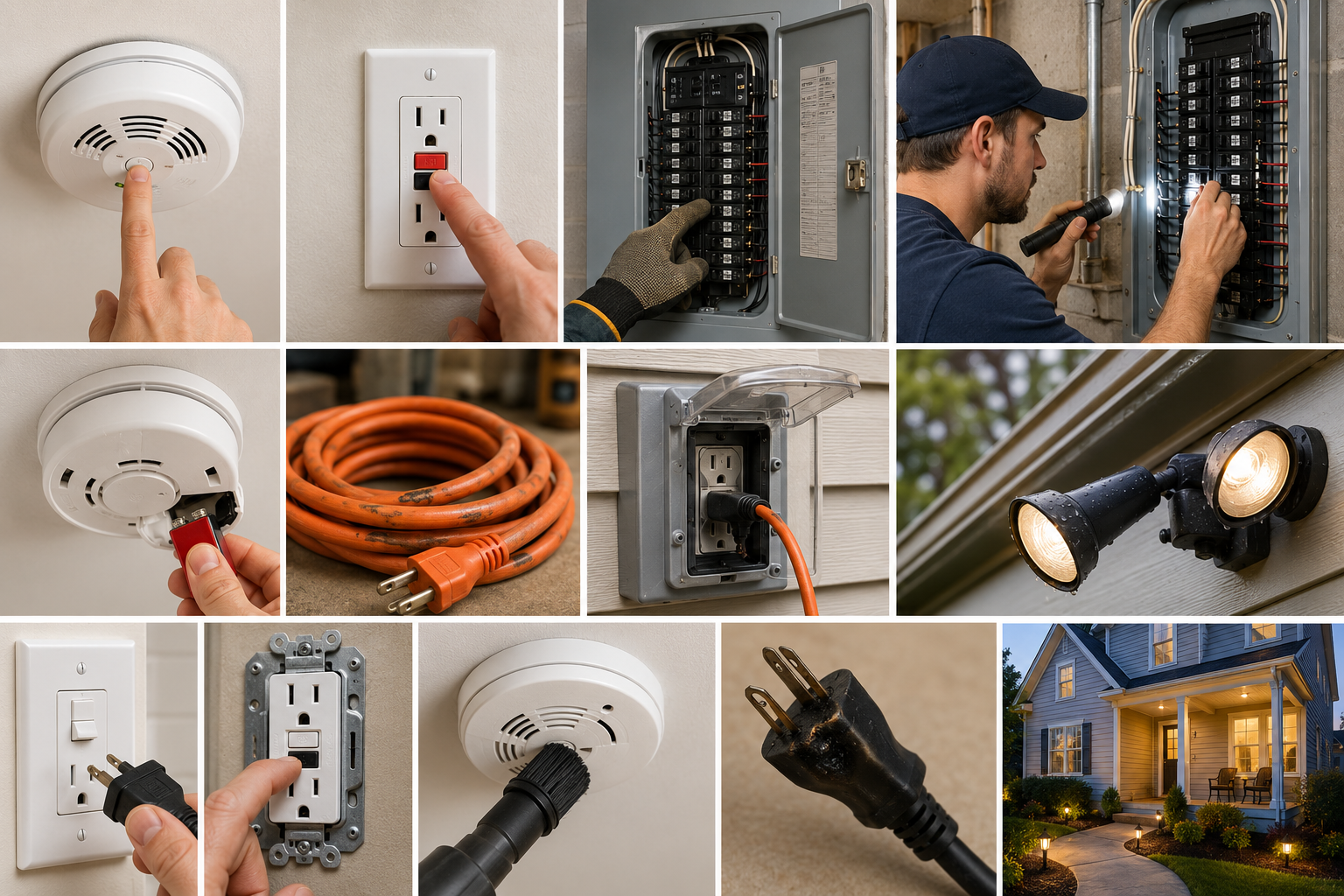
Most homeowners think about electrical maintenance only after something stops working. The better approach is a simple, ongoing checklist that catches small issues before they become expensive repairs or genuine safety hazards.
This guide provides a complete home electrical maintenance checklist organized by frequency, covering smoke detectors, safety outlets, your breaker panel, and seasonal tasks every homeowner should stay on top of. We’ll also cover GFCI testing, smoke alarm maintenance, and practical scheduling advice for American homeowners building a consistent maintenance routine.
By the end, you’ll have a clear, actionable schedule that keeps your home’s electrical system safe and functioning reliably year-round.
What Should Be on Your Checklist?
At minimum, your home electrical maintenance checklist should include monthly smoke detector and GFCI/AFCI testing, annual professional panel inspections, periodic outlet and cord checks, and seasonal tasks like inspecting outdoor electrical fixtures before winter and summer weather extremes. Building these tasks into a recurring schedule, rather than addressing them reactively, is what actually keeps a home’s electrical system safe over time.
Below, we’ve organized every task by how often it should happen, making it easy to build into your existing household routine.
Monthly Electrical Maintenance Tasks
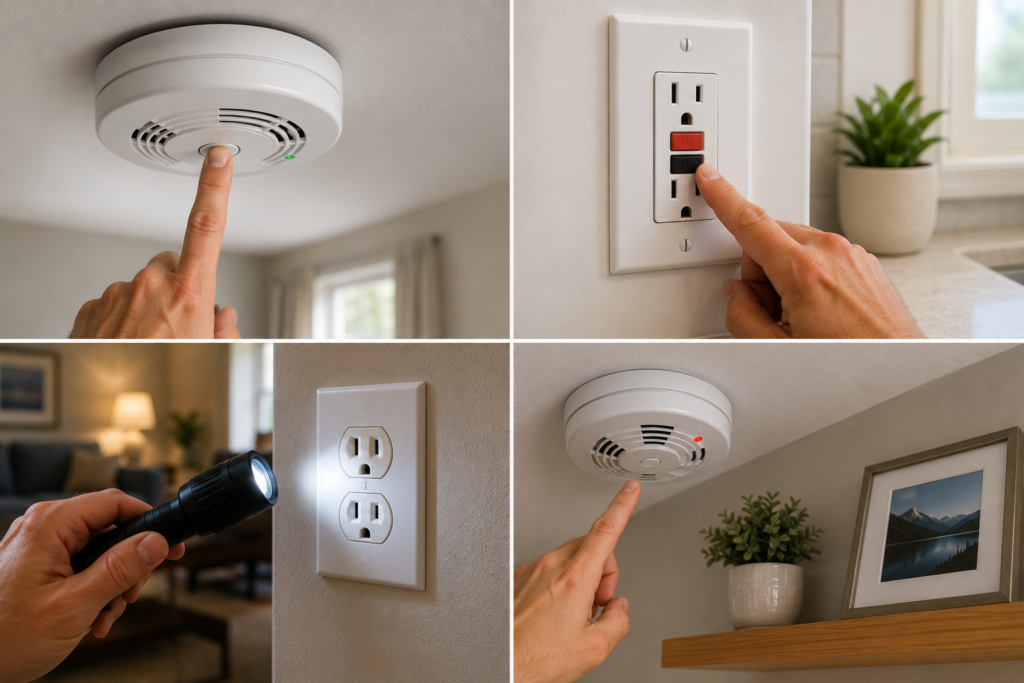
These quick checks take only a few minutes each month but catch the most common early warning signs of electrical problems.
Test Smoke Detectors
Press the test button on each smoke alarm and confirm the sound is loud, clear, and instant. According to the U.S. Fire Administration, smoke detectors should be checked monthly, since a weak, delayed, or silent alarm means something needs immediate attention.
Test GFCI and AFCI Outlets
Press the test button on GFCI and AFCI outlets to confirm they trip properly, then press reset. This simple monthly habit takes just seconds and ensures these safety devices are actually functioning when you need them most.
Visually Inspect Outlets and Switches
Take a quick walk through your home checking for discoloration, warmth, or looseness at outlets and switches. Catching a warm or discolored outlet early prevents it from developing into a more serious overheating issue.
Check for Chirping or Low-Battery Alerts
If any smoke detector or carbon monoxide detector chirps intermittently, this is a sign the battery needs immediate replacement rather than something to ignore until it becomes more annoying.
Quarterly Electrical Maintenance Tasks
A few tasks are best handled every three months, striking a balance between thoroughness and practicality.
Clean Smoke Detector Sensors
Dust and debris can desensitize smoke detector sensors over time. Use a vacuum with a soft brush attachment, or a soft brush alone, to gently clean the unit without opening the sensing chamber, and avoid liquids or compressed air directed straight into the sensor.
Inspect Extension Cords and Power Strips
Check any regularly used extension cords and power strips for fraying, cracking, or heat damage. Replace anything showing wear rather than continuing to use a compromised cord.
Check Outdoor Outlets and Fixtures
Inspect outdoor outlets, particularly those with weatherproof covers, for signs of moisture intrusion or damage, which can affect both function and safety over time.
Annual Electrical Maintenance Tasks
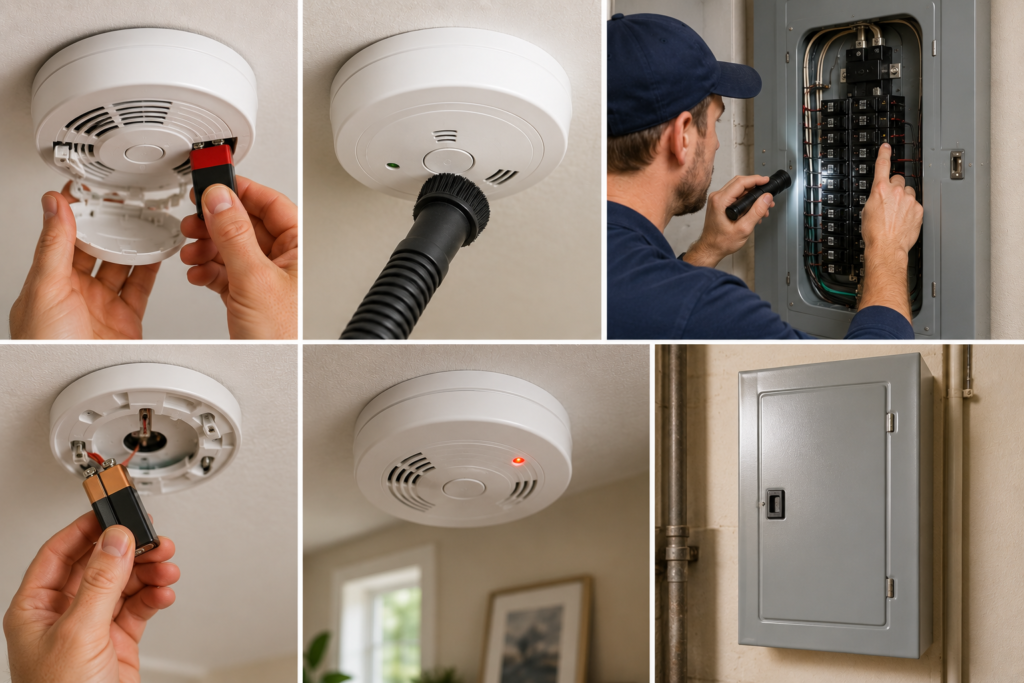
These more involved tasks are worth scheduling once a year, ideally around the same time so they’re easy to remember.
Replace Smoke Detector Batteries
Even if a smoke detector hasn’t started chirping, batteries drain over time regardless of whether the alarm has ever gone off, so it’s worth replacing them annually rather than waiting for a low-battery warning. For hardwired detectors with battery backup, inspect the backup battery for signs of corrosion as well.
Deep-Clean and Test All Smoke and CO Detectors
Beyond monthly button tests, an annual deeper check should include cleaning, confirming clear labeling of installation dates, and testing functionality more thoroughly than a simple button press.
Schedule a Professional Panel Inspection
Have a licensed electrician inspect your breaker panel annually, checking for loose connections, signs of overheating, and confirming the panel can adequately handle your home’s current electrical demands.
Test Backup Batteries in Hardwired Detectors
Hardwired smoke detectors with battery backup should have that backup battery checked for corrosion and function at least twice a year, ensuring the detector will still work during a power outage.
Inspect Your Electrical Panel Exterior
Check that your panel’s exterior is free of rust, and confirm the area around it remains clear of stored items, since proper clearance is both a safety and code requirement.
Comparing Maintenance Frequency by Task
| Task | Frequency | Why It Matters |
| Test smoke detectors | Monthly | Confirms alarm function before an emergency |
| Test GFCI/AFCI outlets | Monthly | Confirms shock and fire protection is active |
| Visual outlet inspection | Monthly | Catches early warning signs |
| Clean smoke detector sensors | Quarterly | Prevents dust-related sensor drift |
| Inspect extension cords | Quarterly | Catches wear before it becomes a hazard |
| Replace smoke detector batteries | Annually | Prevents mid-emergency battery failure |
| Professional panel inspection | Annually | Catches issues invisible to homeowners |
| Replace smoke detectors entirely | Every 10 years | Sensor performance degrades with age |
Smoke Detector Replacement: Know the 10-Year Rule
Beyond regular testing and battery replacement, smoke detectors themselves have a limited functional lifespan that’s easy to overlook.
Most smoke detectors have a maximum lifespan of about 10 years, after which sensor performance can degrade even if the unit still technically functions. Check for a manufacturing date stamped on the back of each unit, and replace any detector that has reached or passed this age, regardless of whether it’s currently working without issue.
Keeping a simple record of installation dates for each detector in your home makes this milestone far easier to track than trying to remember when each unit was originally installed.
Seasonal Electrical Maintenance Considerations
Certain tasks are worth timing around seasonal changes, since weather extremes place additional demands on your home’s electrical system.
Before Winter
Inspect outdoor outlets and fixtures for weatherproofing before freezing temperatures arrive, and confirm holiday lighting and decorations are in good condition before adding them to existing circuits. Test your smoke detectors again specifically before winter, since heating system use increases fire risk during colder months.
Before Summer
Check that outdoor outlets near pools, sprinklers, or other water sources have functioning GFCI protection before increased outdoor electrical use begins. Air conditioning season also places additional load on circuits, making this a good time to confirm your panel can comfortably handle peak summer demand.
After Storms or Power Outages
Following any significant storm or extended power outage, visually inspect your electrical panel and any outdoor equipment for water intrusion or damage before restoring normal use, and test smoke and CO detectors again to confirm they weren’t affected.
Building an Electrical Maintenance Routine That Actually Sticks
Knowing what to check matters less if the checklist never actually gets used consistently. A few practical strategies help turn this into a lasting habit.
- Anchor tasks to existing routines: Testing smoke detectors on the first of the month, or when you change your clocks for daylight saving time, gives you a memorable, recurring trigger.
- Keep a simple maintenance log: A basic written or digital log noting installation dates, last test dates, and any issues found makes tracking multiple detectors and outlets far more manageable than relying on memory alone.
- Set calendar reminders: A recurring digital reminder removes the guesswork of trying to recall when tasks were last completed.
- Involve the whole household: Sharing simple monthly tasks, like pressing test buttons, spreads the responsibility and builds better habits across everyone living in the home.
Essential Supplies for Electrical Maintenance
Keeping a small set of supplies on hand makes staying consistent with this checklist considerably easier.
- Fresh batteries in appropriate sizes for your smoke and CO detectors
- A soft-bristle brush or small vacuum attachment for cleaning detector sensors
- A basic outlet tester for confirming proper wiring and grounding at outlets
- A flashlight for inspecting panels, outdoor fixtures, and dimly lit areas
- A simple maintenance log, whether a notebook or a phone app, for tracking installation and test dates
When to Call a Professional Instead of Continuing DIY Maintenance
While most items on this checklist are safe for homeowners to handle, certain findings during your routine checks should prompt a call to a licensed electrician rather than continued self-maintenance.
- Persistent detector failures: If a smoke detector continues malfunctioning after cleaning and battery replacement, contact a licensed electrician to check for wiring faults or code-related replacement needs.
- Warm or discolored outlets: Any outlet or switch that feels warm to the touch during your monthly inspection warrants prompt professional attention rather than continued monitoring.
- Panel corrosion or damage: Rust, corrosion, or visible damage to your electrical panel’s exterior should be assessed by a professional rather than addressed as a DIY task.
- Frequent breaker trips discovered during inspection: If your annual panel check reveals frequent tripping patterns, this often signals a capacity issue worth having professionally evaluated.
Conclusion
A consistent home electrical maintenance checklist, covering monthly smoke detector and GFCI testing, quarterly cord and outlet checks, and annual professional panel inspections, catches small issues before they become genuine safety hazards or costly repairs. Building these tasks into a simple, recurring schedule makes electrical maintenance far more manageable than trying to remember everything reactively. With a clear routine in place, you’ll have genuine confidence that your home’s electrical system is functioning safely, month after month and season after season.
Frequently Asked Questions
1- How often should I test my smoke detectors?
Smoke detectors should be tested monthly by pressing the test button, with a deeper annual check including battery replacement and sensor cleaning.
2- When should I replace my smoke detectors entirely?
Most smoke detectors should be replaced after about 10 years, even if they’re still functioning, since sensor performance can degrade with age. Check the manufacturing date stamped on the unit.
3- How often should GFCI outlets be tested?
GFCI and AFCI outlets should be tested monthly using the built-in test and reset buttons to confirm they’re functioning properly.
4- Do I need a professional to inspect my electrical panel every year?
An annual professional panel inspection is a good practice, particularly for older homes, since it catches issues like loose connections or overheating that aren’t visible during a routine homeowner check.
5- What’s the easiest way to remember monthly electrical maintenance tasks?
Anchoring tasks to a memorable date, like the first of the month or daylight saving time changes, makes it easier to stay consistent without relying purely on memory.
6- Should I clean my smoke detectors myself?
Yes, gentle cleaning with a soft brush or vacuum attachment is a safe DIY task. Avoid opening the sensing chamber or using liquids or compressed air directly on the sensor.