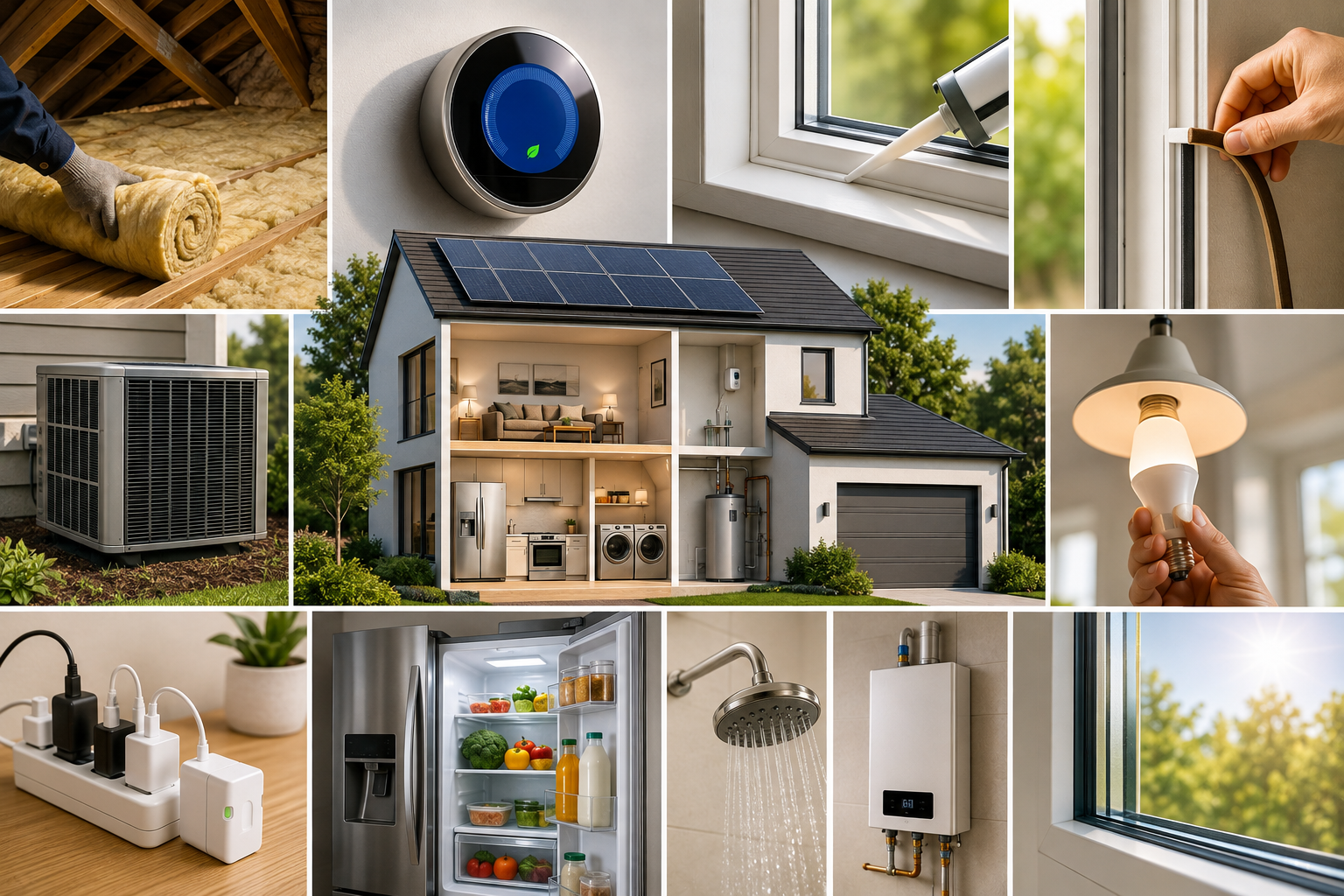
If you’ve ever wondered whether your home is quietly wasting energy without any obvious sign, the answer is almost certainly yes most homes are. The good news is that finding and fixing those issues doesn’t require a professional visit or major renovation to get started.
A thorough home energy efficiency checklist covers six main areas HVAC and air sealing (typically 40 to 60% of energy use), water heating, major appliances, lighting, electronics and phantom loads, and windows and doors. Working through these systematically, starting with the areas that use the most energy, gives you the clearest path to lower bills without guesswork.
This guide walks through a complete, practical checklist you can work through yourself, organized by priority so you can tackle the highest-impact items first and save the smaller fixes for later.
Why Start With a Checklist Instead of Random Fixes
It’s tempting to jump straight to swapping light bulbs or unplugging a few chargers, but those changes have a relatively small impact compared to your home’s biggest energy users heating, cooling, and water heating. A structured checklist helps you prioritize correctly, so your time and money go toward the changes that actually move the needle on your bill.
Step 1: HVAC and Air Sealing Checklist (Highest Priority)

Heating and cooling typically account for the largest share of a home’s total energy use often 40 to 60% of your bill — which makes this the best place to start.
HVAC System Checks
- Check your air filter and replace it if dirty generally every 1 to 3 months, depending on the filter type and household factors like pets
- Note the age of your HVAC system. Most systems have a typical lifespan of 15 to 20 years; older units are worth monitoring for declining efficiency
- Schedule annual maintenance to catch refrigerant, component, or ductwork issues early
- Inspect visible ductwork for gaps, disconnections, or damage, especially in attics, basements, or crawlspaces
- Clear debris from your outdoor AC unit and check that the fins aren’t bent or blocked
Air Leak Checks
- Inspect windows and doors for drafts by running your hand along the frame edges
- Check where different building materials meet — corners, chimneys, faucets, and the foundation line — for gaps
- Check electrical outlets, light switches, and plumbing fixtures, which can also be sources of unexpected air leaks
- Use the incense stick test: light an incense stick near common leak points; if the smoke wavers or gets pulled in a direction, there’s a draft
Air Sealing Fixes
- Apply weatherstripping around door and window frames
- Use caulk to seal smaller gaps and cracks
- Seal duct leaks with mastic sealant or metal tape (avoid standard duct tape, which degrades over time)
Sealing air leaks while maintaining proper ventilation can meaningfully reduce total energy costs often cited in the range of 10 to 20% depending on how significant the leaks were to begin with.
Step 2: Insulation Checklist
Insulation works alongside air sealing to keep conditioned air where it belongs.
- Measure your attic insulation depth. If you can clearly see the floor joists, insulation is likely too thin for your climate zone
- Check wall insulation where accessible, such as around outlet covers (with power off) or in unfinished basement areas
- Look for signs of poor ventilation, like mold, mildew, or excess moisture, which can indicate insulation or airflow problems
- Consider a professional energy audit if you suspect widespread insulation gaps but can’t easily assess them yourself
Step 3: Water Heater Checklist
Water heating typically represents around 12 to 18% of a home’s total energy bill, making it the next priority after HVAC.
- Check your water heater’s temperature setting. Around 120°F is generally sufficient for most households while reducing unnecessary energy use
- Flush the tank periodically to clear sediment buildup, which can reduce efficiency over time
- Check the age of your unit. Water heaters typically last 10 to 15 years, and efficiency often declines as they approach that range
- Consider a tankless or heat pump water heater if your current unit is aging, since these options can offer meaningfully better efficiency
Step 4: Major Appliance Checklist
Appliances collectively contribute a significant share of household energy use, especially older or poorly maintained units.
- Check the age and energy rating of major appliances — refrigerators, washers, dryers, dishwashers
- Look for ENERGY STAR certification when evaluating whether to replace an appliance
- Check your refrigerator’s door seals for gaps; a damaged gasket makes the fridge work harder to hold temperature
- Confirm your fridge and freezer aren’t set colder than necessary, which wastes energy unnecessarily
- Feel the exterior of your refrigerator. If it feels unusually warm, that can indicate the compressor or seals aren’t working efficiently
Prioritization tip: Replace your oldest, most energy-intensive appliances first, since appliances over 10 to 15 years old can use meaningfully more energy sometimes up to 20% or more of total household use collectively — compared to newer, efficiency-rated models.
Step 5: Lighting Checklist
Lighting typically accounts for roughly 9 to 12% of a home’s total energy bill, and it’s one of the easier and more affordable areas to improve.
- Identify your most-used light fixtures and start upgrades there first
- Replace incandescent bulbs with LEDs. LEDs use significantly less energy than incandescent bulbs and last far longer often cited around 25 times longer
- Consider CFLs as an alternative if LEDs aren’t available, though LEDs generally offer better overall efficiency
- Add motion sensors or timers for spaces where lights are often left on unnecessarily, like hallways, closets, or outdoor areas
- Use dimmers in rooms where full brightness isn’t always needed
- Choose LEDs or CFLs for outdoor lighting, since they hold up better to weather while using less energy than traditional bulbs
- Use natural daylight when possible instead of defaulting to artificial lighting during the day
Lighting Comparison
| Bulb Type | Relative Energy Use | Typical Lifespan |
| Incandescent | Highest | ~1,000–1,200 hours |
| CFL | Lower | Several thousand hours |
| LED | Lowest | Up to ~25,000 hours |
Step 6: Electronics and Phantom Load Checklist
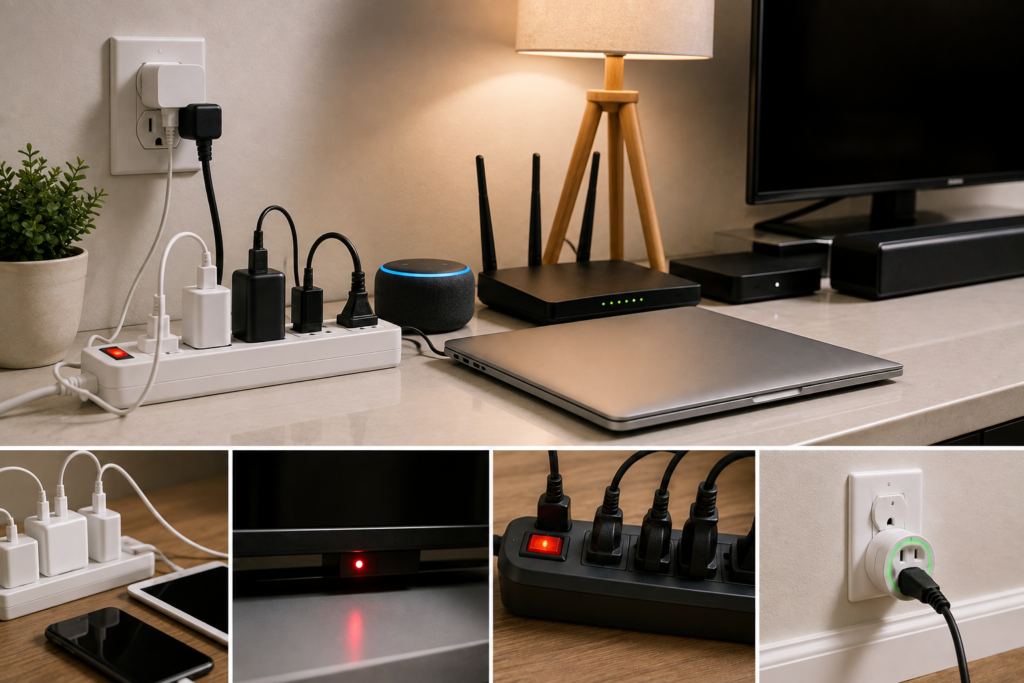
Phantom loads power drawn by devices even when they appear to be off are one of the most overlooked contributors to a high bill.
- Identify “vampire” devices: anything with a remote, digital display, or standby light TVs, streaming boxes, game consoles, sound systems
- Use smart power strips to automatically cut power to devices in standby mode
- Unplug chargers once devices are finished charging, rather than leaving them connected
- Enable eco-friendly sleep and power settings on computers and other devices
- Unplug rarely used appliances, like a spare coffee maker or toaster oven, when not in regular use
Collectively, phantom loads can account for roughly 5 to 10% of total household electricity use a meaningful amount considering how invisible the drain usually is.
Step 7: Windows and Doors Checklist
Windows and doors are among the most common sources of energy loss in a home, both through drafts and through inefficient glass.
- Inspect window and door frames for visible gaps or deteriorating seals
- Apply or replace weatherstripping as needed
- Check for single-pane windows, which are significantly less efficient than double- or triple-pane options
- Consider window film or heavier curtains as a lower-cost interim improvement if full window replacement isn’t in your budget
- Evaluate whether older windows are due for replacement, particularly if drafts persist even after sealing efforts
DIY vs. Professional Energy Audit: Which Do You Need?
What a DIY Checklist Can Catch
- Obvious drafts around windows, doors, and outlets
- Outdated lighting and easy phantom-load fixes
- Basic insulation gaps (like visible attic joists)
- Water heater temperature and appliance age issues
When to Call a Professional
- You suspect significant air leaks but can’t pinpoint the source through a basic inspection
- You want a blower door test, which measures your home’s overall air leakage more precisely than a DIY smoke test
- Your energy bills remain high despite addressing the obvious issues on this checklist
- You’re considering major upgrades (insulation retrofit, HVAC replacement) and want data to prioritize the investment
Some states and utility programs offer free or subsidized professional energy audits, which can be worth checking into before paying out of pocket for one.
Prioritization: Where to Start Based on Impact
| Priority Level | Area | Why It Matters Most |
| Highest | HVAC + air sealing | Largest single share of most energy bills |
| High | Water heating | Second-largest typical energy use |
| Medium | Major appliances | High usage, especially if outdated |
| Medium | Windows and doors | Directly affects HVAC efficiency |
| Lower (but easy) | Lighting | Affordable, quick wins |
| Lower (but easy) | Electronics/phantom loads | Small individually, adds up collectively |
Practical approach: Tackle the “highest” and “high” priority items first, since they typically deliver the most noticeable savings for the effort involved. Treat lighting and phantom-load fixes as easy wins you can knock out quickly alongside the bigger projects.
Practical Buying Advice
- Start with the cheapest fixes first — caulk, weatherstripping, and LED bulbs — before considering bigger investments like new appliances or windows.
- Replace your oldest, most energy-intensive appliances first, prioritizing refrigerators, water heaters, and HVAC systems over smaller electronics.
- Choose ENERGY STAR-certified products whenever you’re replacing an appliance, since they’re built to meet specific, verified efficiency standards.
- Use smart power strips for electronics-heavy areas, like entertainment centers and home offices, where phantom loads tend to concentrate.
- Get a professional audit if your DIY checklist doesn’t explain a persistently high bill — sometimes the source is a leak or inefficiency that’s genuinely hard to detect without specialized tools.
Work Through It Once, Then Make It a Habit
A home energy efficiency checklist isn’t a one-time project it’s a starting point for habits worth maintaining. Start with the highest-impact areas HVAC, air sealing, and water heating then work through appliances, lighting, and electronics as time and budget allow. Even the smaller fixes, done consistently, add up over the course of a year.
Once you’ve worked through the full checklist, revisit it seasonally or annually, since new gaps, aging equipment, and added devices can quietly chip away at your home’s efficiency over time. A little regular attention here keeps your energy bills and your home’s overall performance working in your favor.
FAQ
1- What’s the single most impactful item on this checklist?
Addressing HVAC efficiency and air sealing tends to have the biggest overall impact, since heating and cooling typically represent the largest share of a home’s total energy use.
2- How often should I replace my HVAC air filter?
Generally every 1 to 3 months, though households with pets or higher dust levels may need to replace filters more frequently to keep the system running efficiently.
3- Are LED bulbs really worth switching to?
Yes, LEDs use significantly less energy than incandescent bulbs and last many times longer, making them one of the most cost-effective and low-effort upgrades on this checklist.
4- How much do phantom loads actually cost me?
Collectively, phantom loads from devices left plugged in and drawing standby power can account for roughly 5 to 10% of a household’s total electricity use, even though each individual device draws very little on its own.
5- Is a DIY energy audit as good as a professional one?
A DIY checklist can catch many common, obvious issues, but a professional audit particularly one that includes a blower door test can identify more precise or hidden sources of energy loss that a visual inspection might miss.
6- What temperature should I set my water heater to?
Around 120°F is generally considered sufficient for most household needs, while helping reduce unnecessary energy use compared to higher settings.