
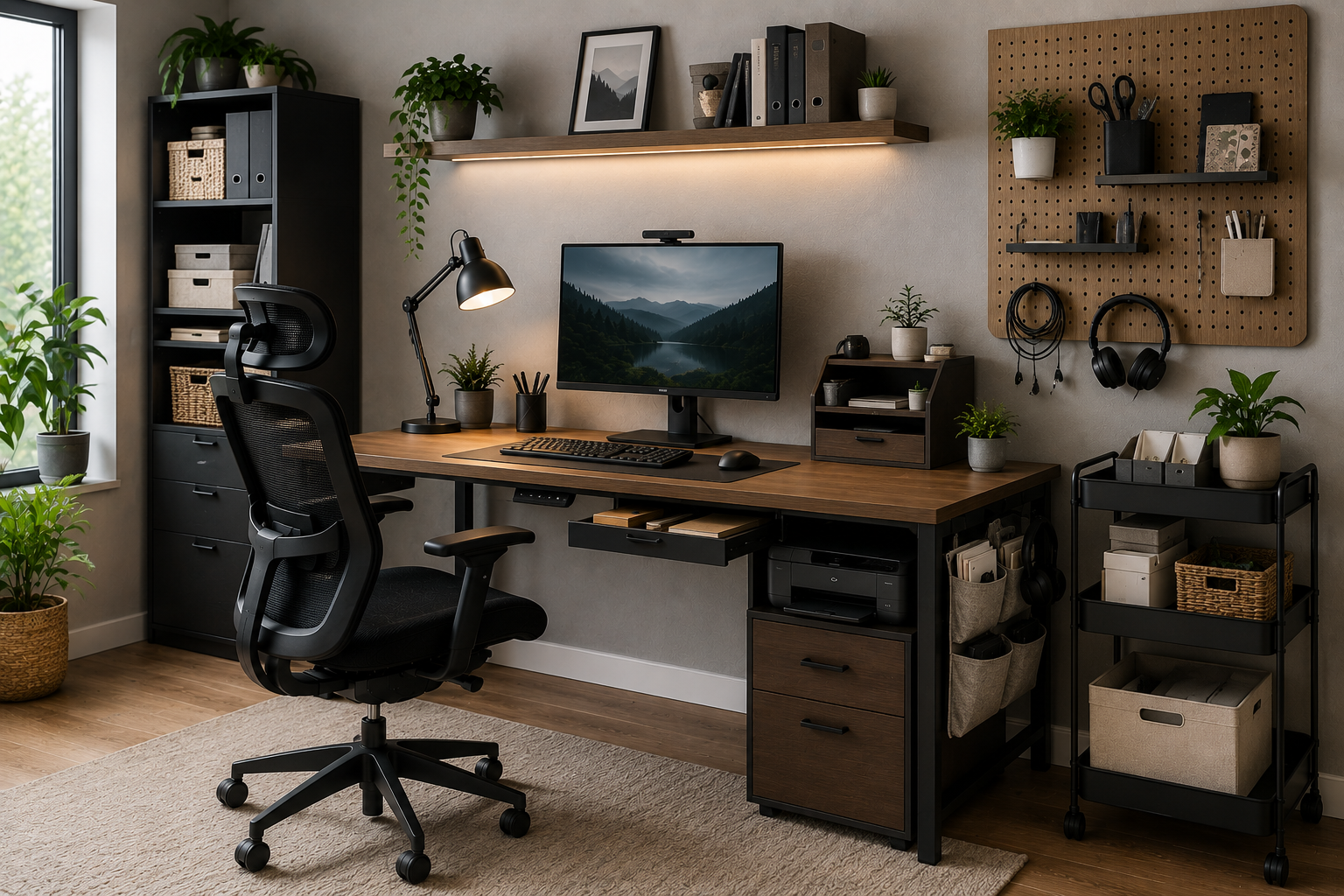
A cluttered desk doesn’t just look messy it makes it harder to focus, find what you need, and actually get work done. If your home office feels chaotic no matter how often you tidy it, the real problem probably isn’t a lack of effort. It’s a lack of the right storage system for your specific space.
The most effective home office storage combines vertical storage (shelves, pegboards, wall organizers), smart desk storage (drawers, organizers, cable management), and furniture that works double duty especially in smaller rooms. The right mix depends on how much floor space you have, how much paperwork or equipment you store, and whether your office needs to double as another room.
This guide walks through storage solutions for every part of your home office walls, desk, floor, and beyond — so you can build a system that actually stays organized, not just looks that way for a week.
Why Home Office Storage Deserves Real Planning
It’s tempting to treat storage as an afterthought something you add once the desk and chair are in place. But disorganized storage tends to snowball. Papers pile up, cords tangle, supplies get lost in random drawers, and the visual clutter alone can make it harder to concentrate.
A well-planned storage system does three things:
- Keeps your desk surface clear, so you have room to actually work
- Makes items easy to find, saving time and reducing daily frustration
- Uses your space efficiently, especially important in smaller rooms or shared spaces
The good news: you don’t need a big room or a big budget to get this right. Most effective home office storage relies on smart use of vertical space and multi-purpose furniture, not expensive built-ins.
Start by Assessing What You Actually Need to Store
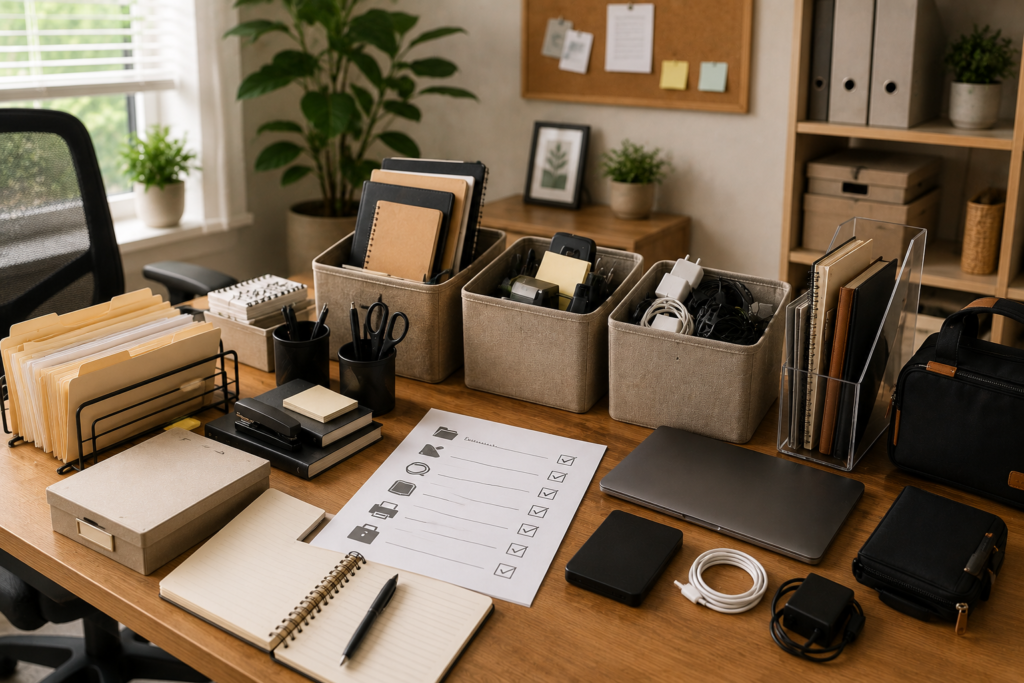
Before buying organizers, take stock of what actually needs a home in your office. This avoids buying storage you don’t need or missing storage for the stuff that’s actually cluttering your space.
Common categories to plan for:
- Paperwork and files (active vs. archived)
- Office supplies (pens, notepads, staplers, etc.)
- Electronics and cables (chargers, cords, peripherals)
- Books, reference materials, or binders
- Equipment (printer, scanner, extra monitor, etc.)
- Personal items that end up in the office (bags, mail, misc.)
Once you know what you’re storing, it’s much easier to choose the right storage type for each category rather than defaulting to generic bins.
Vertical Storage: The Most Space-Efficient Option
If there’s one principle that applies to almost every home office, it’s this: use your walls, not just your floor. Vertical storage keeps clutter off your desk and floor while making use of space that would otherwise go unused.
Floating Shelves
Floating shelves mount directly to the wall without visible brackets, giving you extra storage for books, binders, or decorative items without taking up any floor space.
Best for: Reference books, file boxes, decor mixed with functional storage, small offices where floor space is limited.
Pegboards
A pegboard is a highly customizable wall storage system you can rearrange hooks and shelves as your needs change, making it ideal for supplies you use often.
Best for: Frequently used tools, supplies, or accessories you want visible and within reach.
Wall-Mounted File Organizers
Wire or acrylic file organizers mounted on the wall keep important papers accessible without taking up desk space useful for documents you need regularly but don’t want piling up on the desk itself.
Best for: Active projects, bills, or paperwork you reference often.
Corkboards and Dry-Erase Boards
Beyond organization, these double as a visual planning tool useful for reminders, calendars, or notes you want to see at a glance.
Smart Desk Storage: Keeping Your Work Surface Clear
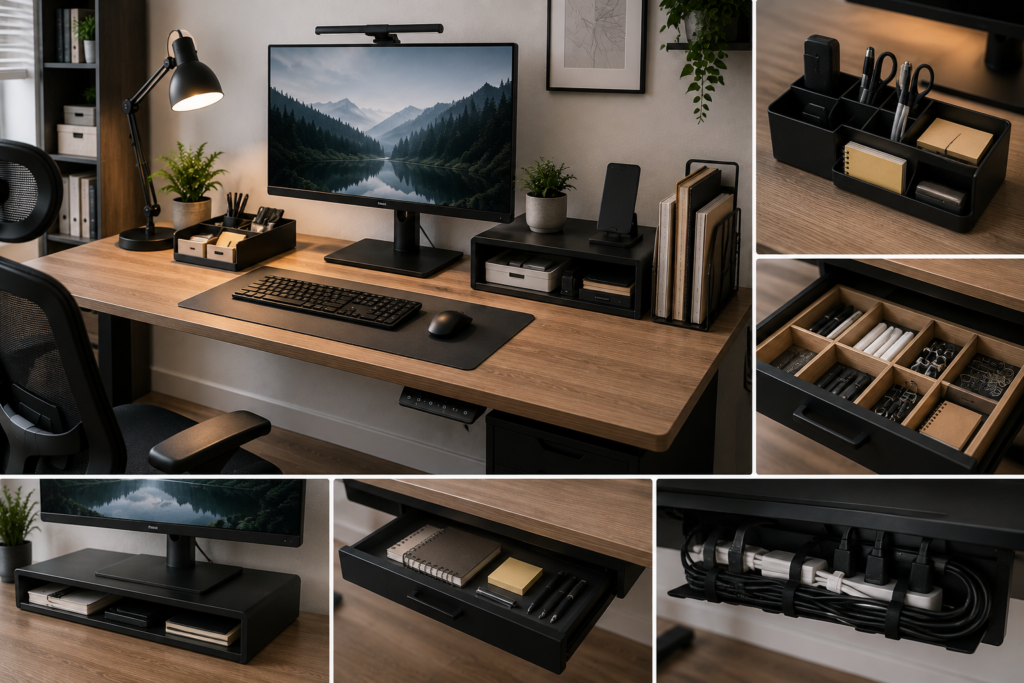
Your desk surface should be reserved for active work not a permanent home for supplies, mail, and miscellaneous items.
Desktop Organizers
A desktop organizer consolidates small items pens, sticky notes, paper clips into one designated spot instead of scattered across the desk.
Drawer Dividers
If your desk has drawers, dividers keep small items separated and easy to find, rather than turning into a junk drawer. Assigning a specific spot to each item type (pens in one section, notepads in another) makes daily use much faster.
Monitor Stands With Storage
A monitor stand that raises your screen to eye level can also include built-in compartments underneath a smart way to add storage without using any additional desk footprint.
Under-Desk Storage
The space beneath your desk is often overlooked, but it’s valuable real estate:
- Under-desk drawers attach directly to the underside of the desk using adhesive strips, adding discreet storage without extra furniture.
- Rolling carts fit under or beside the desk and can hold supplies, files, or personal items, while remaining mobile if you need to move them.
Managing Cables and Cords
Tangled cords aren’t just unsightly they can make cleaning and reorganizing harder and create tripping hazards.
Practical solutions:
- Cable management boxes conceal power strips and cords, keeping them out of view while staying accessible.
- Cable clips or sleeves run along the edge of the desk to keep cords organized and prevent tangling.
- Labeling cords at the plug end makes it much faster to identify and unplug the right device later.
Storage Solutions for Small or Shared Spaces
If your home office is a corner of another room a bedroom, living room, or guest room storage needs to work extra hard without taking over the space.
Over-the-Door Organizers
These hang directly over a standard interior door, requiring no tools or permanent installation. They’re especially useful for small apartments or shared spaces where wall-mounted storage isn’t practical.
Good for: Office supplies, mail, or even a repurposed clear shoe organizer for cables and small electronics.
Multi-Purpose Furniture
- Storage ottomans double as seating or a footrest while hiding paperwork, cables, or supplies inside.
- Decorative storage boxes on open shelves keep less-used items out of sight while still contributing to the room’s look.
- Foldable desks and chairs can be tucked away when the office needs to convert back into another room.
Convertible or Fold-Away Desks
For rooms that serve double duty, a desk that folds up or down when not in use helps the space transition between “office” and “bedroom” or “living room” without permanent clutter.
Storage Solutions for Larger, Dedicated Offices
If you have a full room dedicated to your home office, you have more flexibility but the same organizing principles still apply, just at a larger scale.
Filing Cabinets
A traditional filing cabinet remains one of the most reliable ways to manage paperwork, especially if your work involves regular physical documents.
Tip: If a bulky metal cabinet doesn’t fit your space or style, rolling file carts (including woven or fabric options) offer similar function with a softer aesthetic.
Bookshelves and Cabinets
Larger offices can accommodate freestanding bookshelves or cabinets for reference materials, supplies, and equipment that doesn’t need to be within arm’s reach of the desk.
Closets or Built-In Storage
If your office has a closet, it’s an underused opportunity shelving inserts, hanging organizers, or stackable bins can turn it into dedicated storage for equipment, supplies, or archived files.
Choosing the Right Storage: A Quick Comparison
| Storage Type | Best For | Space Required |
| Floating shelves | Books, binders, décor | Wall space only |
| Pegboard | Frequently used supplies | Wall space only |
| Desktop organizer | Small daily-use items | Minimal desk space |
| Drawer dividers | Organizing existing drawers | None (uses existing drawers) |
| Under-desk drawer | Discreet extra storage | None (attaches to existing desk) |
| Rolling cart | Mobile supply storage | Small floor footprint |
| Over-the-door organizer | Shared/small spaces | Door space only |
| Filing cabinet | Heavy paperwork needs | Dedicated floor space |
| Storage ottoman | Hidden multi-purpose storage | Small floor footprint |
How to Build a Storage System That Actually Stays Organized
Buying organizers is only half the equation the system needs to fit how you actually work, or it won’t stick.
- Give every category a designated spot. If supplies don’t have an assigned home, they’ll end up back on the desk.
- Keep frequently used items within arm’s reach, and move rarely used items to less accessible storage (closets, higher shelves, under-desk).
- Declutter before organizing. Adding storage to a pile of unnecessary items just organizes the clutter sort and remove what you don’t need first.
- Reassess every few months. As your work changes, so do your storage needs what worked initially may need adjusting later.
- Match storage style to your room. In a shared space, look for storage that blends in with the room’s existing decor rather than looking purely “office.”
Practical Buying Advice
- Start with vertical storage if floor space is limited. Wall-mounted solutions add the most storage without shrinking your usable room.
- Prioritize desk-adjacent storage for daily-use items, and save further-away storage (closets, shelves) for things you access less often.
- Choose multi-purpose furniture in small or shared rooms — an ottoman or bench with hidden storage does more work than a single-purpose piece.
- Don’t overbuy bins and boxes before decluttering. It’s more effective to sort what you’re keeping first, then choose storage sized to match.
- Factor in mobility if your space serves multiple purposes. Rolling carts and foldable furniture make it easier to reset the room for another use.
Conclusion
The best home office storage system isn’t the most expensive or elaborate one — it’s the one that matches how you actually work and how much space you actually have. Start by identifying what needs a home, lean on vertical storage wherever floor space is limited, and choose multi-purpose furniture if your office shares a room with another function.
Once everything has a clear, designated spot, staying organized becomes far less effort — and your workspace starts working for you instead of against you.
FAQ
1- What’s the best storage solution for a small home office?
Vertical storage floating shelves, pegboards, and wall-mounted organizers tends to work best in small spaces since it doesn’t use any floor space, which is usually the most limited resource in a compact office.
2- How do I organize a home office that doubles as another room?
Multi-purpose furniture is key think storage ottomans, fold-away desks, and closed cabinets that hide office supplies when the room needs to serve its other function.
3- What should I do with paperwork I don’t use often?
Move it to less accessible storage, like a closet, filing cabinet, or high shelf, and reserve prime, easy-to-reach storage (desk drawers, wall organizers) for documents you use regularly.
4- Are under-desk drawers actually useful, or just a gimmick?
They’re genuinely useful for small, frequently used items, since they add storage without taking up any additional floor or desk space particularly helpful in smaller offices.
5- How often should I reorganize my home office storage?
There’s no fixed schedule, but revisiting your system every few months especially after a change in workload or work type helps ensure your storage still matches how you’re actually using the space.
6- Do I need a filing cabinet if I work mostly digitally?
Not necessarily. If your work is largely paperless, a smaller file organizer or a single drawer with dividers is often enough, freeing up space that a full filing cabinet would otherwise take.