Plumbing problems have a knack for happening at the worst possible time, and how quickly you respond often determines whether it’s a minor inconvenience or a genuinely costly repair. Understanding basic home plumbing doesn’t require becoming a professional plumber, but knowing how your system works, where your key shutoffs are, and which small tasks you can handle yourself gives you real confidence and can save you meaningful money over the years.
This guide walks through your home’s core plumbing system, the shutoff valves every homeowner should locate immediately, common problems and their fixes, and clear guidance on when a task is genuinely safe to DIY versus when it’s time to call a professional.
Home Plumbing Basics
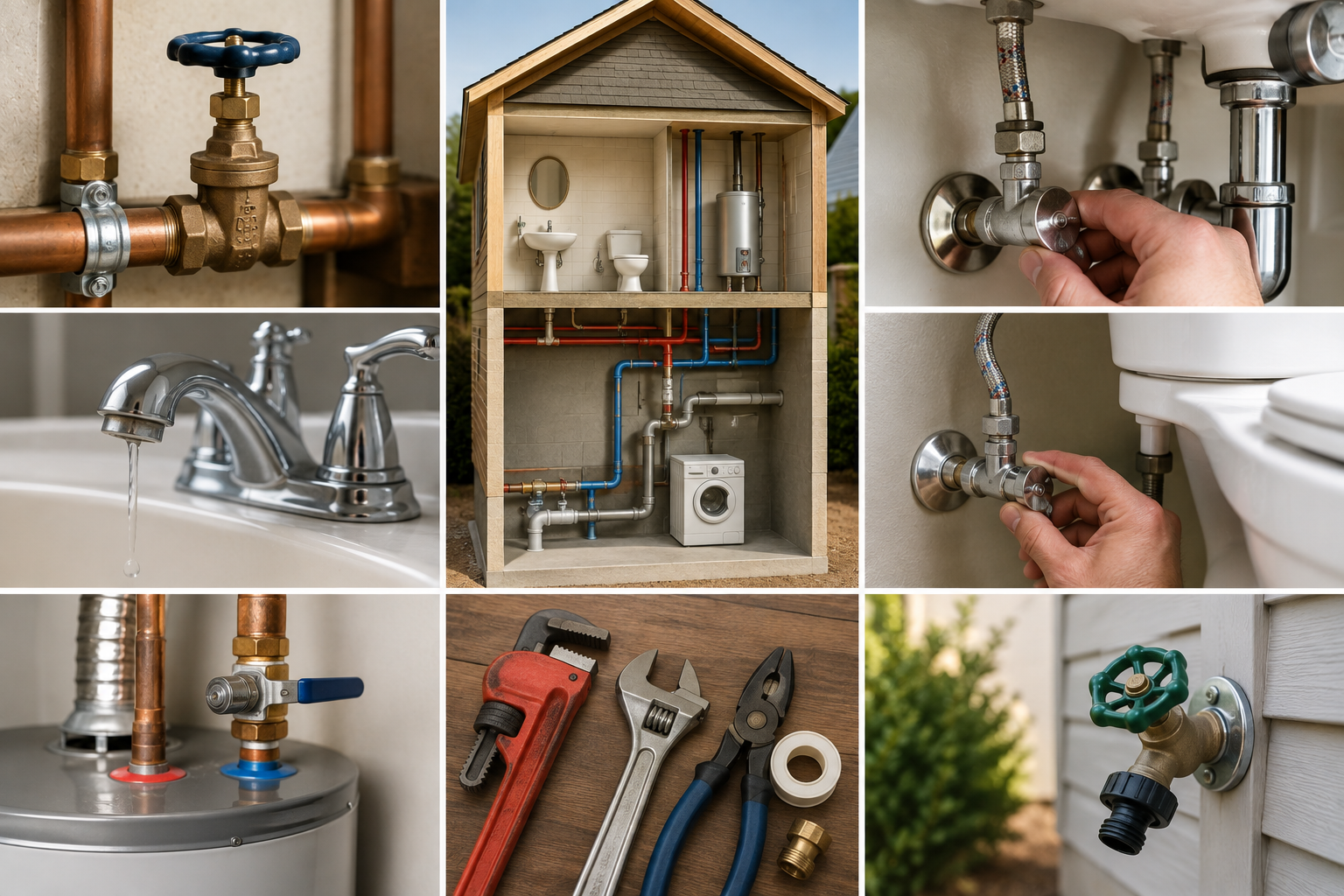
Every homeowner should know the location of their main water shutoff valve, the individual shutoff valves for toilets and sinks, and their home’s water heater shutoff, since these three locations let you stop water flow quickly during an emergency. Beyond that,Understanding basic maintenance, checking for slow leaks, and recognizing which problems are safe to tackle yourself covers the majority of what a homeowner needs, paired with a proper plumbing maintenance checklist for the ongoing schedule.
How Your Home’s Plumbing System Works
The Two Main Systems
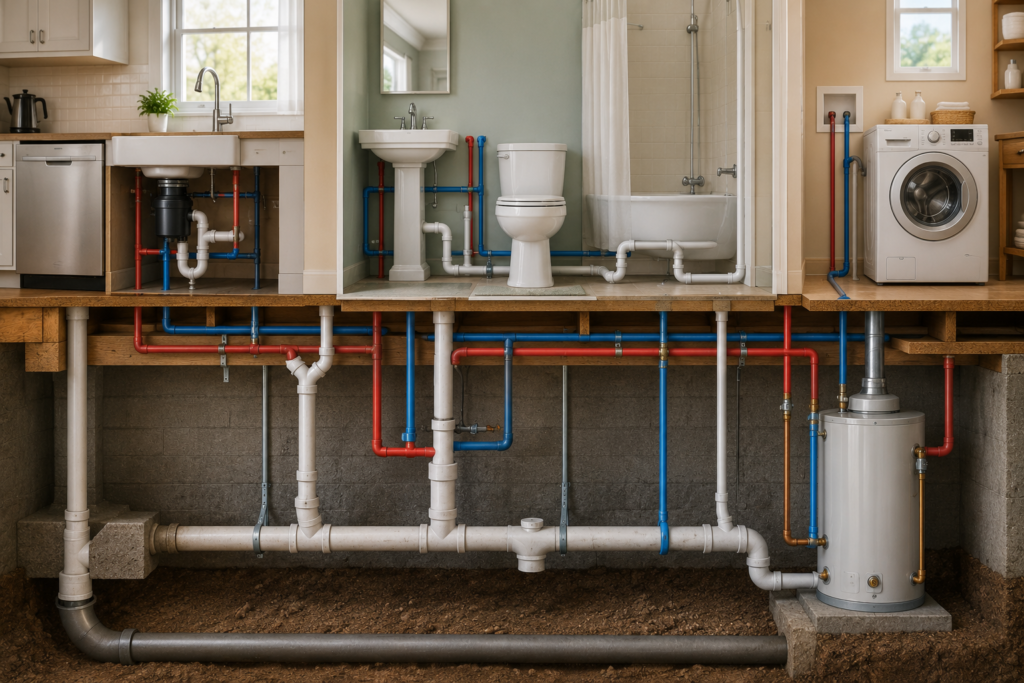
Every home’s plumbing consists of two separate systems working together: the water supply system, which brings fresh water into your home under pressure, and the drain-waste-vent (DWV) system, which carries wastewater out and allows air to vent properly so drains flow correctly without gurgling or trapping sewer gas.
Supply Lines
Supply lines, typically copper, PEX, or occasionally older galvanized steel, carry pressurized water from your main water line to every fixture in your home, sinks, toilets, showers, and appliances like your washing machine and dishwasher.
Drain Lines and Traps
Drain lines carry wastewater away from fixtures toward your home’s main sewer line or septic system, while P-traps (the curved section of pipe beneath sinks) hold a small amount of water that blocks sewer gas from entering your home through the drain.
Essential Shutoff Valves Every Homeowner Should Locate
Main Water Shutoff Valve
This is the single most important plumbing location in your home, controlling water flow to your entire house. It’s typically located where the main water line enters your home, often in a basement, crawl space, utility closet, or near your water heater. In an emergency, like a burst pipe, shutting this off immediately is the fastest way to limit water damage.
Individual Fixture Shutoff Valves
Most toilets, sinks, and washing machines have their own dedicated shutoff valves, typically located directly beneath or behind the fixture. These let you stop water to a single fixture for a repair without shutting off water to your entire home.
Water Heater Shutoff Valve
Located on the cold water supply line leading into your water heater, this valve lets you stop water flow specifically to the heater, useful during water heater repairs or if you notice a leak from the unit itself.
Outdoor Shutoff Valve
Many homes also have a separate shutoff for outdoor spigots or irrigation systems, worth locating and using seasonally, particularly before winter in colder climates, to prevent freeze damage to exterior plumbing.
How to Shut Off Water to Your House
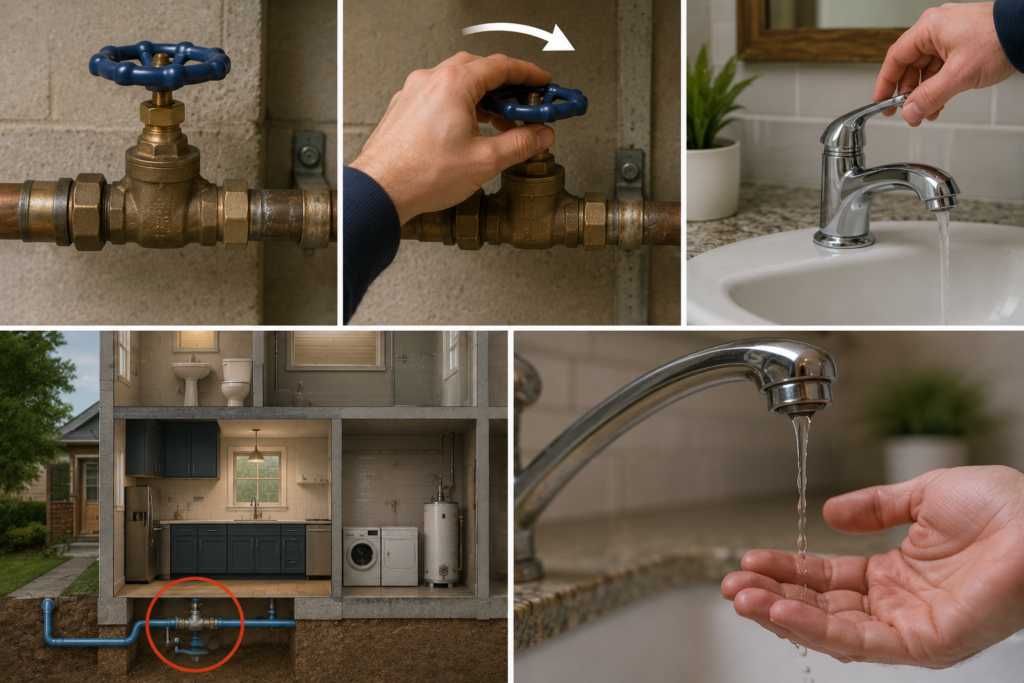
Step-by-Step Process
- Locate your main water shutoff valve (check your basement, crawl space, or utility area if you haven’t identified it already).
- Turn the valve clockwise (righty-tighty) until it stops, this fully shuts off water flow to your home.
- Open a faucet somewhere in your home to relieve pressure and confirm the water is genuinely off.
- If needed, drain remaining water from pipes by opening the lowest faucet in your home.
Gate Valves vs Ball Valves
Older homes may have a gate valve, a round handle that requires several full turns to close completely, while newer homes often have a ball valve, featuring a lever handle that shuts off water with a simple quarter turn. Knowing which type your home has, and testing it periodically to ensure it turns smoothly, prevents a stuck or seized valve from becoming a problem during an actual emergency.
Common Plumbing Problems and Their Fixes
Dripping Faucets
A persistently dripping faucet is usually caused by a worn washer, O-ring, or cartridge inside the faucet mechanism, and while individually minor, a slow drip can waste a genuinely significant amount of water over the course of a year.
Fix: Replacing the worn internal component (often a simple, inexpensive part) typically resolves the issue, though this requires shutting off the fixture’s individual water supply first.
Running Toilets
A toilet that continues running after flushing is often caused by a faulty flapper valve not sealing properly, or a fill valve that isn’t shutting off water at the correct level.
Fix: Both flapper and fill valve replacement kits are widely available and relatively straightforward for a homeowner to install, generally not requiring specialized plumbing tools.
Clogged Drains
Slow-draining or fully clogged sinks, tubs, and showers are commonly caused by accumulated hair, soap scum, grease, or food debris built up over time within the drain line.
Fix: A plunger or a drain snake (auger) can often clear minor clogs. Avoid chemical drain cleaners as a first resort, since they can be harsh on pipes, particularly older ones, and aren’t always effective on more stubborn blockages.
Low Water Pressure
Reduced water pressure throughout the home, or at a specific fixture, can stem from mineral buildup in aerators or showerheads, a partially closed shutoff valve, or in some cases, a broader issue with your home’s supply line or municipal water system.
Fix: Start by cleaning or replacing faucet aerators and showerheads, which often resolve fixture-specific pressure issues. If the problem is house-wide, checking that your main shutoff valve is fully open is a reasonable next step before assuming a larger issue.
Water Heater Issues
Insufficient hot water, unusual noises, or visible leaking around a water heater can indicate sediment buildup, a failing heating element, or, in more serious cases, tank corrosion nearing the end of the unit’s service life.
Fix: Minor sediment buildup can sometimes be addressed with a tank flush, though persistent issues, particularly visible leaking or unusual noises, generally warrant professional assessment.
Common Plumbing Problems at a Glance
| Problem | Likely Cause | DIY-Appropriate? |
| Dripping faucet | Worn washer, O-ring, or cartridge | Yes, with basic tools |
| Running toilet | Faulty flapper or fill valve | Yes, replacement kits widely available |
| Slow/clogged drain | Hair, soap scum, grease buildup | Yes, with plunger or drain snake |
| Low water pressure | Mineral buildup, partially closed valve | Often yes, cleaning aerators/showerheads |
| Water heater issues | Sediment, failing element, corrosion | Sometimes; persistent issues need a pro |
| Burst or leaking pipe | Freezing, age, corrosion, pressure issues | No, shut off water and call a plumber |
Preventive Plumbing Maintenance Tips
Check for Slow Leaks Regularly
Periodically check under sinks, around the base of toilets, and near your water heater for any signs of moisture, staining, or a musty smell, since slow leaks can go unnoticed for extended periods while causing meaningful water damage or mold growth.
Monitor Your Water Meter
If you suspect a hidden leak but can’t locate it visually, check your water meter, turn off all water-using fixtures and appliances, note the meter reading, and check again after a period of no water use. Movement indicates a leak somewhere in your system.
Hidden leaks are more common, and more costly, than most homeowners realize. According to the EPA’s WaterSense program, the average household’s leaks can waste nearly 10,000 gallons of water annually, roughly the amount needed to wash 300 loads of laundry, often from problems as small as a worn toilet flapper or a dripping faucet.
Avoid Flushing or Draining Problematic Materials
Grease, coffee grounds, and “flushable” wipes (which often don’t break down as readily as toilet paper) are common contributors to clogs and should be avoided in drains and toilets, disposed of in regular trash instead.
Insulate Pipes in Cold Climates
In regions with freezing winter temperatures, insulating exposed pipes, particularly in unheated areas like garages, crawl spaces, and exterior walls, helps prevent freezing and the burst pipes that often result from ice expansion within the line.
Flush Your Water Heater Periodically
Draining and flushing your water heater tank periodically (following manufacturer guidelines for your specific model) helps remove sediment buildup that can reduce efficiency and shorten the unit’s overall lifespan.
Test Your Main Shutoff Valve
Periodically turning your main shutoff valve fully closed and then reopening it ensures it hasn’t seized or become difficult to operate, confirming it will actually work when you genuinely need it during an emergency.
Basic Plumbing Tools Every Homeowner Should Have
- Plunger (separate ones for toilets and sinks, given their different shapes) for clearing minor clogs
- Drain snake (auger) for clogs a plunger can’t resolve
- Adjustable wrench and pipe wrench for tightening or loosening various fittings and connections
- Plumber’s tape (Teflon tape) for sealing threaded pipe connections
- Bucket and towels for containing water during minor repairs or leaks
- These are worth adding to the broader DIY starter toolkit every homeowner should build over time.
When to Call a Plumber
- Genuine Emergencies
Burst pipes, significant leaks, sewage backups, or a complete loss of water pressure throughout your home all warrant immediate professional attention, since these situations can escalate quickly and cause substantial property damage if not addressed promptly.
- Tasks Requiring Licensed Expertise
Any work involving your main sewer line, gas line connections (for gas water heaters), or significant repiping generally requires a licensed plumber, both for safety reasons and because many jurisdictions require permits and professional certification for this type of work.
- Recurring or Unresolved Problems
If a clog keeps returning despite repeated DIY attempts, or if water pressure issues persist after basic troubleshooting, this often indicates a more significant underlying problem, tree root intrusion, pipe corrosion, or a larger blockage, that requires professional diagnostic tools and expertise to properly resolve.
When You’re Uncertain
If you’re not confident in your ability to safely complete a specific plumbing task, particularly anything involving your home’s main systems rather than a single, isolated fixture, calling a professional is the more prudent choice than risking a mistake that could create a larger, more expensive problem.
Common Mistakes to Avoid
- Not knowing your main shutoff valve location, losing valuable time during an actual emergency
- Relying on chemical drain cleaners as a first response, risking pipe damage without necessarily resolving the underlying clog
- Ignoring slow, minor leaks, allowing gradual water damage or mold growth to develop unnoticed over time
- Skipping pipe insulation in cold climates, risking frozen and burst pipes during winter months
- Attempting significant repairs beyond your comfort level, potentially turning a manageable problem into a considerably more costly one
Conclusion
Understanding home plumbing basics comes down to knowing your system’s core components, locating your key shutoff valves before you actually need them, and recognizing which problems you can confidently handle yourself versus which genuinely call for a licensed plumber. Taking a few minutes now to identify your main water shutoff, check for slow leaks, and build basic preventive habits into your routine can save you considerable stress, water damage, and repair costs down the road. With this foundation in place, you’ll be far better equipped to respond quickly and confidently whenever a plumbing issue does come up.
Frequently Asked Questions
1- How do I find my home’s main water shutoff valve?
It’s typically located where the main water line enters your home, often in a basement, crawl space, utility closet, or near your water heater. If you’re unsure, checking your home’s inspection report or asking a previous owner or your local water utility can help.
2- What should I do if a pipe bursts in my home?
Shut off your main water valve immediately to stop the flow of water, then contact a licensed plumber for repair. Acting quickly significantly limits the extent of water damage.
3- Can I fix a running toilet myself?
In most cases, yes. A running toilet is commonly caused by a faulty flapper or fill valve, and replacement kits for both are widely available and relatively straightforward for a homeowner to install.
4- Is it safe to use chemical drain cleaners?
Generally, it’s better to try a plunger or drain snake first, since chemical cleaners can be harsh on pipes, particularly older plumbing, and aren’t always effective against more stubborn clogs.
5- How often should I flush my water heater?
This varies by manufacturer recommendation and your local water hardness, but periodic flushing helps remove sediment buildup that can reduce efficiency and shorten the unit’s lifespan over time.
6- What plumbing problems should never be handled without a professional?
Main sewer line issues, gas line connections, and significant repiping generally require a licensed plumber, both for safety and because many areas require permits and professional certification for this type of work.
7- How can I tell if I have a hidden water leak?
Check your water meter with all water-using fixtures and appliances turned off, note the reading, then check again after a period of no water use. Any movement in the reading indicates a leak somewhere in your system.