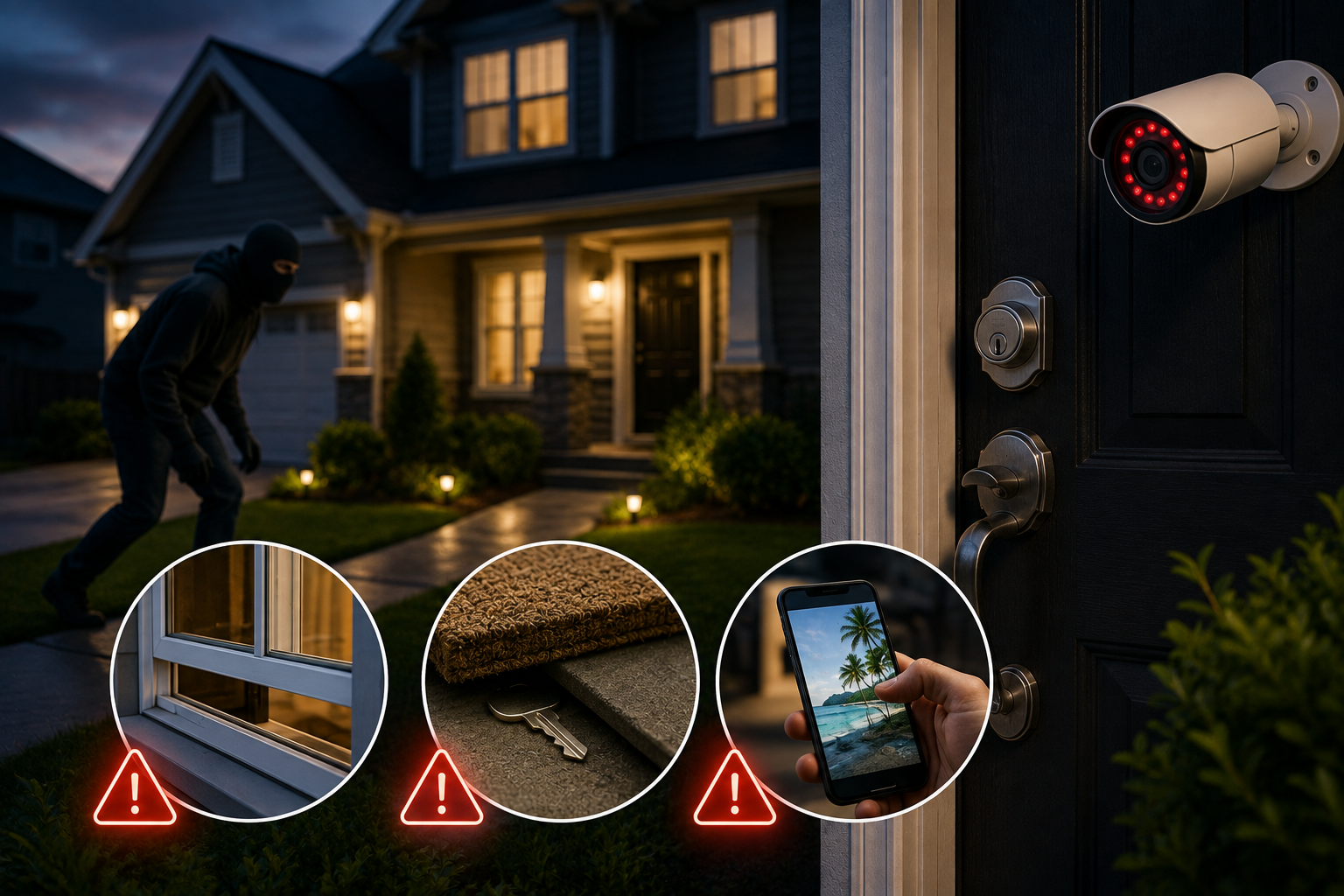
Most burglaries aren’t the work of skilled criminals picking locks in the dead of night. They’re opportunists testing door handles, checking for unlocked windows, and looking for the clearest signs that nobody’s home. Understanding exactly which everyday habits create that opening is the fastest way to close it.
This guide covers the most common home security mistakes homeowners make, why each one matters, and practical fixes for closing these gaps. We’ll also cover entry point security, smart lock upgrades, and social media safety habits for American homeowners wanting to make their homes a genuinely harder target.
By the end, you’ll have a clear, practical checklist for identifying and fixing the specific vulnerabilities burglars actively look for.
What Mistakes Matter Most?
The biggest home security mistakes almost all trace back to one theme: making your home look easy and low-risk. Unlocked doors and windows, hidden spare keys, oversharing travel plans on social media, and skipping a visible security system are the mistakes that consistently show up across burglary research as the factors that turn a home into an attractive target.
Fixing these specific gaps, rather than assuming a strong front door lock alone is enough, is what genuinely reduces your household’s risk.
Mistake One: Leaving Doors and Windows Unlocked
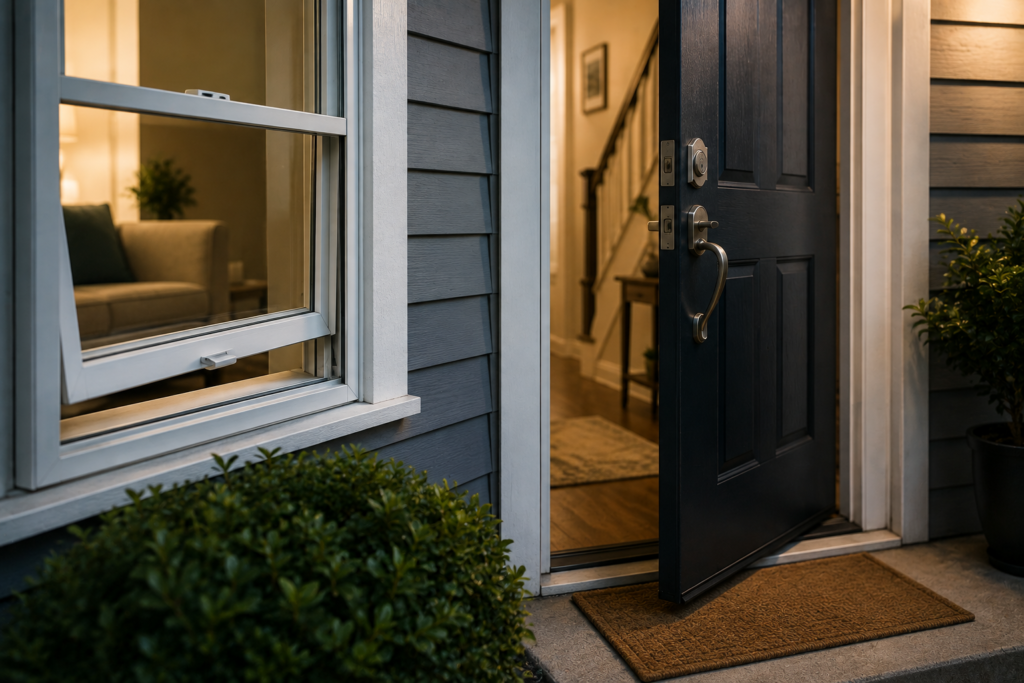
This sounds almost too obvious to mention, yet it remains one of the single most common ways burglars gain entry into a home.
Roughly 37.5 percent of burglars gain access without any forcible entry at all, simply walking through unlocked doors, windows, or garages. More specifically, about 34 percent of burglars enter through an unlocked front door, while 23 percent enter through a first-floor window, making these two access points the clear priority for consistent locking habits.
The fix: Lock every door and window every time you leave, even for a quick errand, and make a habit of double-checking before bed. A smart lock with auto-lock functionality removes the guesswork entirely, automatically securing your door within seconds of closing it, so you’re never left wondering whether you remembered.
Mistake Two: Hiding a Spare Key Outside
That “clever” spot for a spare key, under the mat, inside a fake rock, tucked into a birdhouse, isn’t nearly as clever as it feels.
A hidden spare key is functionally equivalent to leaving your door unlocked, since experienced burglars routinely check exactly these common hiding spots as a matter of habit. Even locations that feel genuinely creative to you are often well-known tricks that offer no real protection.
The fix: Eliminate physical spare keys entirely. A keypad or smart lock with a PIN code gives trusted family members or neighbors access without a physical key ever existing outside your home, removing this vulnerability completely.
Mistake Three: Oversharing on Social Media
Posting real-time vacation photos feels harmless, but it can function as a direct announcement that your home is currently empty.
Roughly 60 percent of burglary victims in one survey reported being active on social media daily or several times a week, and a separate survey found that a significant majority of burglars actively use social media to identify potential targets, specifically watching for travel posts, expensive purchase photos, and clues about a home’s layout. Location tags and countdown posts to an upcoming trip broadcast both timing and opportunity.
The fix: Save vacation photos and check-ins for after you’ve returned home, rather than posting in real time. Review your privacy settings to limit who can see location tags and posts revealing when you’re away.
Mistake Four: Skipping a Home Security System Entirely
A visible security system does real, measurable work beyond just alerting you to a break-in, it actively discourages burglars from choosing your home in the first place.
Homes without any security system were found to be roughly 300 percent more likely to be burglarized than homes with one in place. Even security signage or window stickers alone create meaningful deterrence, since burglars often skip houses displaying these signs in favor of an easier, less-monitored target nearby.
The fix: Even a basic system with entry sensors and a visible camera or two, paired with clear signage, meaningfully reduces your home’s attractiveness as a target compared with a home showing no security presence at all.
Mistake Five: Relying on Weak Entry Point Hardware
A strong-looking deadbolt means little if the surrounding door frame is flimsy or the strike plate is held in with short, standard screws.
Criminals frequently kick in the area around the lock itself rather than attempting to pick it, meaning the door frame’s strength matters just as much as the lock cylinder. Standard builder-grade locks can also give homeowners a false sense of security, since many are relatively easy for a determined intruder to force open.
The fix: Reinforce door frames with longer screws in the strike plate, extending into the door’s structural framing rather than just the trim. Consider adding a door security bar or a high-security strike plate for meaningfully improved resistance to kick-in attempts.
Mistake Six: Opening the Door to Unverified Visitors
Burglars sometimes skip stealth entirely and simply knock, posing as a delivery driver, utility worker, or even law enforcement to gain voluntary entry.
Interestingly, research on convicted burglars found that all surveyed offenders reported knocking on a home’s front door before attempting any break-in, using the response, or lack of one, to gauge whether anyone was home. Opening the door without verifying who’s actually there remains a genuinely risky habit, particularly for households with children.
The fix: Install a video doorbell or peephole camera that lets you verify visitors from anywhere in the home before opening the door. Teach every family member, including kids, to never open the door to unverified strangers.
Mistake Seven: Leaving the Garage Door Vulnerable
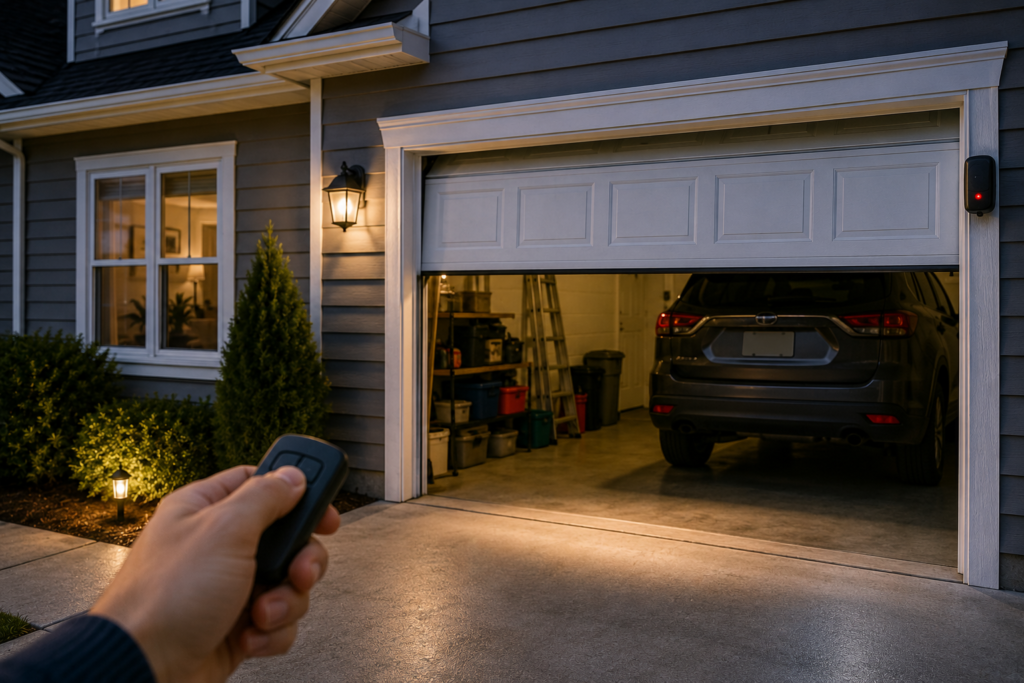
Garage doors are an easy, commonly overlooked entry point, whether left open accidentally or secured with outdated hardware.
An accidentally open garage door offers direct, unmonitored access to your home, and many homeowners simply don’t notice when this happens until much later. Garage doors without a supplemental lock or deadbolt on the interior access door also leave an additional gap even when the main garage door itself is closed.
The fix: A smart garage door opener lets you confirm the door’s status remotely and close it instantly if you notice it was left open, removing the guesswork entirely. Add a deadbolt to any interior door connecting the garage to your home’s main living space.
Mistake Eight: Overgrown Landscaping Near Entry Points
Beautiful, dense shrubs near your front door might look great, but they can also provide burglars with concealment while they work on a lock or window undetected.
Homes with trees or bushes positioned near doors and windows create hiding spots that make burglars feel less exposed while attempting entry, a factor that genuinely influences target selection alongside more obvious signals like visible valuables or an empty-looking house.
The fix: Trim landscaping near windows and entry points to eliminate hiding spots, particularly bushes taller than window height directly beneath ground-floor windows. Maintain clear sightlines from the street to your entry points.
Mistake Nine: Inadequate Outdoor Lighting
Dark entryways and unlit side yards give burglars the cover of shadow, letting them work unnoticed by neighbors or passersby.
Poor exterior lighting is consistently cited alongside unlocked doors and concealing landscaping as a factor that makes a home stand out as an easier target. Most burglaries actually occur during daytime hours, but adequate lighting still matters significantly for evening deterrence and improving camera footage quality if an incident does occur.
The fix: Install motion-activated lighting at all entry points, including side and back doors that often receive less attention than a well-lit front porch. Consider smart lighting that can simulate occupancy with randomized schedules when you’re away.
Comparing Common Mistakes and Their Fixes
| Mistake | Why It Matters | Practical Fix |
| Unlocked doors/windows | Over a third of burglars use this exact method | Lock consistently, add auto-lock smart lock |
| Hidden spare keys | Functionally equivalent to an unlocked door | Switch to keypad or smart lock entry |
| Social media oversharing | Signals your home is currently empty | Post vacation content after returning home |
| No security system | Homes without one are far more likely to be targeted | Add basic sensors, cameras, and visible signage |
| Weak door frame/hardware | Kick-ins target the frame, not just the lock | Reinforce with longer screws, security bar |
| Opening door to strangers | Burglars often knock first to test occupancy | Use video doorbell, verify before opening |
| Unsecured garage | Easy, often-overlooked entry point | Smart garage opener, interior deadbolt |
| Overgrown landscaping | Provides concealment near entry points | Trim shrubs below window height |
| Poor lighting | Reduces visibility and deterrence | Motion-activated lights at all entry points |
Building an “Occupied Home” Illusion When You’re Away
Beyond fixing individual vulnerabilities, creating the impression that someone is home works as a powerful, low-effort deterrent on its own.
- Vary your lighting schedule: Smart plugs or smart bulbs with randomized timing look far more convincing than a single light left on the same time every night.
- Ask a trusted neighbor to help: Having someone collect mail, move a car in the driveway, or occasionally park in your spot signals ongoing activity rather than an empty house.
- Keep a radio or television on low volume: Audible sound from inside adds another subtle signal that the home isn’t empty.
- Avoid obvious cues of absence: An overflowing mailbox, untouched newspapers, or an unmoved car in the driveway for days all quietly signal nobody’s home.
Small Fixes Add Up to Real Protection
Most home security failures aren’t the result of sophisticated criminals outsmarting strong defenses, they’re the result of everyday habits that quietly signal an easy target. Locking doors consistently, eliminating hidden spare keys, being more careful about what you share online, and adding basic deterrents like lighting, signage, and reinforced entry points together create a meaningfully harder target than any single fix alone. None of these changes require a massive investment, just consistent attention to the specific vulnerabilities burglars are actually looking for.
Frequently Asked Questions
1- What’s the single most common way burglars enter a home?
Unlocked doors remain the most common entry method, with roughly a third of burglars entering through an unlocked front door specifically.
2- Do security signs actually deter burglars, even without a monitored system?
Yes, visible signage alone creates meaningful deterrence, since burglars often prefer to skip homes displaying security signs in favor of a less-monitored target.
3- Is it really risky to post vacation photos on social media?
Yes, a majority of burglars in surveyed research reported using social media specifically to identify homes that are currently empty based on travel posts and location tags.
4- Should I really eliminate my hidden spare key?
Yes, common hiding spots like fake rocks or under doormats are well-known tricks that experienced burglars routinely check, offering little genuine protection.
5- How much does a security system actually reduce burglary risk?
Homes without a security system were found to be roughly 300 percent more likely to be burglarized than homes with one, making even a basic system a meaningful deterrent.
6- Are garage doors really a common target for burglars?
Yes, an open or unsecured garage door offers direct, often unmonitored access to a home, making it a genuinely overlooked vulnerability worth addressing.