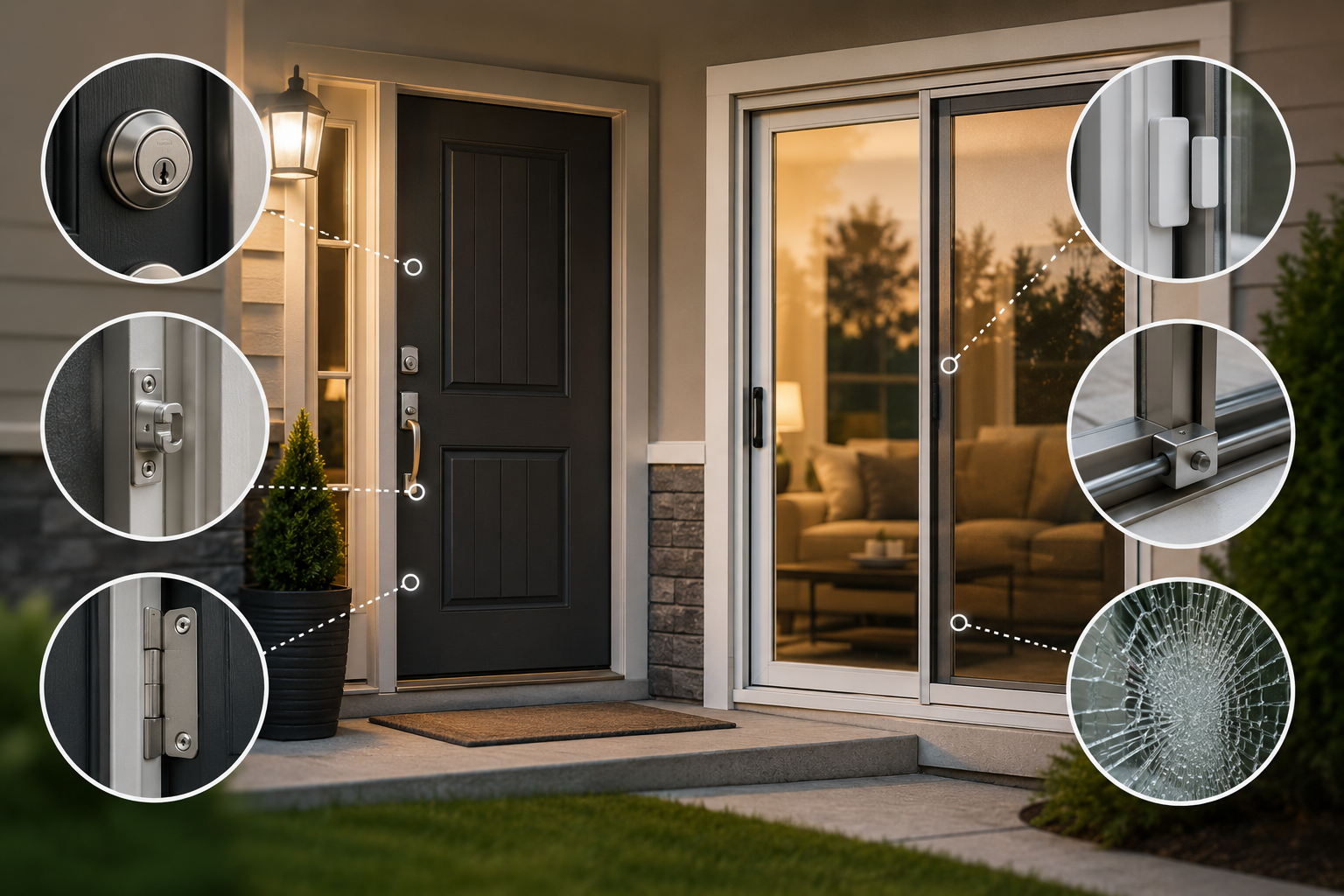
Your front door might have a solid deadbolt, but if a sliding glass door in the back or a first-floor window sits protected only by a flimsy factory latch, that’s exactly where an intruder will focus their attention instead. Roughly 80 percent of break-ins can be prevented by properly reinforcing just 20 percent of a home’s entry points, specifically sliding doors and first-floor windows, making these two areas the smartest place to concentrate your security upgrades.
This guide covers exactly how to secure doors and windows, including sliding glass doors, standard entry doors, and window-specific vulnerabilities most homeowners overlook. We’ll also cover security film, multi-point locking systems, and practical upgrade advice for American homeowners wanting genuinely hardened entry points, not just a stronger front door.
By the end, you’ll know precisely which upgrades matter most for each type of entry point in your home, and which common “fixes” don’t actually offer much real protection.
What Actually Secures Doors and Windows?
Real entry point security comes down to three layers working together: strong locking hardware, reinforced glass or door construction, and secondary devices like security bars or alarm sensors that add friction and time for anyone attempting entry. Standard factory hardware on doors and windows, particularly sliding glass doors, is generally built for convenience rather than genuine resistance to forced entry.
Since sliding doors and first-floor windows account for such a disproportionate share of vulnerable entry points, prioritizing upgrades there first delivers the biggest security improvement for your effort and budget.
Why Sliding Glass Doors Are Your Weakest Link
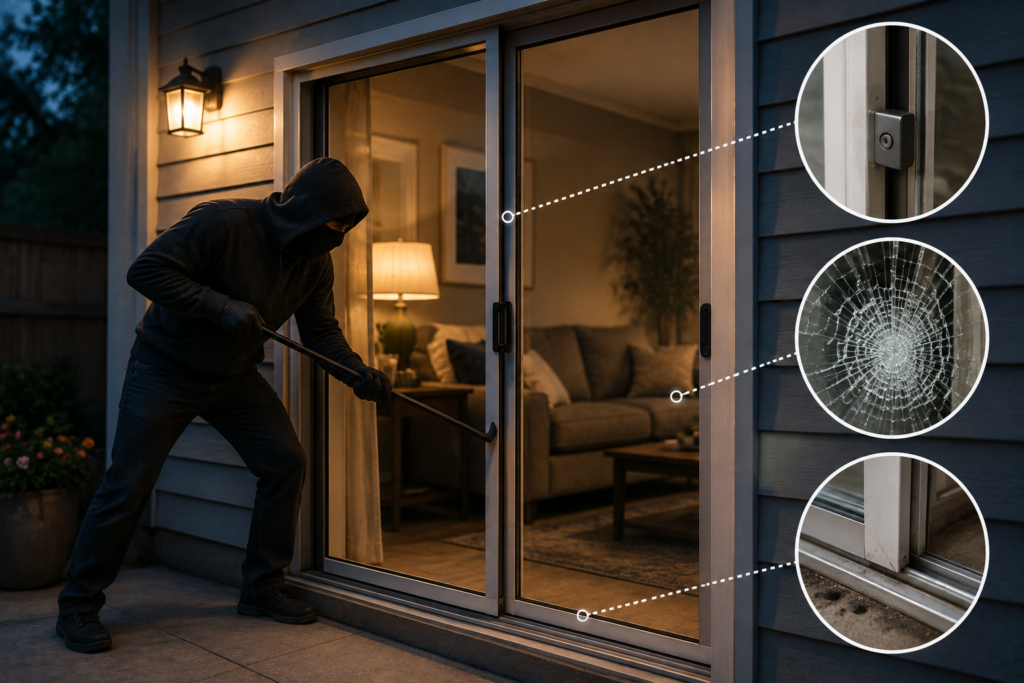
Sliding glass doors bring in beautiful natural light, but their design genuinely favors convenience over resistance to intrusion, and it’s worth understanding exactly why.
Most sliding doors use tempered glass panels set into aluminum or vinyl frames, which flex under pressure rather than resisting it. Their vulnerability comes down to three specific factors: factory latches that rely on friction rather than full mechanical engagement, glass that shatters easily under impact, and placement at the back or side of a home where concealment makes intruders feel less exposed while they work.
Upgrading the Lock Itself
Standard flip-style locks included with most sliding doors can be manipulated surprisingly easily, sometimes even with something as simple as a credit card slipped into the frame. If your sliding door’s lock feels loose when engaged, or the door itself is more than 15 to 20 years old, it’s a strong candidate for a locking upgrade.
Sliding door lock upgrade options:
- Aftermarket rod or bar locks that secure the door at the base of the track, preventing it from sliding open at all
- Multi-point locking systems that engage at several locations along the frame simultaneously, offering significantly more resistance than a single latch
- Keyed cylinder locks added specifically for sliders used as a main entry point rather than just a secondary access door
- Anti-lift devices that prevent the entire door panel from being lifted out of its track, a lesser-known but genuine vulnerability on many sliding doors
Reinforcing the Glass Itself
Even with a stronger lock, the glass remains a separate vulnerability, since shattering the pane can bypass the lock entirely.
Laminated glass bonds two layers of glass with a plastic interlayer, similar to a car windshield, so that even when broken, the pieces stay adhered together rather than falling away cleanly. This construction can reduce impact entry significantly compared with standard tempered glass, while also adding useful noise insulation and UV protection as a side benefit.
Security window film offers a more affordable, retrofittable alternative for glass you’re not ready to replace entirely. This strong adhesive film doesn’t make glass unbreakable, but it holds shattered pieces together, meaningfully delaying an intruder from breaking through and quickly reaching the lock, even though it’s somewhat less effective than fully laminated glass.
The Simple, Nearly Free Fix Most People Skip
Many sliding doors already include a metal rod or wooden dowel groove built into the track design specifically for security, yet plenty of homeowners never actually use it.
Placing a rod or sturdy dowel cut to the right length in the door’s track physically blocks the door from sliding open, even if someone bypasses the primary lock entirely. This remains one of the cheapest, most effective upgrades available and takes only minutes to implement.
Comparing Sliding Door Security Upgrades
| Upgrade | Cost Level | Effectiveness | Best For |
| Track rod or dowel | Very low | Good, blocks sliding | Everyone, minimum baseline |
| Security window film | Low-moderate | Good, delays glass breakage | Existing glass you’re not replacing |
| Aftermarket bar/rod lock | Low-moderate | Very good | Upgrading weak factory latches |
| Multi-point locking system | Moderate-high | Excellent | Sliders used as primary entry points |
| Laminated glass replacement | High | Excellent | New installations or major renovations |
| Security screen | High | Excellent, most comprehensive | Maximum protection, high-risk areas |
Securing Standard Entry Doors Beyond the Lock
While sliding doors get plenty of attention, standard hinged entry doors have their own specific weak points worth addressing.
Reinforcing the Door Frame
A high-quality deadbolt means little if the door frame itself gives way under a swift kick, since intruders frequently target the frame around the strike plate rather than attempting to defeat the lock mechanism directly. Reinforcing the frame around the strike plate with metal shims, or upgrading to a reinforced strike plate secured with longer screws that reach into the structural framing, significantly increases resistance to forced entry.
Addressing Weak Hinges
Exterior door hinges, particularly on doors that swing outward, can sometimes be removed from the outside if not properly secured. Non-removable pin hinges or simple hinge-side security studs close this gap, ensuring the door can’t be popped off its hinges even if the lock itself holds firm.
Securing Standard Windows
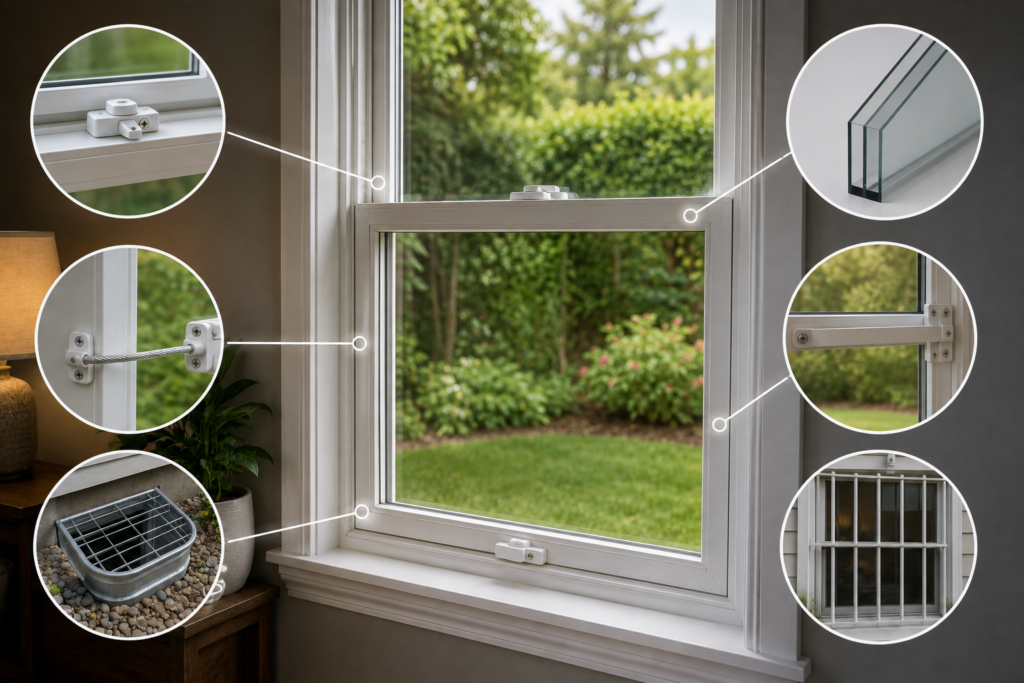
Windows present a different set of vulnerabilities than doors, and addressing them requires a slightly different toolkit.
Upgrading Window Locks
Most standard windows ship with basic flip locks, which are functional for everyday use but offer limited resistance against a determined attempt at entry. Replacing these with turnbuckle locks, which require squeezing a lever while turning the latch or unlocking with a key, offers meaningfully greater security than a standard flip lock alone.
Adding Security Window Film
Just as with sliding glass doors, security window film works well on standard windows too, offering a budget-friendly, relatively simple upgrade that can be cut to fit virtually any window size. Options range from clear film that preserves your full view, to frosted or tinted film that adds privacy alongside the security benefit, letting you choose based on which trade-off matters more for each specific window.
Window and Door Alarm Sensors
Battery-powered sensors that trigger an alert when a window or door is opened, or when glass breaks, add a genuinely valuable layer of protection beyond physical hardware alone. These can operate as standalone alarms or connect directly into a broader home security system for centralized monitoring and smartphone alerts.
Comparing Window Security Options
| Option | Installation Effort | Privacy Impact | Best For |
| Turnbuckle lock upgrade | Low | None | Any standard window |
| Security window film | Low-moderate | Varies by film type | Ground-floor and vulnerable windows |
| Window/glass-break sensors | Low | None | Layered alarm protection |
| Security bars | Moderate | Some, visible from outside | High-risk areas, basement windows |
Don’t Forget Maintenance
Security hardware only works as intended if it’s properly maintained, and neglected locks and tracks quietly undermine even a well-planned security upgrade.
Regularly cleaning sliding door tracks prevents grit buildup that can cause the door to stick, sometimes tempting homeowners to leave it unlocked simply because locking and unlocking has become a hassle. Periodically inspect and lubricate locks and latches to prevent rust and wear, and check the physical condition of any security bars, rods, or window film for signs of deterioration, replacing anything that’s no longer functioning as intended.
Building a Layered Approach Across Your Whole Home
No single upgrade makes a home impenetrable, which is exactly why security professionals consistently recommend layering multiple measures together rather than relying on one fix alone.
- Start with your weakest points first: Since sliding doors and first-floor windows account for such a disproportionate share of vulnerable entry points, prioritize upgrades there before focusing further effort on already-secure areas.
- Combine physical hardware with monitoring: A reinforced lock slows down an intruder, while a sensor or camera adds detection and a real-time alert, working together rather than replacing one another.
- Address both glass and locks together: Upgrading a door’s lock while leaving standard tempered glass in place still leaves shattering as a viable entry method, so treat glass reinforcement and lock hardware as a package rather than choosing one over the other.
- Don’t overlook secondary or less-visible entry points: Basement windows, side doors, and doggy doors are frequently the most overlooked vulnerabilities precisely because they receive less daily attention than a home’s main entrance.
Reinforce Your Weakest Points First
Securing your doors and windows effectively comes down to identifying your home’s genuine weak points, sliding glass doors and first-floor windows most commonly, and layering physical hardware upgrades with reinforced glass and monitoring devices at those specific locations. A stronger front door lock matters far less if a back sliding door still relies on a decades-old factory latch and standard glass. By prioritizing track rods, security film, upgraded locks, and reinforced frames where they matter most, you turn your home’s weakest entry points into some of its strongest, without needing to overhaul every door and window at once.
Frequently Asked Questions
1- Are sliding glass doors really less secure than standard doors?
Yes, sliding doors typically rely on lightweight factory latches and standard tempered glass, both of which are more vulnerable than a solid door with a proper deadbolt and reinforced frame.
2- Does security window film actually stop a break-in?
It doesn’t make glass unbreakable, but it holds shattered pieces together and significantly delays an intruder from reaching the lock quickly, which is often enough to deter an opportunistic attempt.
3- Is a rod in the sliding door track really effective?
Yes, this simple, low-cost method physically blocks the door from sliding open even if the primary lock is bypassed, making it one of the best value security upgrades available.
4- Should I replace my window locks even if they still function?
If your windows only have basic flip locks, upgrading to turnbuckle locks offers meaningfully better resistance to forced entry, even if the existing locks technically still work.
5- What’s the single best upgrade if I can only afford one?
Reinforcing your sliding glass door and first-floor windows first delivers the most security improvement for your investment, since these areas account for a disproportionate share of successful break-ins.
6- Do window and door sensors require a full security system?
No, standalone battery-powered sensors work independently and don’t require a monitored security system, though they can also integrate into a broader system if you have one.