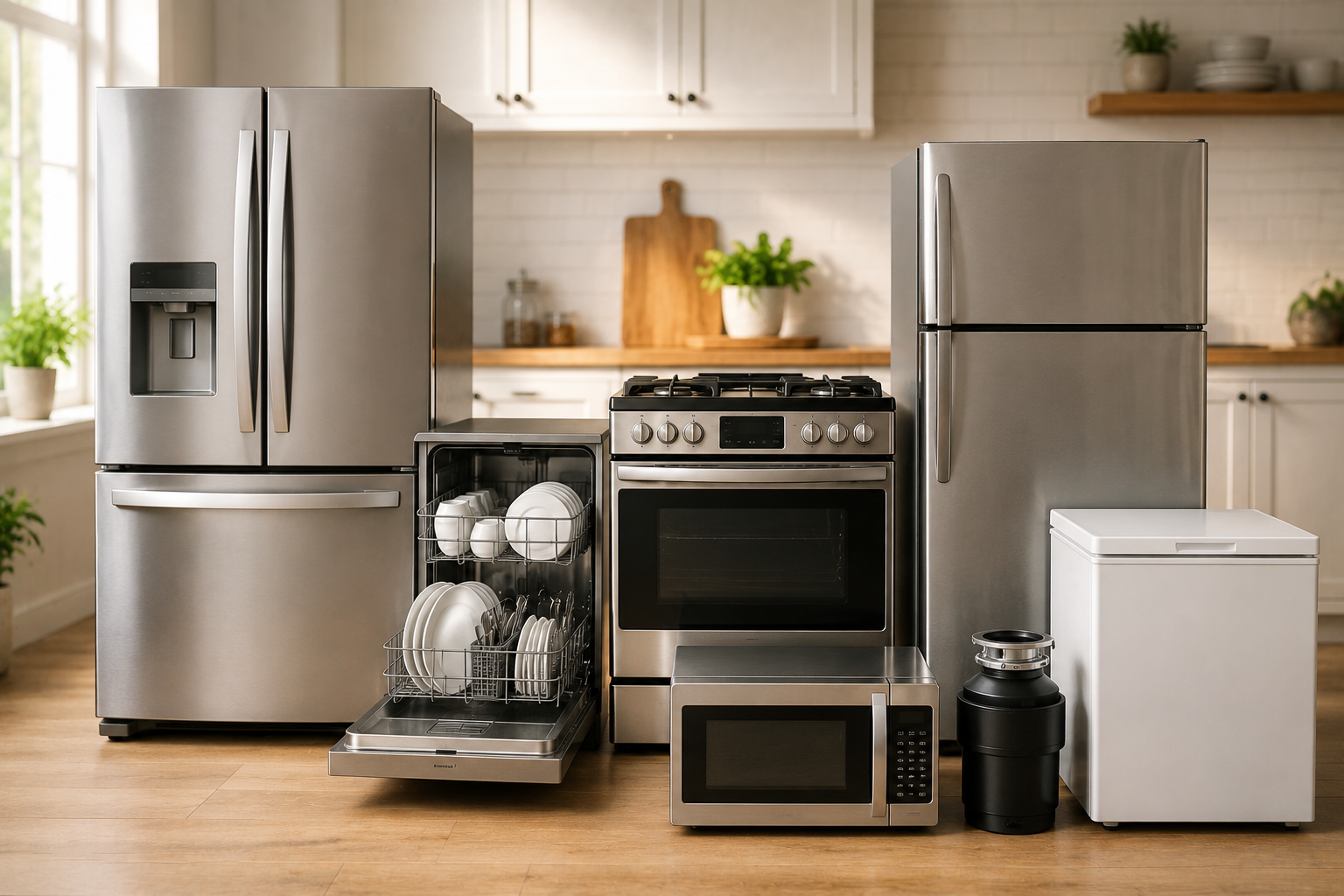
If your dishwasher just started making a strange noise or your fridge is running warmer than it used to, you’re probably wondering whether it’s time to repair or replace it. Knowing the average kitchen appliance lifespan for each type of appliance helps you plan ahead instead of scrambling during an emergency.
This guide covers how long refrigerators, dishwashers, ranges, and other kitchen appliances typically last, what affects their lifespan, and practical signs that it’s time for a replacement. We’ll also cover appliance lifespan, maintenance tips, and repair-versus-replace guidance for American homeowners.
By the end, you’ll have a clear, realistic picture of what to expect from your kitchen appliances and how to get the most years out of each one.
Average Kitchen Appliance Lifespans
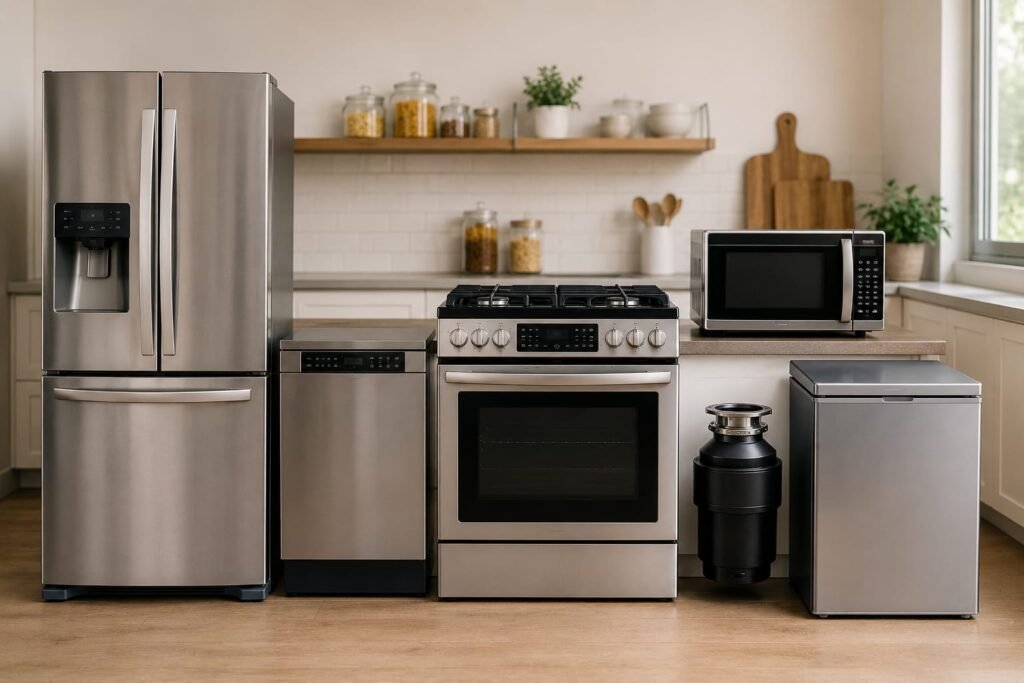
Most major kitchen appliances last between 8 and 15 years, though this varies by appliance type, brand quality, and maintenance. According to the National Association of Home Builders (NAHB) Study of Life Expectancy of Home Components, refrigerators last around 13 years on average, dishwashers around 9 years, gas ranges around 15 years, electric ranges around 13 years, and microwaves around 9 years.
Here’s a quick reference table summarising typical lifespans across common kitchen appliances.
| Appliance | Typical Lifespan |
| Refrigerator | 9–15 years |
| Dishwasher | 8–12 years |
| Gas range | 15–17 years |
| Electric range | 13–15 years |
| Microwave | 7–10 years |
| Garbage disposal | 8–12 years |
| Standalone freezer | 12–20 years |
| Trash compactor | 6 years |
These figures represent averages, so your appliance could last longer or shorter depending on usage, water quality, and maintenance.
Refrigerator Lifespan: What to Expect
Refrigerators are among the hardest-working appliances in your kitchen, running continuously around the clock.
A typical refrigerator lifespan ranges from about 9 to 15 years, with most sources placing the average around 13 years according to NAHB data. Built-in and premium models often last considerably longer, with some high-end brands designed for 18 to 25 years of service when properly maintained.
Factors affecting refrigerator lifespan:
- Compressor and sealed-system condition, since sealed-system failures are among the most expensive repairs
- How often the door is opened and how well door seals are maintained
- Coil cleanliness, since dusty condenser coils force the compressor to work harder
- Overall build quality and brand tier
Sealed-system repairs, such as replacing a compressor, can cost $800 to $1,200 for parts and labor, which is why many homeowners choose replacement once out of warranty.
Dishwasher Lifespan: What to Expect
Dishwashers tend to have one of the shorter lifespans among major kitchen appliances, generally lasting around 9 years on average, with a broader range of roughly 8 to 12 years depending on brand and usage.
Despite the relatively short lifespan, modern dishwashers offer meaningful efficiency improvements over older models. Newer Energy Star-certified dishwashers use significantly less water per cycle compared with older units, which can offset some of the cost of more frequent replacement through lower utility bills.
Common dishwasher repair costs for pump or electronic control issues typically average between $200 and $400, which is worth weighing against replacement cost when problems arise.
Range and Oven Lifespan: What to Expect
Cooking appliances generally enjoy some of the longest lifespans in the kitchen, largely because they contain fewer moving parts than appliances like dishwashers or washing machines.
Gas ranges typically last around 15 to 17 years, while electric ranges average around 13 to 15 years. Wall ovens and cooktops generally fall within a similar 10 to 15 year range, depending on usage and maintenance.
The two most common failure points across range types are bake elements on electric models and burner igniters on gas models, both of which are generally inexpensive repairs rather than reasons for full replacement.
One practical tip: skipping your oven’s self-cleaning cycle can actually help extend its lifespan, since this feature often runs at extremely high temperatures that place additional stress on internal components over time.
Microwave Lifespan: What to Expect
Microwaves tend to have shorter lifespans compared with most other kitchen appliances, generally lasting between 6 and 10 years, with most sources citing an average around 9 years.
Countertop microwaves often have slightly shorter lifespans than built-in units, partly due to heavier daily usage patterns and generally lower-cost construction. Since microwaves see frequent daily use for reheating and quick cooking, this heavier workload contributes to their comparatively shorter service life.
Garbage Disposal and Freezer Lifespan
Garbage disposals typically last around 8 to 12 years, depending on usage frequency and how carefully food waste is managed to avoid clogs and motor strain.
Standalone freezers are among the longest-lasting kitchen appliances, often running 12 to 20 years or more. Their simpler mechanics, with fewer moving parts than a full refrigerator, contribute to this extended lifespan.
Why Are Modern Appliances Lasting Less Long Than Older Models?
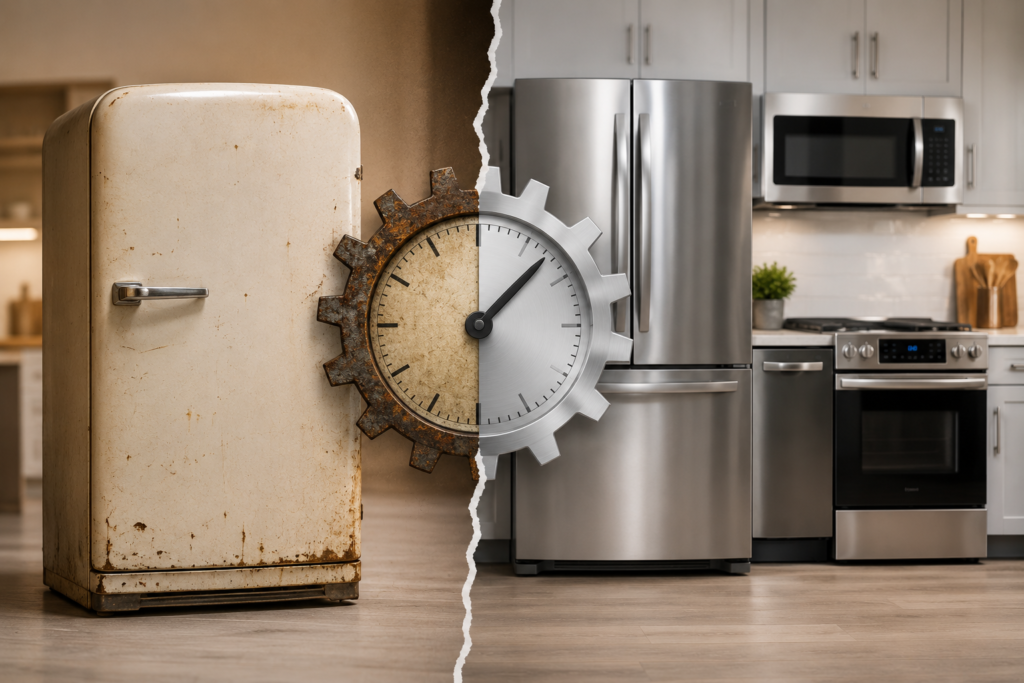
It’s a common observation, and there’s a real explanation. Older appliances were often built with simpler mechanics and could last 30 years or more, while today’s appliances typically last 8 to 15 years.
Modern appliances include significantly more electronic components, smart features, and complex control boards than older models. While these additions offer genuine convenience and efficiency improvements, they also introduce more potential points of failure over time, which can shorten overall lifespan compared with older, mechanically simpler designs.
What Affects How Long Your Appliances Actually Last?
Several factors influence appliance longevity beyond the general averages, and understanding them helps you get more years out of what you already own.
- Usage Frequency
Appliances used heavily every day, like a family’s primary refrigerator or dishwasher, generally wear out faster than appliances used more occasionally, such as a guest bathroom’s fixtures or a secondary freezer.
- Maintenance Habits
Regular cleaning and basic upkeep meaningfully extend appliance lifespan. Dusty refrigerator coils, clogged dishwasher filters, and neglected oven maintenance all contribute to premature wear and reduced efficiency.
- Water Quality
Hard water can accelerate wear in dishwashers and any appliance that processes water regularly, since mineral buildup affects both performance and component longevity over time.
- Installation Quality
Poor installation can shorten an appliance’s effective lifespan from the very start, making professional installation worthwhile for major kitchen appliances.
- Brand and Build Quality
Premium-tier brands consistently outlast mid-range and budget brands in independent lifespan comparisons. Some premium manufacturers explicitly design appliances for extended service lives, with certain brands targeting roughly 20 years of average household use for select models.
- Environmental Factors
Humidity, poor ventilation, and power surges can all quietly reduce appliance lifespan over time, particularly for electronic components sensitive to voltage fluctuations.
How to Make Your Kitchen Appliances Last Longer
A few consistent habits can meaningfully extend the working life of your kitchen appliances, often by several years.
- Clean regularly: Dust, dirt, and grime affect performance, especially in refrigerators, ovens, and dishwashers
- Follow manufacturer guidelines: Stick to recommended usage limits, detergents, and cleaning schedules
- Avoid overloading: Overstuffing dishwashers strains motors and internal components unnecessarily
- Check for leaks: Address water leaks promptly to prevent more significant damage
- Schedule professional maintenance: An annual tune-up can catch small issues before they become costly repairs
- Clean refrigerator coils: Dusty coils force the compressor to work harder than necessary
- Skip harsh self-cleaning oven cycles: These extreme-heat cycles can stress internal components over time
Repair or Replace? A Practical Framework
Deciding whether to repair or replace an ailing appliance is a common dilemma, and there’s a useful rule of thumb worth applying.
Replacement is generally recommended when repair costs exceed roughly 50 percent of the appliance’s replacement value, particularly if the unit is already beyond half of its expected lifespan. A newer appliance well within its expected lifespan is usually worth repairing, while an older appliance nearing the end of its typical range often makes more financial sense to replace.
| Scenario | Recommended Action |
| Appliance under half its expected lifespan, repair cost is low | Repair |
| Appliance nearing end of expected lifespan, repair cost is high | Replace |
| Frequent repairs becoming more common | Consider replacement |
| Appliance still under warranty | Repair through manufacturer |
Signs It’s Time to Replace a Kitchen Appliance
Beyond age alone, certain warning signs suggest replacement is the more sensible choice regardless of how old the appliance technically is.
- Frequent repairs: If you’re calling a technician multiple times within a year or two, ongoing repair costs likely outweigh the value of keeping the appliance running.
- Rising utility costs: Older, less efficient appliances often consume noticeably more energy or water than newer Energy Star-certified models.
- Declining performance: A refrigerator that struggles to maintain temperature or a dishwasher that no longer cleans effectively signals the appliance is nearing the end of its useful service life.
- Visible wear and damage: Rust, unusual noises, or physical damage to components often indicate deeper underlying issues.
Do Smart Appliances Last as Long as Traditional Models?
Smart, Wi-Fi-connected appliances have become increasingly common, offering conveniences like remote monitoring and app-based controls. It’s worth understanding how this added technology affects long-term durability before you buy.
Smart features generally add more electronic components and sensors, which can introduce additional potential points of failure compared with simpler, traditional models. That said, the core mechanical parts, such as compressors and motors, typically follow similar lifespan patterns regardless of smart connectivity.
Practical takeaway: Smart features add convenience but shouldn’t be assumed to extend or shorten an appliance’s core lifespan. Focus on build quality and brand reputation first, and treat smart connectivity as a separate consideration.
How Appliance Warranties Relate to Expected Lifespan
Warranty length offers a useful, if imperfect, signal of how confident a manufacturer is in their own appliance’s durability, though it doesn’t always match the appliance’s full expected lifespan.
Most standard kitchen appliance warranties run between one and two years for general coverage, though some components, like refrigerator sealed systems, often carry extended coverage of 5 to 12 years due to the high cost of those specific repairs. Premium brands frequently offer longer warranty periods as part of their overall value proposition.
When comparing appliances, check not just the base warranty length, but which specific components receive extended coverage, since this often reveals which parts the manufacturer considers most failure-prone.
Regional and Household Factors That Affect Lifespan
Beyond the appliance itself, regional and household-specific factors can meaningfully influence how long your kitchen appliances actually last.
- Water hardness: Hard water often accelerates mineral buildup in dishwashers and other water-connected appliances, shortening effective lifespan without regular descaling.
- Household size: Larger households place more daily demand on refrigerators, dishwashers, and ranges, accelerating wear compared with smaller households using the same appliances less frequently.
- Climate and humidity: Humid climates can speed up wear on electronic components and metal parts prone to corrosion, making proper kitchen ventilation important.
- Power quality: Frequent power surges can gradually damage sensitive electronic control boards, making surge protection worthwhile for major appliances.
Conclusion
Understanding how long kitchen appliances typically last helps you plan and budget for replacements rather than being caught off guard by a sudden breakdown. Refrigerators and ranges generally offer the longest service life among major kitchen appliances, while dishwashers and microwaves tend to wear out sooner due to heavier daily use and moisture exposure. Regular maintenance, proper usage, and choosing quality brands can meaningfully extend any appliance’s lifespan beyond the average. When a major repair does come up, weigh the cost against the appliance’s age and remaining expected lifespan before deciding whether to repair or replace, and you’ll make a more confident, financially sound decision either way.
Frequently Asked Questions
1- How long should a refrigerator realistically last?
Most refrigerators last between 9 and 15 years, with an average lifespan around 13 years according to national housing data.
2- Why do dishwashers have such a short lifespan compared with other appliances?
Dishwashers deal with constant water exposure, heat, and moving parts, which contributes to their comparatively shorter average lifespan of around 9 years.
3- Do gas ranges last longer than electric ranges?
Yes, gas ranges typically last slightly longer, averaging around 15 to 17 years compared with roughly 13 to 15 years for electric ranges.
4- Is it worth repairing an old appliance instead of replacing it?
It depends on repair cost relative to replacement value and how close the appliance already is to the end of its typical lifespan. Repairs under 50 percent of replacement cost are generally worthwhile for younger appliances.
5- Do premium appliance brands really last longer?
Yes, premium-tier brands generally outperform mid-range and budget options in lifespan comparisons, with some manufacturers specifically engineering appliances for extended 20-year service lives.
6- How can I extend my appliance’s lifespan?
Regular cleaning, following manufacturer guidelines, avoiding overloading, and scheduling occasional professional maintenance are the most effective ways to add years to any kitchen appliance.