
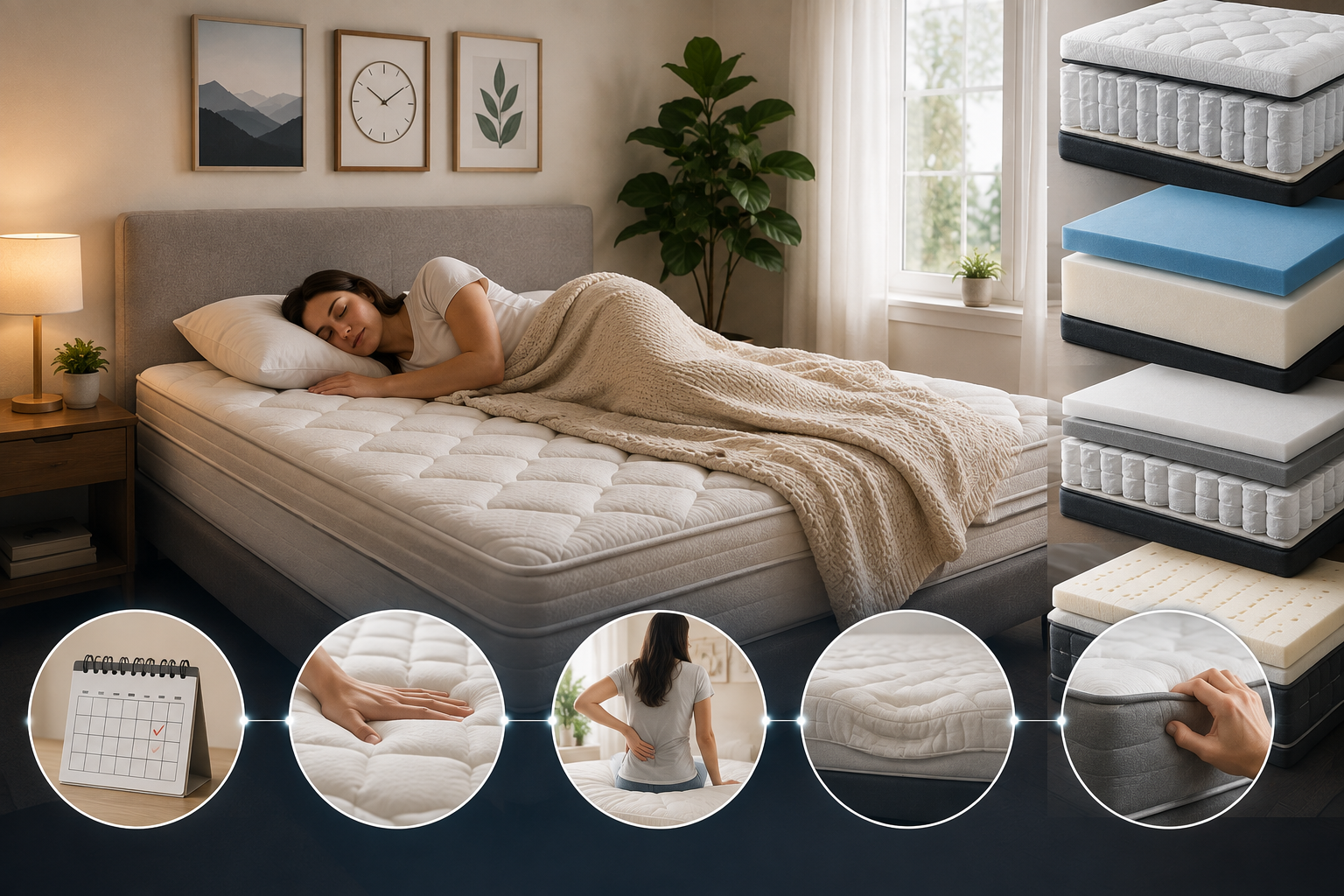
If you’ve been waking up stiff, sore, or just not as rested as you used to, your mattress age might be the real culprit not your sleep habits.
Most mattresses last between 7 and 10 years, but the exact lifespan depends heavily on the type. Innerspring mattresses typically last 5 to 8 years, memory foam and hybrids last 7 to 10 years, and natural latex mattresses can last 12 to 20 years with proper care.
But the number of years alone doesn’t tell the whole story. How you sleep, your body weight, how well you maintain the mattress, and the quality of materials all affect how long a mattress actually stays comfortable and supportive. This guide breaks down mattress lifespan by type, the real signs it’s time to replace yours, and practical tips to help your next mattress last as long as possible.
Why Mattress Lifespan Isn’t Just About Age
A mattress doesn’t fail all at once it degrades gradually. The coils lose tension, the foam stops bouncing back, and the support layers compress unevenly under your body weight. This is why two mattresses of the same age can be in completely different conditions, depending on usage and quality.
That’s also why “how many years” is only part of the answer. A mattress that’s technically 6 years old but used nightly by two adults may need replacing sooner than an 8-year-old guest room mattress that’s rarely slept on.
How Long Does Each Mattress Type Last?
Different materials break down differently. Here’s a realistic breakdown by mattress type.
| Mattress Type | Average Lifespan | Why |
| Innerspring | 5–8 years | Coils lose tension and sag with repeated use |
| Memory Foam | 7–10 years | Foam softens and loses its ability to bounce back |
| Hybrid (Coil + Foam) | 7–10 years | Limited by the comfort foam layer, even though coils last longer |
| Natural Latex | 12–20 years | Highly resilient material that resists sagging and body impressions |
| Pillow-Top | 5–7 years (topper layer) | The soft top layer wears out faster than the base underneath |
Innerspring Mattresses: Shortest Lifespan
Innerspring mattresses rely on metal coils for support. Over time, coils lose their tension, leading to sagging especially in high-pressure areas like the hips and shoulders. Squeaking noises are often an early warning sign that the coils are wearing down.
Typical lifespan: 5 to 8 years, with pocketed coil systems generally outlasting older interconnected coil designs.
Memory Foam Mattresses: Comfort That Fades Gradually
Memory foam contours closely to the body, but that same softness is what eventually wears it down. Lower-density foams break down faster, developing visible body impressions and losing responsiveness.
Typical lifespan: 7 to 10 years. Higher-density memory foam tends to last closer to the upper end of that range.
Hybrid Mattresses: Only as Strong as the Weakest Layer
Hybrid mattresses combine coils with a foam or latex comfort layer, aiming to offer the durability of springs with the pressure relief of foam. In practice, the comfort layer usually wears out before the coil base does, meaning the mattress can start to feel worn even though the support system underneath is still intact.
Typical lifespan: 7 to 10 years, depending on the quality of both the coils and the comfort layer.
Latex Mattresses: The Long-Term Investment
Natural latex is the most durable mattress material available. It resists sagging, springs back into shape reliably, and holds up well against dust mites and allergens. Unlike foam, which tends to sag, latex is more likely to show wear through minor surface cracking after many years of heavy use.
Typical lifespan: 12 to 20 years for high-quality natural latex. Synthetic or blended latex mattresses generally have a shorter lifespan, closer to memory foam.
What Affects How Long Your Mattress Actually Lasts
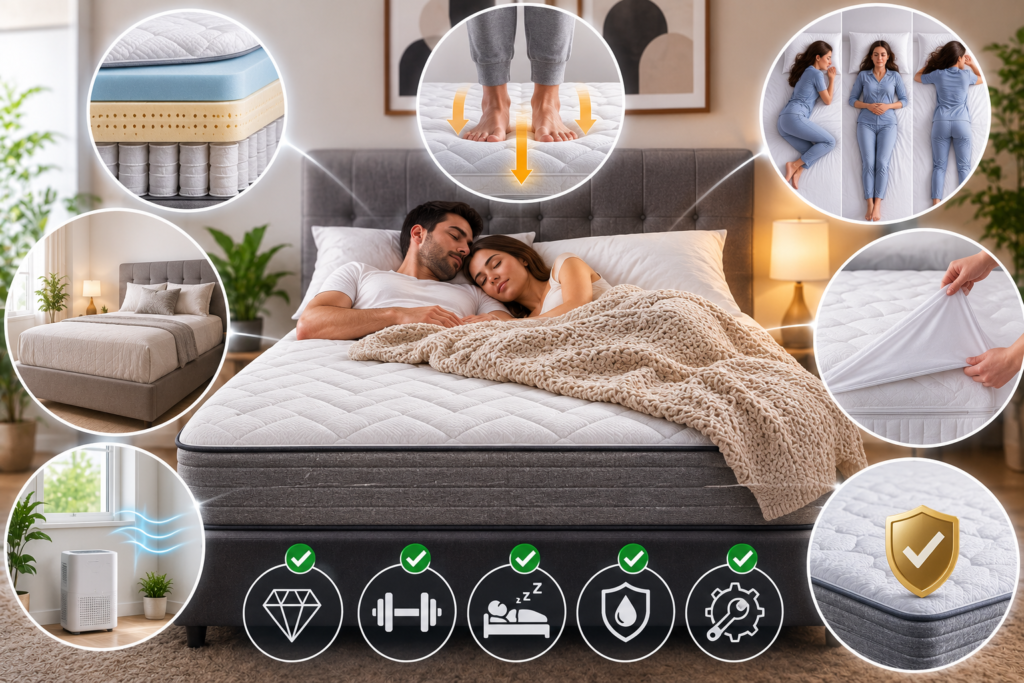
Two people can buy the identical mattress and get very different lifespans out of it. Here’s why.
1. Material Quality and Density
Higher-density foams, natural latex, and pocketed coil systems all hold up better over time than budget materials. In general, higher-priced mattresses use denser, more durable materials, which is part of why they tend to last longer.
2. Body Weight and Sleep Position
Heavier body weight puts more pressure on comfort layers and coils, which can accelerate sagging. Side sleepers may notice wear concentrated around the hips and shoulders, since that’s where the most pressure is applied night after night.
3. How Often the Mattress Is Used
A mattress slept on every night by one or two adults wears out faster than a guest room mattress used occasionally. Daily use adds up quickly over the years.
4. Mattress Maintenance
- Rotating the mattress every 3 to 6 months helps distribute wear more evenly (note: most modern mattresses shouldn’t be flipped, only rotated, unless the manufacturer specifically says otherwise).
- Using a mattress protector helps prevent spills, dust, and allergens from breaking down materials prematurely.
- Proper foundation support matters too a mattress on a worn-out or incompatible base can wear out faster than one on the correct foundation.
5. Foundation and Base Compatibility
Memory foam and latex mattresses generally need a solid platform or slats spaced no more than about 3 inches apart. Using the wrong foundation can cause uneven sagging regardless of how good the mattress itself is.
Signs It’s Time to Replace Your Mattress
Age is a helpful guideline, but your body usually gives clearer signals than the calendar does.
Physical Signs
- Visible sagging or indentations, especially in the areas where you sleep most
- Springs you can feel through the surface of an innerspring mattress
- Lumpy or uneven texture, particularly in pillow-top mattresses
- Squeaking sounds during normal movement, which usually indicates worn coils
Sleep-Related Signs
- Waking up with back, neck, or joint pain that improves once you’re up and moving
- Noticeably more tossing and turning than usual
- Feeling like you sleep better away from home (hotels, guest rooms) than in your own bed
- Increased allergy symptoms, which can result from years of dust mite and allergen buildup
If you’re regularly experiencing stiffness that fades within 30 minutes of getting up, that’s often a strong sign your mattress is no longer providing proper support regardless of how many years you’ve owned it.
Mattress Lifespan vs. Warranty: Don’t Confuse the Two
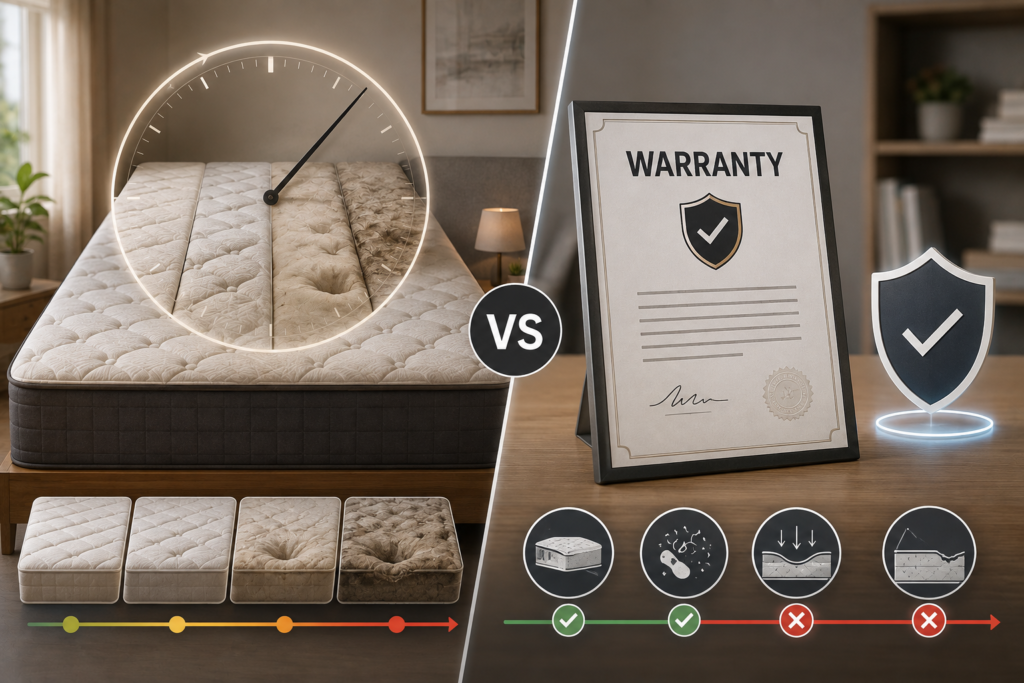
Many shoppers assume a mattress warranty tells them how long the mattress will last. It doesn’t.
- A warranty covers manufacturing defects, like coils breaking or foam splitting apart from a construction flaw.
- It does not cover normal wear and tear, sagging from years of regular use, or comfort simply diminishing over time.
A mattress can be well within its warranty period and still be past its comfortable, supportive lifespan. Always read the fine print most warranties define an acceptable amount of sagging (often around three-quarters of an inch to 1.5 inches) before it’s considered a covered defect.
How to Extend Your Mattress’s Lifespan
While no mattress lasts forever, a few habits can help you get the most years out of your investment:
- Use a mattress protector from day one to guard against spills, sweat, and allergens.
- Rotate the mattress every 3 to 6 months, unless the manufacturer specifically advises against it.
- Choose the correct foundation based on your mattress type and manufacturer guidelines.
- Avoid jumping or excessive pressure in one concentrated area, which speeds up sagging.
- Keep pets off the mattress when possible, since claws and constant weight in one spot accelerate wear.
- Clean regularly by vacuuming the surface and airing it out to reduce dust mite buildup.
If getting the longest possible lifespan out of your next mattress is a priority, keep these factors in mind while shopping:
- Prioritize material quality over price alone. High-density foam, natural latex, and pocketed coils all tend to outperform budget alternatives.
- Check the warranty length, since manufacturers often design mattresses to comfortably outlast their warranty period as a mark of confidence in the build quality.
- Consider natural latex if long-term durability matters more to you than upfront cost — it’s a higher investment initially but can outlast two or three foam mattresses combined.
- Don’t skip the foundation. Pairing a good mattress with the wrong base can shorten its lifespan significantly, regardless of quality.
Let Your Body Guide You — Not Just the Calendar
While the general rule of “every 7 to 10 years” is a useful starting point, mattress lifespan really comes down to type, quality, and how the mattress has been used and maintained. An innerspring mattress may need replacing well before the 8-year mark, while a well-cared-for natural latex mattress can comfortably outlast a decade or more.
The most reliable signal isn’t your calendar — it’s your body. Persistent aches, visible sagging, and noticeably better sleep away from home are all signs your current mattress may no longer be doing its job. Pay attention to those signals, maintain your mattress properly in the meantime, and when it’s time to replace it, choose the type and quality that fits how long you actually want it to last.
FAQ
1- How do I know exactly when to replace my mattress?
Rather than relying only on age, watch for visible sagging, lumps, springs you can feel, or waking up with pain that fades shortly after getting up. If several of these signs appear together, it’s time to start shopping.
2- Does a more expensive mattress always last longer?
Generally, yes — higher price often reflects denser foam, higher-quality coils, or natural latex, all of which hold up better over time. However, price alone isn’t a guarantee; it’s worth checking the specific materials used rather than assuming cost equals durability.
3- Can I extend my mattress’s life with a topper?
A mattress topper can restore some comfort to a mattress that’s starting to feel firm or worn, but it won’t fix structural issues like sagging coils or broken-down support layers underneath.
4- Do heavier people need to replace mattresses more often?
Often, yes. More body weight applies more pressure to comfort layers and coils, which can accelerate sagging and wear compared to lighter sleepers using the same mattress.
5- Is it bad to sleep on an old, sagging mattress?
Yes, over time. A sagging mattress fails to support the spine properly, which can contribute to poor sleep posture, aches, and disrupted sleep quality.
6- How often should mattresses generally be replaced?
As a general guideline, most experts recommend replacing a mattress every 7 to 10 years, though this varies by type, usage, and mattress quality, as outlined above.