
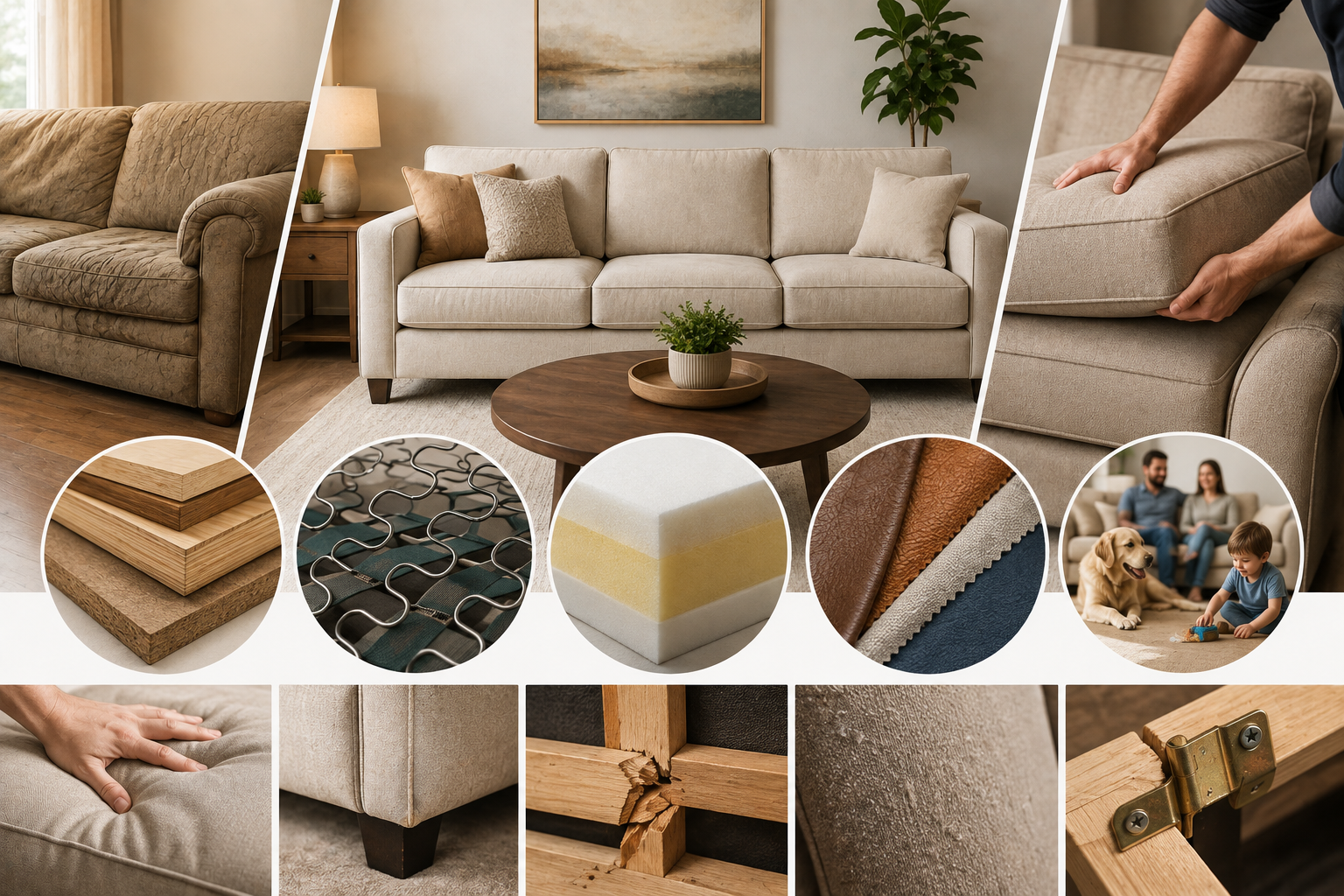
If your sofa is starting to sag, squeak, or just doesn’t feel as supportive as it used to, you’re probably wondering whether it’s genuinely time to replace it or if a repair could buy you a few more years. It’s a fair question, since a sofa is one of the more expensive pieces of furniture most households own.
How Long Does a Sofa Last?
Most sofas last between 7 and 15 years, though the exact number depends heavily on quality and construction. Budget sofas with particleboard frames and low-density foam often last only 3 to 7 years, mid-range sofas with solid wood frames typically last 8 to 12 years, and high-end sofas with hardwood frames and quality leather can last 15 years or more. Usage also matters households with kids or pets often see shorter lifespans than lightly used formal living rooms.
This guide breaks down exactly what determines how long a sofa lasts, the clear signs it’s time to replace yours, and practical steps to extend its life in the meantime.
Why There’s No Single Answer to “How Long Does a Sofa Last?”
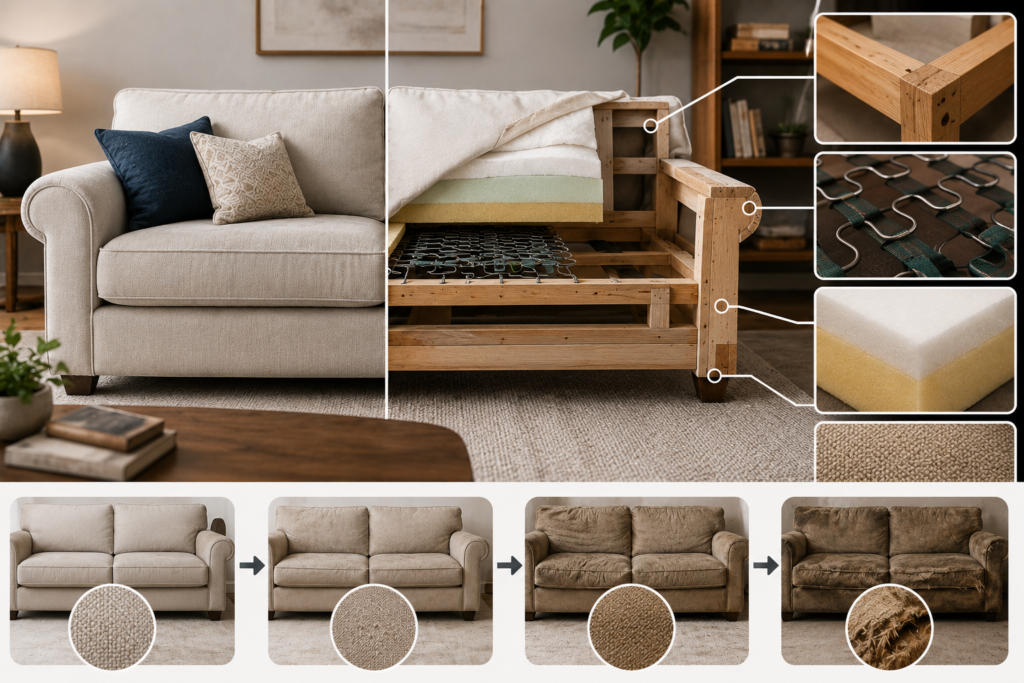
A sofa isn’t one uniform product it’s a combination of a frame, a suspension system, cushion fill, and upholstery, and each of these components wears out at a different rate. A sofa with a strong frame but cheap cushion fill might feel worn out within a couple of years, even though the structure underneath is still perfectly sound.
This is why judging a sofa by age alone is misleading. The real question isn’t just “how old is it,” but “how well was it built, and how has it been used?”
Average Sofa Lifespan by Quality Tier
| Quality Tier | Typical Lifespan | Common Construction |
| Budget | 3–7 years | Particleboard frame, low-density foam, basic fabric |
| Mid-range | 8–12 years | Solid wood or plywood frame, durable fabric, moderate-density foam |
| High-end | 15+ years | Kiln-dried hardwood frame, high-density foam, top-grain leather or performance fabric |
The practical takeaway: A cheaper sofa can cost more over time if it needs replacing every few years, while a well-built sofa properly maintained often works out to a lower cost per year of use, even with a higher upfront price.
What Actually Determines How Long a Sofa Lasts
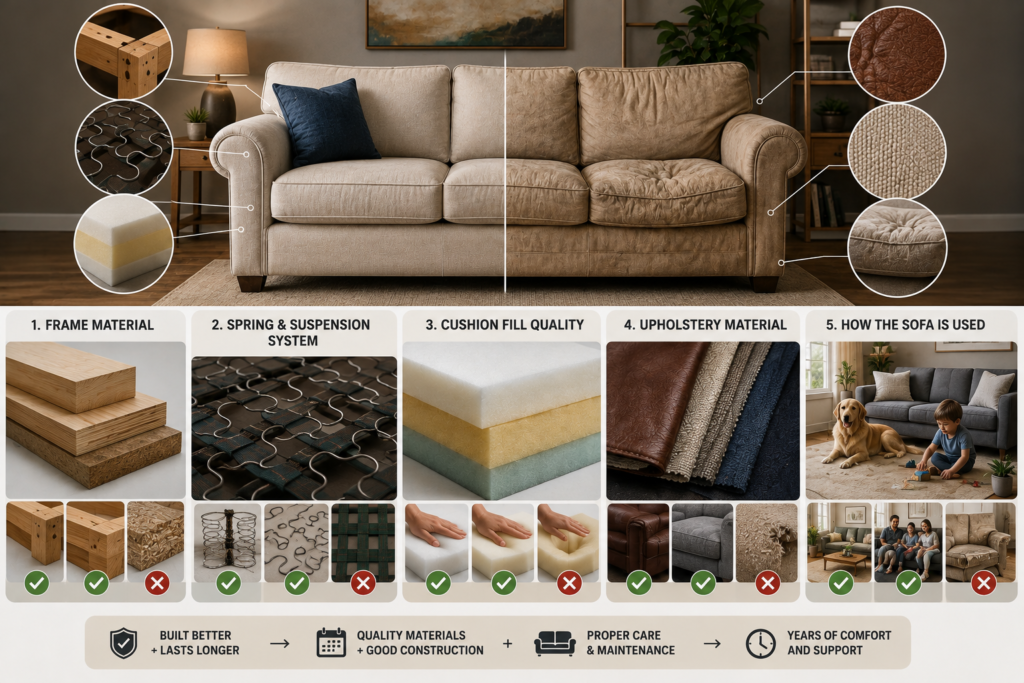
1. Frame Material
The frame is the structural foundation of the sofa, and it has the single biggest impact on long-term durability.
- Kiln-dried hardwood (oak, maple, ash) is the gold standard it resists warping and cracking far better than other materials.
- Plywood offers a solid, more affordable alternative to solid hardwood.
- Particleboard is the least durable option and is prone to breaking down under repeated stress, especially in budget sofas.
2. Spring and Suspension System
The suspension system supports the cushions and affects both comfort and how well the sofa resists sagging over time.
- Eight-way hand-tied springs offer the highest durability and comfort, though at a higher price.
- Sinuous (S-spring) systems are common in quality mid-range and higher sofas, offering solid durability for many years of normal use.
- Web suspension is the least durable option, typically found in budget sofas, and tends to lose tension faster than spring-based systems.
3. Cushion Fill Quality
Cushions are often the first part of a sofa to show visible wear, even when the frame underneath is still structurally fine.
- High-density foam (generally 1.8 lbs/cubic foot or higher) holds its shape well over years of regular use.
- Low-density foam compresses and flattens much faster, sometimes within just a couple of years.
- Foam wrapped in down offers a balance of plush comfort and reasonable durability.
4. Upholstery Material
- Leather, particularly full-grain or top-grain, can last significantly longer than fabric often 15 to 25 years, sometimes described as lasting roughly three times as long as a comparable fabric sofa.
- Performance fabrics are engineered specifically for durability and can meaningfully extend the practical lifespan of a fabric sofa compared to standard fabric.
- Standard fabric typically falls in the 7 to 15 year range, depending on quality and usage intensity.
5. How the Sofa Is Used
Usage intensity plays a bigger role in sofa lifespan than most people expect.
| Usage Type | Typical Lifespan |
| Formal living room (occasional use) | 12–20 years |
| Everyday primary seating | 7–10 years |
| Household with kids or pets | 5–10 years |
| Heavy daily use in a small apartment | 5–7 years |
More hours of daily weight-bearing use naturally accelerates foam compression and joint stress, which is why a lightly used formal sofa can significantly outlast one that serves as a household’s primary daily seating.
The Impact of Pets and Kids on Sofa Lifespan
Households with pets or young children often see sofa lifespans shortened by a noticeable margin compared to lower-traffic homes.
- Scratching, spills, and rough play all accelerate visible wear, particularly on lower-grade fabric.
- In homes with larger dogs, sofa lifespan can shorten by roughly 20 to 40% unless the sofa is built with more durable materials.
- Budget microfiber may last only 3 to 5 years in a home with an active dog, while high-quality leather can still exceed 10 years with proper care.
If pets or kids are a significant factor in your household, prioritizing performance fabric, leather, or removable/washable cushion covers can meaningfully extend the sofa’s usable life.
Signs It’s Time to Replace Your Sofa
Not every aging sofa needs immediate replacement some issues are fixable with simple repairs. Here’s how to tell the difference.
Structural Warning Signs
- Creaking or groaning when you sit down or shift position, which often signals a weakening frame or failing springs
- Visible sagging or an unstable, uneven feel when seated
- A frame that no longer feels solid or level
Comfort Warning Signs
- Sinking in every time you sit, rather than feeling supported
- Stiffness or discomfort after only short periods of sitting
- Cushions that don’t recover their shape after you get up
Upholstery Warning Signs
- Deep, set-in stains that professional cleaning can’t remove
- Cracked leather, frayed seams, or severe fading
- Pilling or fraying fabric beyond what regular care can address
Hygiene Warning Signs
- Persistent odors — from pets, spills, or general use that deep cleaning doesn’t resolve
A helpful rule of thumb: If you’re noticing several of these signs at once, the sofa is likely nearing the end of its useful life. If it’s mostly one issue especially cushion-related a repair may be the smarter, more cost-effective option.
Repair or Replace? How to Decide
Before assuming a worn sofa needs full replacement, consider whether it can be repaired instead.
Repair often makes sense when:
- The frame is still structurally strong and stable
- The issue is primarily worn cushion foam or fabric, not the frame or suspension
- The sofa has sentimental or design value worth preserving
Replacement usually makes more sense when:
- The frame feels loose, unstable, or has visibly failed
- Multiple issues (structural, comfort, and upholstery) are present at once
- Repair costs approach or exceed a significant portion of a new sofa’s price
Reupholstering is a common way to extend a structurally sound sofa’s life, especially for higher-quality frames that would otherwise be discarded prematurely.
How to Extend Your Sofa’s Lifespan
A few consistent habits can meaningfully stretch a sofa’s usable years, regardless of quality tier.
- Rotate and flip loose cushions regularly to distribute wear evenly rather than concentrating it in the most-used seat.
- Clean spills immediately rather than letting them set into the fabric or leather.
- Vacuum regularly to prevent dust and debris from breaking down fibers over time.
- Avoid direct, prolonged sunlight, which can fade fabric and dry out leather.
- Use removable, washable cushion covers if your household includes pets or young children.
- Address minor wear early — a small tear or loose seam repaired promptly is far cheaper than replacing a fully worn cushion or cover later.
Practical Buying Advice for a Longer-Lasting Sofa
- Prioritize frame quality first. Kiln-dried hardwood is worth the investment if you want a sofa that genuinely lasts over a decade.
- Check foam density if it’s listed. Higher-density foam holds its shape significantly longer than budget alternatives.
- Choose upholstery based on your household’s actual use. Performance fabric or leather is a smart choice if pets, kids, or heavy daily use are part of your routine.
- Look for removable, zip-off cushion covers. These allow for deep cleaning, repair, or eventual refreshing without replacing the entire piece.
- Check the warranty length. A longer, more comprehensive warranty is often a reasonable signal of the manufacturer’s confidence in the sofa’s construction.
- Consider modular designs if durability and flexibility both matter. Some modular sofas allow individual sections to be replaced if damaged, rather than requiring a full replacement.
Judge Your Sofa by Condition, Not Just Age
There’s no single number that tells you exactly when to replace a sofa a well-built piece can comfortably serve a household for 15 years or more, while a budget sofa in heavy daily use might show real wear within just a few years. Instead of focusing purely on age, pay attention to the frame’s stability, how well the cushions recover their shape, and whether the upholstery still looks and functions well.
If you’re noticing multiple warning signs at once structural creaking, sinking cushions, and worn upholstery together it’s a strong signal your sofa has reached the end of its useful life. If it’s mostly one issue, particularly cushion-related, a repair might be all it needs to comfortably serve your home for several more years.
FAQ
1- What’s the average lifespan of a sofa?
Most sofas last between 7 and 15 years, though this varies significantly based on construction quality, materials, and how the sofa is used day to day.
2- Do leather sofas really last longer than fabric ones?
Yes, generally. High-quality leather particularly full-grain or top-grain often lasts 15 to 25 years, while standard fabric sofas typically last in the 7 to 15 year range, depending on quality and usage.
3- How much shorter is a sofa’s lifespan with pets in the home?
It varies by pet and sofa quality, but households with larger, active dogs may see sofa lifespan shortened by roughly 20 to 40% compared to lower-traffic homes, unless the sofa is built with more durable, pet-resistant materials.
4- Is it worth repairing an old sofa instead of replacing it?
It depends on the frame’s condition. If the frame is still structurally sound and the main issues are cushion foam or upholstery-related, repair or reupholstering can be a cost-effective way to extend the sofa’s life significantly.
5- What’s the biggest factor in how long a sofa lasts?
Frame construction is generally considered the most important factor, since it determines the sofa’s overall structural lifespan a strong hardwood frame can outlast several rounds of cushion or upholstery wear.
6- How do I know if my sofa’s cushions need replacing versus the whole sofa?
If the frame still feels solid and stable but the cushions have lost their shape or comfort, replacing just the cushion inserts is often a practical and more affordable fix than buying an entirely new sofa.