
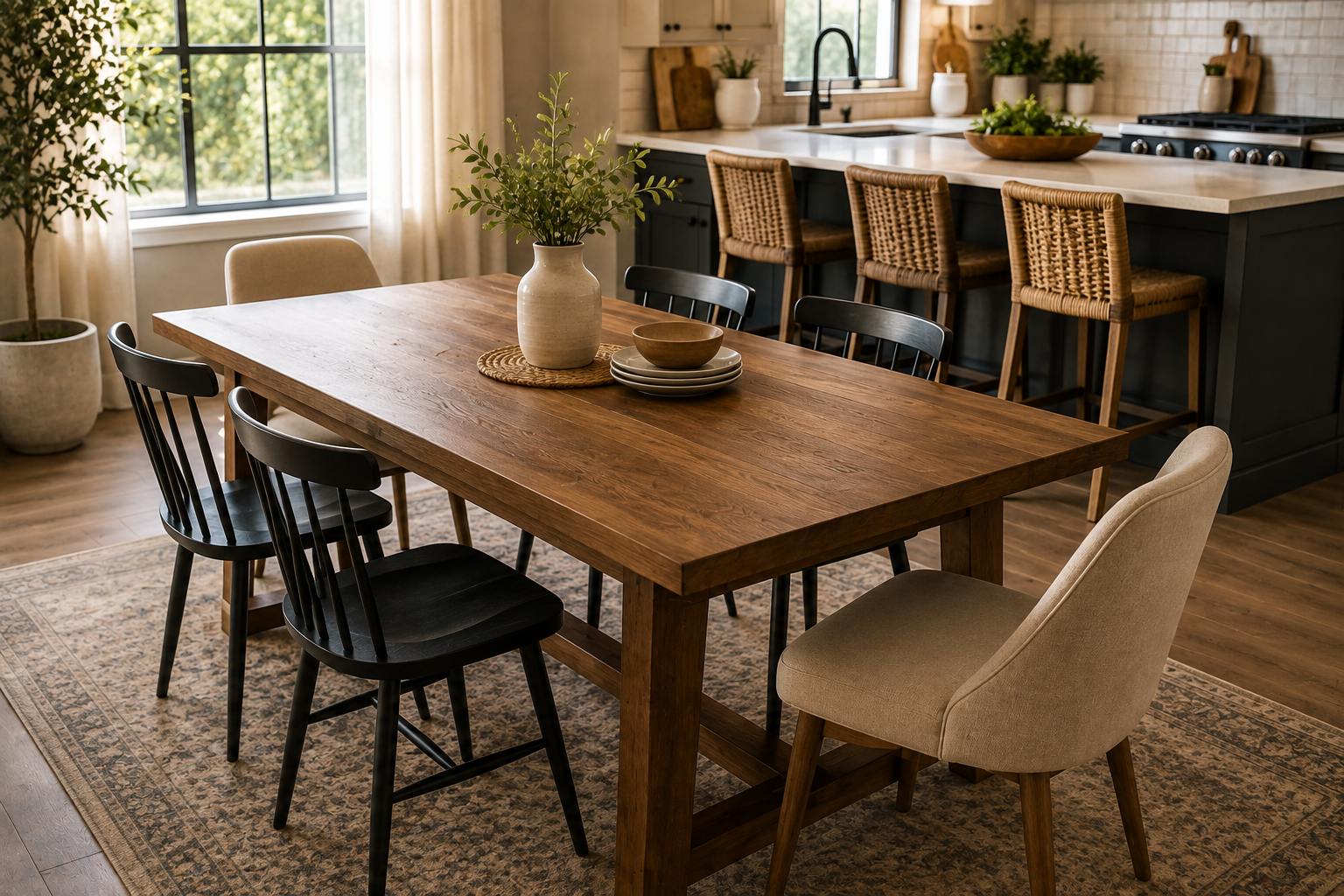
A dining table is one of the most-used pieces of furniture in any home, yet it’s often chosen based on looks alone rather than how well it actually fits your space and daily routine. It hosts everything from rushed weekday breakfasts to holiday dinners, homework sessions, and the occasional late-night conversation, so getting it right matters more than most furniture decisions.
Getting it right means considering size, shape, material, and durability together, not just one factor in isolation. A beautiful table that doesn’t fit your room, or one that can’t handle daily spills, will end up disappointing no matter how good it looked in the showroom.
This kitchen dining table buying guide walks through everything you need to know before buying, from measuring your space to choosing the right shape, material, and height, so you end up with a table that works for your kitchen and your household for years to come.
1- Start With Your Space
Before considering style or material, measure the room where the table will go. This single step prevents the most common dining table mistake: buying a table that’s the wrong size for the space.
Measure the Room
Record the length and width of your dining area, including the distance to walls, doorways, and any nearby furniture. Leave at least 36 inches of clearance around the table on all sides so chairs can be pulled out comfortably and people can walk past seated guests. In tighter spaces, aim for at least 24 inches of clearance as an absolute minimum, though this will feel noticeably tighter during everyday use.
Consider Traffic Flow
Think about how people actually move through the room. A table positioned in a busy walkway, even if it technically fits, will feel cramped and awkward during daily use. If your kitchen connects to a hallway, back door, or another frequently used room, try to position the table so it doesn’t sit directly in that natural path.
Account for Nearby Furniture
If your dining area sits close to counters, an island, or other furniture, factor that spacing in as well. A table that fits comfortably on its own can still feel crowded once you account for chairs being pulled out near an adjacent island or cabinet.
2- How Many People Do You Need to Seat?
Sizing a dining table starts with an honest assessment of how many people you regularly need to seat, not just how many you might seat occasionally for holidays. Buying for rare, once-a-year gatherings often means living with an oversized table the rest of the time.
| Seats | Rectangular Table Length | Round Table Diameter |
| 2–4 | 36–48 inches | 36–44 inches |
| 4–6 | 60–72 inches | 48–54 inches |
| 6–8 | 72–96 inches | 60 inches |
| 8+ | 96+ inches or extendable | Not typically practical |
As a general rule, allow 24 inches of table width per seated person, plus enough legroom underneath, typically at least 24 inches of depth per side. If you regularly host larger groups only occasionally, an extendable table often solves this sizing dilemma better than committing to a permanently large table.
3- Choosing the Right Shape
Rectangular Tables
Rectangular tables remain the most common choice, fitting naturally against a wall or down the center of a longer room. They tend to maximize seating efficiently and work well in most standard dining spaces, particularly rooms that are noticeably longer than they are wide.
Round Tables
Round tables encourage conversation, since everyone faces inward equally, and they tend to suit smaller or square-shaped rooms particularly well. They also soften a room’s tight corners, which can help traffic flow in compact spaces where sharp table edges might otherwise create awkward pinch points.
Square Tables
Square tables work best for smaller households, typically seating four comfortably, and suit square-shaped rooms or nook-style dining areas. They tend to feel more casual and intimate than larger rectangular options.
Oval Tables
Oval tables combine the seating efficiency of a rectangular table with the softer, rounded edges of a round one, making them a practical middle ground for narrower rooms. They work particularly well in spaces where a rectangular table’s sharp corners would otherwise interfere with walking paths.
Fixed vs Extendable Tables
If your seating needs vary, an extendable table offers genuine flexibility. These typically include a leaf that can be added for larger gatherings and removed for everyday use, letting one table serve two different purposes without needing extra storage space for a second table.
Fixed tables, by contrast, offer more structural stability and often a cleaner overall look, since there’s no visible seam or leaf mechanism. They work best for households with consistent, predictable seating needs, where the flexibility of an extendable design simply wouldn’t get much use.
It’s worth noting that extendable tables typically need a leaf stored somewhere when not in use, so factor that storage requirement into your decision if closet or garage space is already limited.
4- Kitchen Dining Table Materials Explained
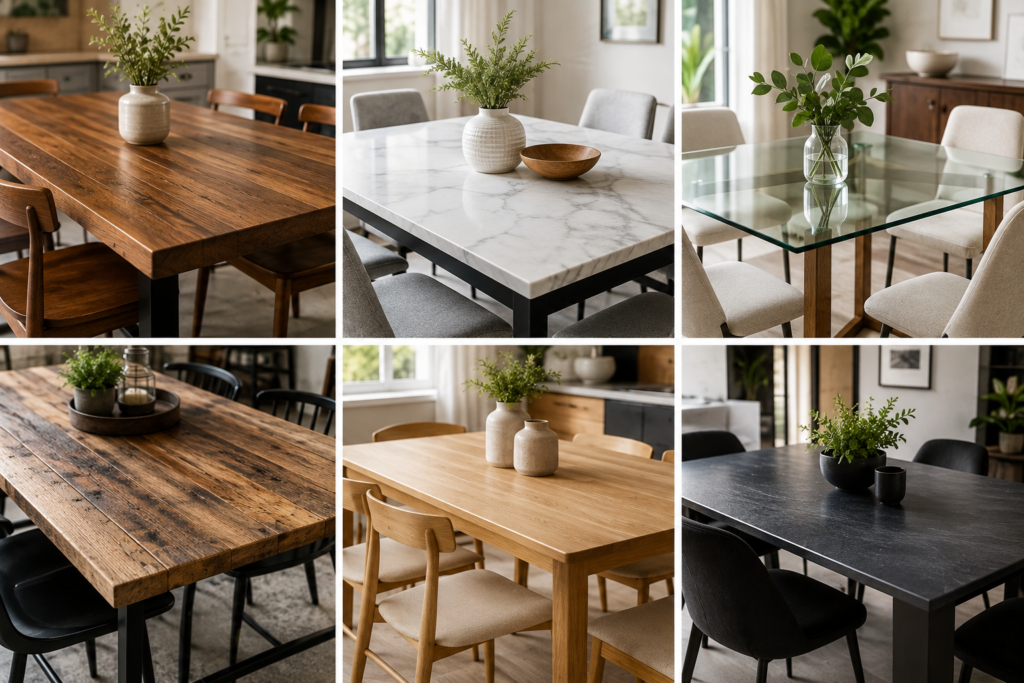
Solid Wood
Solid wood offers the greatest durability and can typically be refinished if it becomes scratched or worn over the years. It costs more upfront but tends to last considerably longer than other materials, making it a strong long-term investment for a table your household will use daily for years.
Engineered Wood
Engineered wood, including plywood or MDF with a veneer finish, costs less than solid wood while still offering a similar appearance. It’s more vulnerable to moisture damage and generally can’t be refinished the way solid wood can, so it’s better suited to households wanting a lower upfront cost over long-term durability.
Glass
Glass tabletops bring a light, modern feel to a room and are easy to wipe clean. They show fingerprints and smudges more readily than other materials and require more frequent cleaning to maintain their appearance, which is worth considering for busy households that may not want to wipe the table down after every use.
Metal
Metal-framed tables, often paired with a wood or glass top, offer strong durability and suit more industrial or contemporary kitchen styles. Metal frames also tend to hold up particularly well in humid climates, where solid wood legs might be more prone to warping over time.
Laminate
Laminate is the most budget-friendly option, offering reasonable durability and easy cleaning, though it lacks the authenticity and longevity of solid wood. It’s a practical choice for households prioritizing a lower price point over long-term investment value.
Table Height Considerations
Standard dining tables sit around 28 to 30 inches tall, matching typical dining chair heights. Counter-height tables run 34 to 36 inches, pairing with counter-height stools, while bar-height tables reach 40 to 42 inches, typically paired with taller bar stools.
Matching your table height to your kitchen’s existing counters or island can create a more cohesive look, particularly in open-plan spaces where the dining area is visible from the kitchen itself. If your kitchen already includes counter-height or bar-height seating at an island, choosing a matching height for your separate dining table can help the whole space feel more visually connected.
Matching the Table to Your Lifestyle
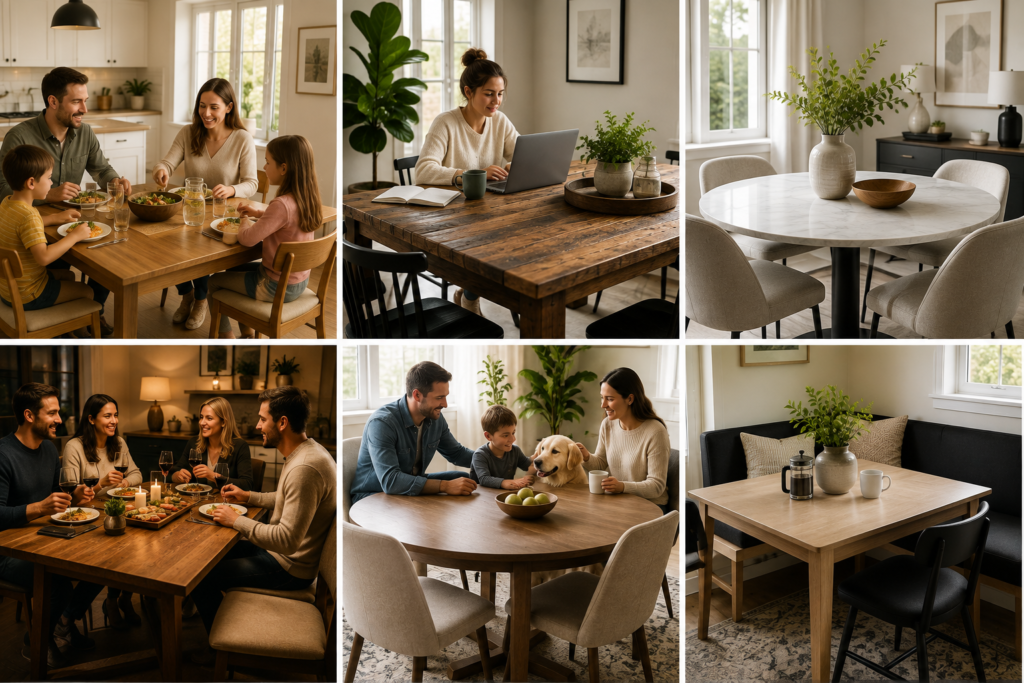
Households With Kids
Durable, easy-to-clean materials like laminate, sealed wood, or performance finishes hold up better to daily spills and scuffs than delicate finishes or glass. Rounded corners are also worth considering for households with young children, reducing the risk of bumps and scrapes.
Frequent Entertainers
An extendable table or one on the larger end of your size range offers more flexibility for hosting guests without needing a separate table for special occasions. This avoids the cost and storage burden of owning two dining tables for different scales of gathering.
Small Households
A smaller fixed table, or a round table seating four, avoids wasting space that a larger table would otherwise leave empty most of the year. This also tends to make the dining area feel more proportionate to the rest of a smaller home.
Small Kitchens
A drop-leaf or extendable table that can shrink down for daily use frees up valuable floor space when you don’t need full seating capacity. Some drop-leaf designs can even fold down against a wall entirely when not in use, which is worth considering in genuinely tight kitchens.
Style Considerations
The table should complement your kitchen’s overall design rather than standing apart from it.
- Modern kitchens often pair well with tables featuring clean lines, metal accents, or a matte finish.
- Farmhouse kitchens typically suit a solid wood table with a distressed or natural finish.
- Traditional kitchens favor richer wood tones and more detailed leg or base designs.
- Minimalist kitchens benefit from simple, low-profile tables without excessive ornamentation.
- Transitional kitchens work well with tables that blend simple lines and warmer wood tones, avoiding commitment to one style extreme.
Choosing a table finish that complements, rather than exactly matches, your existing cabinetry or flooring often creates a more intentional, layered look than an exact match would.
Budget Planning
Dining table prices vary significantly based on size, material, and construction quality. Laminate and basic engineered wood tables represent the most affordable entry point. Solid wood and metal-framed tables occupy the mid-to-upper range, with price increasing alongside size and craftsmanship. Custom or designer tables, along with larger extendable options, represent the top end of the price range.
Setting a budget before shopping helps filter through options efficiently and avoids the temptation to overspend on a table that exceeds your actual needs. It’s often more useful to set a budget range rather than a single fixed number, giving yourself flexibility if you find a table just above your initial target that offers better durability or craftsmanship meaningfully.
Common Mistakes to Avoid
A handful of recurring mistakes catch many buyers off guard when purchasing a new dining table:
- Choosing a table too large for the room, leaving insufficient clearance for chairs and walking space
- Ignoring chair height compatibility, resulting in an uncomfortable seating arrangement
- Prioritizing style over durability, particularly in households with children or heavy daily use
- Skipping extendable options when seating needs vary throughout the year
- Forgetting to measure doorways, risking a table that won’t fit through the entrance to your home
- Overlooking maintenance requirements, choosing a high-maintenance material without accounting for the upkeep it requires
Conclusion
Choosing the best kitchen dining table for your home means balancing size, shape, material, and lifestyle rather than focusing on style alone. Measure your space carefully, consider how your household actually uses the table day to day, and choose materials that match your maintenance expectations. With the right table in place, you’ll have a piece of furniture that genuinely serves your home for years, not just one that looks good on delivery day.
Frequently Asked Questions
1- How do I know what size dining table I need?
Measure your available room space first, leaving at least 36 inches of clearance around the table, then choose a size based on how many people you typically need to seat.
2- What is the best material for a kitchen dining table?
Solid wood offers the best long-term durability, though engineered wood, laminate, and metal-framed tables all provide good value depending on your budget and lifestyle.
3- Should I choose a round or rectangular dining table?
Rectangular tables generally seat more people efficiently and suit longer rooms, while round tables work well in smaller or square spaces and encourage more natural conversation.
4- Is an extendable dining table worth it?
Yes, particularly for households that entertain occasionally but don’t need a large table for everyday use. It offers flexibility that a fixed table can’t match.
5- What height should my dining table be?
Standard dining height is 28 to 30 inches, which suits most homes. Counter-height or bar-height tables work best when paired with matching stool heights and a more casual dining style.