
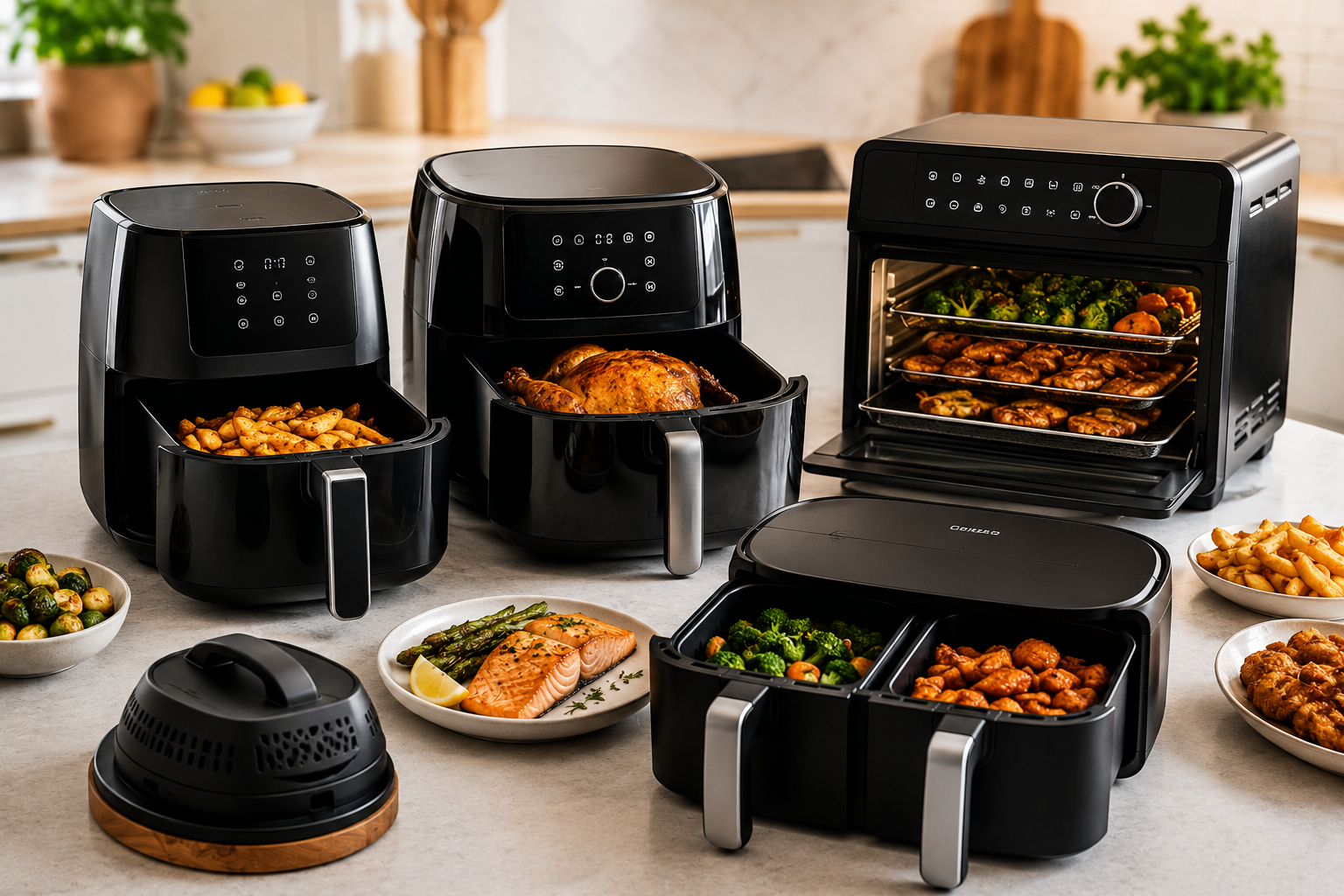
Air fryers have become one of the most popular kitchen appliances in American homes, and it’s easy to see why. They cook faster than a conventional oven, use less oil than traditional frying, and handle everything from crispy vegetables to reheated leftovers with minimal cleanup.
But with so many shapes, sizes, and price points on the market, how to choose an air fryer isn’t always straightforward. This step-by-step guide walks through everything you need to consider, from capacity and wattage to basket style and safety features, so you can find the best air fryer for home use without guessing or overspending.
Step 1: Understand What an Air Fryer Actually Does
Before comparing models, it helps to understand the technology itself. An air fryer works by circulating hot air rapidly around food using a powerful fan, cooking it quickly while creating a crispy exterior similar to deep frying, but using little to no added oil.
This makes air fryers particularly useful for reheating leftovers, cooking frozen foods, roasting vegetables, and preparing proteins like chicken or fish with a crisp finish. They generally cook faster than a conventional oven and don’t require preheating in the same way, since most models reach cooking temperature within a few minutes.
Step 2: Decide Which Type of Air Fryer Suits You
Air fryers come in a few distinct formats, and choosing the right one depends largely on your kitchen space and cooking habits.
- Basket-Style Air Fryers
This is the most common and widely recognized format, using a pull-out basket that food sits in during cooking. Basket-style models are typically the most compact and affordable option, making them a strong starting point for most households.
- Oven-Style (Toaster Oven) Air Fryers
These larger units function like a countertop toaster oven with an air fry setting built in, often including multiple racks and additional cooking modes like baking or broiling. They offer more cooking versatility and larger capacity, but take up considerably more counter space.
- Air Fryer Lids for Existing Pressure Cookers
Some households add an air fryer lid to an existing multi-cooker or pressure cooker rather than buying a separate standalone unit. This can be a practical, space-saving option for anyone who already owns a compatible base unit.
- Dual-Basket Air Fryers
Newer models include two separate baskets that operate independently, allowing you to cook two different foods, at two different temperatures, at the same time. This suits households cooking multiple components for a meal simultaneously.
Air Fryer Types Comparison
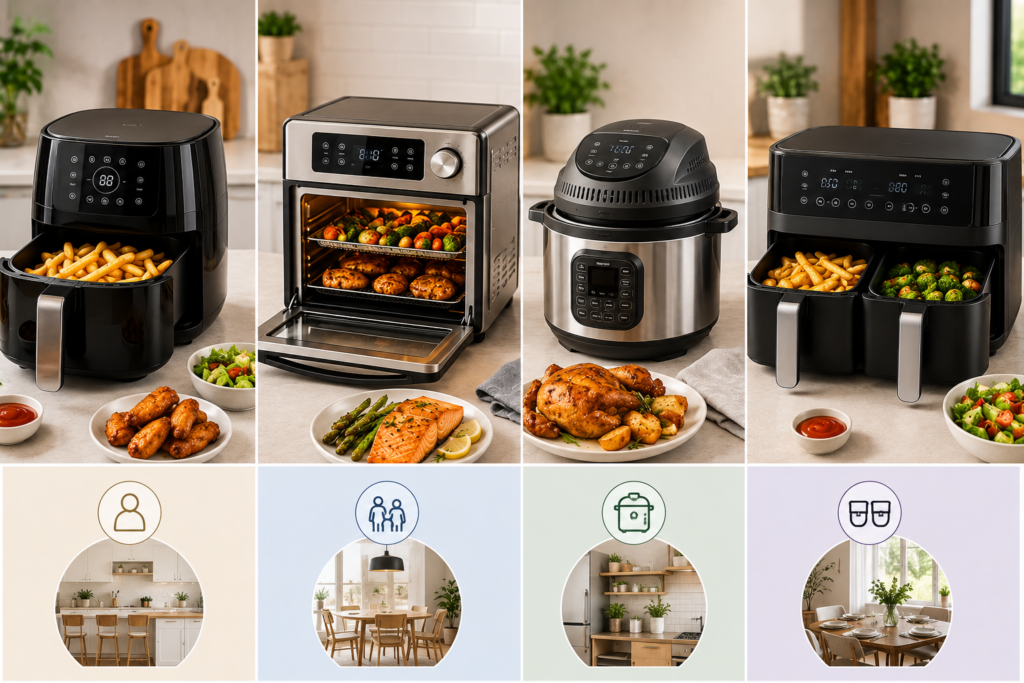
| Type | Best For | Countertop Space | Price Range |
| Basket-style | Most households, simplicity | Compact | Lowest to mid-range |
| Oven-style | Larger families, versatility | Large | Mid to high |
| Pressure cooker lid | Existing multi-cooker owners | Minimal (uses existing base) | Lowest (lid only) |
| Dual-basket | Cooking multiple foods at once | Moderate to large | Mid-range |
Step 3: Choose the Right Capacity
Air fryer capacity is typically measured in quarts, and choosing the right size depends on how many people you’re regularly cooking for.
| Household Size | Recommended Capacity |
| 1–2 people | 2–4 quarts |
| 3–4 people | 5–6 quarts |
| 5+ people | 7–10+ quarts, or oven-style |
It’s worth sizing up slightly if you frequently cook larger cuts of meat, whole vegetables, or batches of food for meal prep, since overcrowding the basket generally leads to uneven cooking and less crispiness.
Step 4: Consider Wattage and Cooking Performance
Wattage affects how quickly an air fryer heats up and how evenly it cooks, though higher wattage doesn’t automatically mean better performance across every model.
Most home air fryers range from around 1,000 to 1,800 watts. Lower-wattage models can still perform well for smaller portions or lighter cooking tasks, while higher-wattage models tend to heat faster and handle larger capacities more evenly, which matters more as basket size increases.
Beyond raw wattage, look for models with a reputation for even heat distribution, since some units can develop hot spots that cook food unevenly regardless of their wattage rating.
Step 5: Look at Basket and Tray Design
The physical design of the cooking basket affects both performance and cleanup, so it’s worth paying attention to a few specific details.
- Non-Stick Coating Quality
A durable, high-quality non-stick coating makes food release easier and simplifies cleanup considerably. Lower-quality coatings can wear down faster with regular use, particularly if metal utensils are used inside the basket.
- Basket Shape
Square or rectangular baskets generally offer more usable interior space than round baskets of a similar stated capacity, since they make better use of the corners.
- Removable Parts
Look for baskets and trays that separate for cleaning, ideally dishwasher-safe, since this significantly reduces the time spent cleaning after each use.
Step 6: Evaluate Control Types
Air fryers typically offer either manual dial controls or digital touchscreen controls, and the right choice largely comes down to personal preference.
Manual dial controls tend to be simpler, more durable over time, and often more affordable, appealing to buyers who prefer straightforward operation without digital menus.
Digital touchscreen controls typically include preset cooking programs for common foods like fries, chicken, or fish, along with more precise temperature and timer adjustments. These suit buyers who want more guided cooking options, though touchscreens can occasionally be less durable than physical dials over years of heavy use.
Step 7: Check for Useful Features
Beyond the core cooking function, several additional features can meaningfully improve everyday usability.
- Preset cooking programs for common foods, simplifying the guesswork for beginners
- Shake or stir reminders that prompt you partway through cooking for more even results
- Viewing windows that let you check on food without opening the basket and losing heat
- Automatic shutoff for added safety once cooking is complete
- Keep-warm functions that hold food at a safe temperature until you’re ready to serve
Not every household needs every feature, so it’s worth prioritizing based on how you actually plan to use the appliance day to day.
Step 8: Think About Kitchen Space and Storage
Air fryers take up meaningful counter space, and larger oven-style models in particular can be bulky enough to require dedicated storage when not in use.
Before buying, measure the counter space or storage area where the air fryer will live, including clearance for ventilation, since most models need open space around the back and sides to release heat properly during operation. If counter space is limited, a compact basket-style model or one with a slim profile may be a better fit than a larger, multi-function unit.
Step 9: Set a Realistic Budget
Air fryer prices vary considerably based on size, brand, and features.
Basic basket-style models with manual controls generally represent the most affordable entry point, offering solid core performance without extra features. Mid-range models typically add digital controls, preset programs, and larger capacity. Premium oven-style or dual-basket models, particularly those from well-known kitchen appliance brands, sit at the top of the price range, reflecting their added versatility and typically larger build.
Setting a budget range before shopping helps narrow the field quickly, especially given how many models and price points are currently available.
Step 10: Compare Warranty and Brand Support
Warranty coverage varies by brand and model, and it’s worth checking this before finalizing a purchase, particularly for higher-priced units. A longer warranty period generally reflects greater manufacturer confidence in the product’s durability, and responsive customer support can matter considerably if you ever need to request a replacement part or troubleshoot an issue.
Air Fryer Buying Tips Summary
A few practical air fryer buying tips to keep in mind while comparing models:
- Choose capacity based on your household size and how much food you typically cook at once
- Prioritize basket shape and non-stick quality for easier cooking and cleanup
- Decide whether digital presets or simple manual controls better match your cooking style
- Measure your available counter and storage space before choosing a larger oven-style unit
- Don’t pay for features you’re unlikely to use regularly
Common Mistakes to Avoid
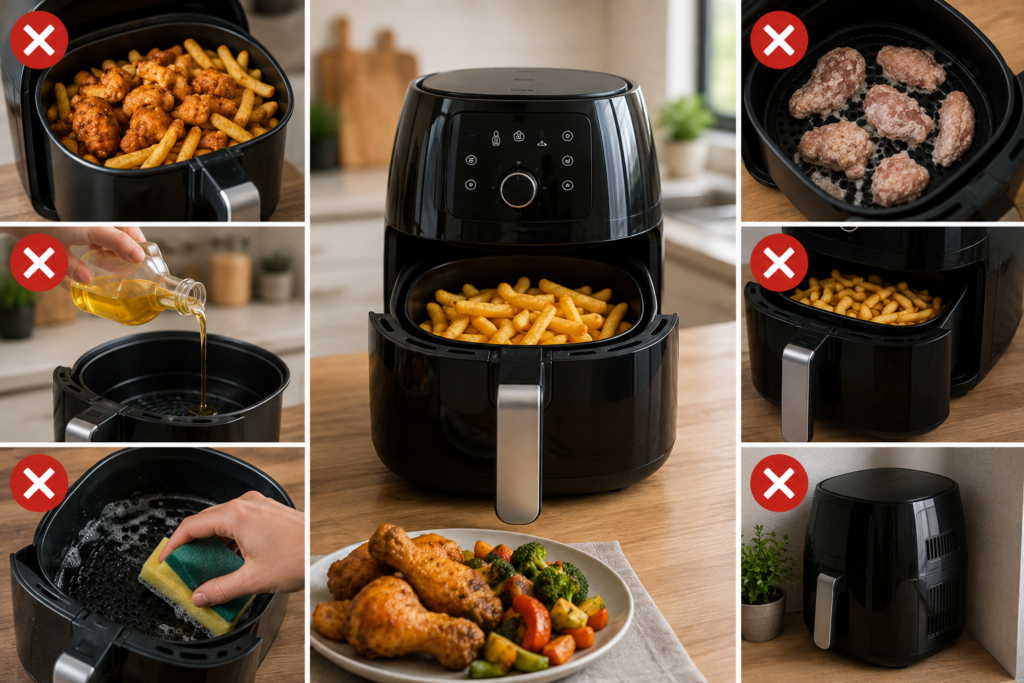
A handful of avoidable mistakes come up often when buying an air fryer for the first time:
- Buying too small a capacity, leading to overcrowded baskets and uneven cooking results
- Overlooking counter space and storage, ending up with an appliance too bulky for daily use
- Focusing only on wattage, without considering basket design or overall build quality
- Ignoring cleaning requirements, choosing a model with non-removable or difficult-to-clean parts
- Overpaying for unnecessary features, particularly digital presets that go unused in favor of simple, familiar recipes
Tips for Using Your Air Fryer Effectively
Once you’ve chosen the right model, a few simple habits help you get the most consistent results.
Avoid overcrowding the basket, since air needs to circulate freely around food for even cooking and proper crisping. Shake or flip food partway through cooking when recommended, particularly for smaller items like fries or vegetables. Lightly coating food in oil, even in small amounts, often improves crispiness compared to cooking with no oil at all. Clean the basket and tray after each use to prevent buildup that can affect both performance and flavor over time.
Conclusion
Finding the best air fryer for home use comes down to matching capacity, features, and control style to how your household actually cooks, rather than choosing based on price or popularity alone. Start by considering your household size and available counter space, then narrow down your options based on basket design, control preferences, and the specific features that matter most to your daily routine. With the right air fryer in place, you’ll have a genuinely useful appliance that earns its spot on your counter for years to come.
Frequently Asked Questions
1- What size air fryer should I buy for a family of four?
A capacity of 5 to 6 quarts generally suits a household of three to four people comfortably, though larger families or those who meal prep in bulk may prefer a 7-quart or larger model.
2- Is a higher wattage air fryer always better?
Not necessarily. While higher wattage often means faster heating and more even cooking in larger baskets, basket design and build quality also significantly affect overall performance.
3- Are digital air fryers better than manual dial models?
Neither is inherently better, since the choice mainly comes down to personal preference. Digital models offer preset programs and more precise control, while manual dial models tend to be simpler and often more affordable.
4- How much counter space does an air fryer need?
This varies by model, but most air fryers require clearance around the back and sides for ventilation, in addition to the appliance’s own footprint, so it’s worth measuring your available space before buying, particularly for larger oven-style units.
5- Can I cook two different foods at once in an air fryer?
Yes, if you choose a dual-basket model, which allows two separate foods to cook independently at different temperatures and times within the same appliance.
6- How long do air fryers typically last?
With proper care, including regular cleaning and avoiding metal utensils that can damage non-stick coatings, most air fryers last several years of regular home use, though this varies by brand, build quality, and frequency of use.
7- Do I need to preheat an air fryer?
Many air fryers don’t require lengthy preheating due to their small size and rapid air circulation, though some recipes and models still recommend a brief preheat period for best results. Checking your specific model’s instructions is the most reliable way to know for sure.