A frying pan is arguably the single most-used piece of cookware in any kitchen, yet it’s often bought quickly, grabbed as part of a set, or replaced without much thought about whether it actually matches how you cook. Understanding how to choose a frying pan properly means looking past appearance and price alone, toward material, size, and construction details that genuinely affect your everyday cooking results.
This guide walks through every major decision point, material, size, handle design, and weight, so you can choose a frying pan that fits your specific cooking habits rather than settling for whatever’s most convenient on the shelf.
Choose the Right Frying Pan
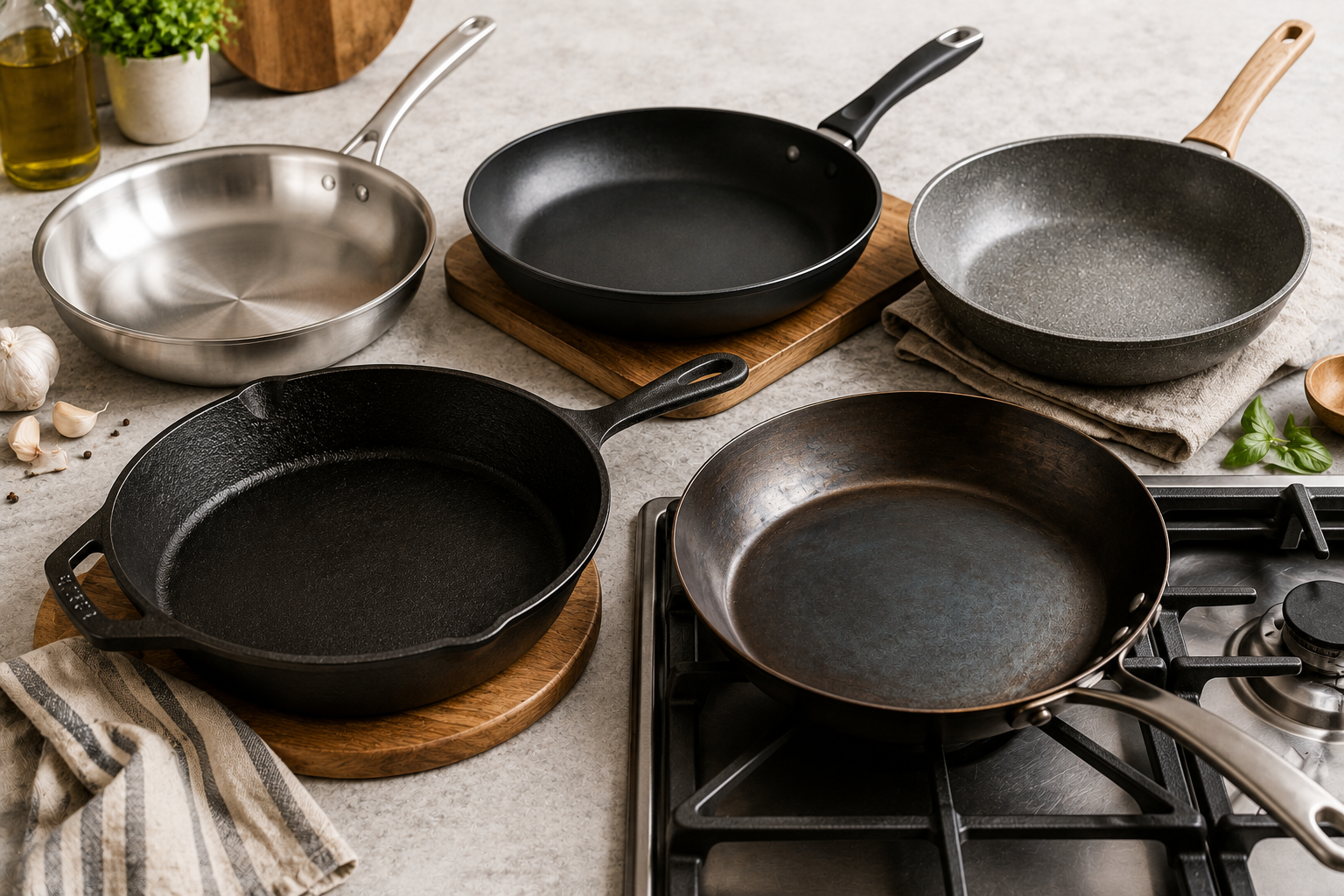
For most home cooks, a 10-to-12-inch stainless steel or nonstick frying pan covers the vast majority of everyday cooking needs. Choose stainless steel if you prioritize versatility, searing, and long-term durability without a coating to eventually replace. Choose nonstick or ceramic if eggs, delicate fish, and low-oil cooking dominate your routine. Cast iron is worth adding as a second pan specifically for high-heat searing and dishes that move from stovetop to oven. Most well-equipped kitchens genuinely benefit from owning at least two frying pans in different materials, rather than trying to make a single pan handle every cooking task equally well.
Steps To Choose the Right Frying Pan
Step 1: Decide on Material First
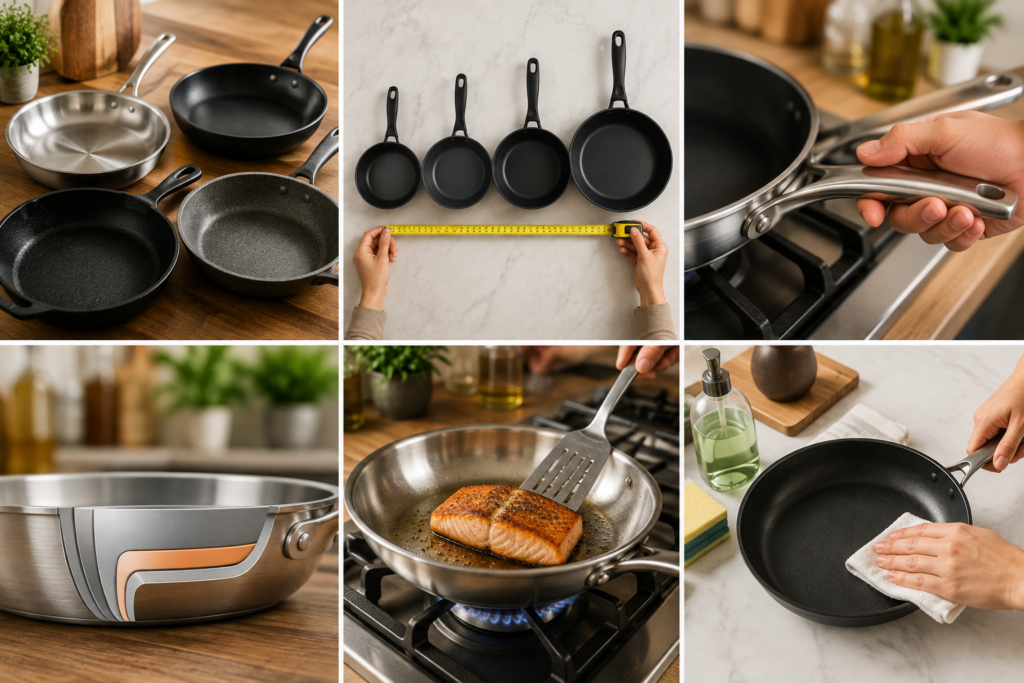
Material affects performance more than almost any other frying pan decision, so it’s worth settling this before comparing specific sizes or brands.
- Stainless Steel
Stainless steel offers the most versatility for everyday cooking, handling searing, sautéing, and sauce-making without any coating to wear down over time. It’s non-reactive with acidic ingredients, making it the clear choice for tomato-based dishes or anything involving wine or citrus. The trade-off is that stainless steel isn’t naturally nonstick, requiring proper preheating and adequate oil to prevent sticking, a matter of technique rather than a flaw in the pan itself.
- Nonstick (Traditional PTFE)
Nonstick pans excel specifically at eggs, pancakes, and delicate fish, offering the easiest food release and cleanup of any material. They require lower cooking temperatures than stainless steel or cast iron, and the coating gradually degrades over a few years of regular use regardless of how carefully you maintain it.
- Ceramic
Ceramic-coated pans offer nonstick-style convenience without traditional PTFE or PFAS compounds, generally tolerating somewhat higher heat than traditional nonstick. Performance and durability vary meaningfully by specific brand, so it’s worth checking individual product reviews rather than assuming all ceramic pans perform identically.
- Cast Iron
Cast iron delivers exceptional heat retention, making it ideal for searing steaks and achieving deep, even browning. It’s noticeably heavier than the alternatives and requires seasoning and specific care, but can genuinely last for generations with proper maintenance.
- Carbon Steel
Carbon steel offers similar heat retention benefits to cast iron in a lighter, more responsive package, closer in weight and feel to a stainless steel pan. It requires the same seasoning process as cast iron but suits techniques requiring quicker heat adjustments, like stir-frying, more comfortably.
Frying Pan Material Comparison
| Material | Best For | Weight | Maintenance | Longevity |
| Stainless steel | Searing, sauces, everyday versatility | Light to moderate | Low | Decades |
| Nonstick (PTFE) | Eggs, delicate fish, low-oil cooking | Light | Low, gentle handling | A few years per pan |
| Ceramic | PFAS-free nonstick convenience | Light | Low, varies by brand | Varies, often a few years |
| Cast iron | High-heat searing, oven-finished dishes | Heavy | Higher (seasoning) | Generations |
| Carbon steel | Stir-frying, responsive high-heat cooking | Moderate | Higher (seasoning) | Generations |
Step 2: Choose the Right Size
- Standard Frying Pan Sizes
Frying pans are typically measured by the diameter of the cooking surface, and choosing the right size affects both cooking efficiency and how comfortably you can maneuver the pan.
| Pan Size | Best For |
| 8 inches | Single servings, eggs, small sauces |
| 10 inches | Two servings, everyday versatility |
| 12 inches | Family-sized portions, searing multiple pieces |
| 14+ inches | Large households, batch cooking |
- Matching Size to Household Needs
A single person or couple often does well with an 8-to-10-inch pan for daily use, while a family of four or more will find a 12-inch pan considerably more practical for cooking enough food in a single batch, without needing multiple rounds.
- Why Bigger Isn’t Always Better
A pan larger than your typical cooking needs wastes stovetop heat around the pan’s edges and can be more awkward to maneuver, particularly for tasks like flipping or tossing food. Choosing a size that matches your actual typical batch size, rather than defaulting to the largest available option, generally produces better cooking results.
Step 3: Consider Handle Design
- Handle Material
Metal handles (often stainless steel) generally tolerate oven use at higher temperatures than handles incorporating plastic or rubber grip components, which may have lower maximum heat tolerances. If you regularly move pans from stovetop to oven, prioritize an all-metal handle rated for higher temperatures.
- Handle Shape and Grip
A handle with a slight upward curve or ergonomic contouring tends to feel more secure and comfortable during extended cooking sessions or when lifting a fully loaded pan. Testing the grip in person, where possible, remains one of the more reliable ways to judge comfort before buying.
- Riveted vs Welded Handles
Riveted handles, attached with visible metal rivets through the pan’s side, tend to be more durable over the long term than welded or screwed alternatives, since rivets distribute stress across a wider area rather than concentrating it at a single attachment point.
- Helper Handles
Larger frying pans (12 inches and above) often include a smaller secondary handle on the opposite side, making it considerably easier and safer to lift a heavier, fully loaded pan with both hands.
Step 4: Evaluate Weight and Balance
- Heavier Pans
Heavier frying pans, particularly cast iron and thicker-gauge stainless steel, generally offer better heat retention and are less prone to warping over time, but they’re correspondingly more tiring to maneuver, especially for tasks requiring frequent tossing or flipping.
- Lighter Pans
Lighter pans, common among aluminum-core nonstick and carbon steel options, are easier to handle and maneuver but may retain heat less effectively and, in the case of thinner construction, be somewhat more prone to warping under high or uneven heat over time.
- Finding the Right Balance for You
There’s no universally “correct” weight, it depends on your physical comfort handling the pan regularly, your specific cooking techniques, and how much you prioritize heat retention versus ease of movement.
Step 5: Check Base Construction and Heat Distribution
- Single-Layer vs Clad Construction
Pans made from a single layer of metal, common in budget stainless steel and some aluminum options, can develop uneven hot spots during cooking. Multi-clad or tri-ply construction, where layers of different metals (often aluminum sandwiched between stainless steel) are bonded together, generally distributes heat more evenly across the entire cooking surface.
- Base Thickness
A thicker base generally improves heat retention and reduces the likelihood of warping over years of regular use, though this typically comes with added weight and, often, a higher price point.
- Flat vs Slightly Warped Bases
Check that a pan sits flat and stable on a flat surface before buying, particularly for budget cookware, since thin or poorly constructed bases can develop a slight warp that affects contact with electric or induction cooktops specifically.
Step 6: Confirm Stovetop Compatibility
- Gas Stovetops
Gas stoves work well with virtually all frying pan materials and constructions, since the open flame adapts flexibly to the pan’s shape and base.
- Electric Coil or Radiant Stovetops
These perform best with flat-bottomed pans that maintain full, consistent contact with the heating element, since any warping or unevenness in the base creates inconsistent heat distribution.
- Induction Cooktops
Induction cooking specifically requires cookware with magnetic properties. Stainless steel and cast iron are generally induction-compatible, while pure aluminum or copper pans typically aren’t, unless specifically constructed with a magnetic base layer. Always confirm induction compatibility directly for a specific product if you cook on an induction cooktop.
Step 7: Decide Between Oven-Safe and Stovetop-Only
If you regularly finish dishes in the oven, frittatas, seared meats finished at higher heat, or baked dishes started on the stovetop, prioritize a pan with a genuinely high oven-safe temperature rating and an all-metal handle. Pans with plastic or composite handle components often carry meaningfully lower oven temperature limits, which is worth checking carefully if oven versatility matters to your cooking routine.
Best Frying Pan for Specific Cooking Tasks
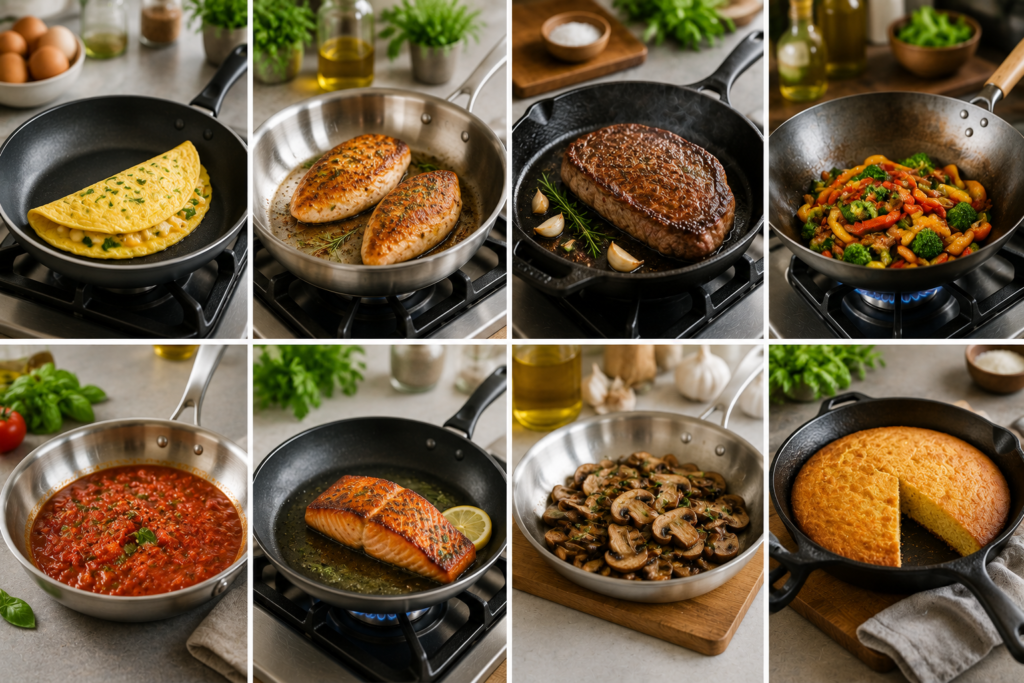
| Cooking Task | Best Material | Why |
| Scrambled eggs, omelets | Nonstick or ceramic | Effortless release, minimal oil |
| Searing steak | Cast iron or stainless steel | Superior heat retention, browning |
| Pan sauces, deglazing | Stainless steel | Non-reactive, develops fond |
| Stir-frying | Carbon steel | Lightweight, responsive heat control |
| Everyday sautéing | Stainless steel | Versatile, durable, no coating concerns |
| Delicate fish | Nonstick | Prevents sticking and tearing |
Building a Practical Frying Pan Collection
Rather than searching for a single “perfect” frying pan, most well-equipped kitchens benefit from owning at least two: a versatile stainless steel or cast iron pan for searing and everyday cooking, plus a dedicated nonstick or ceramic pan reserved specifically for eggs and delicate foods. This combination covers the overwhelming majority of home cooking needs without asking a single pan and material to do everything equally well.
Budget Planning
Frying pan prices vary considerably based on material, construction quality, and brand. Budget options, generally basic stainless steel or entry-level nonstick pans, offer solid everyday performance for straightforward cooking needs. Mid-range pans, including quality tri-ply stainless steel or well-reviewed ceramic nonstick options, balance durability and price for most households. Premium pans, particularly fully-clad stainless steel from established cookware brands or high-quality cast iron, represent a longer-term investment that can genuinely last decades with proper care.
Common Mistakes to Avoid
- Choosing size based on the stove burner alone, rather than your actual typical batch sizes and household needs
- Ignoring handle heat tolerance, discovering only after purchase that a pan isn’t suited for oven use
- Overlooking induction compatibility, particularly for pure aluminum or copper pans on an induction cooktop
- Relying on a single pan for every cooking task, rather than matching material to specific needs like searing versus eggs
- Prioritizing price over base construction quality, ending up with a pan prone to warping or uneven heating
Conclusion
Choosing the right frying pan comes down to matching material, size, and construction quality to how you actually cook, rather than defaulting to whatever’s most convenient or heavily marketed. Prioritize stainless steel or cast iron for versatility and searing, add a dedicated nonstick pan for eggs and delicate foods, and pay attention to handle design and base construction regardless of which material you choose. With the right combination in place, you’ll have frying pans that genuinely perform well for the specific tasks you cook most often, rather than settling for one pan trying, and failing, to do everything equally well.
Frequently Asked Questions
1- What is the best all-purpose frying pan size?
A 10-to-12-inch pan generally suits most households, offering enough surface area for family-sized portions while remaining manageable to handle and store.
2- Is stainless steel or nonstick better for a frying pan?
Neither is universally better, they suit different tasks. Stainless steel offers durability and versatility for searing and sauces, while nonstick excels specifically at eggs and delicate, low-oil cooking.
3- What is the best frying pan material for eggs?
Nonstick or ceramic-coated pans are best suited for eggs, offering the easiest food release and preventing the sticking and tearing that can occur with stainless steel or cast iron.
4- Do I need an oven-safe frying pan?
Only if you regularly finish dishes in the oven or use techniques like starting on the stovetop and finishing under a broiler. If you don’t, this feature matters less for your specific cooking style.
5- How do I know if a frying pan works on my induction cooktop?
Check the manufacturer’s specifications directly, since induction requires magnetic cookware. Stainless steel and cast iron are typically compatible, while pure aluminum or copper generally are not unless specifically constructed with a magnetic base.
6- How many frying pans do I actually need?
Most households do well with at least two: a versatile stainless steel or cast iron pan for everyday cooking and searing, plus a dedicated nonstick or ceramic pan for eggs and delicate foods.
7- Does a heavier frying pan cook better than a lighter one?
Not necessarily “better,” but heavier pans generally offer improved heat retention and reduced warping risk, at the cost of being more tiring to maneuver during active cooking techniques.