
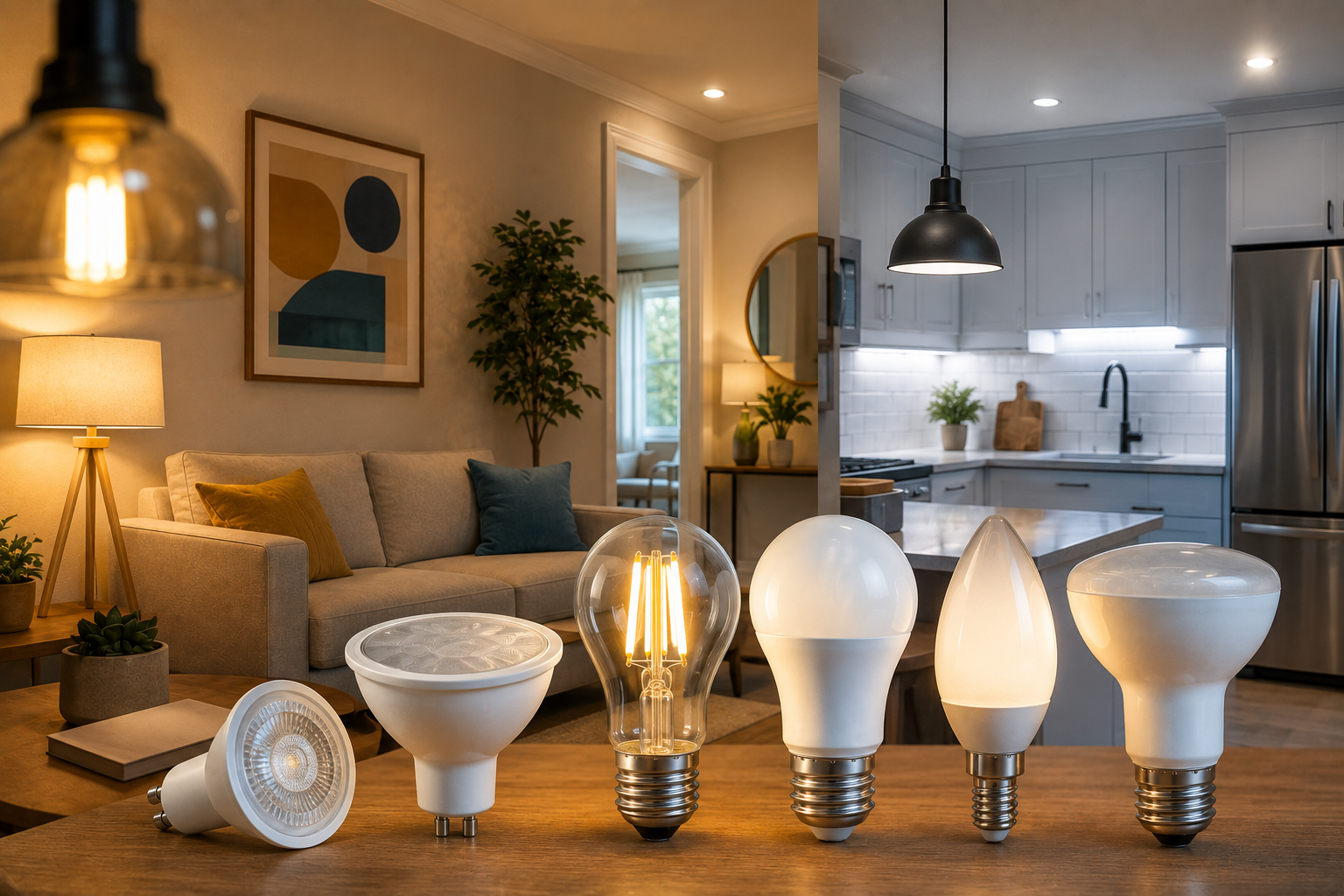
Standing in the light bulb aisle today involves decoding a genuinely confusing set of numbers, lumens, watts, Kelvin, CRI, none of which meant much when incandescent bulbs simply came in “60 watt” or “100 watt.” Understanding how to choose light bulbs properly means knowing what each of these specifications actually tells you, since picking the wrong combination can leave a room feeling either harshly clinical or dimly inadequate, even with a bulb that’s technically bright enough.
This guide breaks down every spec that actually matters, brightness, color temperature, color accuracy, base type, and dimmability, along with room-by-room recommendations, so you can shop with genuine confidence instead of guessing.
Choose the Right Light Bulb
Ignore wattage as your main guide, since LED technology has made watts a poor indicator of brightness. Instead, check lumens for actual light output and choose a color temperature (measured in Kelvin) that matches the room’s purpose: warmer light (2700K–3000K) for bedrooms and living rooms where relaxation matters, and cooler light (3500K–4000K, sometimes higher) for kitchens, bathrooms, and workspaces where clarity and focus matter more. For rooms where color accuracy genuinely counts, kitchens, closets, art displays, look for a CRI of 90 or above. Confirm the bulb’s base matches your fixture, and check dimmer compatibility before buying if the fixture is on a dimmer switch.
Why Watts No Longer Tell You What You Think
The Old Rule of Thumb Doesn’t Apply Anymore
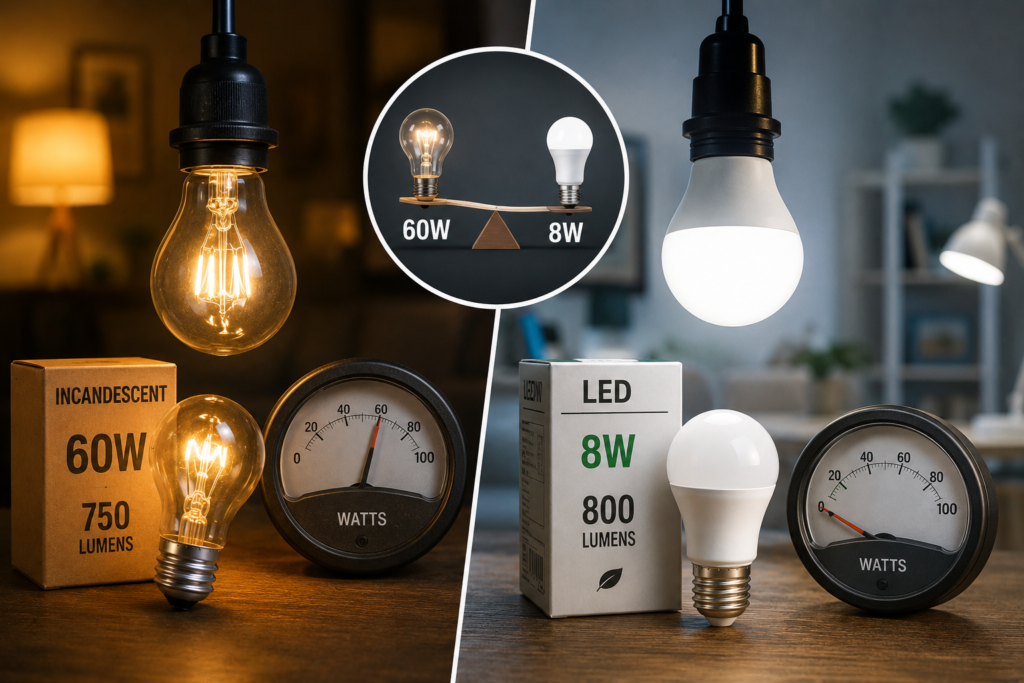
For decades, “watts” was shorthand for brightness, a 100-watt bulb was simply brighter than a 60-watt one. But watts actually measure energy consumption, not light output, and LED technology produces considerably more light per watt than older incandescent bulbs ever could. This means a modern LED using just 8 to 10 watts can produce the same brightness as an old 60-watt incandescent, making wattage comparisons across bulb types genuinely misleading.
Watch for “Equivalent” Wattage Labels
Many LED packages include a phrase like “60-watt equivalent,” which is a comparison label meant to help shoppers used to old incandescent terms, not a measure of the bulb’s actual power draw. Always check both the lumen output and the bulb’s real wattage separately, rather than relying on the equivalent label alone.
Lumens vs Watts: What Actually Measures Brightness
Lumens Are Your Brightness Number
Lumens measure the total amount of visible light a bulb actually produces; this is the number you should compare when judging brightness, not wattage. Higher lumens means a brighter bulb, regardless of how many watts it uses to get there.
General Lumen Guidelines by Room Function
| Room Type | Approximate Lumens Needed |
| Small accent lighting | 200–400 lumens |
| Bedroom, living room (ambient) | 1,000–1,600 lumens |
| Kitchen, workspace (task lighting) | 1,500–3,000+ lumens (often across multiple fixtures) |
| Bathroom vanity | 400–800 lumens per bulb |
Why Higher Lumens Per Watt Is a Good Thing
When comparing bulbs, a higher lumens-per-watt ratio means the bulb produces more light for less energy, generally the more efficient, lower-cost-to-run choice over the bulb’s lifespan.
Understanding Kelvin (Color Temperature)
What Kelvin Actually Describes
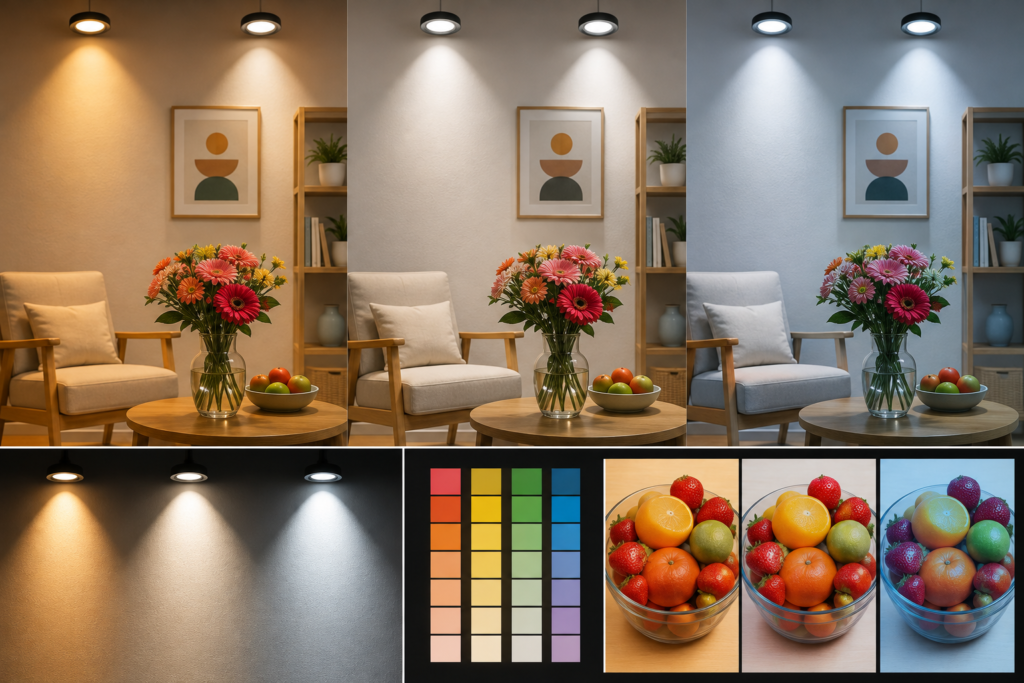
Color temperature, measured in Kelvin (K), describes how warm (yellow/amber) or cool (white/blue) a light appears, it has nothing to do with brightness. A 2700K bulb and a 5000K bulb can both produce 800 lumens and look equally bright, but they’ll create a completely different feeling in a room.
The Kelvin Scale Explained
| Kelvin Range | Common Name | Appearance | Best For |
| 2700K | Soft/Warm White | Warm, golden glow (like candlelight) | Bedrooms, living rooms, dining rooms |
| 3000K | Bright/Warm White | Slightly brighter warm tone | Living areas, hallways |
| 3500K | Neutral White | Balanced, clean illumination | Home offices, bathrooms |
| 4000K | Cool White | Crisp with a subtle blue tint | Kitchens, garages, workspaces |
| 5000K–6500K | Daylight | Crisp, energizing, close to natural sunlight | Task lighting, closets, security areas |
Best Color Temperature for Bedrooms
Bedrooms overwhelmingly benefit from warmer light in the 2700K range, since this softer, amber-toned light supports relaxation and winding down, rather than the alert, energizing feeling cooler light tends to create.
Matching Kelvin to Wall Color
Cooler-toned wall colors (grays, blues) can look flat or clinical under equally cool lighting, generally benefiting from a slightly warmer 3000K–3500K bulb to balance the room. Darker walls absorb more light than they reflect, so rooms with dark paint often need a higher lumen output regardless of which color temperature you choose.
Understanding CRI (Color Rendering Index)
What CRI Measures
CRI describes how accurately a light source reveals colors compared to natural daylight, on a scale up to 100. Two bulbs can share the exact same Kelvin rating and still render colors differently, a 2700K bulb with a CRI of 80 and another 2700K bulb with a CRI of 95 will look equally warm in tone, but the higher-CRI bulb will show reds, greens, and skin tones considerably more true to life.
When CRI Genuinely Matters
For basic utility lighting, a garage, a storage closet, CRI quality is rarely a priority. But for spaces where color accuracy actually matters, kitchens (where you’re judging food freshness), closets (matching clothing colors), and areas displaying artwork, look specifically for a CRI of 90 or above.
Why Cheaper Bulbs Sometimes Disappoint
Inexpensive LED bulbs can shift color slightly over time or vary from batch to batch, meaning two bulbs both labeled “4000K” from different manufacturers, or even different production runs, won’t necessarily look identical side by side. Reputable brands with documented color stability and consistent CRI tend to avoid this mismatched look within the same room.
Bulb Base and Shape: Making Sure It Actually Fits
Common Base Types
The base is the part that screws or plugs into your fixture, and getting this wrong means the bulb simply won’t fit or connect properly. The most common residential base is E26 (standard medium screw base), with E12 (candelabra base) common in smaller fixtures like chandeliers and decorative sconces.
Common Shapes
A19 is the classic, most familiar bulb shape used in most household fixtures. ST19 (Edison/filament-style) offers a more decorative, exposed-filament look popular in pendant lighting. Specialty shapes (globe, flame-tip, reflector) suit specific decorative or directional fixtures.
Checking Before You Buy
Always confirm both base type and shape against your specific fixture before purchasing, particularly for decorative fixtures where an unusual base or shape might be involved.
Dimmability: Don’t Assume Every LED Works With Your Dimmer
Why This Matters
Not every LED bulb is dimmable, and even ones labeled dimmable don’t always pair well with every dimmer switch, since older dimmer switches were designed specifically for the electrical characteristics of incandescent bulbs, not LEDs.
What to Check Before Buying
If your fixture is on a dimmer switch, confirm the bulb is explicitly labeled dimmable, and if you experience flickering or a limited dimming range after installation, the issue is often dimmer compatibility rather than the bulb itself, sometimes resolved with an LED-compatible dimmer switch.
Smart and Tunable White Bulbs
What Tunable White Bulbs Offer
Rather than committing to a single, fixed color temperature, tunable white (color-selectable) bulbs let you adjust the Kelvin output after installation, typically via an app, a smart home system, or a physical switch, commonly offering a range from around 2200K up to 6500K.
Where They’re Especially Useful
Multipurpose rooms and home offices benefit particularly from this flexibility, letting you shift from warm, relaxed lighting in the evening to brighter, cooler light during focused daytime work, all from the same bulb rather than needing to physically swap it.
Practical Considerations
Many smart and tunable bulbs rely on a home Wi-Fi connection or a dedicated hub to access their full range of scheduling and automation features, worth factoring in if your router or smart home setup isn’t fully reliable, since some functionality may be limited without an active connection.
Room-by-Room Light Bulb Recommendations
| Room | Recommended Kelvin | Notes |
| Bedroom | 2700K | Warm, relaxing tone supports winding down |
| Living room | 2700K–3000K | Cozy, comfortable ambient lighting |
| Kitchen | 3500K–4000K | Crisper light supports food prep and cleanup |
| Bathroom | 3000K–4000K | Balance of clarity and comfort; higher CRI helps with grooming tasks |
| Home office | 3500K–4500K | Cooler tones support focus and alertness |
| Closet | 4000K–5000K, high CRI | Accurate color rendering helps with matching clothing |
| Garage/workspace | 4000K–5000K | Bright, functional task lighting |
| Outdoor/security | 5000K+ | Crisp, high-visibility light |
Practical Buying Tips
- Compare lumens, not watts, when judging how bright a bulb will actually be
- Match Kelvin to the room’s purpose, warmer for relaxing spaces, cooler for task-focused areas
- Prioritize CRI 90+ specifically for kitchens, closets, and anywhere color accuracy genuinely matters
- Double-check base type and shape against your fixture before purchasing, especially for decorative fixtures
- Confirm dimmer compatibility explicitly if the bulb will be used on a dimmer switch
- Consider tunable white bulbs for multipurpose rooms where lighting needs shift throughout the day
Common Mistakes to Avoid
- Shopping by wattage alone, missing that lumens, not watts, actually determine brightness
- Ignoring Kelvin and buying based on lumens alone, ending up with a harshly cool bedroom or an overly dim, warm kitchen
- Assuming all “dimmable” LEDs work with any dimmer switch, risking flickering or limited dimming range
- Mixing bulbs with different Kelvin ratings within the same room, creating a visually inconsistent, mismatched look
- Overlooking CRI in spaces where color accuracy matters, ending up with food, clothing, or artwork that looks subtly “off” under low-CRI lighting
Conclusion
Learning how to choose light bulbs comes down to moving past old wattage habits and understanding what lumens, Kelvin, and CRI actually tell you about a bulb’s brightness, tone, and color accuracy. Match warmer light to relaxing spaces and cooler light to task-focused rooms, prioritize higher CRI where color truly matters, and always confirm base type and dimmer compatibility before you buy. With these fundamentals in place, choosing the right bulb for every room becomes considerably less confusing, and the results considerably more satisfying, than grabbing whatever’s cheapest off the shelf.
Frequently Asked Questions
1- How do I know how bright a light bulb will be?
Check the lumen rating rather than wattage, higher lumens means more actual light output, regardless of how many watts the bulb uses to produce it.
2- What is the best color temperature for a bedroom?
Warmer light around 2700K is generally recommended for bedrooms, supporting a relaxed, comfortable feeling ideal for winding down in the evening.
3- What does CRI mean, and does it matter for my home?
CRI (Color Rendering Index) measures how accurately a light source reveals true colors. It matters most in kitchens, closets, and anywhere you’re judging color, like food freshness or matching clothing, where a CRI of 90 or above is worth prioritizing.
4- Can I use any LED bulb with my dimmer switch?
Not necessarily. Confirm the bulb is specifically labeled dimmable, and if you experience flickering, the issue is often dimmer compatibility rather than the bulb itself.
5- Does a higher Kelvin number mean a brighter bulb?
No, Kelvin measures color temperature (warm versus cool tone), not brightness. A 2700K and a 5000K bulb can have identical lumen output and be equally bright, just visually different in tone.
6- What’s the difference between an E26 and E12 bulb base?
E26 is the standard medium screw base used in most household fixtures, while E12 is a smaller candelabra base common in chandeliers and decorative sconces. Always match the base to your specific fixture.
7- Are smart or tunable white bulbs worth the extra cost?
For multipurpose rooms or home offices where lighting needs shift throughout the day, yes, they offer genuine flexibility by letting you adjust color temperature without physically changing bulbs, though most rely on a stable home Wi-Fi connection for full functionality.