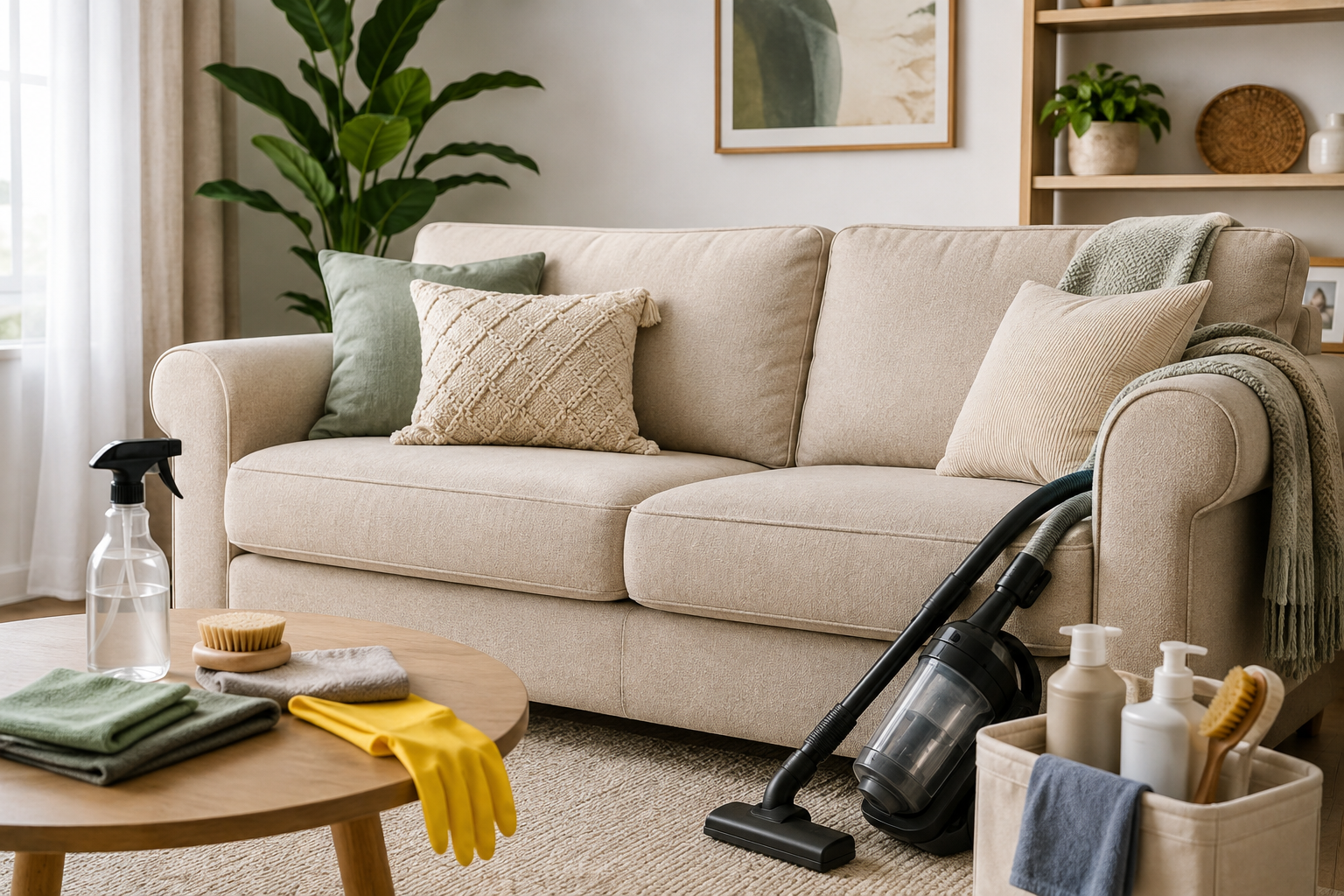
A sofa takes on more daily wear than almost any other piece of furniture in your home spills, dust, pet hair, and the simple friction of everyday use all add up over time. The good news is that most sofas don’t need complicated care, just the right routine applied consistently.
Clean and Maintain Your Sofa
Proper sofa care starts with checking your cleaning code (W, S, WS, or X) before using any product, vacuuming weekly to remove dust and debris, spot-treating spills immediately, and rotating cushions regularly to distribute wear. Leather sofas need different care than fabric mainly regular dusting and occasional conditioning rather than deep cleaning. Getting this routine right can meaningfully extend how long your sofa looks and feels new.
This guide walks through exactly how to clean, maintain, and protect your sofa whether it’s fabric, leather, or a performance material so it stays comfortable and presentable for years.
Why Sofa Care Matters More Than People Realize
A sofa is one of the most heavily used pieces of furniture in most homes, and neglecting basic care accelerates wear far more than people expect. Dust and debris that build up in the fibers can grind against the material every time someone sits down, while spills left untreated can set into permanent stains. Regular maintenance isn’t about being overly precious with your furniture — it’s about protecting a significant investment with a few simple, consistent habits.
Steps to Clean and Maintain Your Sofa
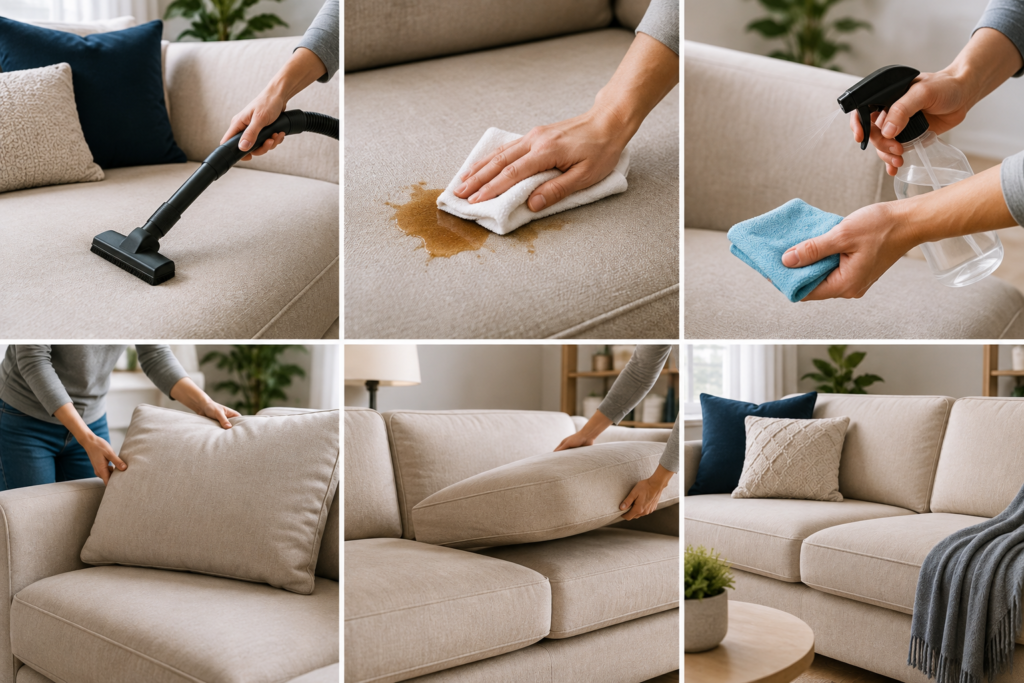
Step 1: Find and Understand Your Sofa’s Cleaning Code
Before cleaning any sofa, locate the cleaning code on the care tag usually found under a seat cushion, on a side seam, or on the underside of the frame. This single letter (or letter combination) tells you exactly which cleaning methods are safe for your specific fabric.
What Each Cleaning Code Means
| Code | Meaning | Safe Cleaning Method |
| W | Water-based cleaners | Mild soap and water solutions |
| S | Solvent-based cleaners only | Water-free dry-cleaning solvent — no water or steam |
| WS (or SW) | Water or solvent-based cleaners | Either method works; start with the gentlest option |
| X | Vacuum or brush only | No liquids of any kind — professional cleaning for stains |
Why this matters: Using the wrong cleaning method can cause water rings, shrinkage, dye bleeding, or permanent fiber damage. Ignoring the code is one of the most common and most avoidable sofa cleaning mistakes.
If you can’t find a cleaning code: Contact the manufacturer directly, or default to the gentlest possible approach (vacuuming and minimal spot testing) until you can confirm the correct method.
Step 2: Build a Regular Cleaning Routine
Most sofa damage happens gradually, through dust, debris, and minor spills that accumulate over time. A simple, consistent routine prevents most of this.
Weekly Maintenance
- Vacuum the entire surface using the upholstery attachment, moving in a circular or overlapping motion.
- Pay extra attention to seams, crevices, and under cushions, where crumbs, dust, and pet hair tend to collect.
- Fluff and reposition loose cushions to help maintain their shape.
Monthly Maintenance
- Rotate reversible cushions to distribute wear more evenly across the sofa.
- Check for any new stains or spots that may need spot treatment before they set further.
Every Few Months
- Deep clean per your fabric’s cleaning code, either with a DIY method (for W or WS codes) or professional service (for S or X codes).
- Condition leather if applicable, following manufacturer guidance.
Step 3: Clean Fabric Sofas the Right Way
Fabric sofas are more porous than leather, which means spills and stains can absorb deeper into the material if not addressed quickly.
General Fabric Cleaning Steps
- Vacuum first. Always remove loose dirt, crumbs, and dust before applying any liquid cleaner cleaning over debris can grind it further into the fibers.
- Mix a mild cleaning solution. For W or WS-coded fabrics, combine a small amount of mild dish soap or detergent with warm water.
- Test in a hidden spot first. Apply a small amount of the solution to an inconspicuous area and let it dry to confirm it won’t cause discoloration or damage.
- Blot, don’t rub. Dip a clean cloth into the solution, wring out excess moisture, and blot the affected area gently rubbing can push stains deeper or damage fibers.
- Let it air dry completely before replacing cushions or sitting on the treated area.
A Note on Steam Cleaners
Steam cleaning is generally safe only for fabrics labeled with a W or WS code. Never use steam on S or X-coded materials, since heat and moisture can cause shrinking, warping, or permanent damage.
Step 4: Care for Leather Sofas Differently
Leather requires a fundamentally different care approach than fabric mostly regular light maintenance rather than frequent deep cleaning.
Routine Leather Care
- Dry dust regularly using a clean, soft white cloth or a vacuum with a soft brush attachment.
- Avoid harsh cleaners and abrasive materials, which can damage the leather’s surface finish.
- Keep leather out of direct, prolonged sunlight, which can cause fading or drying over time.
Handling Spills and Stains on Leather
- Blot spills immediately with a clean, dry cloth don’t rub, which can spread the stain or damage the surface.
- For stubborn stains, gently blot with distilled water and a clean white cloth until the stain lifts.
- Avoid soaking the leather. Excess moisture can damage the material or cause it to dry out unevenly.
Conditioning
Depending on the leather type, occasional conditioning helps maintain flexibility and prevent cracking over time. Some natural leathers are designed to age gracefully without oiling or conditioning at all always check manufacturer guidance specific to your sofa’s leather type before applying any conditioning product.
Faux Leather Considerations
Before following genuine leather care steps, confirm whether your sofa is real leather or faux leather (vinyl or synthetic), since the two materials often require different cleaning products and methods.
Step 5: Tackle Common Stains the Right Way
Different stains call for slightly different approaches, though the core principles quick action and gentle blotting apply across most sofa materials.
General Stain-Removal Steps (for W or WS-coded fabric)
- Blot up excess liquid immediately with a clean, dry cloth.
- Mix a gentle cleaning solution — equal parts water and white vinegar works for many general stains, or mild soap and water for a softer approach.
- Apply the solution to a cloth, not directly to the fabric, and blot the stain gently.
- Repeat as needed, allowing the area to dry between attempts if the stain persists.
- Air dry completely before use.
When to Call a Professional
- The care tag shows an S or X code
- The stain is large, deep-set, or from a biological source (blood, urine)
- DIY attempts haven’t fully removed the stain after a couple of tries
- The sofa is leather and the stain hasn’t responded to gentle blotting
Professional upholstery cleaners have access to specialized tools and cleaning agents that can safely address tougher stains without risking damage to delicate materials.
Step 6: Protect Your Sofa From Future Wear
Beyond active cleaning, a few preventative habits go a long way toward keeping a sofa looking newer for longer.
- Use throws or slipcovers on high-traffic areas, especially arm rests and the most-used seat cushion, and choose ones that are machine washable for easy upkeep.
- Keep the sofa out of direct sunlight where possible, since prolonged UV exposure fades fabric and dries out leather.
- Apply a fabric protector if your cleaning code allows it, to add an extra layer of stain resistance.
- Rotate and flip reversible cushions regularly to prevent uneven wear from concentrated use in one spot.
- Trim pet nails regularly if you have pets that spend time on the sofa, reducing the risk of snags or scratches.
- Vacuum and dust consistently, since dust buildup accelerates fiber wear over time, even without visible stains.
Cleaning Approach by Material: Quick Reference
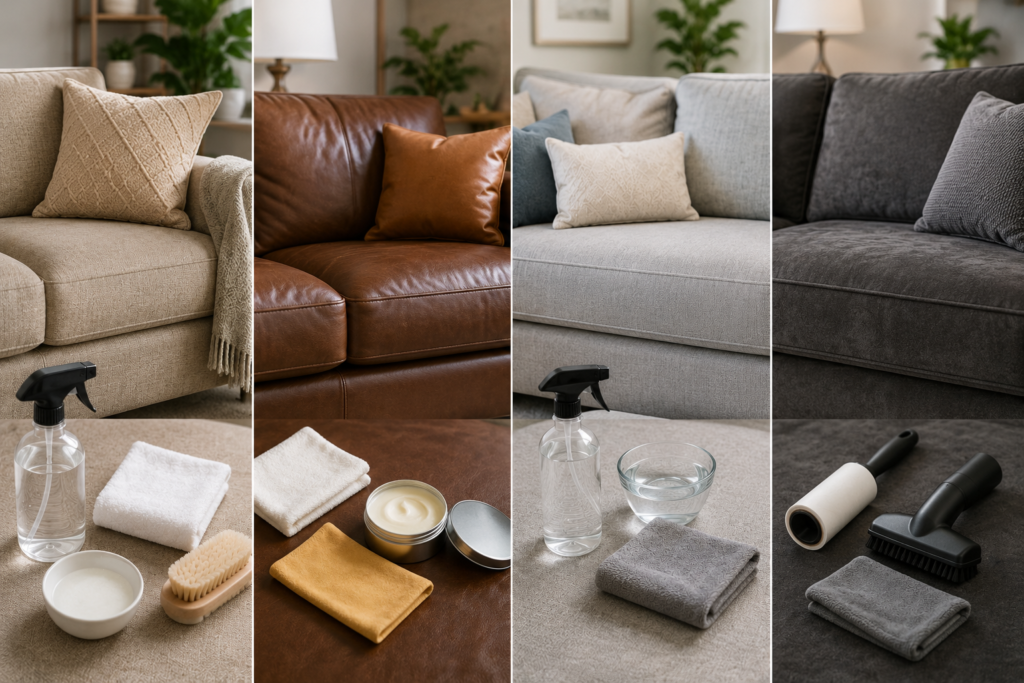
| Material | Routine Care | Spot Cleaning | Deep Cleaning |
| Fabric (W/WS code) | Weekly vacuum | Mild soap and water, blot | DIY or professional, per code |
| Fabric (S code) | Weekly vacuum | Solvent-based cleaner only, no water | Professional recommended |
| Fabric (X code) | Weekly vacuum | Vacuum/brush only, no liquids | Professional only |
| Leather | Regular dry dusting | Distilled water, blot gently | Manufacturer-recommended conditioner |
| Performance fabric | Weekly vacuum | Typically W or WS — check tag | Often more DIY-friendly, per code |
Common Sofa Cleaning Mistakes to Avoid
- Skipping the cleaning code. Using water on an S-coded fabric, or a solvent on a W-coded fabric, can cause lasting damage.
- Rubbing instead of blotting. Rubbing tends to spread stains and can damage fibers or leather finishes.
- Over-wetting the material. Excess moisture — on either fabric or leather — can cause water rings, warping, or mold growth if it doesn’t dry properly.
- Ignoring spills until later. Fresh stains are significantly easier to remove than ones that have had time to set.
- Using harsh or unverified cleaning products. Always spot test in a hidden area first, regardless of what the cleaning code allows.
- Neglecting regular vacuuming. Dust and debris buildup accelerates fiber wear even without visible spills or stains.
Practical Buying Advice for Easier Long-Term Care
If you’re currently shopping for a new sofa and maintenance simplicity matters to you, keep these factors in mind:
- Check the cleaning code before buying, not after — W and WS codes are generally the easiest for at-home care, while S and X codes typically require more professional maintenance.
- Consider performance fabrics if you want the look of standard fabric with easier, more forgiving cleaning requirements.
- Choose leather if low-maintenance, wipe-clean care is a priority, keeping in mind the different (but generally lighter) care routine it requires.
- Look for removable, washable cushion covers, which make deep cleaning significantly easier over the sofa’s lifetime.
- Ask about the cleaning code directly when shopping in-store, especially if kids or pets are part of your household.
Consistency Matters More Than Intensity
Caring for a sofa doesn’t require an elaborate routine it requires consistency. Vacuum regularly, address spills the moment they happen, and always check your cleaning code before applying any product, whether it’s fabric or leather. These small, repeated habits do far more for your sofa’s long-term appearance and comfort than occasional deep cleaning ever will.
Take a few minutes to locate your sofa’s care tag today if you haven’t already, and build these simple steps into your regular home routine. A little consistent care now will keep your sofa looking and feeling like new for years longer than neglect ever would.
FAQ
1- How often should I clean my sofa?
Vacuum weekly to prevent dust and debris buildup, spot-treat stains immediately when they happen, and plan for a deeper clean every few months depending on your sofa’s cleaning code and how heavily it’s used.
2- Can I use a steam cleaner on any sofa?
No — steam cleaning is generally only safe for fabrics labeled with a W or WS cleaning code. Using steam on S or X-coded materials can cause shrinking, warping, or permanent damage.
3- How do I know if my sofa is real or faux leather?
If you’re unsure, check the manufacturer’s product information or care tag, since faux leather (vinyl or synthetic) often requires different cleaning products than genuine leather. When in doubt, use the gentlest cleaning method and test in a hidden area first.
4- What should I do if I can’t find a cleaning code tag?
Contact the manufacturer directly for cleaning guidance. In the meantime, stick to vacuuming and minimal, well-tested spot cleaning rather than guessing which products are safe.
5- Is it safe to clean leather with water?
Light use of distilled water for blotting stubborn stains is generally acceptable for genuine leather, but excessive water should be avoided, since it can affect the leather’s finish. Always blot gently rather than rubbing or soaking the area.
6- Do performance fabrics really need less maintenance?
Generally, yes. Performance fabrics are specifically engineered for stain resistance and durability, which often makes at-home cleaning easier and more forgiving compared to standard fabric though checking the specific cleaning code is still important.