

A lawn that looks great in June but struggles by August, or bounces back slowly every spring, usually isn’t dealing with one big problem. It’s dealing with gaps in year-round care, small missed steps in a different season that quietly undermine everything else. Understanding how to keep your lawn healthy across all four seasons, not just during peak growing months, is what separates a lawn that’s consistently green from one that’s constantly playing catch-up.
This guide walks through a complete seasonal maintenance calendar, plus the underlying soil health, pest prevention, and weather-resilience habits that keep a lawn performing well no matter what time of year it is.
Keep Your Lawn Healthy Year-Round
Year-round lawn health comes down to four consistent priorities: building healthy soil as your foundation, adjusting your maintenance routine to match each season’s specific needs rather than using one approach all year, preventing problems (weeds, pests, disease) before they establish rather than treating them after the fact, and preparing your lawn in advance for weather extremes like drought or heavy winter conditions. Lawns that struggle typically aren’t missing one dramatic fix; they’re missing this ongoing seasonal rhythm.
Start With Soil Health, Not Grass Health
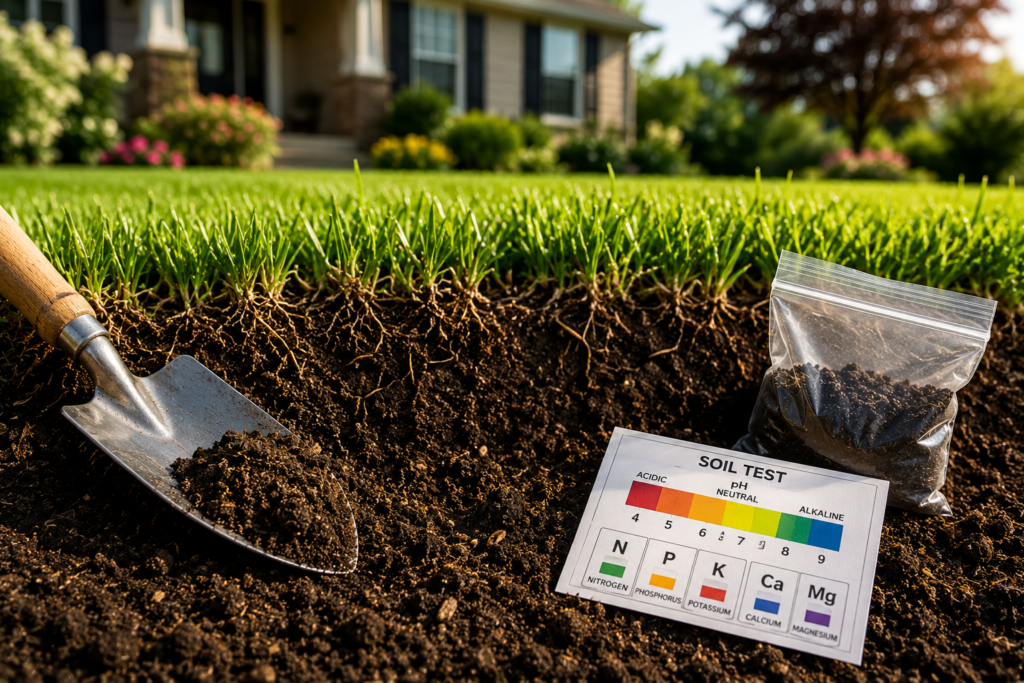
Why Soil Comes First
Grass is only as healthy as the soil supporting it. A lawn that receives perfect mowing and watering but sits on compacted, nutrient-poor, or improperly balanced soil will always struggle to reach its full potential, regardless of how much effort goes into surface-level care.
Get a Soil Test
A basic soil test, often available through your local agricultural extension office, reveals your soil’s pH and existing nutrient levels. Most grass types thrive in a slightly acidic to neutral pH range (roughly 6.0 to 7.0), and testing removes the guesswork from deciding what your lawn actually needs versus what a generic fertilizer bag assumes.
Address Compaction
Compacted soil restricts water, air, and nutrients from reaching grass roots effectively, and it’s one of the most common underlying causes of a thin or struggling lawn. Core aeration, removing small plugs of soil to relieve this pressure, should be part of your annual or biannual routine, particularly in high-traffic areas.
Build Organic Matter Over Time
Topdressing with a thin layer of compost after aeration gradually improves soil structure, water retention, and nutrient availability, creating a more resilient foundation for grass roots over multiple seasons.
The Year-Round Lawn Care Calendar
Spring: Wake-Up and Reset
Spring is about assessing winter damage and preparing your lawn for its primary growing season; timing varies depending on whether you have cool-season or warm-season grass.
- Rake away dead grass and debris left over from winter
- Apply pre-emergent herbicide before summer weeds like crabgrass germinate
- Begin regular mowing once grass actively resumes growth, avoiding cutting while soil is still soft from spring moisture
- For cool-season grasses, this is a key fertilizing window
- For warm-season grasses, spring is when you’ll begin regular fertilizing as active growth ramps up
Summer: Maintain and Protect
Summer maintenance focuses on protecting your lawn through heat and, in many regions, reduced rainfall.
- Water deeply but infrequently, roughly 1 to 1.5 inches per week including rainfall, rather than daily shallow watering
- Raise your mowing height slightly during peak summer heat, taller grass shades its own roots and retains moisture more effectively
- Watch for signs of heat or drought stress: grayish-blue tint, grass that doesn’t spring back after being walked on
- For warm-season grasses, summer is peak fertilizing season
- For cool-season grasses, minimize fertilizing during summer heat, since it can stress grass that’s already working to survive high temperatures
Fall: The Most Important Season for Cool-Season Lawns
For cool-season grasses specifically, fall is widely considered the single most impactful season for lawn care.
- This is the primary fertilizing window, timed with the grass’s natural active fall growth period
- Aerate and overseed thin or bare areas, taking advantage of cooler temperatures and typically more consistent rainfall
- Continue mowing until grass growth slows significantly, gradually lowering height slightly for the final mowing of the season
- Apply pre-emergent herbicide for winter weeds if applicable to your region
- For warm-season grasses, fall is when you’ll begin reducing fertilizing and mowing frequency as growth slows ahead of dormancy
Winter: Protect and Minimize Disturbance
Winter care is largely about protection and patience rather than active maintenance.
- Avoid walking on frosted or frozen grass, which can damage blades and create lasting bare or thin patches
- For cool-season lawns still actively growing in milder climates, continue light mowing as needed
- For warm-season lawns, dormancy and browning is entirely normal and doesn’t indicate a health problem
- Keep fallen leaves cleared regularly rather than left to smother grass underneath, which can lead to fungal issues developing under leaf cover
- Avoid unnecessary fertilizing or treatment during dormancy, when grass isn’t actively absorbing nutrients
Seasonal Calendar at a Glance
| Season | Cool-Season Grass Priority | Warm-Season Grass Priority |
| Spring | Pre-emergent herbicide, early fertilizing, resume mowing | Resume mowing, pre-emergent herbicide, begin fertilizing |
| Summer | Deep watering, minimal fertilizing, raise mowing height | Peak fertilizing, deep watering, active mowing |
| Fall | Primary fertilizing, aerate and overseed | Reduce fertilizing and mowing as growth slows |
| Winter | Minimal activity, clear fallen leaves | Dormancy is normal; minimal maintenance |
Preventing Pests and Disease Before They Take Hold
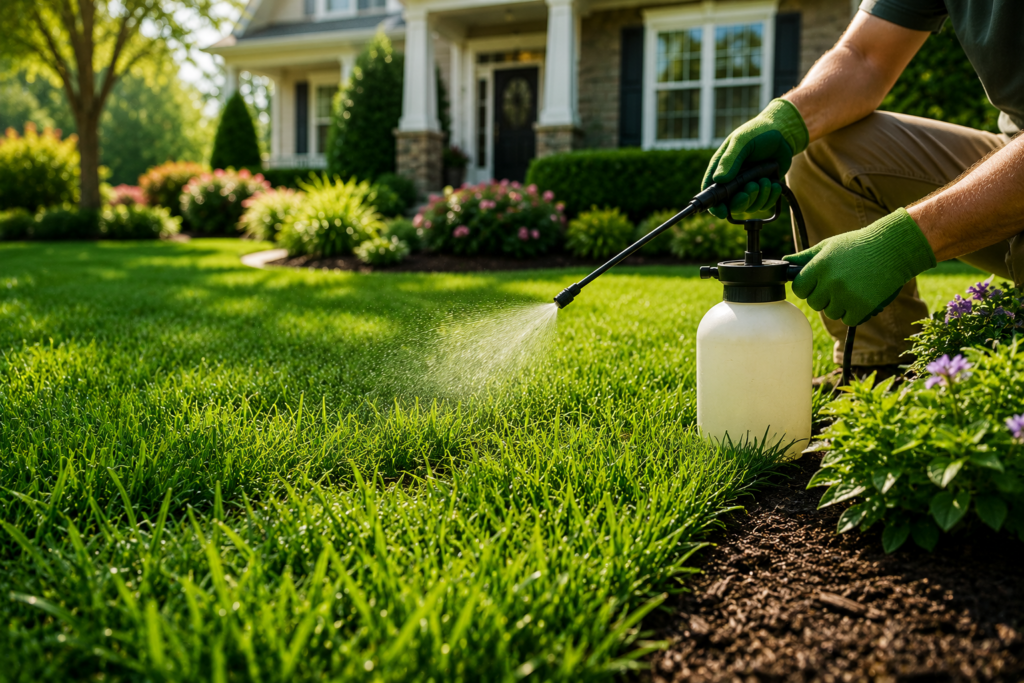
Why Prevention Beats Treatment
A dense, healthy lawn naturally resists pest and disease pressure far better than a stressed, thin one, since healthy turf leaves less bare soil and fewer weak spots for problems to establish. Most pest and disease prevention genuinely starts with the fundamentals: correct mowing height, proper watering timing, and appropriate fertilization, rather than reactive chemical treatment.
Common Lawn Pests to Watch For
Grubs (the larval stage of beetles) feed on grass roots underground, often producing irregular brown patches that lift easily like loose carpet. Chinch bugs cause similar yellowing or browning patches, particularly in hot, dry conditions, and are more common in certain warm-season grass types. Armyworms can cause rapid, visible damage in a short period, typically appearing as patches of grass eaten down to the soil.
Common Lawn Diseases to Watch For
Fungal diseases like brown patch, dollar spot, and rust typically develop in conditions of excess moisture, particularly when grass stays wet overnight due to late-day watering or poor drainage. Proper morning watering timing, allowing grass blades to dry before evening, remains one of the most effective preventive habits against fungal disease development.
When to Call a Professional
Persistent, spreading problems that don’t respond to basic corrective care, adjusted watering, appropriate mowing height, or a single targeted treatment are worth having assessed by a lawn care professional or your local agricultural extension office, since accurately identifying the specific pest or disease significantly affects which treatment will actually work.
Preparing Your Lawn for Weather Extremes
Drought Preparation
Deep, infrequent watering throughout the growing season builds deeper root systems that are naturally more drought-resistant than the shallow roots created by frequent, shallow watering. In regions prone to extended dry periods, choosing drought-tolerant grass varieties suited to your climate, where reseeding or overseeding is an option, can meaningfully reduce ongoing water stress.
Heat Stress Management
Raising your mowing height slightly during the hottest months allows grass blades to shade the soil and their own root systems more effectively, reducing moisture loss and heat stress compared to closely cut grass exposed to direct, intense sun.
Cold and Winter Protection
Avoiding foot traffic on frozen or frost-covered grass prevents blade damage that can leave lasting bare patches once growth resumes. In regions with heavy snow, avoid piling snow (particularly snow mixed with de-icing salt) directly onto lawn areas where possible, since concentrated salt exposure can damage grass and soil in that specific area.
Heavy Rain and Drainage
Lawns in areas prone to heavy or sustained rainfall benefit from good drainage planning, ensuring water doesn’t pool for extended periods, which can suffocate roots and create ideal conditions for fungal disease. Core aeration also helps here, improving water infiltration into compacted soil rather than allowing it to pool on the surface.
Building Sustainable, Consistent Habits
A Simple Weekly Routine During Growing Season
Rather than treating lawn care as a series of occasional big projects, most healthy lawns are the product of a consistent, low-effort weekly rhythm: mow as needed following the one-third rule, check for early signs of pest or disease issues, and monitor soil moisture to guide watering decisions.
A Simple Monthly Check-In
Once a month during the growing season, take a slower look at your lawn’s overall condition: any developing bare patches, weed pressure, or off-color areas that might benefit from early intervention before they spread further.
Annual Tasks Not to Skip
- Soil testing every one to three years
- Core aeration, particularly in high-traffic or compacted areas
- Overseeding thin or bare patches
- Blade sharpening for your mower, ideally once or twice per mowing season
Practical Buying Tips for Year-Round Lawn Care
- Invest in a basic soil test kit or use your local extension office’s testing service before choosing fertilizer products
- Choose a mower with adjustable height settings, since you’ll want to vary cutting height across seasons
- Keep a simple calendar or reminder system for seasonal tasks (fertilizing windows, aeration timing), since these are easy to forget outside their narrow effective windows
- Consider a rain gauge or simple soil moisture meter to make more informed watering decisions rather than watering on a fixed schedule regardless of actual conditions
Common Mistakes to Avoid
- Treating lawn care as a single-season activity, focusing effort only during spring or summer while neglecting fall and winter preparation
- Fertilizing at the wrong time for your grass type, wasting product and missing the periods when grass can actually use the nutrients effectively
- Watering on a fixed schedule regardless of actual conditions, rather than adjusting based on rainfall and visible signs of stress
- Ignoring soil health entirely, focusing only on surface-level mowing and watering while underlying compaction or nutrient deficiencies persist
- Reacting to pest and disease problems only after they’re clearly visible, rather than maintaining the preventive fundamentals that reduce their likelihood in the first place
Conclusion
Keeping a lawn genuinely healthy year-round comes down to building good soil health as your foundation, adjusting your care routine to match each season’s specific needs, and preventing problems early rather than scrambling to fix them once they’ve spread. There’s no single dramatic fix that replaces this ongoing seasonal rhythm, but consistency across all four seasons, not just the visibly active growing months, is what ultimately produces the kind of lawn that looks good and stays resilient, all year long.
Frequently Asked Questions
1- What is the single most important season for lawn care?
For cool-season grasses, fall is generally considered the most impactful season, since it aligns with the grass’s natural active growth period for fertilizing, aeration, and overseeding. For warm-season grasses, late spring through summer plays this role instead.
2- How often should I test my soil?
Every one to three years is generally sufficient for most home lawns, unless you’re addressing a specific persistent problem that warrants more frequent testing.
3- Why does my lawn struggle every summer even with regular watering?
This is often related to mowing height (cutting too short reduces the grass’s ability to shade its own roots) or watering technique (frequent, shallow watering creates weaker, more heat-vulnerable root systems) rather than watering frequency alone.
4- Is it normal for warm-season grass to turn brown in winter?
Yes, this dormancy is a completely normal seasonal response for warm-season grasses and doesn’t indicate poor lawn health, provided the grass returns to active growth as temperatures warm in spring.
5- How do I know if my lawn has a pest problem versus a disease problem?
Pest damage (like grubs) often shows irregular patches that lift easily from the soil, while disease-related damage tends to show more defined patterns or discoloration linked to moisture conditions. When uncertain, your local extension office can help with accurate identification.
6- Do I need to aerate my lawn every single year?
Not necessarily; most lawns benefit from aeration every one to three years, with more frequent aeration needed for high-traffic areas or lawns with heavy clay soil prone to compaction.
7- What’s the best way to prepare my lawn for drought conditions?
Consistent deep, infrequent watering throughout the growing season builds deeper, more drought-resistant root systems well before drought conditions actually arrive, making this a proactive habit rather than a reactive one.