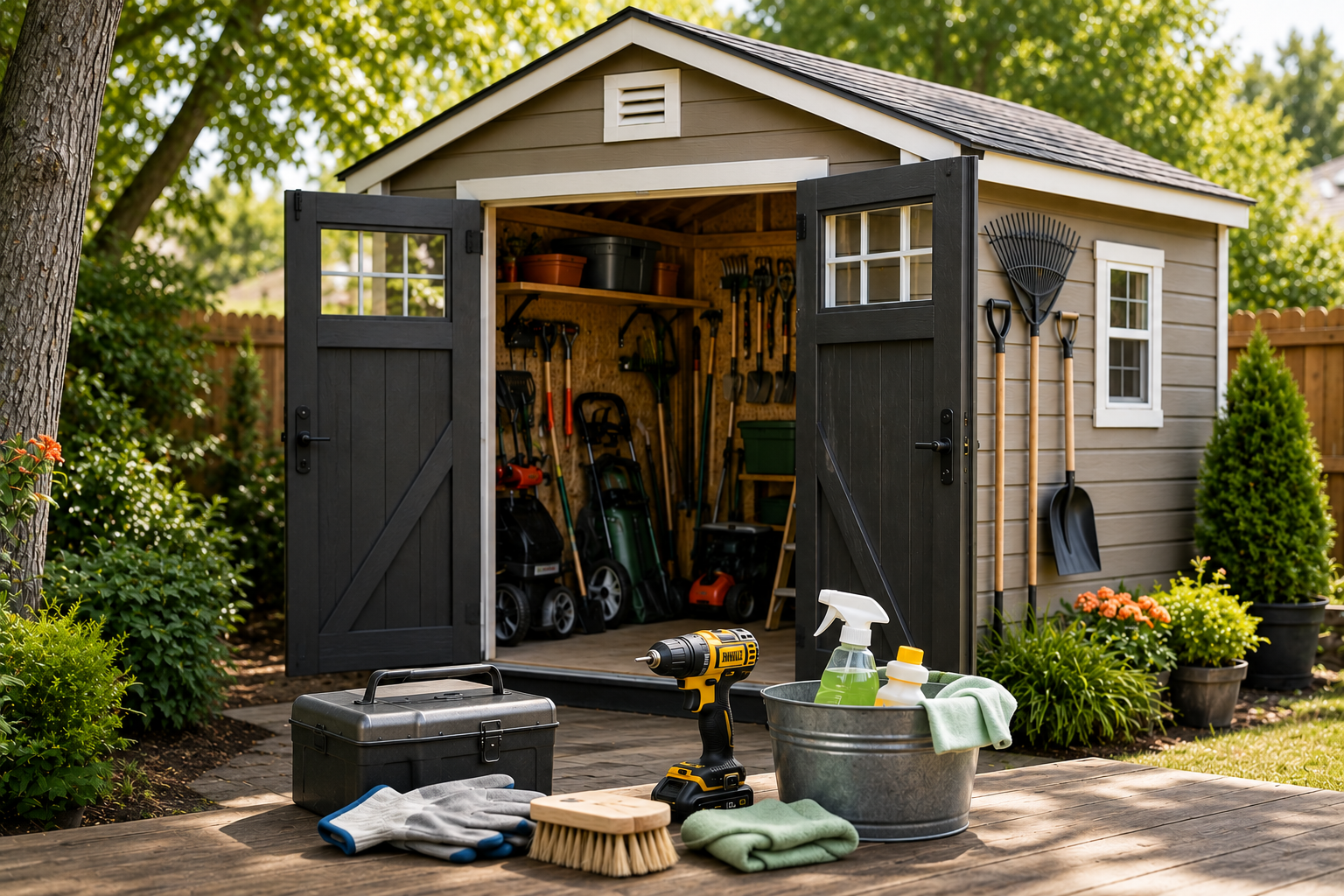
The best way to maintain your outdoor storage shed is to inspect it regularly, keep it clean and dry, check the roof and foundation, maintain ventilation, and repair small problems before they become expensive. Most homeowners can handle routine shed maintenance with a simple monthly and seasonal checklist.
An outdoor storage shed is a valuable addition to any home. It protects your lawn equipment, gardening tools, outdoor furniture, seasonal decorations, and countless other belongings from the elements. However, like any outdoor structure, a shed needs regular maintenance to stay in good condition.
Without proper care, small issues such as loose hardware, clogged gutters, water leaks, or poor ventilation can gradually turn into expensive repairs. Fortunately, maintaining a storage shed doesn’t require professional skills or expensive equipment. Most routine maintenance tasks take only a few minutes and can significantly extend the life of your investment.
Whether you own a wood, metal, or resin shed, a simple maintenance routine helps preserve its appearance, improve durability, and protect everything stored inside. By inspecting your shed regularly and addressing minor issues early, you can avoid larger structural problems while keeping your backyard neat and organized.
This guide explains how to maintain your outdoor storage shed throughout the year, covering cleaning, inspections, weather protection, repairs, and material-specific maintenance tips for every homeowner.
Why Shed Maintenance Matters
Routine maintenance does much more than improve appearance.
Proper care helps:
- Extend your shed’s lifespan
- Protect stored belongings
- Prevent expensive repairs
- Improve safety
- Reduce moisture problems
- Maintain curb appeal
- Preserve your investment
Ignoring maintenance often allows small problems to become much larger over time.
Create a Regular Maintenance Schedule
The easiest way to keep your shed in excellent condition is by following a simple maintenance schedule.
| Task | Recommended Frequency |
| Sweep interior | Monthly |
| Inspect roof | Every season |
| Clean exterior | Twice per year |
| Check doors and locks | Monthly |
| Inspect foundation | Twice per year |
| Clean vents | Every season |
| Remove debris | Monthly |
| Check for leaks | After heavy storms |
Following a routine prevents maintenance from becoming overwhelming.
Start with a Complete Inspection
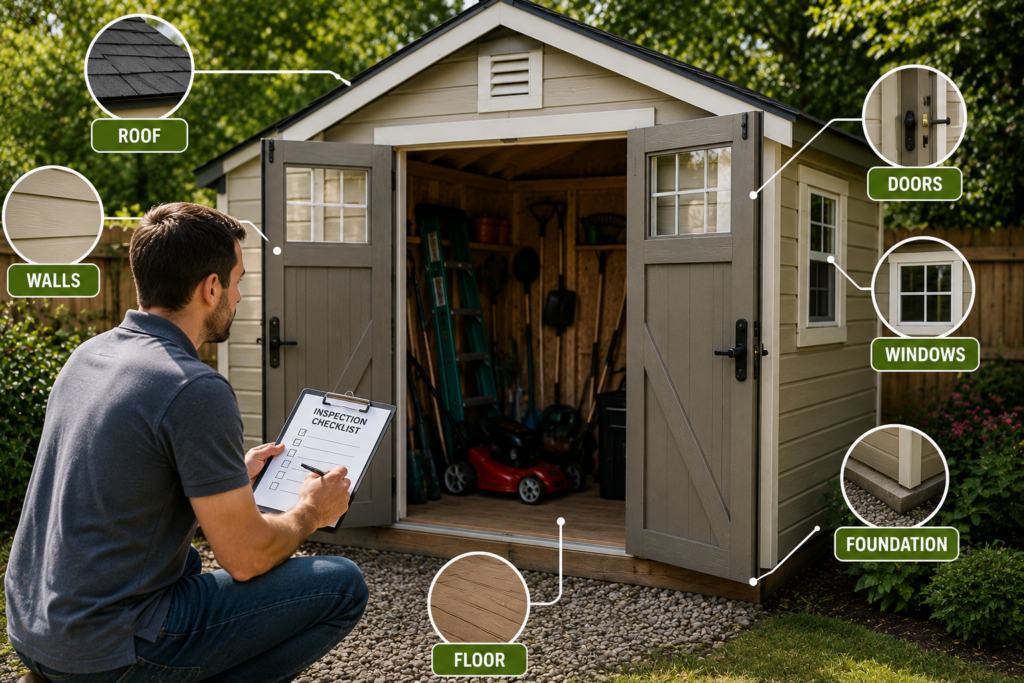
Before cleaning or making repairs, inspect the entire shed.
Look carefully at:
- Roof
- Walls
- Doors
- Windows
- Foundation
- Floor
- Hinges
- Locks
Finding problems early often means easier and less expensive repairs.
Keep the Interior Clean
A clean shed stays in better condition.
Regularly:
- Sweep dirt
- Remove leaves
- Dispose of trash
- Organize storage bins
- Return tools to their proper places
Clean floors also make it easier to notice leaks or pest activity.
Clean the Exterior
Outdoor sheds collect dirt, pollen, bird droppings, and mildew over time.
Wash exterior surfaces using:
- Mild soap
- Soft brush
- Garden hose
- Non-abrasive sponge
Avoid harsh chemicals unless recommended by the manufacturer.
Cleaning twice each year usually keeps the shed looking its best.
Remove Roof Debris
Leaves and branches often accumulate on shed roofs.
Regularly remove:
- Leaves
- Pine needles
- Small branches
- Dirt buildup
Excess debris traps moisture and may shorten the life of roofing materials.
Always use appropriate safety precautions when working around the roof.
Inspect the Roof for Damage
The roof provides your shed’s primary protection against weather.
Check for:
- Loose shingles
- Cracked panels
- Damaged flashing
- Missing fasteners
- Standing water
Repairing roof problems quickly helps prevent water damage inside the shed.
Check Doors and Windows
Doors should open and close smoothly.
Inspect:
- Hinges
- Handles
- Locks
- Weather stripping
- Door alignment
Lubricate moving parts as needed using products intended for outdoor hardware.
Properly functioning doors also improve security.
Keep Vents Clear
Ventilation plays an important role in preventing moisture buildup.
Inspect vents regularly to ensure they aren’t blocked by:
- Leaves
- Dirt
- Spider webs
- Bird nests
Good airflow reduces condensation and helps protect stored equipment.
Protect Against Moisture
Moisture is one of the most common causes of shed damage.
Reduce moisture by:
- Maintaining ventilation
- Repairing leaks promptly
- Keeping gutters clear
- Elevating stored items off the floor
- Avoiding wet equipment inside the shed
Dry storage conditions help prevent mold, mildew, rust, and wood deterioration.
Organize the Interior
Good organization makes maintenance easier.
Store similar items together.
For example:
Gardening Supplies
- Gloves
- Hand tools
- Fertilizer
- Seeds
Lawn Equipment
- Lawn mower
- Trimmer
- Leaf blower
Seasonal Items
- Holiday decorations
- Outdoor cushions
- Camping equipment
Organization improves airflow while making inspections easier.
Inspect the Foundation
A solid foundation supports the entire shed.
Look for signs of:
- Settling
- Cracks
- Standing water
- Uneven flooring
- Soil erosion
Addressing foundation problems early helps protect the entire structure.
Trim Nearby Vegetation
Trees and shrubs growing too close to the shed may create problems.
Trim back:
- Tree branches
- Bushes
- Climbing vines
- Tall grass
This improves airflow while reducing moisture and limiting pest access.
Prevent Pest Problems
Outdoor sheds naturally attract insects and small animals.
Regularly inspect for signs of:
- Rodents
- Termites
- Ants
- Wasps
- Carpenter bees
Seal small openings and keep food or bird seed stored in secure containers whenever possible.
Check Shelving and Storage Systems
Storage systems should remain stable throughout the year.
Inspect:
- Shelves
- Wall hooks
- Pegboards
- Tool racks
- Hanging storage
Tighten loose hardware before heavier items are returned to storage.
Inspect Security Features
Your shed protects valuable equipment.
Test:
- Door locks
- Padlocks
- Hinges
- Latches
Replace damaged hardware promptly to maintain security.
Material-Specific Maintenance
Different shed materials require different care.
Wood Sheds
Wood benefits from regular inspections and protective finishes.
Check for:
- Cracked paint
- Peeling stain
- Soft wood
- Insect activity
Repainting or resealing when necessary helps protect the wood from moisture and sunlight.
Metal Sheds
Metal sheds require relatively little maintenance.
Inspect for:
- Rust spots
- Scratches
- Loose screws
- Corrosion around fasteners
Repairing damaged finishes according to the manufacturer’s guidance helps reduce the risk of corrosion.
Resin Sheds
Resin sheds are among the easiest to maintain.
Routine care generally includes:
- Washing exterior surfaces
- Cleaning vents
- Inspecting hinges
- Tightening hardware
Unlike wood, resin does not require painting or sealing.
Seasonal Shed Maintenance Checklist
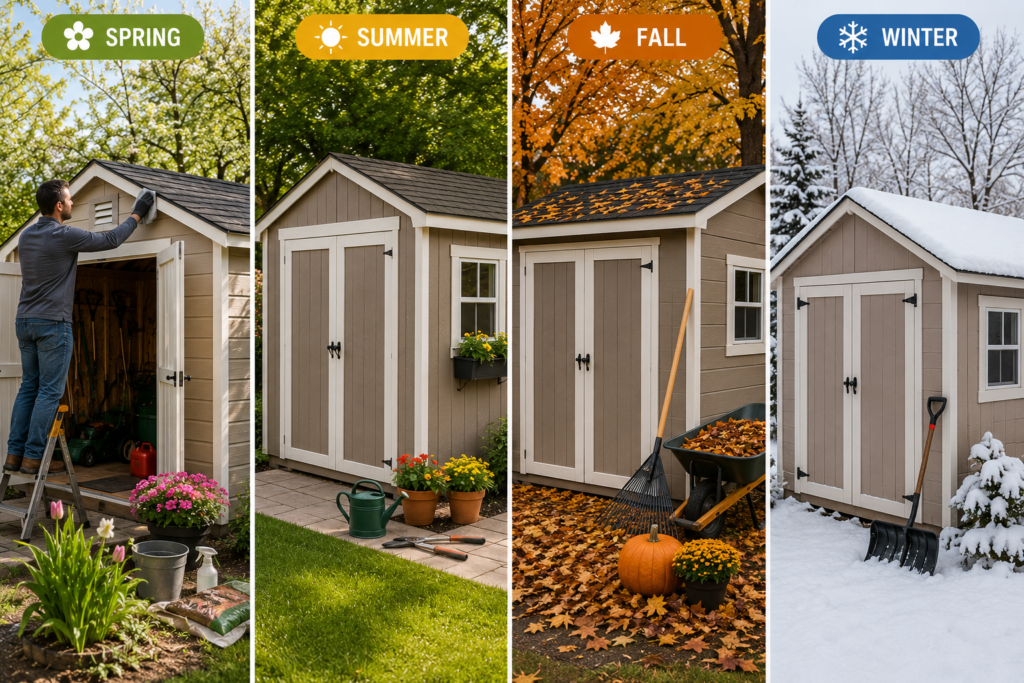
Weather changes throughout the year can affect your outdoor storage shed in different ways. Following a seasonal maintenance routine helps prevent problems before they become expensive repairs.
Spring
After winter, inspect your shed for damage caused by snow, ice, and moisture.
Complete these tasks:
- Wash the exterior with mild soap and water.
- Inspect the roof for loose shingles or panels.
- Check doors and windows for proper operation.
- Tighten loose screws and hinges.
- Sweep the interior thoroughly.
- Remove leaves and debris around the foundation.
- Inspect for signs of pests.
Spring is also a good time to reorganize gardening tools before the growing season begins.
Summer
Heat and strong sunlight can affect outdoor storage sheds.
Focus on:
- Checking ventilation.
- Cleaning windows and vents.
- Looking for UV damage.
- Inspecting weather stripping.
- Removing weeds growing around the shed.
If your shed becomes extremely hot, improving ventilation can help protect stored equipment and reduce moisture buildup.
Fall
Preparing your shed before winter is one of the most important maintenance tasks.
Complete these jobs:
- Remove leaves from the roof.
- Clean gutters if installed.
- Inspect the roof for leaks.
- Store summer equipment properly.
- Organize snow removal tools near the entrance.
- Trim nearby tree branches.
Fall maintenance reduces the risk of winter damage.
Winter
Cold temperatures require a few additional precautions.
Check for:
- Ice accumulation
- Snow buildup
- Frozen doors
- Water leaks
- Roof stress after heavy snowfall
If snow accumulates heavily on the roof, remove it carefully according to the manufacturer’s recommendations to reduce excess weight.
Protect Your Shed from Severe Weather
Storms, heavy rain, snow, and strong winds can shorten the life of any outdoor structure.
Before severe weather arrives:
- Secure loose outdoor items.
- Lock all doors and windows.
- Check roof fasteners.
- Remove tree branches that could fall.
- Inspect drainage around the foundation.
After the storm passes, perform another inspection to identify any new damage.
Improve Drainage Around the Shed
Standing water is one of the biggest threats to any storage shed.
Good drainage helps prevent:
- Rot
- Mold
- Foundation settling
- Water intrusion
To improve drainage:
- Keep gutters clear.
- Grade soil away from the shed.
- Remove leaves from drainage paths.
- Avoid storing wet items directly on the floor.
A properly drained site helps protect both the shed and everything stored inside.
Protect the Floor
The floor supports heavy equipment every day.
Help extend its life by:
- Sweeping regularly.
- Cleaning up spills immediately.
- Using rubber mats under heavy equipment.
- Avoiding dragging sharp tools across the surface.
If your shed has a wooden floor, inspect it periodically for signs of moisture damage.
Store Equipment Properly
Proper storage reduces wear on both your equipment and the shed itself.
Whenever possible:
- Hang long-handled tools.
- Store chemicals safely.
- Keep heavy equipment along the walls.
- Use shelving for smaller supplies.
- Avoid stacking heavy boxes too high.
An organized shed is easier to inspect and maintain.
Recommended Maintenance Supplies
Keeping a few basic supplies on hand makes regular maintenance much easier.
Useful items include:
| Maintenance Supply | Purpose |
| Soft brush | Exterior cleaning |
| Mild soap | Washing surfaces |
| Garden hose | Rinsing exterior |
| Microfiber cloths | Cleaning windows |
| Silicone lubricant | Hinges and locks |
| Work gloves | General maintenance |
| Ladder | Roof inspections |
| Flashlight | Interior inspections |
| Storage bins | Organization |
| Waterproof labels | Identifying stored items |
You don’t need specialized equipment for most maintenance tasks. Consistency is far more important than expensive tools.
Common Outdoor Shed Maintenance Mistakes
Avoid these common mistakes to keep your shed in excellent condition.
Ignoring Small Repairs
Loose hinges or a tiny roof leak may seem insignificant, but delaying repairs often leads to larger and more expensive problems.
Blocking Ventilation
Stacking storage bins in front of vents restricts airflow.
Poor ventilation increases moisture and can contribute to mold or rust.
Storing Wet Equipment
Putting away wet hoses, lawn equipment, or patio cushions introduces unnecessary moisture.
Allow items to dry before storing them.
Skipping Seasonal Inspections
Many homeowners only inspect their shed when something goes wrong.
Regular inspections allow you to identify problems before they worsen.
Neglecting Organization
A cluttered shed makes maintenance difficult.
Keeping tools organized allows you to inspect walls, floors, and roofing more easily.
Outdoor Storage Shed Maintenance Checklist
Use this checklist throughout the year to keep your shed in excellent condition.
- ✓ Sweep and organize the interior
- ✓ Wash exterior surfaces
- ✓ Remove leaves and roof debris
- ✓ Inspect the roof
- ✓ Check doors and locks
- ✓ Lubricate hinges
- ✓ Clean vents
- ✓ Inspect the foundation
- ✓ Trim nearby vegetation
- ✓ Look for pests
- ✓ Repair small problems promptly
- ✓ Store equipment properly
Completing these simple tasks regularly helps extend your shed’s lifespan while protecting everything inside.
Conclusion
Routine maintenance is the key to keeping your outdoor storage shed functional, attractive, and durable for years to come. Whether your shed is made of wood, metal, or resin, regular inspections, seasonal cleaning, proper organization, and timely repairs can prevent small issues from becoming costly structural problems. Taking a proactive approach also helps protect the valuable tools, equipment, and seasonal items stored inside.
You don’t need to spend hours maintaining your shed. A simple schedule of monthly inspections and seasonal maintenance is enough to preserve its appearance and performance. By keeping the roof clean, improving ventilation, managing moisture, and staying organized, you’ll enjoy a reliable storage space that continues to serve your home efficiently through every season. For more practical home improvement tips, explore Feel Home Better’s guides for homeowners
Frequently Asked Questions
1- How often should I clean my outdoor storage shed?
Sweeping the interior monthly and washing the exterior twice each year is sufficient for many homeowners. Additional cleaning may be needed after severe weather or heavy pollen seasons.
2- Do resin sheds require maintenance?
Yes, although much less than wood or metal sheds. Resin sheds benefit from periodic cleaning, hardware inspections, and keeping vents free of debris.
3- How can I prevent rust inside a metal shed?
Good ventilation, prompt repair of damaged finishes, and avoiding prolonged moisture exposure help reduce the risk of rust.
4- Should I repaint a wooden shed regularly?
Wood sheds may require repainting or resealing over time depending on the climate, exposure to sunlight, and the condition of the finish. Following the product manufacturer’s maintenance recommendations helps protect the wood.
5- What is the easiest shed material to maintain?
Resin sheds generally require the least maintenance because they resist rot, rust, insects, and weather-related deterioration while needing only occasional cleaning.