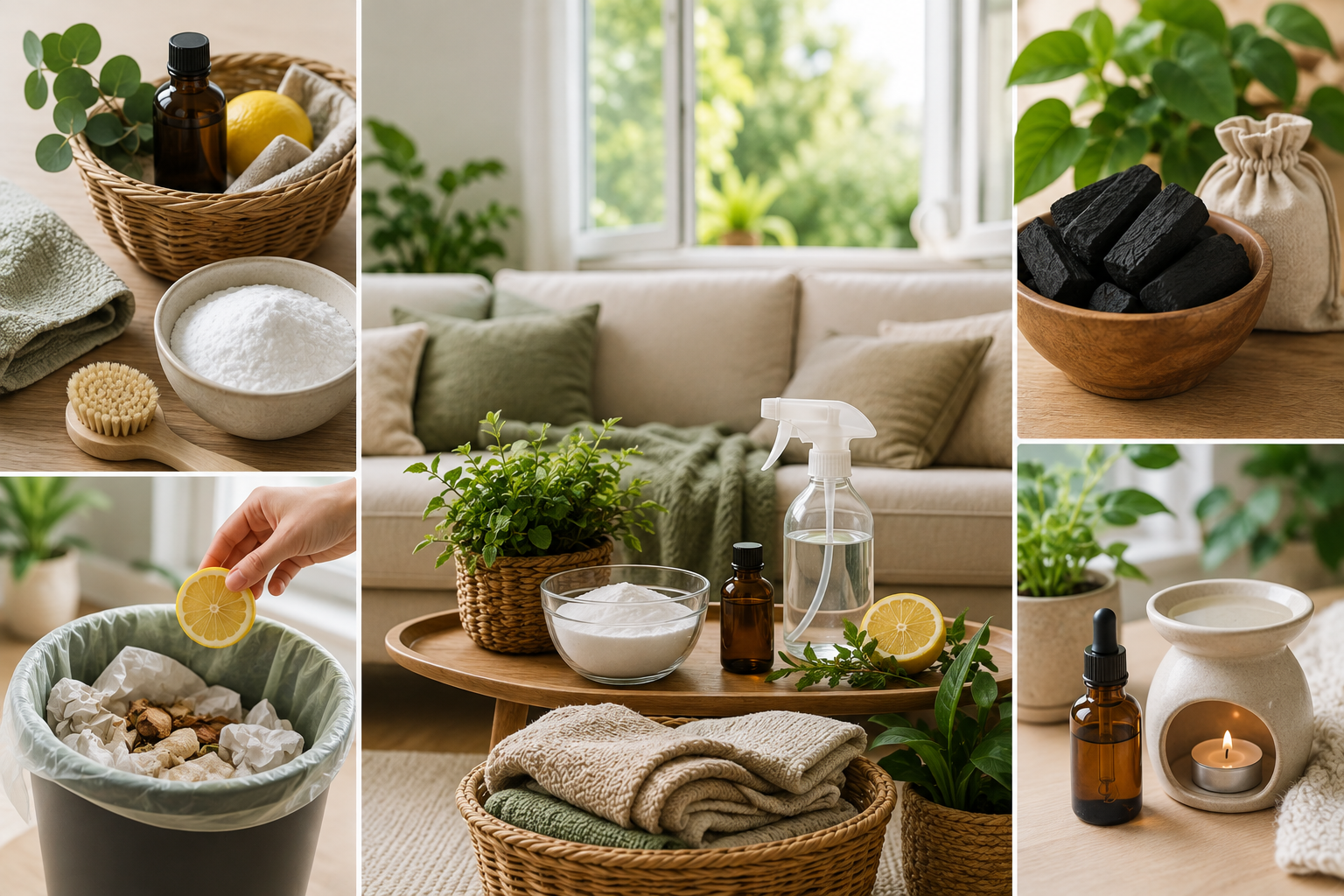
Reaching for a spray can the moment a room smells off feels like the fastest fix, but most store-bought air fresheners don’t actually eliminate odors, they just add a stronger scent on top of the problem, sometimes introducing dozens of undisclosed chemicals in the process. Learning how to make your home smell fresh naturally starts with a genuinely different mindset: address what’s actually causing the smell first, then use simple, inexpensive ingredients to neutralize what’s left, rather than masking odors with synthetic fragrance.
This guide walks through the real, science-backed natural methods that work, room by room troubleshooting for the most common odor sources, and simple DIY recipes using ingredients you likely already have in your kitchen.
Make Your Home Smell Fresh Naturally
The most effective approach to a naturally fresh home follows three steps in order: eliminate the actual source of the odor first (trash, dirty laundry, pet messes, spoiled food), ventilate the space to clear lingering particles, then use natural absorbers like baking soda, white vinegar, or activated charcoal to neutralize whatever odor molecules remain. Skipping straight to a spray or plug-in scent without addressing the source just layers a synthetic fragrance on top of the actual problem, and most conventional air fresheners can release well over 100 different volatile organic compounds into your home’s air in the process.
Start Here: Eliminate the Source Before You Try to Mask It
Why This Step Gets Skipped So Often
It’s tempting to reach straight for a spray the moment you notice a smell, but a naturally fresh home genuinely begins with cleanliness, you can’t permanently freshen a room while the actual source of the odor is still sitting there.
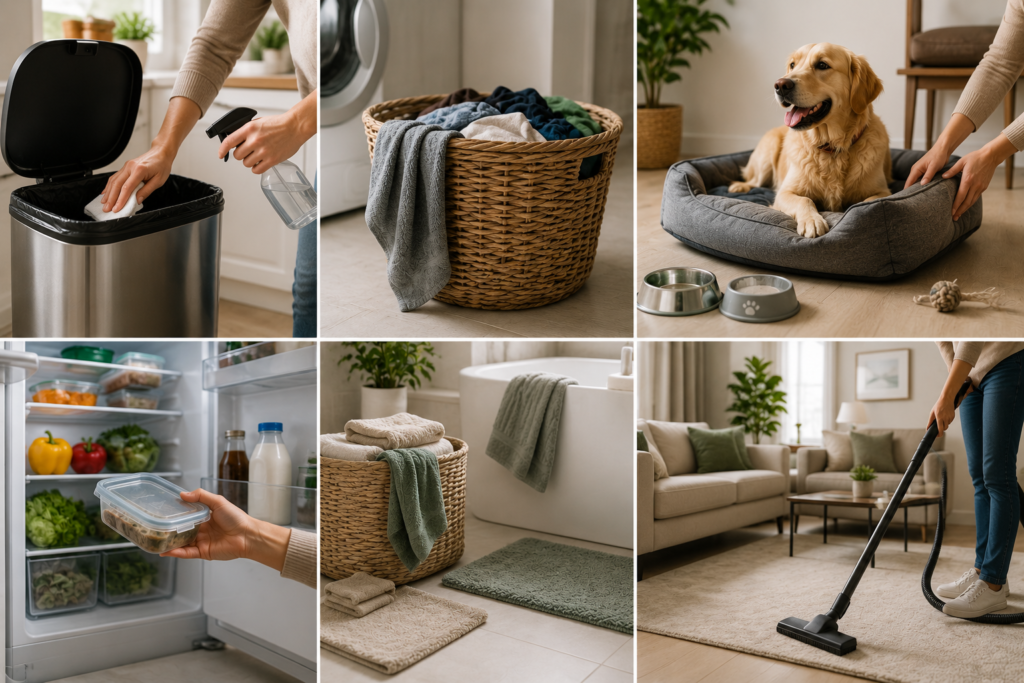
Common Odor Sources People Overlook
- Trash cans and recycling bins that haven’t been emptied or wiped down recently
- Dirty laundry hampers, especially damp gym clothes or towels
- Pet bedding, litter boxes, and food bowls
- Spoiled food hiding in the back of the refrigerator or pantry
- Damp bath mats, towels, or shower curtains harboring mildew
- Dust and grime trapped in carpets, upholstery, and curtains
The Habit That Fixes Most of This
Regularly wiping down trash cans, washing pet bedding at least monthly, and doing a quick weekly sweep for spoiled food or forgotten laundry addresses the majority of household odors before they ever have a chance to build up.
Ventilation: The Free Tool Most People Underuse
Why Fresh Air Beats Any Spray
Opening windows for genuine cross-ventilation, letting air flow in one side of a room and out the other, clears stale air and lingering odor particles more effectively than any air freshener, and it costs absolutely nothing.
Running Fans to Move Air Faster
Ceiling fans, box fans, or bathroom exhaust fans help circulate fresh air through a space more quickly, particularly useful in rooms without much natural cross-breeze.
What to Do When You Can’t Open Windows
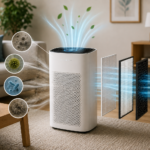
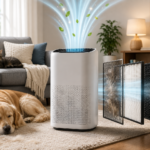
During extreme weather or in rooms without accessible windows, an air purifier or dehumidifier can still meaningfully improve air quality and reduce lingering odors, particularly useful for musty smells caused by excess humidity.
Your Natural Odor-Fighting Toolkit
Baking Soda: The Everyday Workhorse
Baking soda (sodium bicarbonate) is one of the most versatile natural deodorizers available, and it works by actually neutralizing odor molecules, both acidic and basic ones, rather than simply covering them up. Sprinkle it directly on carpets or upholstery, let it sit for at least 30 minutes (overnight for stronger odors), then vacuum thoroughly. An open box left in a closet, refrigerator, or trash can quietly absorbs odors over time, generally lasting about a month before it needs refreshing.
White Vinegar: The Odor Neutralizer
White vinegar is mildly acidic, which lets it react with and neutralize many alkaline odor compounds, the kind associated with smoke and certain cooking smells. Mix equal parts water and vinegar in a spray bottle for an all-purpose cleaning and deodorizing spray, or simply set out small bowls of vinegar in a room to passively absorb lingering smells overnight. The vinegar scent itself dissipates fully as it dries, so it won’t leave a lingering smell behind.
Activated Charcoal: The Absorption Specialist
Activated charcoal is highly effective at absorbing odors and impurities directly from the air, making it a strong option for enclosed spaces like closets, gym bags, or shoe cabinets where ventilation alone can’t fully solve the problem.
Essential Oils: For Genuine Scent, Used Sparingly
A few drops of a pure essential oil, lavender, citrus, or tea tree are common choices, can be added to a baking soda or vinegar mixture for a pleasant, natural scent alongside their odor-fighting properties. Because essential oils are highly concentrated, use them sparingly and with good ventilation, and avoid heavy use around pets or during pregnancy, since concentrated exposure can be irritating in enclosed spaces.
Natural Odor Eliminators at a Glance
| Ingredient | Best Use | How Long It Lasts |
| Baking soda | Carpets, closets, trash cans, refrigerator | About 30 days before refreshing |
| White vinegar | Kitchen surfaces, laundry, general odor absorption | Effective immediately; dissipates as it dries |
| Activated charcoal | Closets, shoes, gym bags, enclosed spaces | Several months, depending on odor intensity |
| Essential oils | Adding pleasant scent to DIY sprays and powders | Use sparingly per application |
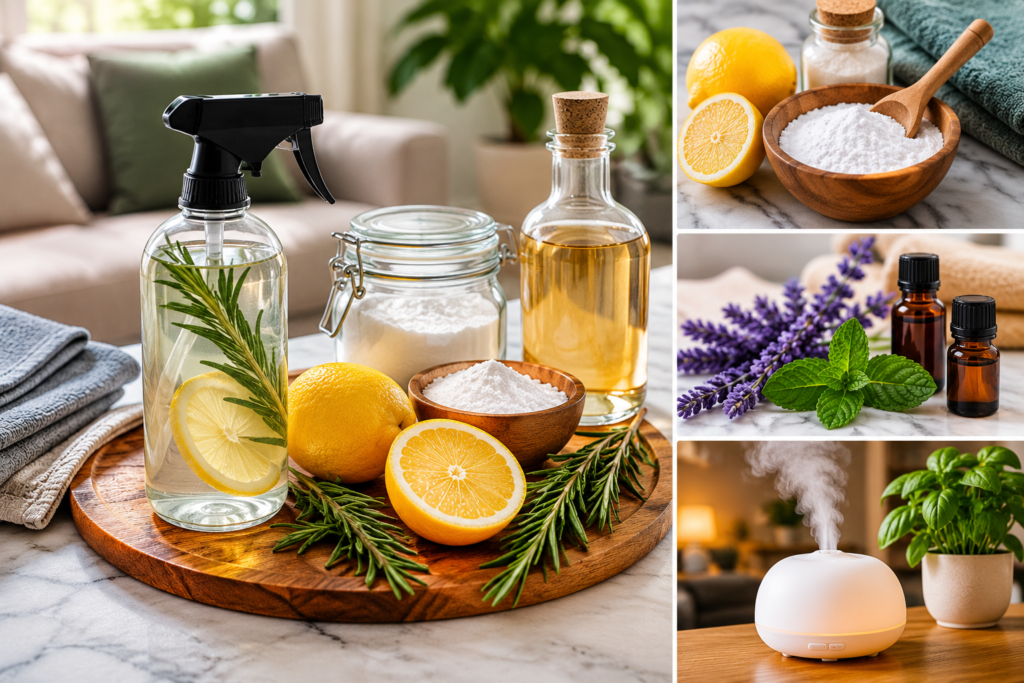
Simple DIY Recipes You Can Make Today
All-Purpose Deodorizing Powder
Mix about 20 drops of your favorite essential oil into half a cup of baking soda, blending thoroughly. Sprinkle on carpets or upholstery, let sit, then vacuum for a naturally scented, odor-neutralizing refresh.
Natural Spray Cleaner
Combine equal parts white vinegar and water in a spray bottle, adding roughly 5 drops of essential oil per cup of liquid. This works well on hard surfaces and as a light air freshening mist, just avoid spraying directly on delicate fabrics or finished wood without testing an inconspicuous spot first.
Stovetop Simmer Pot
Simmering water with citrus peels, cinnamon sticks, and a few cloves on the stove creates a genuinely pleasant, natural fragrance that fills a kitchen or open-plan living space, without introducing synthetic fragrance chemicals into the air. It’s worth noting this is a temporary ambiance booster rather than an actual air-purifying method.
DIY Reed Diffuser
A basic reed diffuser can be made at home using a neutral base like vodka or a light carrier oil combined with essential oils, poured into a narrow-necked container with reed sticks. This gives you a natural, ongoing scent without needing to purchase a pre-made kit.
Room-by-Room Natural Freshening Guide
Kitchen
Grinding citrus peels (cut into small pieces to avoid clogging) through the garbage disposal releases a clean, natural scent while helping clear buildup inside the disposal itself. Clean the disposal periodically with baking soda followed by a vinegar rinse, and wipe down trash cans regularly rather than just replacing the liner.
Bathroom
Moisture and waste make bathrooms particularly prone to odors. Clean surfaces regularly with a vinegar-water solution, keep a small bowl of baking soda near the toilet to passively absorb odors, and always run the exhaust fan (or open a window) during and after showers to control the humidity that contributes to musty smells.
Bedroom
Vacuum your mattress with an upholstery attachment to remove dust and trapped particles, then sprinkle it with baking soda, let it sit for at least an hour, and vacuum again. Wash pet bedding at least monthly, and consider limiting pet access to the bedroom if odors persist despite regular cleaning.
Living Room and Carpeted Areas
Sprinkle baking soda evenly over carpets and rugs, let sit for at least 30 minutes (longer for stubborn odors), then vacuum thoroughly. If smells persist afterward, a light vinegar-water mist, tested first on a hidden area to check for any fabric discoloration, can help finish the job.
Closets
Closets need airflow just as much as any other room, which is part of why louvered doors are so common, they keep air from going stale inside. Only store fully dry clothing, use breathable storage bins rather than sealed plastic containers, and avoid packing clothes too tightly so air can actually circulate. Odor-absorbing inserts or a small container of activated charcoal or baking soda can handle any residual smell, particularly in shoe storage.
Houseplants: A Living Addition to a Fresh Home
Certain houseplants, including fragrant options like jasmine or gardenia, can add a subtle, natural scent to a room while also contributing to general indoor air quality. While plants alone won’t neutralize a strong existing odor, they’re a genuinely pleasant, low-maintenance addition to an overall natural freshening routine.
Why Skipping Synthetic Air Fresheners Is Worth Considering
What’s Actually in Conventional Air Fresheners
Many traditional aerosol and plug-in air fresheners contain a wide range of undisclosed chemical compounds designed to attach to dust and continuously recirculate through your home’s air. Independent testing has found that some conventional air freshener products emit more than 100 distinct volatile organic compounds, and certain products have been found to generate compounds of genuine health concern.
“Natural” Labels Aren’t Always a Guarantee
Even products marketed as “natural” or “green” can still emit VOCs or other chemicals not disclosed on the label, so it’s worth being cautious of marketing language and prioritizing genuinely simple, transparent ingredients, baking soda, vinegar, pure essential oils, over commercial products making vague natural claims.
Common Mistakes to Avoid
- Masking odors with spray instead of addressing the actual source, like a full trash can or dirty laundry hamper
- Overusing essential oils in enclosed spaces, risking irritation, particularly for pets or anyone sensitive to strong scents
- Skipping ventilation because it seems too simple to work, when opening windows genuinely outperforms most sprays for actually clearing odor
- Forgetting to refresh baking soda regularly, since it loses its odor-absorbing effectiveness after roughly a month
- Assuming “natural” labeled commercial products are automatically free of synthetic chemicals, without checking actual ingredient transparency
Conclusion
Learning how to make your home smell fresh naturally comes down to a simple sequence: eliminate the actual source of any odor first, let genuine ventilation do the heavy lifting, and finish with natural absorbers like baking soda, vinegar, or activated charcoal rather than reaching for a synthetic spray. These inexpensive, genuinely effective methods work with your home’s air rather than layering artificial fragrance on top of an unresolved problem, and building them into a regular routine means you’ll spend far less time chasing odors and far more time simply enjoying a home that smells clean because it actually is.
Frequently Asked Questions
1- What naturally absorbs bad smells in a room?
Baking soda, white vinegar, and activated charcoal are among the most effective natural odor absorbers, working by actually neutralizing odor molecules rather than simply covering them with a stronger scent.
2- How can I make my house smell good without air fresheners?
Start by eliminating odor sources (trash, laundry, pet areas), ventilate with open windows or fans, then use natural methods like baking soda, a vinegar-water spray, or a simmering pot of citrus and spices for pleasant, chemical-free scent.
3- Is it bad to use synthetic air fresheners regularly?
Many conventional air fresheners release a significant number of volatile organic compounds into indoor air, and some have been found to generate compounds of genuine health concern, worth considering if you’re regularly using them throughout your home.
4- How often should I refresh baking soda used as an odor absorber?
Roughly every 30 days, since baking soda’s odor-absorbing effectiveness diminishes over time, particularly with exposure to moisture or stronger, more concentrated odors.
5- Can houseplants actually make a room smell better?
Fragrant plants like jasmine or gardenia can add a subtle, pleasant natural scent and support general indoor air quality, though they won’t neutralize a strong existing odor on their own.
6- Is boiling lemons actually good for air quality?
Boiling citrus creates a pleasant, temporary fragrance in the room, but it doesn’t have a genuine air-purifying effect, proper ventilation and odor-source elimination remain more effective for actually improving air quality.
7- Are essential oils safe to use around pets?
Use them sparingly and with good ventilation, since essential oils are highly concentrated and can be irritating to pets in enclosed spaces. If you have pets, research specific oils carefully or consult your veterinarian before regular use.