When a pipe bursts or a supply line fails, the difference between a minor cleanup and thousands of dollars in water damage often comes down to how quickly you can act. Knowing exactly how to shut off water to your house, before you’re standing in an inch of water at 11pm, is one of the single most valuable pieces of homeownership knowledge you can have.
This guide covers every type of shutoff valve you might encounter, where to find them based on your specific home type, and step-by-step instructions for shutting off water quickly during an actual emergency.
How to Shut Off Your Home’s Water Supply
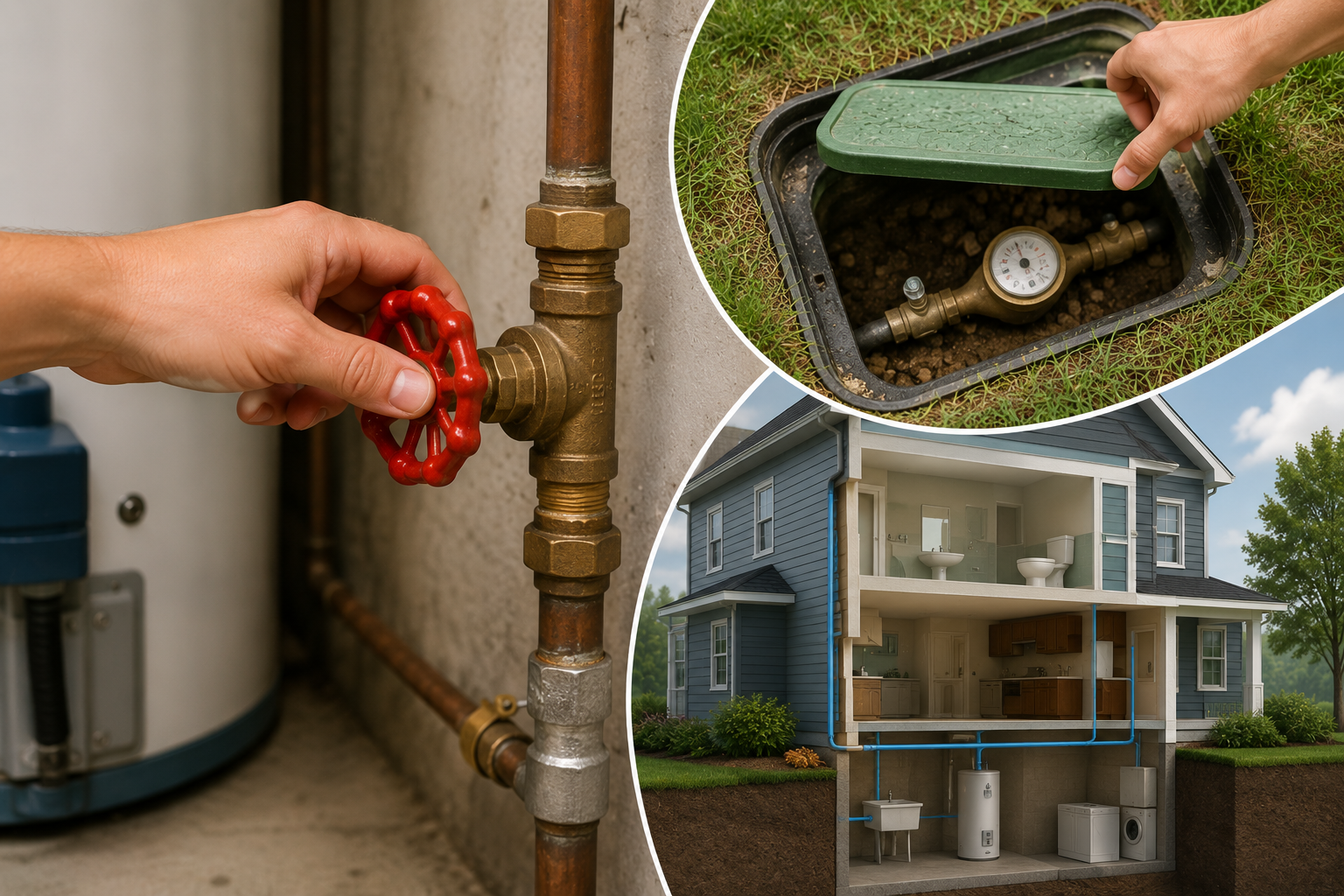
Every home has a main water shutoff valve, typically located where the water line enters the house, often in a basement, crawl space, utility closet, or near the water heater. To shut it off, turn a gate valve clockwise through several rotations until it stops, or turn a ball valve’s lever a quarter turn until it sits perpendicular to the pipe. If you can’t locate your interior shutoff or it’s not working, your home’s exterior curb valve, controlled by a street-level water meter box, serves as a backup, though this typically requires a special tool and is generally used only when the interior valve fails.
Why Knowing This Matters Before an Emergency
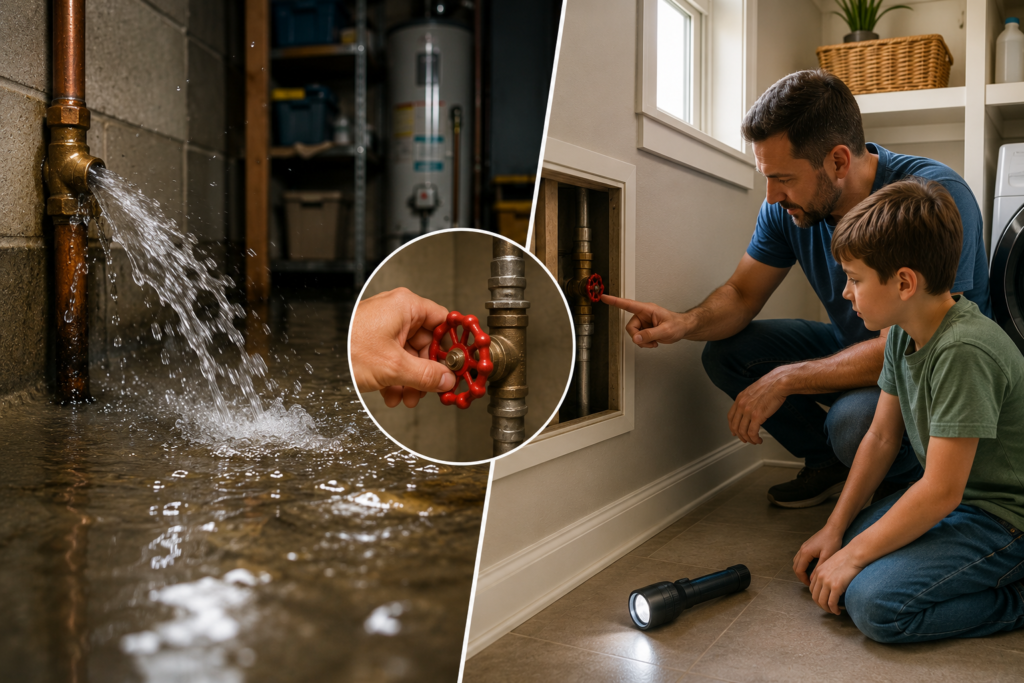
Every Minute Counts During a Leak
A burst pipe or failed supply line can release a significant volume of water in a short period, and the damage compounds the longer water continues flowing. Knowing your shutoff location instantly, rather than searching for it while water is actively spreading, can meaningfully limit the extent of damage to floors, walls, and belongings.
Not Every Household Member Knows This
It’s worth ensuring more than one person in your household knows the shutoff location and how to operate it, since you may not be the one home when an emergency happens.
Types of Water Shutoff Valves
Gate Valves
Older homes commonly use gate valves, recognizable by their round, wheel-like handle. These require several full rotations to close completely, and because they use a flat gate that slides down to block water flow, they can become stiff, corroded, or difficult to turn if not operated periodically over the years.
Ball Valves
Newer homes typically use ball valves instead, featuring a lever-style handle that shuts off water with a simple quarter turn. When the lever sits parallel to the pipe, water flows freely; when turned perpendicular to the pipe, water is fully shut off. Ball valves are generally more reliable and faster to operate than gate valves.
Identifying Which Type You Have
| Valve Type | Handle Style | How to Close | Common In |
| Gate valve | Round wheel handle | Turn clockwise, multiple rotations | Older homes |
| Ball valve | Lever handle | Quarter turn, perpendicular to pipe | Newer homes |
Where to Find Your Main Water Shutoff Valve
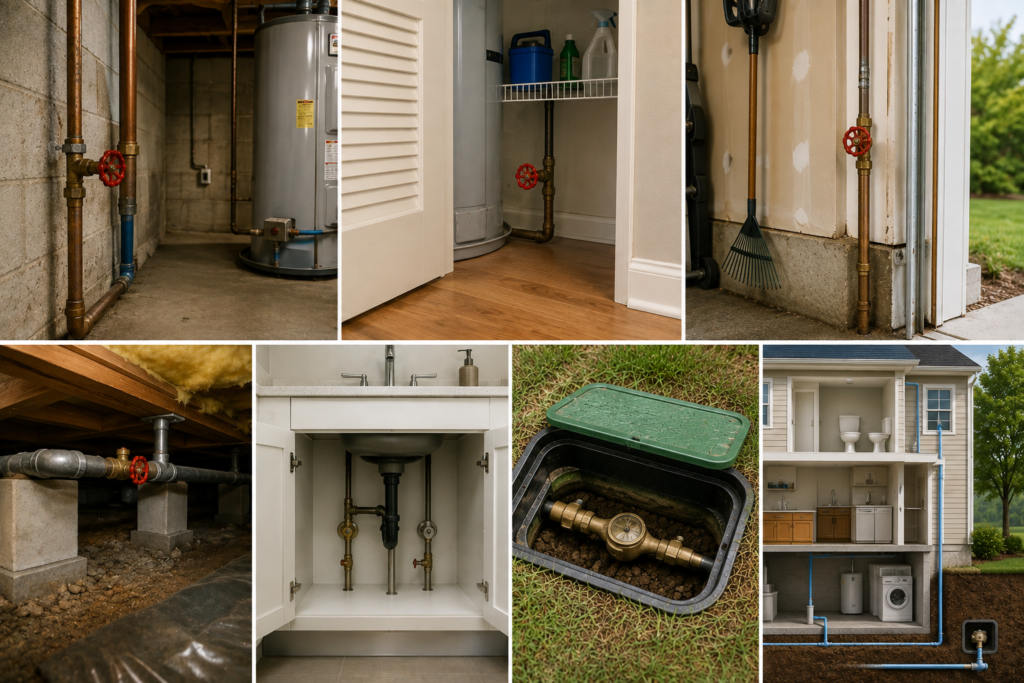
Homes With Basements
In homes with a basement, the main shutoff valve is typically located along the wall closest to the street, where the water supply line first enters the house, often near the water heater or a utility sink.
Homes on a Slab Foundation
Water Shutoff for Slab Homes can be trickier to locate, since there’s no basement to house the valve near an obvious entry point. Common locations include a utility closet, garage wall, or occasionally an exterior wall box near where the water line enters the home. In some slab homes, the primary accessible shutoff may actually be the exterior curb valve rather than an easily reached interior valve.
Homes With a Crawl Space
Similar to basement homes, the shutoff valve is often located near where the water line enters the crawl space, though accessing it may require more effort given the confined space typical of crawl spaces.
Condos and Apartments
In multi-unit buildings, individual units sometimes have their own shutoff valve, often located under a kitchen or bathroom sink, or in a utility closet within the unit. However, many condos and apartments rely on a shared building shutoff controlled by property management or a building superintendent, worth confirming directly with your building management if you’re unsure.
Homes With Well Water
For homes on a private well system rather than municipal water, the “main shutoff” is typically located near the pressure tank or well pump, rather than at a point where a municipal line enters the house. Shutting off power to the well pump, in addition to the shutoff valve itself, is often part of a complete emergency shutdown for well-based systems.
The Exterior Curb Valve: Your Backup Option
What It Is
Beyond your home’s interior shutoff, most municipal water systems include an exterior curb valve (sometimes called a curb stop), typically located near the property line in a small underground box, often near the sidewalk or street.
When You’d Use It
This backup shutoff becomes relevant if your interior main valve is broken, seized, or otherwise inaccessible during an emergency, or if the leak or break is actually located between the curb valve and your home’s interior shutoff.
How to Access It
Curb valves generally require a specific tool, often called a curb key or water meter key, to operate, since they’re recessed underground and not designed for routine, everyday use. Some homeowners keep one of these tools on hand specifically for emergency situations; otherwise, your local water utility can typically dispatch someone to operate it if needed.
Step-by-Step: How to Shut Off Water to Your House
For a Ball Valve
- Locate your main shutoff valve.
- Turn the lever handle a quarter turn until it sits perpendicular to the pipe.
- Open a faucet somewhere in your home to confirm water flow has stopped and to relieve pressure in the lines.
For a Gate Valve
- Locate your main shutoff valve.
- Turn the wheel handle clockwise, continuing until it stops turning (this may take several full rotations).
- Avoid forcing the valve if it feels stuck or seized, excessive force can damage older valves; instead, use the exterior curb valve as a backup if the interior valve won’t budge.
- Open a faucet to confirm water flow has stopped.
Shutting Off Water to a Single Fixture (Instead of the Whole House)
When This Makes More Sense
If the problem is isolated to a specific fixture, a leaking toilet supply line or a dripping faucet, shutting off that fixture’s individual valve is often more practical than cutting water to your entire home, letting the rest of your household continue using water normally while you address the specific issue.
Where to Find Fixture Shutoff Valves
Toilets typically have a small oval or round shutoff handle on the supply line behind or beside the base of the toilet. Sinks generally have shutoff valves in the cabinet beneath, on the supply lines leading up to the faucet. Washing machines usually have dedicated shutoff valves, often behind the machine itself, worth turning off between uses in older installations prone to hose failure.
Emergency Water Shutoff: What to Do in Different Scenarios
Burst or Leaking Pipe
Shut off your main water valve immediately, then open a faucet to drain remaining pressure from the lines. Contact a licensed plumber for the actual repair, since a burst pipe generally indicates a deeper issue that needs professional assessment and fixing.
Overflowing Toilet
Shut off the toilet’s individual supply valve first, this is faster than locating your home’s main shutoff and stops the immediate problem without affecting water access elsewhere in your home.
Water Heater Leak
Shut off the water heater’s dedicated shutoff valve, typically on the cold water supply line leading into the unit, and if the unit is gas-powered, also shut off the gas supply to the heater as a safety precaution before contacting a professional.
Washing Machine Hose Failure
Shut off the washing machine’s dedicated shutoff valves if you can access them quickly; if not, or if the leak is substantial, shutting off your home’s main valve is a reasonable immediate response while you assess the situation.
Uncertain Source of a Leak
If you can hear or see water but can’t immediately identify the source, shutting off your main water valve is the safest first step, buying you time to investigate further without ongoing water damage accumulating.
Preparing Your Home Before an Emergency
Test Your Main Shutoff Valve Periodically
Turn your main shutoff valve fully closed and then reopen it once or twice a year to confirm it turns smoothly and hasn’t seized from lack of use, discovering a stuck valve during an actual emergency is far worse than finding out ahead of time.
Label Your Shutoff Valves
Consider labeling your main shutoff and any individual fixture shutoffs clearly, particularly helpful for other household members, guests, or house sitters who may need to respond to a plumbing emergency in your absence.
Keep a Water Meter Key on Hand
If your home relies on an exterior curb valve as a meaningful backup option, keeping the specific tool needed to operate it, generally inexpensive and available at most hardware stores, ensures you’re not scrambling to find one during an actual emergency.
Share the Information With Your Household
Make sure other adults and older children in your household know both the location of the main shutoff and how to operate it, since you may not always be the one present when an emergency occurs.
Common Mistakes to Avoid
- Not knowing your shutoff valve location until an emergency happens, wasting critical time while water damage accumulates
- Forcing a stuck gate valve, risking damage to an already aging or corroded valve rather than using the exterior curb valve as a backup
- Assuming a condo or apartment shutoff works the same as a single-family home, when many multi-unit buildings rely on a shared building shutoff instead
- Never testing your main valve, only discovering it’s seized or difficult to operate during an actual crisis
- Shutting off the entire house for a single-fixture problem, when the individual fixture’s shutoff valve would resolve the issue more efficiently
Conclusion
Knowing exactly how to shut off water to your house, before you’re facing an actual emergency, is one of the simplest and most valuable pieces of preparation any homeowner can do. Take a few minutes to locate your main shutoff valve, identify whether it’s a gate or ball valve, test it periodically to confirm it works smoothly, and make sure other members of your household know this information too. That small amount of preparation can mean the difference between a quick, contained incident and a genuinely costly plumbing disaster.
Frequently Asked Questions
1- Where is the main water shutoff valve usually located?
It’s typically located where the main water line enters your home, often in a basement, crawl space, utility closet, or near the water heater, though slab homes and condos sometimes have less obvious locations.
2- How do I know if I have a gate valve or a ball valve?
Gate valves have a round, wheel-style handle requiring several rotations to close, while ball valves have a lever handle that shuts off water with a simple quarter turn.
3- What do I do if my main shutoff valve won’t turn?
Avoid forcing it, since this can damage an already stiff or corroded valve. Instead, use your home’s exterior curb valve as a backup, generally requiring a specific tool called a curb key or water meter key.
4- Can I shut off water to just one fixture instead of my whole house?
Yes, most toilets, sinks, and washing machines have individual shutoff valves, letting you stop water to that specific fixture without affecting the rest of your home’s water supply.
5- How do I shut off water in a condo or apartment?
Check under sinks or in utility closets for an individual unit shutoff valve first. If you can’t locate one, many multi-unit buildings rely on a shared building shutoff controlled by property management, worth confirming directly with your building.
6- What is a curb valve, and when would I use it?
A curb valve (or curb stop) is an exterior shutoff typically located near the property line in an underground box, used as a backup when your interior main shutoff is broken, seized, or inaccessible during an emergency.
7- How often should I test my main water shutoff valve?
Testing it once or twice a year, turning it fully closed and then reopening it, helps confirm it hasn’t seized and will actually function properly when you genuinely need it during an emergency.