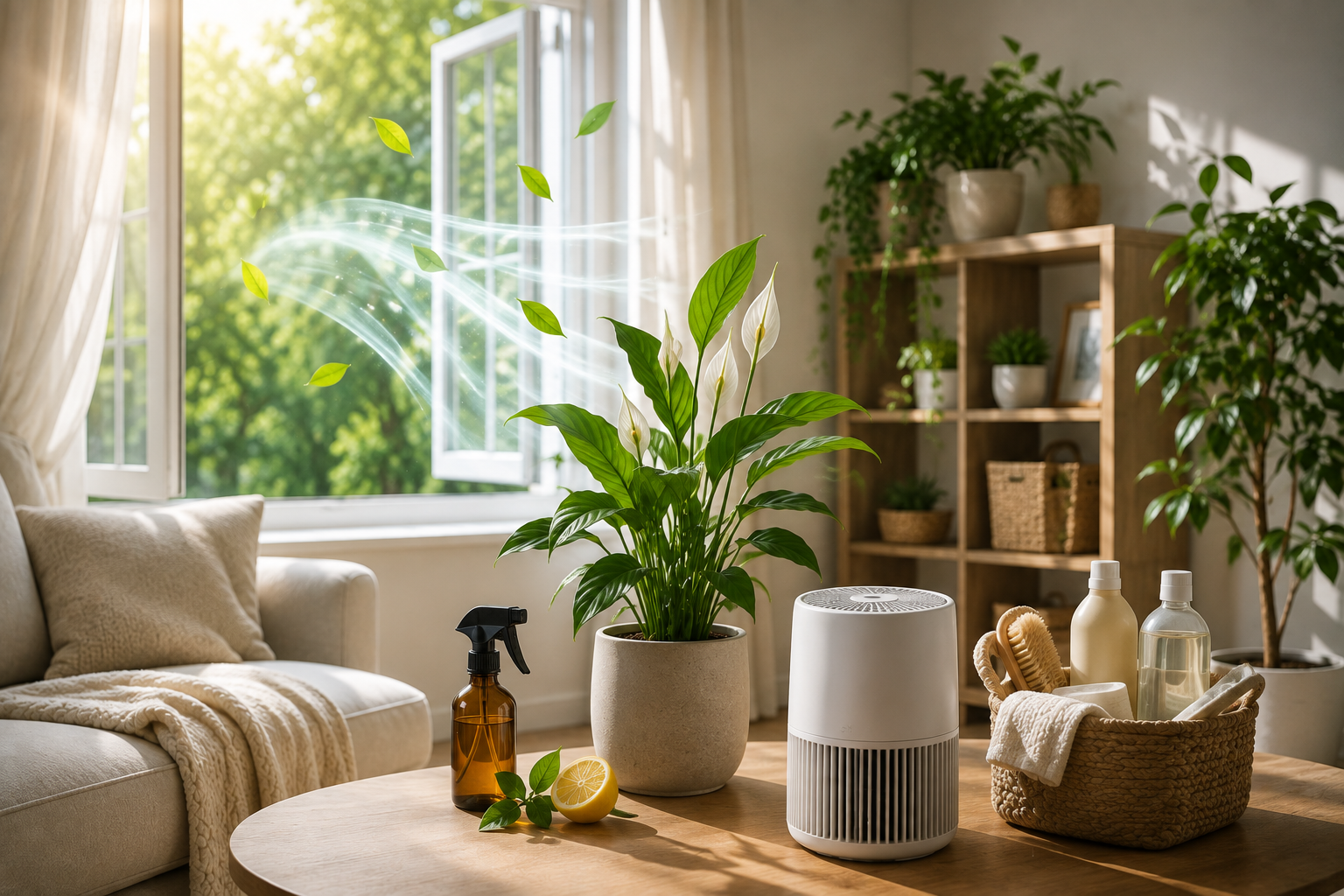
Indoor air can be two to five times more polluted than the air right outside your front door, and the natural fix most people reach for, adding a few houseplants, does far less than popular wisdom suggests. The genuinely effective natural strategies are simpler and less glamorous: open your windows daily, eliminate pollution at its source, and control humidity, all of which outperform any arrangement of houseplants when it comes to measurable air quality improvement.
This guide breaks down what actually improves indoor air quality naturally, addresses the popular but largely debunked houseplant myth honestly, and covers practical source-control and ventilation strategies. We’ll also cover VOC reduction, natural ventilation, and practical advice for American homeowners wanting genuinely effective, low-cost air quality improvements.
By the end, you’ll know exactly which natural methods deliver real, measurable results, and which ones are more folklore than science.
What Actually Works?
The two genuinely proven natural strategies for improving indoor air quality are source control, reducing or eliminating pollutants at their origin, and ventilation, actively exchanging stale indoor air for fresh outdoor air. Opening windows for just 10 to 15 minutes daily meaningfully dilutes indoor pollution, and swapping high-VOC household products for low-VOC alternatives addresses the problem before it even enters your air, both far more effective strategies than houseplants alone.
Houseplants can still be a lovely addition to your home for mood and aesthetics, but the scientific consensus is now fairly clear that they don’t meaningfully purify air under real household conditions, a distinction worth understanding before you rely on them as your primary air quality strategy.
Let’s Address the Houseplant Myth Honestly
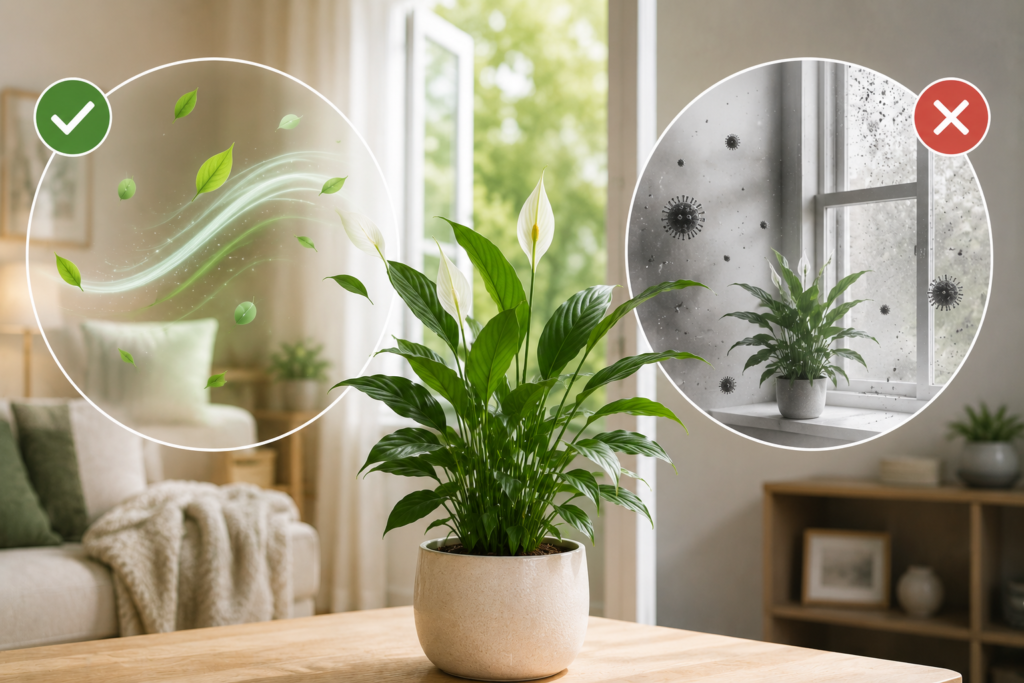
This is genuinely one of the most persistent home-improvement myths in circulation, and it deserves a clear, honest explanation rather than repeating the popular claim without context.
Where the Myth Actually Came From
The famous NASA Clean Air Study, published in 1989, tested houseplants for their ability to remove volatile organic compounds inside small, sealed laboratory chambers, environments specifically designed to have no air exchange with the outside world. Under those tightly controlled, contained conditions, certain plants genuinely did reduce VOC concentrations over time.
Why the Real-World Application Falls Apart
The problem is that homes and offices bear little resemblance to a sealed laboratory chamber. Researchers at Drexel University found that natural building ventilation does the overwhelming majority of the work removing indoor VOCs, and matching the plant-based VOC reduction demonstrated in NASA’s sealed-chamber studies would require somewhere between 10 and 1,000 plants per square meter of floor space in a typical home, or roughly 680 plants in a 1,500-square-foot house. Independent reviews have consistently found that plants remove VOCs too slowly to matter meaningfully in a real, naturally ventilated living space, and simply opening a window outperforms any realistic arrangement of houseplants for actual air quality improvement.
What This Means for Your Plant Collection
None of this means you should get rid of your houseplants. They offer genuine benefits, adding natural beauty, modest humidity contribution, and a documented boost to mood and general well-being, they simply shouldn’t be relied upon as your primary indoor air quality strategy. Houseplants and dedicated air purifiers or ventilation ultimately serve different purposes and genuinely work best as complementary elements rather than one substituting for the other.
Strategy One: Ventilation (The Single Most Effective Fix)
If there’s one habit worth building above all others, it’s simply moving fresh outdoor air through your home consistently.
Since indoor air can be significantly more polluted than outdoor air, actively increasing ventilation by opening doors and windows for just 10 to 15 minutes daily brings in fresh air that dilutes accumulated indoor pollutants. This air exchange happens through three distinct pathways: infiltration through small cracks and gaps in your home’s construction, natural ventilation through open doors and windows, and mechanical ventilation through fans and HVAC systems specifically designed to move air.
Practical Ways to Improve Ventilation
- Open windows on opposite sides of your home briefly each day to create genuine cross-ventilation rather than just opening a single window
- Run bathroom and kitchen exhaust fans during and after cooking or showering, since these rooms generate concentrated moisture and pollutants quickly
- Use ceiling fans or portable fans to keep air actively circulating rather than sitting stagnant in any one room
- Consider a mechanical ventilation system, like an energy recovery ventilator, for consistently tight, well-sealed newer homes where natural air leakage is minimal
Strategy Two: Source Control (Stopping Pollution Before It Starts)
Removing or reducing pollutants at their origin is genuinely more effective than trying to filter or dilute them after the fact, and it’s often the more overlooked half of the equation.
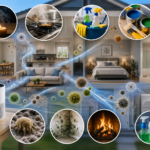
Everyday household products, cleaning products, air fresheners, glues, permanent markers, cosmetics, and paints, can contain genuinely high levels of VOCs, meaning simply reducing or eliminating these products indoors directly reduces indoor air pollution at its true source.
Practical Source Control Habits
Choose low-VOC products where possible: Look specifically for low-VOC or zero-VOC labeling on paints, adhesives, and cleaning products, since these formulations release meaningfully fewer harmful compounds into your indoor air.
Reduce fragranced product use: Air fresheners, scented candles, and heavily fragranced cleaning products are common, easily addressed VOC sources that many households use daily without realizing their air quality impact.
Store chemical products properly: Keeping paints, solvents, and similar products tightly sealed and, where possible, stored outside main living spaces like a garage rather than a closet, prevents ongoing low-level off-gassing into your home’s air.
Address moisture sources promptly: Fixing leaks and controlling humidity prevents mold growth, itself a significant and genuinely harmful indoor air pollutant source that’s entirely preventable.
Avoid smoking indoors entirely: Tobacco smoke is one of the most significant indoor air pollutants a household can control directly, and eliminating it indoors delivers an outsized air quality benefit compared with almost any other single change.
Strategy Three: Control Indoor Humidity
Humidity sits at an interesting intersection between comfort and air quality, since imbalanced moisture levels directly contribute to some of the most persistent indoor air problems.
Excess humidity creates the conditions mold and dust mites need to thrive, both significant asthma and allergy triggers, while air that’s too dry can worsen respiratory irritation and make it easier for viruses to circulate. Keeping indoor relative humidity within the widely recommended 30 to 50 percent range, using a humidifier or dehumidifier as needed depending on your specific climate and season, is a genuinely evidence-based natural strategy for supporting better indoor air quality.
Strategy Four: Manage Dust and Particle Buildup
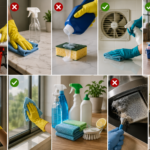
Regular cleaning habits function as a genuine, low-cost natural air quality strategy, since dust and accumulated particles directly affect what you’re breathing indoors.
Vacuum regularly with a quality filter: A vacuum with strong suction and proper filtration, the kind worth having in your cleaning arsenal, removes dust, pet dander, and allergens from carpets and upholstery rather than simply redistributing them into the air.
Dust with a damp cloth rather than dry: Dry dusting can send particles back into the air rather than genuinely removing them, while a slightly damp microfiber cloth traps dust more effectively.
Wash bedding and soft furnishings regularly: These fabric surfaces accumulate dust mites and allergens over time, and regular washing in hot water meaningfully reduces this buildup.
Use door mats and a no-shoes policy: Reducing the dirt, pollen, and outdoor particles tracked directly into your home cuts down on what needs to be managed indoors in the first place.
Comparing Natural Air Quality Strategies by Effectiveness
| Strategy | Real-World Effectiveness | Cost |
| Daily ventilation (opening windows) | High, most effective single habit | Free |
| Source control (low-VOC products) | High, prevents pollution at origin | Low-moderate |
| Humidity management (30–50% RH) | Moderate-high | Low-moderate |
| Regular dust/particle cleaning | Moderate | Low |
| Houseplants | Low, largely debunked for real homes | Low-moderate |
| Avoiding indoor smoking | High, for households where relevant | Free |
When Natural Methods Alone Aren’t Enough
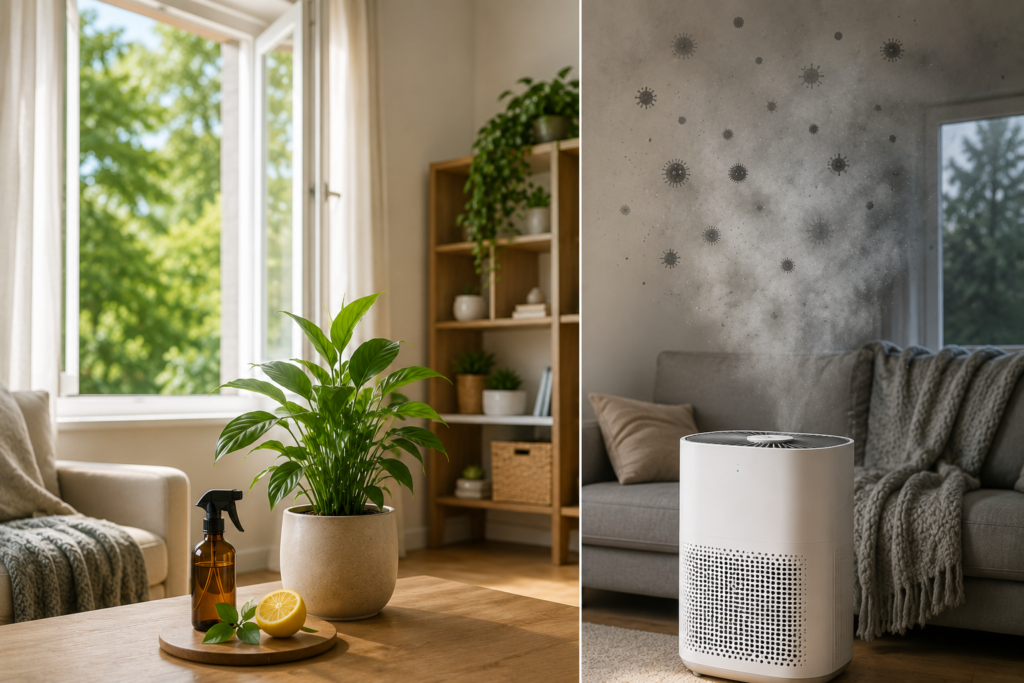
Ventilation and source control genuinely form the strongest foundation, but certain situations call for additional, more targeted equipment beyond these habits alone.
If you live in an area with significant outdoor air pollution, wildfire smoke, high pollen counts, or heavy traffic pollution, opening windows can sometimes introduce more particulate matter than it removes, making a dedicated HEPA air purifier a more appropriate solution during those specific periods. Households managing genuine asthma, severe allergies, or chemical sensitivities may also benefit from combining these natural strategies with a quality air purifier and consistent HVAC filter maintenance, rather than relying on ventilation and source control alone.
Building a Realistic Natural Air Quality Routine
Rather than trying to implement everything at once, a simple, sustainable routine produces better long-term results than an overwhelming one-time effort.
Daily: Open windows for 10 to 15 minutes when weather and outdoor air quality allow, and run exhaust fans during cooking and showering.
Weekly: Vacuum with a quality filter, wash bedding, and wipe down surfaces with a damp cloth to manage accumulated dust.
Monthly: Check and replace HVAC filters as needed, and review any newly purchased household products for VOC content before bringing them into frequent-use spaces.
Ongoing: Gradually swap high-VOC cleaning products, paints, and air fresheners for low-VOC alternatives as you naturally use up existing supplies.
Common Mistakes When Trying to Improve Air Quality Naturally
Relying on houseplants as a primary strategy: While plants offer genuine aesthetic and mood benefits, expecting them to meaningfully purify your air isn’t supported by real-world research outside sealed laboratory conditions.
Skipping ventilation because windows feel like they let in “dirty” outdoor air: In most everyday circumstances, indoor air is actually more polluted than outdoor air, making ventilation genuinely beneficial rather than counterproductive.
Masking odors instead of addressing their source: Air fresheners and scented candles cover up smells without removing the underlying VOC source, and can actually add their own fragrance-related VOCs to the problem.
Ignoring humidity until mold or dryness symptoms appear: Proactively monitoring and managing humidity prevents problems rather than reacting to them after they’ve already developed.
Assuming natural methods alone are sufficient for everyone: Households with specific health sensitivities or those in high-pollution areas often need to combine these habits with dedicated filtration equipment for genuinely adequate air quality.
Open Windows and Cut Sources, Skip the Plant Myth
Genuinely improving your indoor air quality naturally comes down to two evidence-backed habits: consistent ventilation through daily window-opening and active exhaust fan use, and source control through choosing low-VOC products and addressing moisture and smoking indoors. Houseplants remain a lovely, mood-boosting addition to any home, but real-world research has made clear they shouldn’t be counted on as a meaningful air-purifying strategy on their own. Building these ventilation and source-control habits into a simple daily and weekly routine delivers genuinely measurable air quality improvement, no unrealistic plant collection required.
Frequently Asked Questions
1- Do houseplants really not clean indoor air?
The scientific consensus has shifted considerably; while NASA’s original sealed-chamber study did show VOC reduction, real-world research has found that natural ventilation does the overwhelming majority of the work in actual homes, and achieving plant-based results comparable to simple ventilation would require an unrealistic number of plants per room.
2- What’s the single most effective natural way to improve indoor air quality?
Daily ventilation, opening windows for 10 to 15 minutes, combined with source control by reducing high-VOC products, are consistently identified as the most effective evidence-based strategies.
3- Should I still keep houseplants in my home?
Yes, if you enjoy them; they offer genuine aesthetic, mood, and modest humidity benefits, they simply shouldn’t be relied upon as your primary indoor air quality solution.
4- Is it bad to open windows if outdoor air quality is poor?
It can be counterproductive during specific events like wildfire smoke or high pollution days, in which case keeping windows closed and using a HEPA air purifier is the more appropriate temporary strategy.
5- How does humidity affect indoor air quality?
Excess humidity promotes mold and dust mite growth, both significant allergy and asthma triggers, while overly dry air can worsen respiratory irritation, making the 30 to 50 percent relative humidity range the generally recommended target.
6- Can natural methods alone fully replace an air purifier?
For many healthy households, yes, ventilation and source control alone can meaningfully improve air quality; households with allergies, asthma, or those in high-pollution areas often benefit from combining these habits with a dedicated air purifier.