
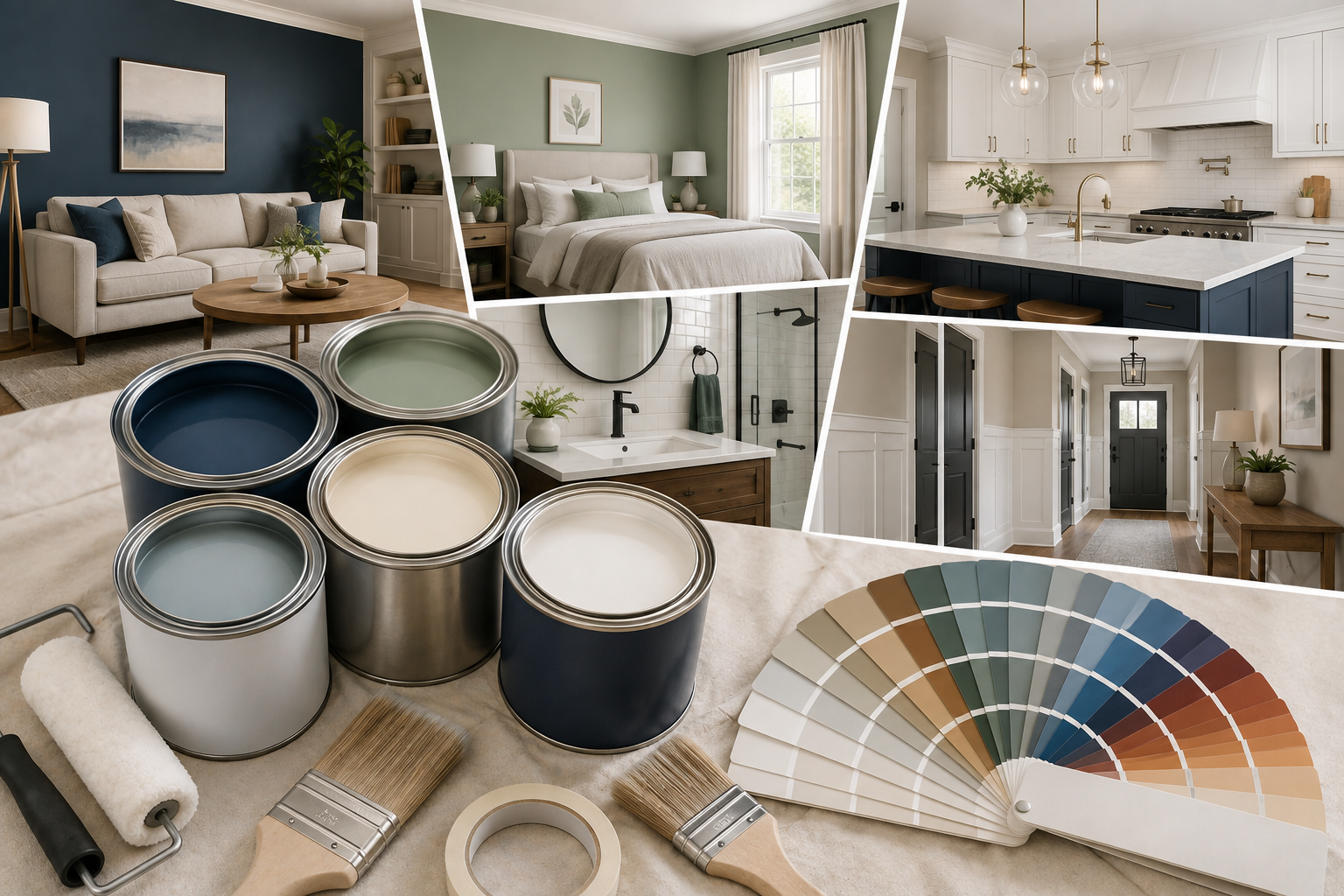
Standing in the paint aisle facing dozens of finish options, brands, and formulations can turn a simple color decision into a genuinely confusing purchase. Understanding how to choose paint properly means looking beyond color alone, toward finish (sheen), formulation, and how a specific room’s conditions should actually inform your choice.
This guide walks through everything you need to know before buying interior paint, covering paint types, sheen levels, room-specific recommendations, and practical buying advice, so you can make a confident choice rather than guessing based on the can’s front label alone.
How to Choose the Right Paint for Every Room
For most homes, choose eggshell or satin finish for living rooms, bedrooms, and hallways, since these offer a nice balance of subtle sheen and washability without looking overly glossy. Use semi-gloss or gloss finish for kitchens, bathrooms, and trim, where moisture resistance and easy cleaning matter more. Flat or matte finish works well for ceilings and low-traffic formal spaces where hiding wall imperfections matters more than durability. Beyond finish, prioritize a quality paint with genuine hide (color coverage) and low-VOC formulation for better indoor air quality, since paint quality differences become considerably more noticeable over years of daily wear than they do on the day you apply it.
Understanding Paint Sheen (Finish) Levels
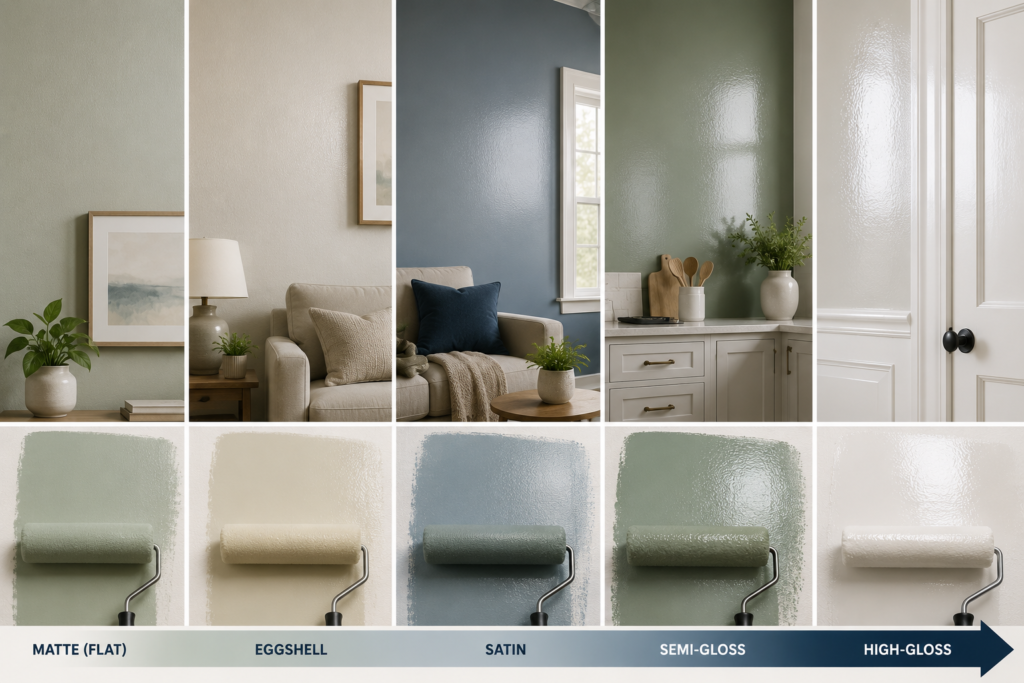
1- Flat/Matte
Flat paint offers no shine at all, absorbing light rather than reflecting it, which helps hide minor wall imperfections like small dents or uneven texture. It’s the least washable and durable option, making it best suited for low-traffic areas, ceilings, or formal rooms rarely touched.
2- Eggshell
Eggshell offers a subtle, low sheen, slightly more reflective than flat but still soft in appearance, striking a practical balance between washability and a matte-like look. This has become one of the most popular all-purpose choices for living rooms, bedrooms, and hallways.
3- Satin
Satin offers a bit more sheen than eggshell, with noticeably better washability and moisture resistance, making it a strong choice for higher-traffic areas, hallways, kids’ rooms, or family rooms where walls see more regular contact and occasional marks.
4- Semi-Gloss
Semi-gloss offers a noticeably shinier, more reflective finish with strong durability and moisture resistance, commonly used in kitchens, bathrooms, trim, doors, and cabinetry where easy cleaning and water resistance matter considerably.
5- High-Gloss
High-gloss provides the most reflective, shiniest finish available, offering the strongest durability and easiest cleaning of any sheen level, though it also most prominently highlights any surface imperfections, making careful surface prep essential before application.
Paint Sheen Comparison
| Sheen Level | Durability | Washability | Imperfection Hiding | Best For |
| Flat/Matte | Low | Low | Excellent | Ceilings, low-traffic formal rooms |
| Eggshell | Moderate | Moderate | Good | Living rooms, bedrooms, hallways |
| Satin | Good | Good | Moderate | Family rooms, kids’ rooms, higher-traffic areas |
| Semi-Gloss | Very good | Very good | Poor | Kitchens, bathrooms, trim, doors |
| High-Gloss | Excellent | Excellent | Poor | Cabinetry, trim, accent features |
Understanding Paint Types
- Latex (Water-Based) Paint
Latex paint has become the standard choice for most interior residential painting, offering easy soap-and-water cleanup, lower odor than oil-based alternatives, and quicker drying time between coats. It’s suitable for the vast majority of interior wall and ceiling applications.
- Oil-Based Paint
Oil-based paint offers exceptional durability and a notably smooth, hard finish, historically popular for trim and doors, though it requires mineral spirits for cleanup, has stronger odor and higher VOC content, and takes considerably longer to dry between coats. Its use has declined in many areas as latex formulations have improved, and some states have restricted or limited oil-based paint sales due to VOC regulations.
- Hybrid Alkyd Paint
Newer hybrid alkyd formulations aim to combine oil-based paint’s smooth, durable finish with latex paint’s easier cleanup and lower odor, offering a practical middle ground increasingly popular for trim and cabinetry specifically.
Low VOC Interior Paint: What It Means and Why It Matters

- Understanding VOCs
VOCs (volatile organic compounds) are chemicals that can off-gas from paint during and after application, contributing to that strong “new paint smell” and, at higher concentrations, potential indoor air quality concerns, particularly during and shortly after application.
- Low-VOC and Zero-VOC Options
Most major paint brands now offer low-VOC or zero-VOC formulations, which significantly reduce these emissions compared to traditional paint formulations, without generally sacrificing color selection or overall performance.
- When This Matters Most
Low-VOC paint is worth prioritizing particularly for bedrooms, nurseries, and homes with occupants who have respiratory sensitivities, or any situation where you’ll be spending significant time in a freshly painted space shortly after application.
Choosing Paint by Room
- Living Rooms and Dining Rooms
Eggshell or satin finish generally works well here, offering a subtle sheen with reasonable washability for moderate everyday traffic and occasional wall contact.
- Bedrooms
Flat or eggshell finish suits bedrooms well, given their generally lower traffic and contact compared to shared living spaces, with eggshell offering a bit more washability if preferred.
- Kitchens
Semi-gloss is the traditional standard here, given the combination of grease, moisture, and frequent cleaning kitchens require, though satin has become an increasingly popular middle-ground alternative for kitchen walls specifically, reserving semi-gloss for trim and cabinetry.
- Bathrooms
Semi-gloss remains the strongest choice for bathrooms, given the room’s consistent humidity and moisture exposure, where a more washable, moisture-resistant finish genuinely matters.
- Hallways and Entryways
Satin or semi-gloss suits these higher-traffic transitional spaces well, standing up better to scuffs, bumps, and general wear than flatter finishes would.
- Kids’ Rooms and Playrooms
Satin offers a practical balance for these spaces, where walls often see more marks, fingerprints, and occasional crayon or marker mishaps than adult bedrooms typically experience.
- Ceilings
Flat white ceiling paint remains the standard choice nearly universally, since ceilings see minimal direct contact and flat finish helps minimize the visibility of minor surface imperfections overhead.
- Trim, Doors, and Cabinetry
Semi-gloss or high-gloss generally suits these elements best, offering durability and a crisp, defined look that contrasts nicely against flatter or satin wall finishes.
Room-by-Room Recommendation Table
| Room | Recommended Sheen |
| Living room/dining room | Eggshell or satin |
| Bedroom | Flat or eggshell |
| Kitchen | Satin (walls) / Semi-gloss (trim, cabinets) |
| Bathroom | Semi-gloss |
| Hallway/entryway | Satin or semi-gloss |
| Kids’ room/playroom | Satin |
| Ceiling | Flat |
| Trim/doors/cabinetry | Semi-gloss or high-gloss |
Understanding Paint Quality Tiers
Budget-Tier Paint
Generally offers thinner coverage, requiring more coats to achieve full, even color, and typically has a shorter durability lifespan before showing wear, fading, or requiring touch-ups.
Mid-Range Paint
Balances reasonable coverage and durability at a moderate price point, suitable for most standard residential painting projects without needing premium-tier investment.
Premium Paint
Offers superior hide (color coverage, often achievable in fewer coats), better durability against scuffing and fading, and generally more consistent, richer color results, particularly noticeable with deeper or more saturated color choices that can be harder for lower-tier paint to achieve full coverage on.
Where Paying More Genuinely Matters
Investing in higher-quality paint tends to pay off most noticeably in high-traffic areas, rooms with significant natural light exposure (which can accelerate fading in lower-quality paint), and when using deep or bold colors that require strong hide to achieve even, full coverage.
Primer: Do You Actually Need It?
When Primer Is Genuinely Necessary
Priming is important when painting over bare drywall or wood, covering a significantly darker existing color with a much lighter one, painting over stains (water marks, smoke damage), or applying paint to a glossy existing surface that needs help with adhesion.
Paint-and-Primer-in-One Products
Many modern paints include primer built into the formulation, which can work well for simpler jobs like a similar-color repaint over an already well-prepared surface, though a dedicated separate primer generally still performs better for more significant color changes or surface issues.
Calculating How Much Paint You Need
Measuring Your Space
Calculate the total square footage of the walls you’re painting (height multiplied by width for each wall, then subtracting large windows and doors), and check the specific paint product’s coverage rate, typically listed per gallon on the can, to determine how many gallons you’ll need.
Accounting for Multiple Coats
Most projects, particularly significant color changes, require two coats for full, even coverage, so factor this into your total paint quantity calculation rather than assuming a single coat will suffice.
Buying a Little Extra
Purchasing slightly more paint than your calculated minimum, and keeping the leftover properly sealed and labeled with the color name and formula code, is worth doing for future touch-ups, since exact color matching later can be more difficult than simply having extra from the original batch.
Practical Buying Tips
- Match sheen to each specific room’s traffic level and moisture exposure, rather than using one finish throughout your entire home
- Prioritize low-VOC or zero-VOC formulations, particularly for bedrooms and spaces where you’ll spend significant time shortly after painting
- Invest in higher-quality paint for high-traffic areas and rooms with significant natural light, where durability and fade resistance matter most
- Don’t skip primer when the situation genuinely calls for it, significant color changes, stains, or glossy existing surfaces
- Buy a bit of extra paint for future touch-ups, storing it properly sealed and clearly labeled
Common Mistakes to Avoid
- Using flat paint in high-traffic or high-moisture areas, leading to premature wear, staining, or difficulty cleaning
- Skipping primer when covering a significantly darker color or a stain, resulting in uneven coverage or bleed-through
- Choosing budget-tier paint for a deep or bold color, requiring far more coats than expected to achieve full, even coverage
- Underestimating how much paint a project requires, leading to a frustrating mid-project trip back to the store
- Ignoring VOC content, particularly for bedrooms or spaces occupied shortly after painting
Conclusion
Choosing the right interior paint comes down to matching sheen and formulation to each specific room’s traffic level, moisture exposure, and lighting conditions, rather than applying one finish throughout your entire home. Prioritize semi-gloss for kitchens and bathrooms, satin for higher-traffic living spaces, and flat or eggshell for bedrooms and ceilings, while considering low-VOC formulations and investing in quality paint where durability genuinely matters most. With the right combination of finish and formulation for each room, your paint job will look better and hold up considerably longer than a one-size-fits-all approach ever could.
Frequently Asked Questions
1- What is the best paint finish for walls in general?
Eggshell is generally considered the most versatile all-purpose finish for most living spaces, offering a good balance of subtle sheen, washability, and forgiveness of minor wall imperfections.
2- What paint finish should I use in a bathroom?
Semi-gloss is the traditional recommendation for bathrooms, given its strong moisture resistance and easy cleanability in a consistently humid environment.
3- Is low-VOC paint worth the extra cost?
For most homeowners, yes, particularly in bedrooms or spaces occupied shortly after painting, since low-VOC formulations significantly reduce off-gassing without generally sacrificing color selection or performance.
4- Do I really need primer before painting?
It depends on the situation. Primer is genuinely important for bare surfaces, significant color changes, stains, or glossy existing surfaces, though paint-and-primer-in-one products can work well for simpler, similar-color repaints.
5- How many coats of paint do I need?
Most projects need two coats for full, even coverage, particularly for significant color changes, though high-quality paint with strong hide can sometimes achieve full coverage in fewer coats than budget-tier alternatives.
6- What’s the difference between eggshell and satin paint?
Satin offers slightly more sheen and better washability than eggshell, making it a better choice for higher-traffic areas, while eggshell’s more subtle finish suits lower-traffic living spaces and bedrooms well.
7- Is expensive paint actually better than cheap paint?
Generally, yes, particularly for coverage (hide), durability, and fade resistance over time, though the difference matters most in high-traffic areas, well-lit rooms, and when using deep or bold colors.