
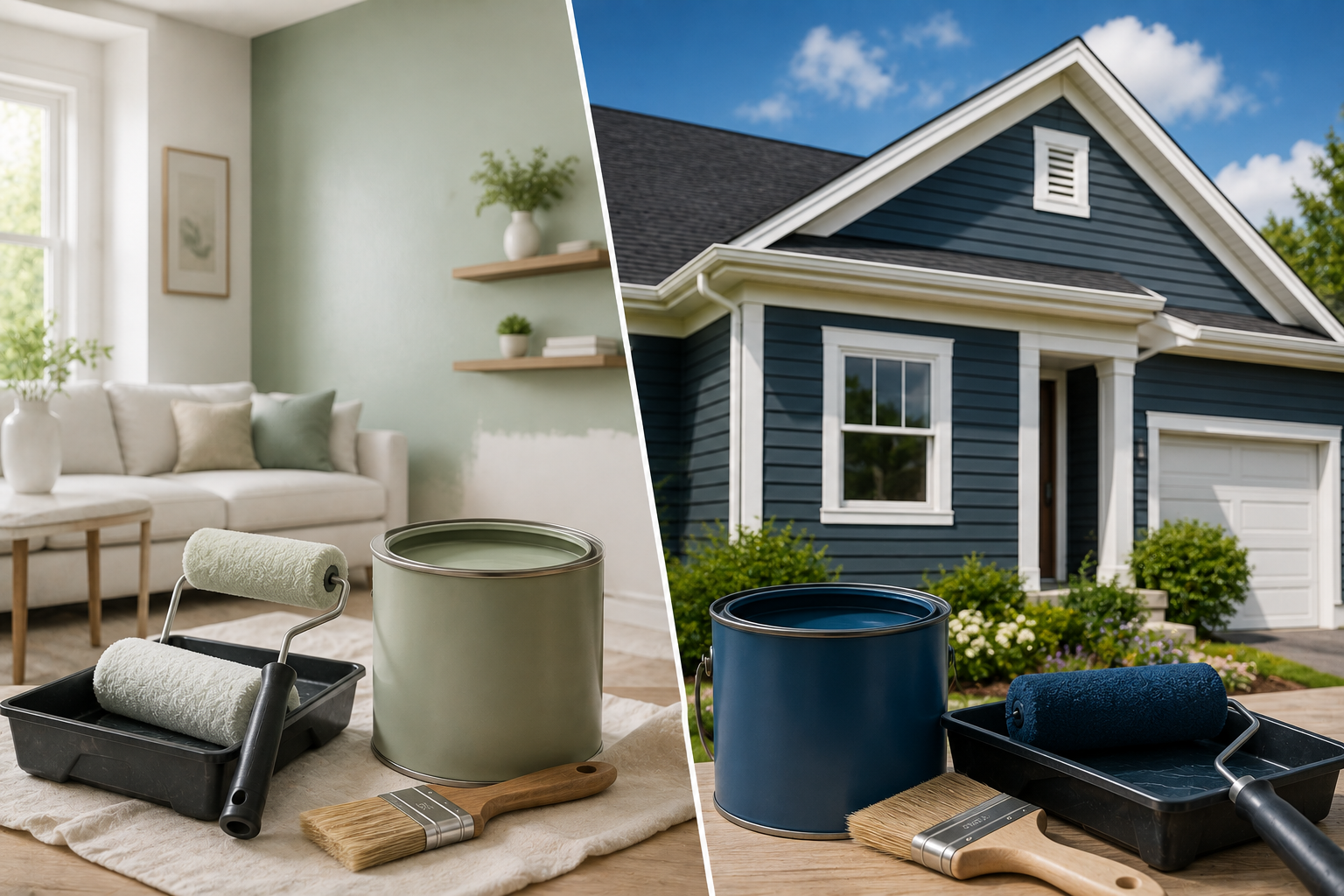
It might seem like paint is paint, some color in a can, but interior vs exterior paint are actually formulated quite differently, built to handle genuinely different conditions. Using the wrong type in the wrong place isn’t just a minor mismatch, it can lead to premature peeling, fading, or even health and air quality concerns depending on which direction you get it backwards.
This guide explains exactly how these two paint types differ in formulation and performance, why that difference matters, and what happens if you use one where the other belongs.
Interior vs Exterior Paint
Interior and exterior paint are formulated with different resins, additives, and flexibility levels specifically suited to their environment. Exterior paint is built to withstand UV exposure, temperature swings, rain, and general weathering, using more flexible resins that expand and contract with outdoor temperature changes without cracking. Interior paint prioritizes a smoother, more durable finish for scrubbing and cleaning, along with lower VOC off-gassing, since it’s applied in an enclosed, occupied space. You should never substitute one for the other, exterior paint’s VOC content is often too high for safe, comfortable indoor use, and interior paint lacks the weather resistance to hold up outdoors for more than a season or two.
The Core Formulation Differences
Resins and Binders
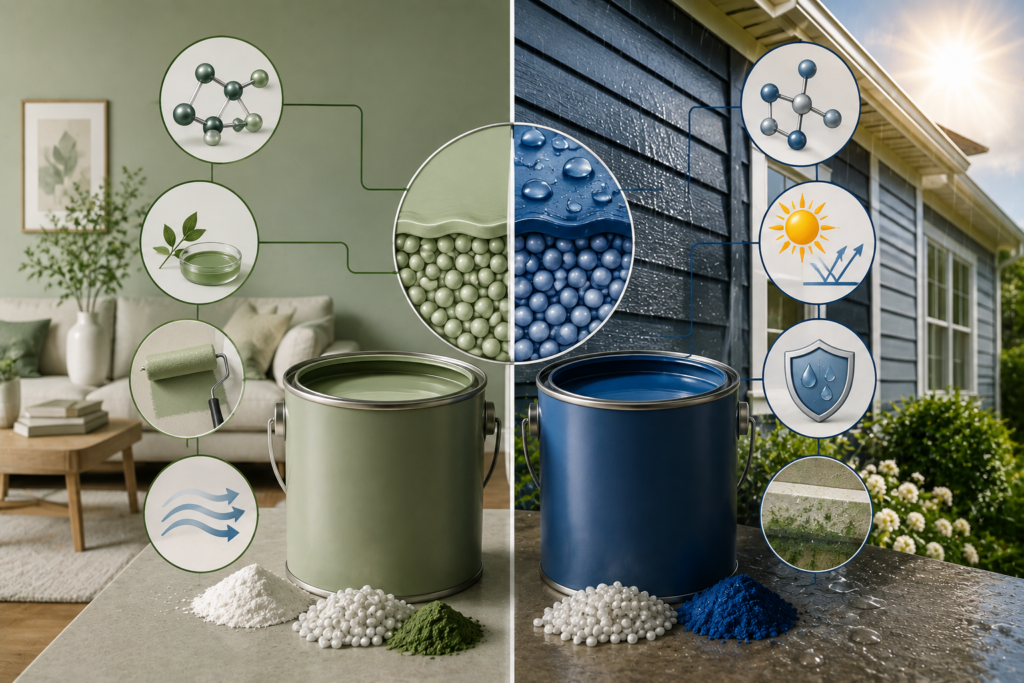
Exterior paint uses more flexible resins and binders specifically engineered to expand and contract with temperature fluctuations without cracking, an essential property given how much more exterior surfaces experience daily and seasonal temperature swings compared to a climate-controlled interior.
UV Resistance
Exterior paint includes UV-resistant additives specifically formulated to slow fading and degradation from direct sunlight exposure, a consideration that’s largely irrelevant for interior paint, which doesn’t face anywhere near the same intensity or duration of direct UV exposure.
Mildew and Mold Resistance
Exterior paint typically includes stronger mildewcide additives, given its constant exposure to moisture, humidity, and organic growth conditions outdoors that interior surfaces, outside of consistently humid rooms like bathrooms, generally don’t face to the same degree.
VOC Content
Exterior paint has historically contained higher VOC (volatile organic compound) levels than interior paint, partly because exterior use allows for natural ventilation and dissipation that isn’t available indoors. While regulations have pushed VOC levels down across both categories over time, exterior paint formulations still generally aren’t intended or recommended for indoor application given ongoing air quality and occupant exposure concerns.
Interior vs Exterior Paint Comparison
| Factor | Interior Paint | Exterior Paint |
| Primary purpose | Washability, appearance, comfort | Weather resistance, UV protection |
| Flexibility | Lower (not needed for stable indoor temps) | Higher (handles temperature swings) |
| UV resistance | Minimal | Strong |
| Mildew resistance | Moderate | Strong |
| VOC content | Generally lower | Historically higher (varies by product) |
| Durability focus | Scrubbing, cleaning, scuffs | Rain, sun, temperature, weathering |
| Odor after application | Milder, dissipates faster | Can be stronger, less suited to enclosed spaces |
| Sheen options | Flat through high-gloss | Flat through gloss, weather-focused formulations |
Can You Use Interior Paint Outside?
Why This Doesn’t Work Well
Interior paint lacks the UV-resistant additives and flexible resins that exterior paint needs to withstand direct sunlight, rain, and temperature swings. Applied outdoors, interior paint will generally fade, crack, and peel considerably faster than proper exterior paint, often within a single season or two rather than the multiple years exterior paint is designed to last.
Are There Any Exceptions?
Some covered outdoor areas with minimal direct sun and weather exposure, a fully covered porch ceiling, for example, might see interior paint hold up somewhat longer than it would in fully exposed conditions, but this still isn’t a genuinely recommended practice, since even indirect weather exposure and humidity will accelerate wear compared to proper exterior-rated paint.
Can You Use Exterior Paint Inside?
Why This Is Generally Not Recommended
Exterior paint’s higher VOC content and stronger chemical additives, including more robust mildewcides, aren’t intended for the sustained, close-proximity exposure that comes with painting an occupied indoor space. Off-gassing in an enclosed room can create genuinely uncomfortable, and potentially concerning, air quality conditions, particularly in poorly ventilated spaces.
Ventilation Doesn’t Fully Solve This
Even with windows open and fans running, achieving the same air exchange rate indoors as occurs naturally outdoors is difficult, meaning exterior paint’s higher-VOC formulation remains a legitimate indoor air quality concern regardless of ventilation efforts.
Why Exterior Paint Needs to Handle More
Temperature Fluctuation
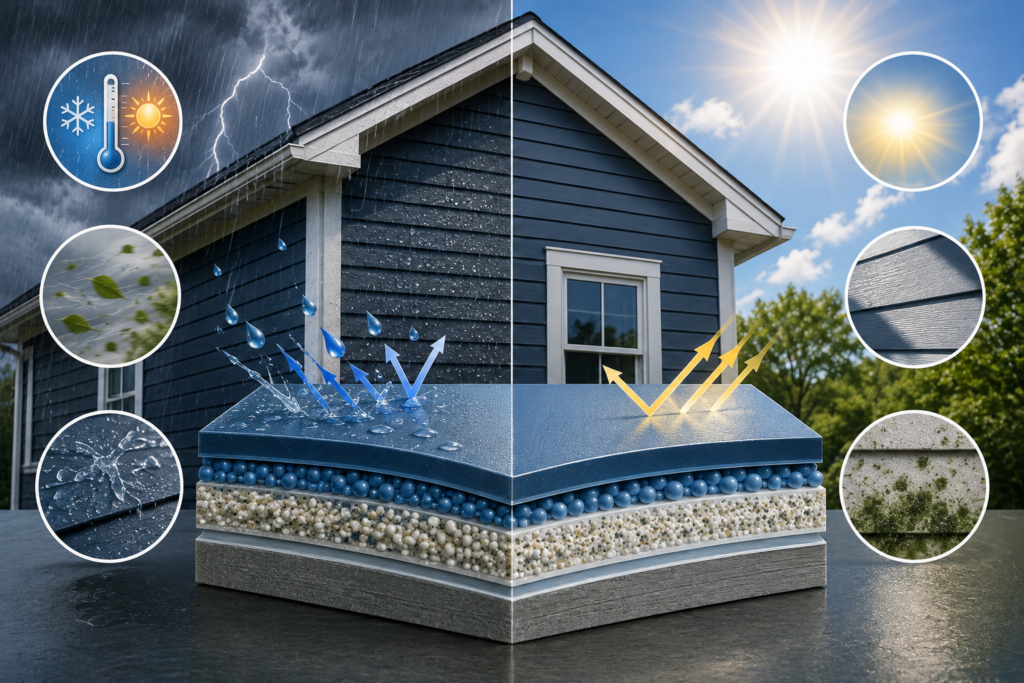
Exterior surfaces experience considerably wider daily and seasonal temperature swings than interior walls, which stay within a relatively narrow, climate-controlled range year-round. This temperature variation is precisely why exterior paint’s more flexible resin formulation matters, allowing the paint film to expand and contract without cracking.
Direct Weather Exposure
Rain, snow, and humidity all directly contact exterior surfaces in a way interior walls simply never experience, making water resistance and proper sealing considerably more critical for exterior paint’s long-term performance.
Sustained UV Exposure
Direct, cumulative sun exposure over months and years causes paint pigments to fade and the paint film itself to break down chemically over time, a degradation process exterior paint’s UV-resistant additives are specifically designed to slow.
Why Interior Paint Prioritizes Different Things
Washability and Cleaning
Since interior walls face regular contact, hands, furniture, cleaning, interior paint (particularly higher-sheen finishes) is formulated to hold up to scrubbing and cleaning without losing its finish or color.
Lower VOC for Occupied Spaces
Because interior painting happens in enclosed spaces where people will spend extended time shortly afterward, and indefinitely afterward, interior paint formulations prioritize lower VOC content and reduced off-gassing considerably more than exterior formulations need to.
Appearance and Sheen Variety
Interior paint offers a wide range of sheen options specifically tailored to indoor aesthetic and functional needs, flat for ceilings, semi-gloss for trim, since indoor lighting and viewing distance differ meaningfully from how exterior paint sheen reads in natural outdoor light.
Exterior Paint Durability: What Affects It
Climate and Regional Considerations
Homes in regions with intense sun exposure, high humidity, or significant freeze-thaw cycling generally see exterior paint wear faster than homes in milder, more consistent climates, worth considering when selecting a specific exterior product and anticipating your repainting timeline.
Surface Material
Exterior paint performance varies by substrate, wood siding, stucco, brick, and fiber cement all have different porosity and movement characteristics that affect how well paint adheres and how long it lasts on that specific material.
Proper Surface Preparation
Regardless of paint quality, inadequate surface preparation, skipping priming on bare wood, failing to clean mildew or chalking residue before painting, significantly shortens exterior paint’s effective lifespan, often more than the paint product choice itself.
Sun Exposure by Elevation
South and west-facing exterior walls generally receive more direct, intense sun exposure than north-facing walls, meaning different sides of the same house can genuinely experience different rates of fading and wear over time.
Choosing the Right Exterior Paint Type
Latex (Water-Based) Exterior Paint
Now the dominant choice for most exterior residential painting, offering good flexibility, easier cleanup, and lower VOC content than traditional oil-based alternatives, while still delivering strong weather resistance.
Oil-Based Exterior Paint
Historically valued for its hard, durable finish, though it’s less flexible than latex (making it more prone to cracking with temperature swings) and involves higher VOC content and more involved cleanup, leading to its declining use in many regions.
Elastomeric Paint
A specialized, highly flexible exterior coating often used on stucco or masonry surfaces prone to hairline cracking, offering superior crack-bridging capability compared to standard exterior paint, though it comes at a higher cost and is typically reserved for specific substrate needs rather than general use.
Choosing the Right Interior Paint Type
Latex (Water-Based) Interior Paint
The standard choice for the vast majority of interior residential painting, offering easy cleanup, lower odor, and quicker drying between coats.
Oil-Based and Hybrid Alkyd Interior Paint
Sometimes still used for interior trim, doors, and cabinetry specifically, given the smooth, hard, durable finish these formulations provide, though hybrid alkyd formulations increasingly offer a comparable finish with easier cleanup than traditional oil-based paint.
Weather-Resistant Paint: Key Features to Look For
UV Blocking Technology
Look specifically for exterior paint marketed with UV-resistant or fade-resistant technology, particularly important for homes with significant south or west-facing sun exposure.
Mildew Resistance
Prioritize exterior paint with strong mildewcide additives if your home is in a humid climate or a shaded area prone to moisture retention, both conditions that accelerate mildew growth on exterior surfaces.
Flexibility Rating
Some exterior paint products specifically market their flexibility or crack-resistance performance, worth checking if your home is in a region with significant temperature swings between seasons.
Warranty Coverage
Many exterior paint products come with a manufacturer warranty covering fading, peeling, or cracking within a specified timeframe, worth reviewing and comparing across product lines as one indicator of the manufacturer’s confidence in that specific formulation’s durability.
What Happens If You Mix Up Interior and Exterior Paint
Using Interior Paint Outdoors
Expect noticeably faster fading, cracking, and peeling, often requiring repainting within a season or two rather than the multiple years proper exterior paint is designed to last, along with reduced protection against moisture intrusion into the underlying surface.
Using Exterior Paint Indoors
Expect stronger, more persistent odor and higher VOC off-gassing than typical interior paint, potentially creating uncomfortable air quality conditions in the room for an extended period after application, particularly in spaces with limited ventilation.
Practical Buying Tips
- Always confirm a specific product is labeled for interior or exterior use before purchasing, rather than assuming based on color selection or brand alone
- For exterior projects, factor in your specific climate and sun exposure when choosing a product’s UV and flexibility performance level
- For interior projects, prioritize low-VOC formulations, particularly for bedrooms or spaces you’ll occupy shortly after painting
- Don’t skip proper surface preparation for either type, since this significantly affects how long either paint type actually performs as intended
- Check manufacturer warranty coverage for exterior paint as one indicator of expected durability and performance confidence
Common Mistakes to Avoid
- Using interior paint on an exterior surface, expecting it to last as long as proper exterior paint, when it genuinely won’t hold up to weather exposure
- Using exterior paint indoors to save money or use leftover product, risking uncomfortable VOC exposure in an enclosed, occupied space
- Ignoring climate-specific exterior paint needs, choosing a standard product without considering your region’s actual sun, humidity, or temperature swing conditions
- Skipping proper surface preparation, undermining either paint type’s designed performance regardless of product quality
- Assuming all exterior paint performs identically, without comparing UV resistance, flexibility, and mildew protection across different product lines
Conclusion
The difference between interior vs exterior paint comes down to genuinely different formulations built for genuinely different environments, exterior paint prioritizes weather resistance, UV protection, and flexibility, while interior paint prioritizes washability, appearance, and lower VOC content for occupied spaces. Using the wrong type in the wrong place isn’t a minor shortcut, it leads to premature failure outdoors or uncomfortable air quality indoors. Always confirm a product’s labeled use before purchasing, and match your specific project, and its unique conditions, to the paint type genuinely designed for that environment.
Frequently Asked Questions
1- Can you use interior paint outside?
Not recommended. Interior paint lacks the UV resistance and flexible resins needed to withstand outdoor weather exposure, and it will generally fade, crack, and peel considerably faster than proper exterior paint.
2- Can you use exterior paint inside?
Not recommended. Exterior paint’s higher VOC content and stronger chemical additives aren’t intended for sustained exposure in an enclosed, occupied indoor space, and can create uncomfortable air quality conditions.
3- What is the main difference between interior and exterior paint?
Exterior paint is formulated with more flexible resins and UV-resistant additives to withstand weather and temperature swings, while interior paint prioritizes washability, appearance, and lower VOC content suited to enclosed, occupied spaces.
4- Why does exterior paint last longer outdoors than interior paint would?
Exterior paint’s more flexible resin formulation allows it to expand and contract with temperature changes without cracking, and its UV-resistant additives specifically slow the fading and breakdown that comes from direct, sustained sun exposure.
5- Does exterior paint have higher VOC levels than interior paint?
Generally, yes, historically and in many current formulations, though VOC regulations have pushed levels down across both categories over time. Exterior paint still generally isn’t recommended for indoor use given ongoing air quality considerations.
6- How do I know if a paint product is interior or exterior rated?
Check the product label directly, paint cans clearly state whether a formulation is intended for interior or exterior use, and this information should always be confirmed before purchasing rather than assumed.
7- Does climate affect which exterior paint I should choose?
Yes, homes in regions with intense sun, high humidity, or significant temperature swings benefit from exterior paint products specifically formulated with strong UV resistance, mildew protection, or flexibility suited to those particular conditions.