
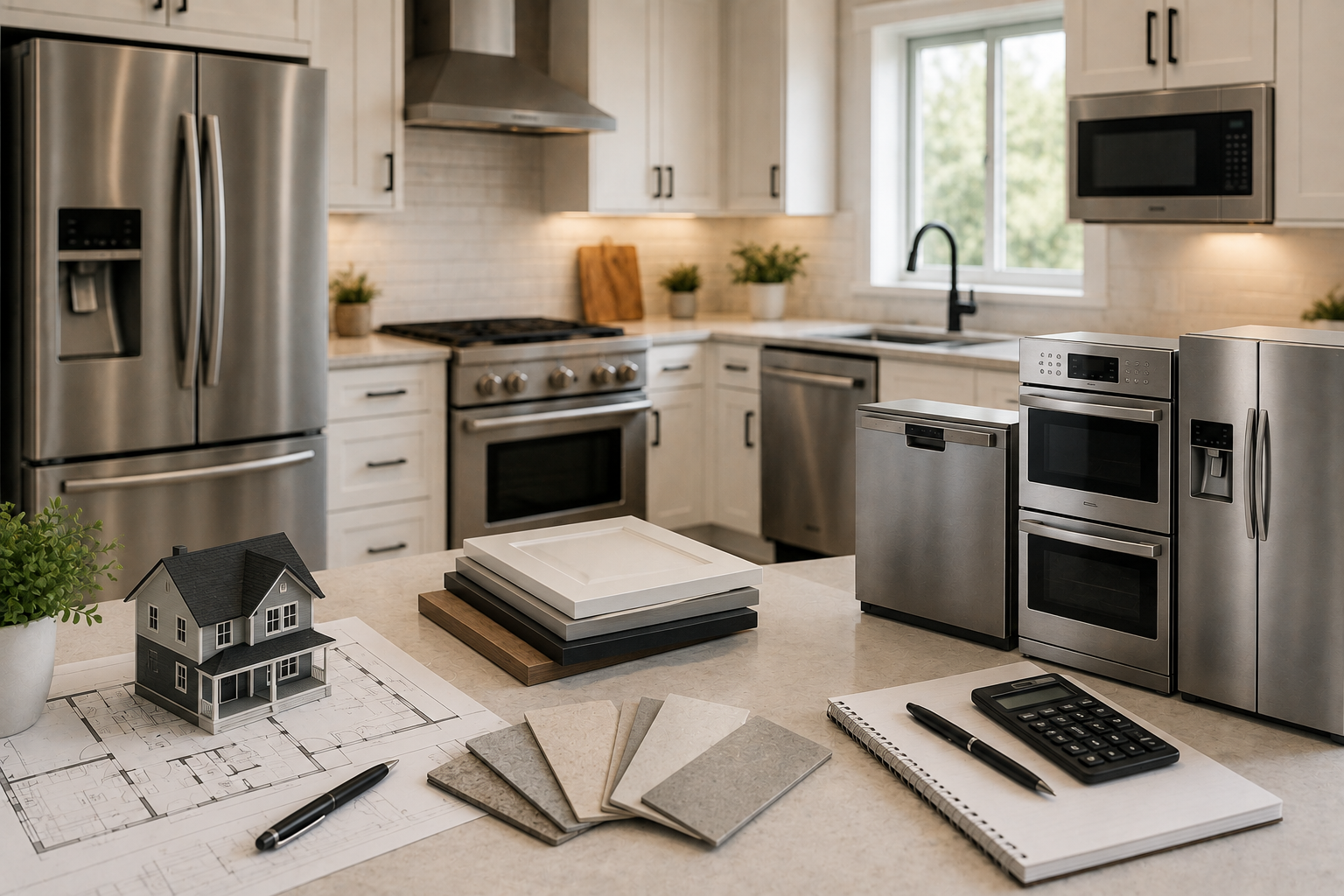
Furnishing a kitchen for a new home, whether it’s new construction, a full renovation, or simply a house that came without appliances, involves more coordinated decisions than buying a single replacement appliance ever does. Budget, infrastructure (gas versus electric), sizing, finish matching, and purchase timing all interact with each other, and getting the sequence wrong can mean expensive surprises partway through the process.
This kitchen appliance buying guide walks through the entire process from start to finish: how to budget, what to check about your home’s existing infrastructure, which appliances to prioritize, and how to sequence your purchases so everything arrives on time and fits together properly.
The Complete Kitchen Appliance Buying Guide
Step 1: Confirm Your Kitchen’s Infrastructure Before Shopping
Before comparing a single product, verify what your kitchen is actually set up to support, since this eliminates entire categories of appliances immediately and prevents costly mistakes later.
- Gas vs Electric
Check whether your kitchen has an existing gas line for a range or cooktop, or whether it’s wired for an electric range instead. Converting from one fuel type to the other typically requires a licensed contractor and adds meaningful cost and time to your project, so it’s worth confirming this early rather than falling in love with a gas range for an all-electric kitchen.
- Electrical Capacity
Certain appliances, particularly electric ranges, ovens, and some dishwashers, require dedicated circuits with specific amperage. If you’re in new construction or a major renovation, confirm with your electrician or contractor that your panel has adequate capacity for your planned appliance lineup.
- Plumbing and Drainage
Dishwashers and refrigerators with water/ice dispensers need nearby water line access. If your kitchen doesn’t already have this infrastructure in place, factor in the added cost and time of running new plumbing before finalizing your appliance choices.
- Ventilation
Ranges and cooktops, particularly gas models, benefit from proper ventilation, either a vented range hood or a ducted over-the-range microwave. Confirm whether your kitchen has existing ductwork before assuming a fully vented setup is straightforward to install.
Step 2: Set a Realistic Overall Budget

- Allocating Your Budget Across Appliance Categories
Rather than shopping category by category with no overall plan, it helps to set a total appliance budget first, then allocate roughly across categories based on priority and typical cost proportions.
| Appliance Category | Typical Share of Total Budget |
| Refrigerator | 25–35% |
| Range/oven | 20–30% |
| Dishwasher | 10–15% |
| Microwave | 5–10% |
| Small appliances (combined) | 10–15% |
| Contingency/installation | 10–15% |
These proportions will shift depending on your specific priorities, a household that entertains often might allocate more toward a larger refrigerator or range, while a smaller household might prioritize a compact, efficient lineup instead.
- Building in a Contingency
Installation costs, unexpected infrastructure work (like adding a dedicated circuit or water line), and delivery fees can add up beyond the sticker price of the appliances themselves. Building in a 10 to 15 percent contingency beyond your core appliance budget helps absorb these costs without derailing your overall plan.
Step 3: Decide Between a Package Deal and Individual Purchases
- Appliance Package Deals
Many retailers offer discounted pricing when purchasing multiple major appliances together as a bundle, typically a refrigerator, range, dishwasher, and sometimes a microwave. This can offer meaningful savings compared to buying each appliance individually, particularly for new construction or full kitchen buildouts where you need everything at once.
- Buying Individually
Purchasing appliances one at a time offers more flexibility to prioritize spending, choosing a higher-end refrigerator while opting for a more budget-friendly dishwasher, for example, but generally forgoes the bundled discount available through package deals.
- When Package Deals Make the Most Sense
Package deals tend to offer the best value when you need multiple major appliances simultaneously and don’t have strong brand preferences that span different manufacturers, since most bundle discounts require staying within a single brand’s lineup.
Step 4: Prioritize Appliance Categories in the Right Order
- Major Appliances First
Refrigerator, range or cooktop with oven, and dishwasher (if your kitchen has the necessary hookups) represent the core purchases that should be finalized before moving to smaller categories, since these often involve longer lead times, installation coordination, and infrastructure verification.
- Built-In Appliances Second
Microwaves, particularly over-the-range or built-in models, along with any wall ovens or built-in coffee systems, should be finalized alongside or shortly after your major appliances, since they’re often coordinated with the same cabinetry and electrical planning.
- Small Appliances Last
Coffee makers, toasters, blenders, and other countertop appliances can reasonably be purchased closer to your actual move-in date, since they don’t require the same installation coordination or long lead times as major appliances.
Step 5: Match Finishes and Aesthetic Consistency
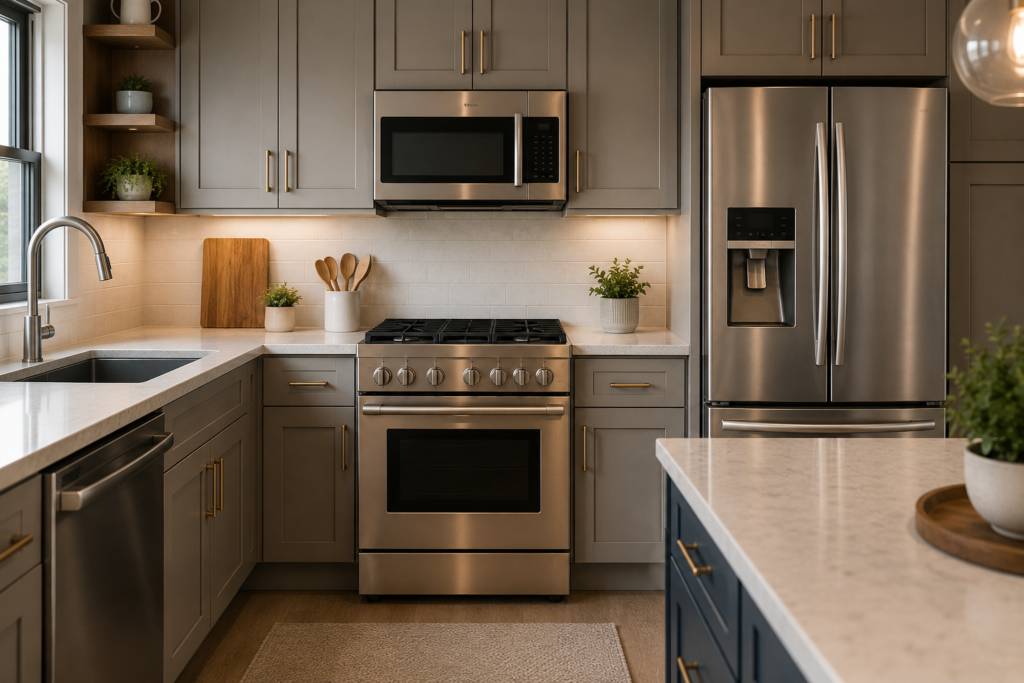
- Common Finish Options
Stainless steel remains the most widely available and versatile finish, suiting most kitchen styles. Black stainless steel offers a similar aesthetic with a darker tone and often better fingerprint resistance. Panel-ready appliances accept custom cabinet panels for a fully built-in look, appealing to buyers wanting a seamless, integrated kitchen design, though this option adds cost for both the appliance and the custom panel.
- Do All Appliances Need to Match Exactly?
Not necessarily. While matching finishes across major visible appliances, refrigerator, range, and dishwasher, creates the most cohesive look, small appliances and less visible items don’t need to match exactly. A slight mix of finishes, particularly for appliances in different areas of the kitchen, can still look intentional rather than mismatched, provided the overall palette stays reasonably coordinated.
Step 6: Understand Standard Sizing Before You Shop
Confirming standard dimensions for each appliance category prevents the common and costly mistake of falling in love with a model that doesn’t fit your kitchen’s cutouts or cabinetry.
| Appliance | Typical Width |
| Refrigerator | 29–36 inches |
| Freestanding range | 30 inches |
| Dishwasher | 18 or 24 inches |
| Over-the-range microwave | 29–30 inches |
| Wall oven | 24–30 inches |
Always measure your actual kitchen openings and compare them against a specific model’s full spec sheet, rather than relying on general category averages, since depth and height can vary meaningfully even among appliances sharing the same width.
Step 7: Decide on Energy Efficiency Priorities
- Why It Matters More in a New Home
Since you’re outfitting your kitchen from scratch, this is the ideal time to prioritize energy-efficient models across the board, rather than retrofitting individual appliances later. Verify current ENERGY STAR certification by exact model number through the official product finder, since certification status is tracked model by model rather than by brand.
- Checking for Local Rebates
Many utility companies offer rebates for ENERGY STAR certified appliances, particularly refrigerators, and some offer additional incentives for recycling old appliances during a renovation or new home setup. Check your specific utility provider’s current offerings before finalizing purchases, since programs and amounts vary by region and change periodically.
Step 8: Plan for Delivery and Installation Logistics
- Lead Times
Major appliances, particularly during high-demand periods or for specific in-demand models, can have lead times of several weeks or longer. Factor this into your overall home timeline, ordering major appliances well ahead of your anticipated move-in date rather than waiting until the last minute.
- Doorway and Hallway Access
Measure every doorway, hallway, and staircase turn between your delivery entrance and the final installation point for each major appliance, not just the kitchen space itself, since a refrigerator that fits your kitchen perfectly won’t help if it can’t physically reach it.
- Professional Installation Needs
Gas appliances, built-in ovens, and any appliance requiring new electrical or plumbing work generally need professional installation. Confirm whether your appliance purchase includes installation or whether you’ll need to separately coordinate a licensed contractor.
Step 9: Build Your Small Appliance Starter Set
Beyond the major built-in appliances, a handful of small appliances cover most everyday cooking needs for a new household:
- Coffee maker: A daily-use staple for most households
- Toaster or toaster oven: Covers basic toasting and light baking/reheating tasks
- Blender: Handles smoothies, sauces, and soups
- Basic cookware and bakeware: Necessary to actually use your new range and oven
Appliances like a stand mixer, air fryer, or slow cooker are genuinely useful additions but can reasonably be added over time as your budget allows, rather than purchased all at once alongside your major appliances.
A Sample Sequencing Timeline
| Timeframe Before Move-In | Action |
| 8–12 weeks | Confirm infrastructure (gas/electric, plumbing, ventilation); set budget |
| 6–10 weeks | Order major appliances (refrigerator, range, dishwasher) |
| 4–6 weeks | Order built-in microwave and any wall ovens |
| 2–4 weeks | Confirm delivery logistics and installation scheduling |
| 1–2 weeks before | Purchase small appliances and cookware |
This timeline can compress considerably for a straightforward appliance replacement without infrastructure changes, but remains a useful guide for new construction or full kitchen buildouts.
Common Mistakes to Avoid
- Shopping before confirming infrastructure, falling in love with a gas range for an all-electric kitchen
- Skipping doorway and hallway measurements, resulting in a major appliance that can’t reach its installation point
- Underestimating lead times, ordering major appliances too close to a move-in deadline
- Ignoring energy efficiency at the outset, missing the ideal opportunity to build efficient appliances into a new home from the start
- Overcommitting to package deals, when specific brand preferences for individual categories would have served better value
- Forgetting installation costs, budgeting only for the appliance price and being caught off guard by contractor fees
Conclusion
Furnishing a new home’s kitchen goes far more smoothly when you follow a clear sequence: confirm your infrastructure first, set a realistic overall budget, prioritize major appliances before smaller ones, and build in enough lead time for delivery and installation. Working through this kitchen appliance buying guide step by step, rather than shopping category by category with no overall plan, helps you avoid the costly surprises and mismatched purchases that catch so many new homeowners off guard, and gets your new kitchen fully functional right when you need it.
Frequently Asked Questions
1- What should I check before buying any appliances for a new home?
Confirm your kitchen’s gas versus electric setup, electrical capacity, plumbing access, and ventilation before shopping for specific appliances, since these infrastructure factors eliminate entire categories of options immediately.
2- Is it cheaper to buy appliances as a package or individually?
Package deals often offer meaningful discounts when purchasing multiple major appliances from the same brand simultaneously, while individual purchases offer more flexibility if you have strong preferences spanning different manufacturers.
3- How far in advance should I order appliances for a new home?
Major appliances should generally be ordered 6 to 10 weeks before your anticipated move-in date, given typical lead times, though this can vary based on demand and specific model availability.
4- Do all my kitchen appliances need to match in finish?
Not necessarily. Matching finishes across the most visible major appliances, refrigerator, range, and dishwasher, creates the most cohesive look, but small appliances and less visible items have more flexibility.
5- Should I prioritize energy-efficient appliances for a new home?
Yes, this is the ideal time to do so, since you’re building your kitchen’s full appliance lineup from scratch rather than replacing pieces individually later. Verify current ENERGY STAR certification by model number and check for local utility rebates.
6- What’s the biggest mistake homeowners make when buying appliances for a new home?
Shopping for specific appliances before confirming their kitchen’s infrastructure, gas versus electric setup, electrical capacity, and plumbing access, is one of the most common and costly mistakes, often requiring expensive changes mid-project.
7- Can I install a dishwasher if my kitchen doesn’t already have one?
Yes, but it requires adding the necessary plumbing, drainage, and electrical connections if they don’t already exist, which adds meaningful cost and time compared to replacing an existing dishwasher with a matching setup.