
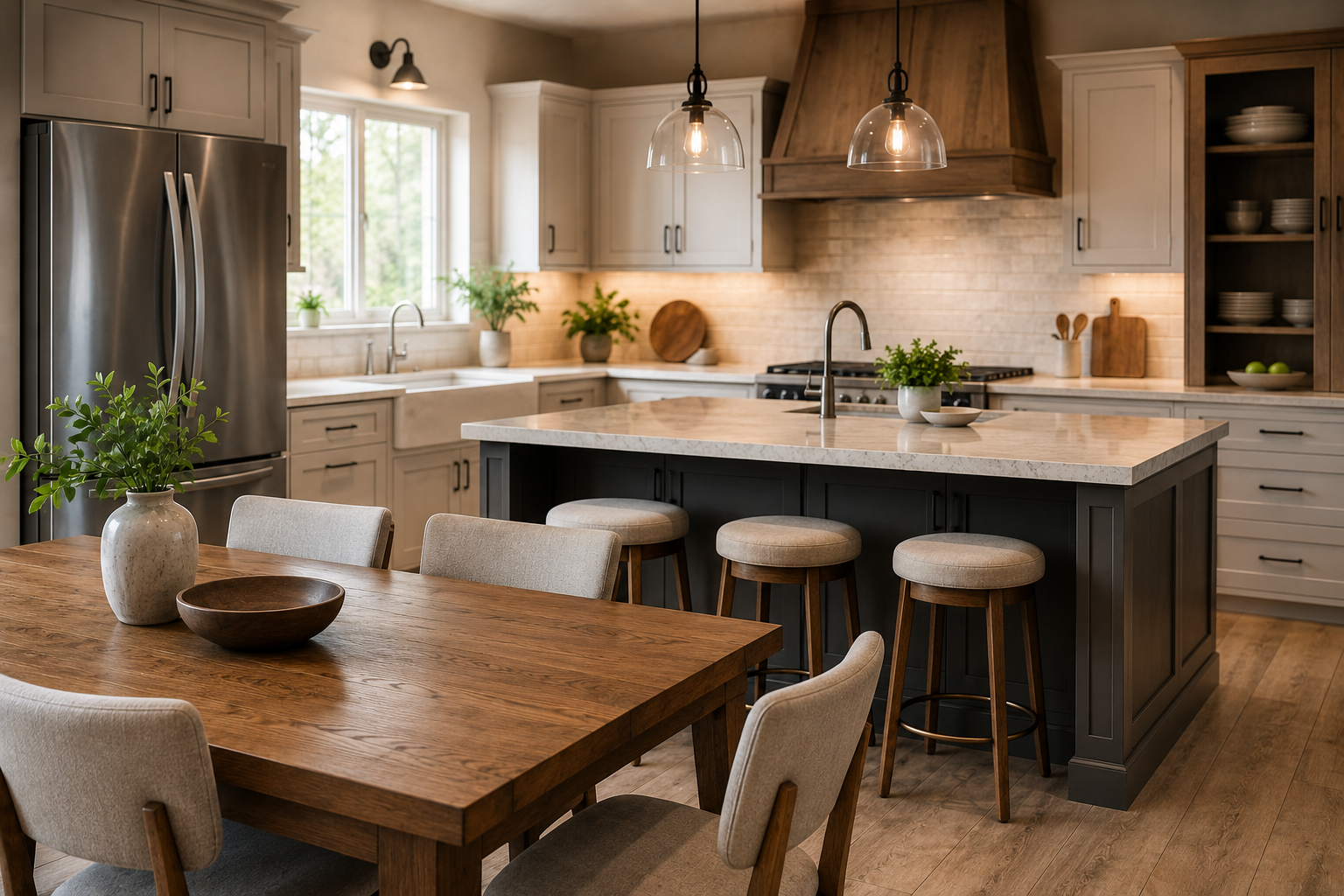
Furnishing a kitchen involves more decisions than most people expect. Between tables, islands, storage cabinets, and seating, each piece needs to work well on its own while also fitting together as a cohesive whole. Get one piece wrong- an island that’s too large, a table that doesn’t match your seating needs- and the whole room can feel off, even if every individual item looks great on its own.
This kitchen furniture buying guide breaks the process down into three core factors: size, materials, and style, so you can make confident decisions whether you’re furnishing a brand-new kitchen or replacing a few key pieces. We’ll also cover budgeting, common mistakes, and how to approach furnishing kitchens of different sizes, so you finish with a clear, practical plan rather than a list of individual purchases made in isolation.
Why Kitchen Furniture Decisions Are Different
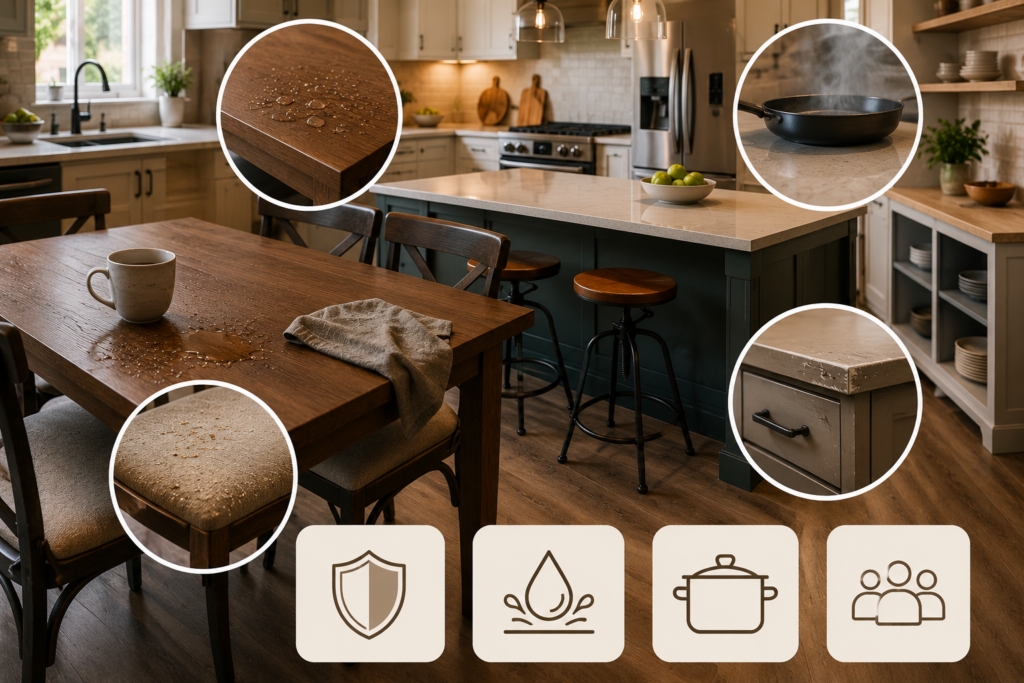
Kitchen furniture faces more daily wear than furniture in almost any other room. It’s exposed to spills, heat, moisture, and constant use, which means durability and practicality need to weigh just as heavily as appearance. A sofa that gets scuffed occasionally is one thing; a dining chair or island surface that deals with daily meals, hot pans, and constant cleaning is a very different challenge.
Understanding how to choose kitchen furniture starts with recognizing that every piece needs to balance three things at once: fitting your available space, standing up to daily use, and complementing your kitchen’s overall design. Skipping any one of these three considerations tends to show up as a problem later, whether that’s a table that never quite fits the room, a finish that wears out within a year, or a piece that clashes visually with everything around it.
Step 1: Getting Size Right
Measure Before You Shop
Every piece of kitchen furniture should be chosen against your kitchen’s actual measurements, not general assumptions about what “should” fit. Measure the full room, note the location of doorways, windows, and outlets, and account for appliance doors that need room to open. It’s also worth measuring doorways and hallways leading into the kitchen, since a piece that fits the room perfectly won’t help if it can’t get through the entrance.
Leave Room for Movement
Kitchens function best when there’s clear space to move between the stove, sink, and counters, often called the kitchen work triangle. Furniture placed within this zone, even if it technically fits, can slow down everyday cooking tasks considerably. As a general rule, aim to keep at least 36 inches of clear walking space around any major piece of furniture, and more if multiple people regularly cook together.
Scale Furniture to the Room
A large kitchen can accommodate a substantial island or table without feeling crowded, while the same piece in a small kitchen would dominate the space. As a general guideline:
| Kitchen Size | Furniture Approach |
| Small (under 100 sq ft) | Prioritize slim, multi-functional, or movable pieces |
| Medium (100–200 sq ft) | Balance seating, storage, and workspace |
| Large (200+ sq ft) | Room for a full island, larger table, and additional storage |
Even within these general categories, it’s worth sketching a rough layout or using painter’s tape on the floor to visualize how a new piece will actually sit in the room before committing to a purchase.
Step 2: Choosing the Right Materials
Solid Wood
Solid wood remains one of the most durable choices for kitchen furniture, capable of being refinished if it becomes scratched or worn. It costs more upfront but tends to outlast cheaper alternatives by a significant margin, often lasting decades with proper care. This makes it a strong choice for larger, harder-to-replace pieces like a dining table or island base.
Engineered Wood
Engineered wood, including plywood and MDF, offers a more budget-friendly alternative while still providing a similar look to solid wood. It’s more vulnerable to moisture damage, which matters considerably in a room where spills are common. It works well for lower-cost cabinetry or furniture that isn’t in direct, constant contact with water.
Metal
Metal furniture and fixtures resist moisture and heat well, making them a practical choice for kitchen environments, particularly for islands, shelving, and table frames. Metal also tends to suit more modern or industrial kitchen styles, and it’s less prone to warping over time compared with wood exposed to humidity.
Laminate
Laminate surfaces are budget-friendly, easy to clean, and reasonably durable for everyday use, though they generally can’t be repaired or refinished the way solid wood can. Once a laminate surface chips or peels, the only real fix is replacement, which is worth keeping in mind for pieces you plan to keep long-term.
Stone and Quartz
For countertops specifically, quartz and natural stone offer excellent durability and heat resistance, making them well suited to islands and countertop-adjacent furniture. Quartz in particular resists staining and requires minimal maintenance, while natural stone options like granite may need periodic sealing to maintain their resistance to moisture.
Material Comparison
| Material | Durability | Maintenance | Cost | Best For |
| Solid Wood | High | Moderate | Higher | Long-term investment pieces |
| Engineered Wood | Moderate | Low | Lower | Budget-conscious buyers |
| Metal | High | Low | Moderate | Modern, moisture-prone areas |
| Laminate | Moderate | Low | Lowest | Everyday use, tight budgets |
| Quartz/Stone | Very High | Low | Higher | Countertops, islands |
Step 3: Matching Style to Your Kitchen
Modern Kitchens
Modern kitchen furniture typically favors clean lines, minimal detailing, and materials like metal, quartz, and matte-finished wood. Furniture in this style tends to avoid ornate hardware or decorative flourishes, keeping the overall look streamlined.
Farmhouse Kitchens
Farmhouse-style furniture leans toward natural wood tones, distressed finishes, and simple, functional silhouettes. Pieces often include visible wood grain, painted cabinetry, and hardware with a slightly weathered or vintage look.
Traditional Kitchens
Traditional kitchens often feature richer wood tones, raised-panel detailing, and more ornate furniture legs or hardware. This style tends to favor a warmer, more formal feel compared with modern or minimalist alternatives.
Transitional Kitchens
Transitional style blends modern simplicity with warmer, more classic materials, offering flexibility for households who don’t want to commit fully to one aesthetic direction. It’s a practical middle ground for anyone unsure which single style best fits their taste.
Minimalist Kitchens
Minimalist kitchens benefit from furniture with a low visual profile, avoiding excessive detailing or bulky proportions. Every piece in a minimalist kitchen tends to serve a clear, specific purpose, with little room for purely decorative additions.
Choosing Furniture for Small Kitchens
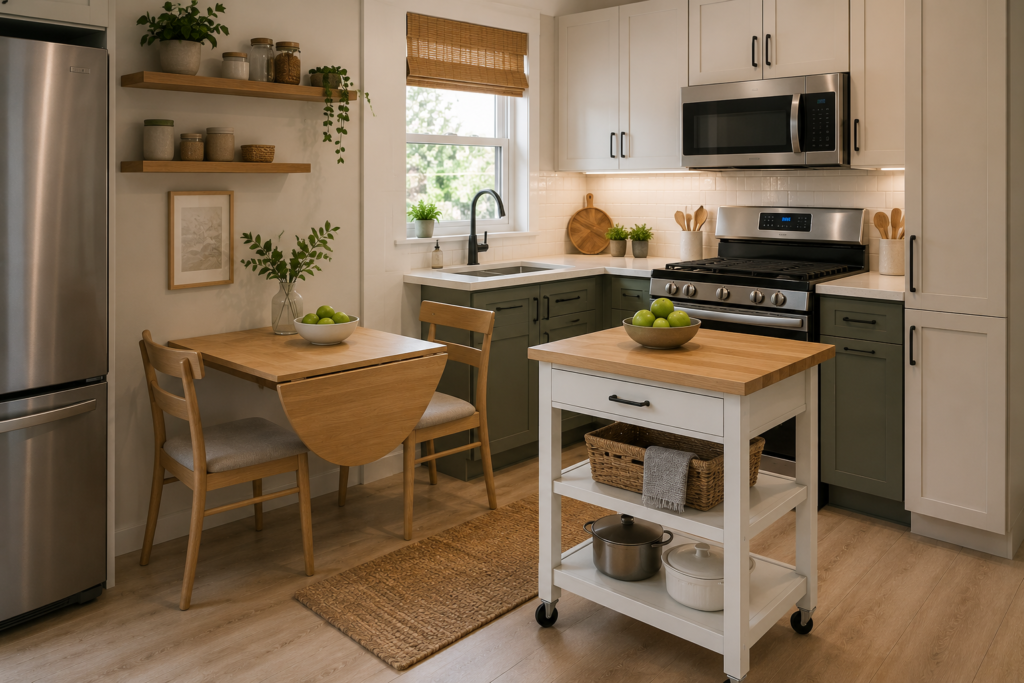
Small kitchens require a more deliberate approach to furniture selection. Kitchen furniture for small spaces should prioritize multi-functional pieces wherever possible, since floor space is simply too limited to dedicate to single-function furniture.
- A slim, movable island or cart instead of a large fixed island
- Extendable or drop-leaf dining tables that shrink down for daily use
- Vertical storage solutions that make use of wall space rather than floor space
- Furniture with built-in storage, such as bench seating with hidden compartments
- Foldable or stackable chairs that can be tucked away when not in use
Every piece in a small kitchen should ideally serve more than one purpose. A cart that also offers storage, or a table that extends only when guests visit, gets far more value out of limited square footage than furniture designed around a single function.
Choosing Furniture for Larger Kitchens
Larger kitchens offer more flexibility but still benefit from a deliberate plan rather than filling space simply because it’s available. Overfilling a large kitchen can create its own problems, disrupting traffic flow just as easily as overcrowding a small one.
- A substantial island with seating, storage, and workspace combined
- Larger dining tables, potentially extendable for entertaining
- Freestanding storage cabinets or pantries for additional capacity
- Distinct zones for cooking, dining, and casual seating
- Additional seating areas, such as a window bench or coffee nook, if space allows
Even in a large kitchen, leaving some open floor space improves both functionality and the room’s overall visual balance. A kitchen that’s fully packed with furniture can start to feel cluttered, regardless of how much total space is available.
Balancing Function and Style
It’s tempting to prioritize whichever furniture looks best in photos, but function should generally take precedence in a room used as heavily as a kitchen. A genuinely well-chosen piece of kitchen furniture looks good and holds up to years of daily spills, heat, and general wear.
That said, style still matters considerably, since a kitchen is one of the most visible and frequently used rooms in any home. The goal is finding furniture that satisfies both priorities rather than sacrificing one entirely for the other. In practice, this usually means choosing durable materials first, then narrowing down finishes and details within that shortlist to match your preferred style.
Budget Planning Across Kitchen Furniture
Furnishing a kitchen fully involves several categories of purchases, and it helps to plan a budget across all of them rather than overspending on one piece and underspending on another. A stunning island paired with flimsy, uncomfortable dining chairs rarely feels like a well-furnished kitchen overall.
Prioritize durability for the pieces that see the most daily use, such as dining chairs, table surfaces, and cabinet hardware. It’s often reasonable to spend less on decorative or occasional-use pieces, saving your budget for furniture that genuinely needs to withstand years of regular wear. Setting a rough budget split across categories, seating, storage, and workspace- before shopping helps prevent overspending in one area at the expense of another.
Common Mistakes to Avoid
A handful of avoidable mistakes come up again and again when furnishing a kitchen:
- Buying furniture before measuring, leading to pieces that don’t fit the available space
- Choosing style over durability, particularly for high-use items like dining chairs and tables
- Overlooking the kitchen work triangle, placing furniture in a way that disrupts natural movement
- Mismatching materials and finishes, creating a disjointed rather than cohesive look
- Underestimating storage needs, resulting in ongoing clutter despite new furniture
- Ignoring long-term maintenance, choosing a beautiful but high-maintenance material without accounting for the upkeep it requires
Conclusion
A well-furnished kitchen comes down to three consistent priorities: choosing the right size for your space, selecting materials that can handle daily wear, and picking a style that ties everything together. Whether you’re starting from scratch or replacing a few key pieces, working through size, materials, and style in that order, rather than shopping by appearance alone, will help you build a kitchen that’s both genuinely functional and a space you enjoy spending time in for years to come.
Frequently Asked Questions
1- What furniture is essential for a kitchen?
At minimum, most kitchens benefit from a dining table or eating area, adequate storage cabinets, and, space permitting, an island or cart for extra workspace.
2- What is the best material for kitchen furniture?
Solid wood offers the best long-term durability for furniture pieces, while quartz remains the top choice for countertops specifically, thanks to its durability and low maintenance.
3- How do I choose kitchen furniture for a small space?
Prioritize multi-functional, movable, or foldable pieces, and make use of vertical storage wherever possible to avoid overcrowding limited floor space.
4- Should kitchen furniture match exactly?
Not necessarily. A cohesive look often comes from complementary tones and materials rather than an exact match across every piece.
5- How much should I budget for kitchen furniture?
This varies enormously based on materials and size, but planning your budget across all necessary pieces, rather than overspending on one item, generally leads to a more balanced, functional kitchen overall.