
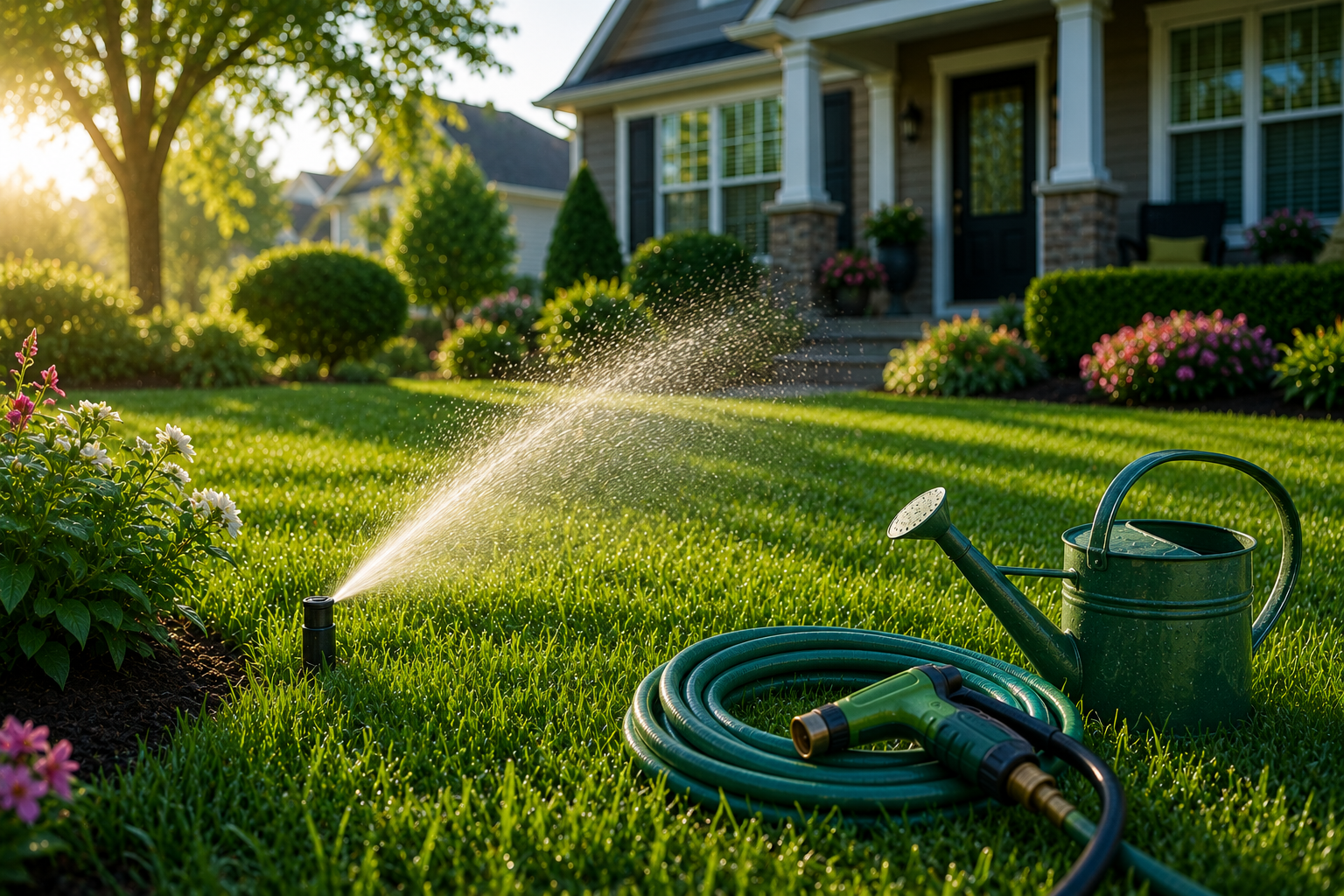
More lawns suffer from watering mistakes than almost any other single cause, and the mistake usually isn’t watering too little; it’s watering too often, at the wrong time of day, or in the wrong amount for actual soil conditions. Getting lawn watering tips right is one of the highest-impact things you can do for your lawn’s health, since water affects root depth, disease resistance, and drought resilience more directly than almost any other maintenance factor.
This guide covers exactly how much water your lawn actually needs, the best time of day to water, how to choose and use an irrigation system, and how to adjust your approach for different seasons, soil types, and regional conditions.
Lawn Watering Tips Every Homeowner Should Know
Most lawns need approximately 1 to 1.5 inches of water per week, including rainfall, delivered in two to three deep watering sessions rather than daily light watering. Early morning, roughly 6 to 10 a.m., is the best time to water, since it allows grass blades to dry before evening and reduces both evaporation loss and fungal disease risk. Watering deeply but infrequently encourages grass roots to grow deeper into the soil, building a naturally more drought-resistant lawn than the shallow root systems created by frequent, shallow watering.
Why Watering Technique Matters More Than Watering Amount
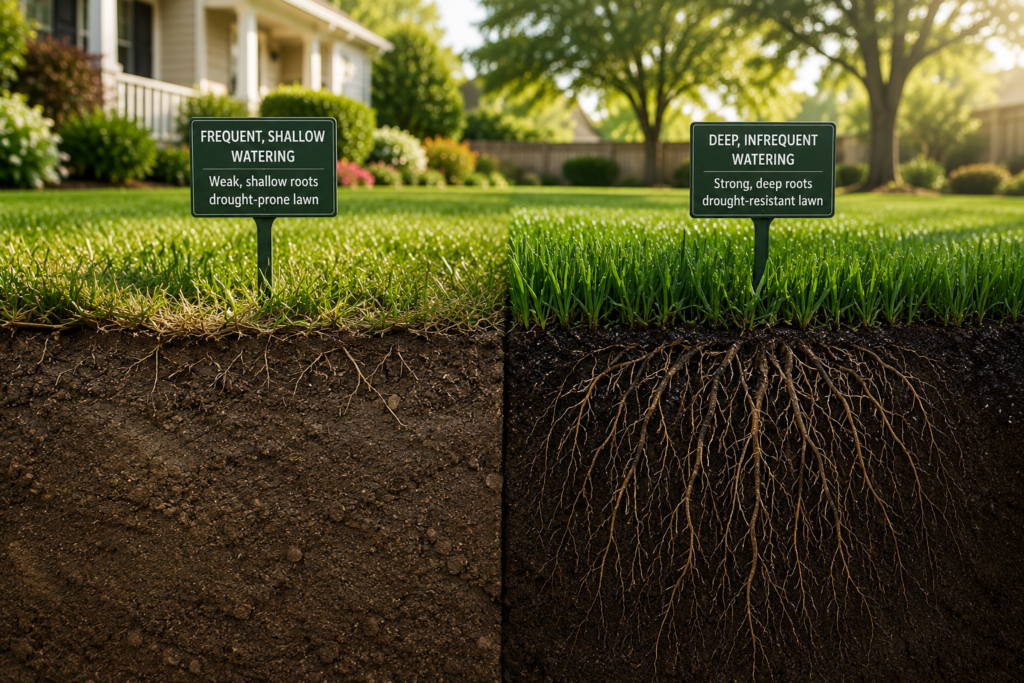
The Shallow Root Problem
When you water a small amount every day, water only penetrates the top inch or two of soil, and grass roots naturally grow toward wherever moisture is most consistently available. This creates a shallow root system that struggles the moment watering is interrupted, whether from a vacation, a watering restriction, or simply forgetting a day.
The Deep Root Solution
Watering deeply but less frequently forces roots to grow deeper in search of moisture between watering sessions, building a root system that can access water further down in the soil profile. This deeper root system is meaningfully more resilient during hot, dry stretches and requires less supplemental watering overall once established.
How Much Water Does Your Lawn Actually Need?
The General Guideline
Most lawns need roughly 1 to 1.5 inches of water per week during the growing season, combining both rainfall and any supplemental watering you provide. This isn’t a fixed rule for every lawn, though, since actual needs vary by grass type, soil composition, and current weather conditions.
Adjusting for Grass Type
Warm-season grasses like Bermuda and zoysia generally have somewhat better drought tolerance and can often get by with slightly less supplemental water than cool-season grasses like Kentucky bluegrass, which tend to need more consistent moisture to maintain their appearance and density.
Adjusting for Soil Type
Sandy soil drains quickly and holds less moisture, often requiring more frequent (though still not daily) watering sessions. Clay soil holds moisture longer but absorbs water more slowly, meaning it benefits from slower watering application to avoid runoff, since clay can’t absorb water as quickly as sandy soil can.
How to Measure Your Lawn’s Actual Water Intake
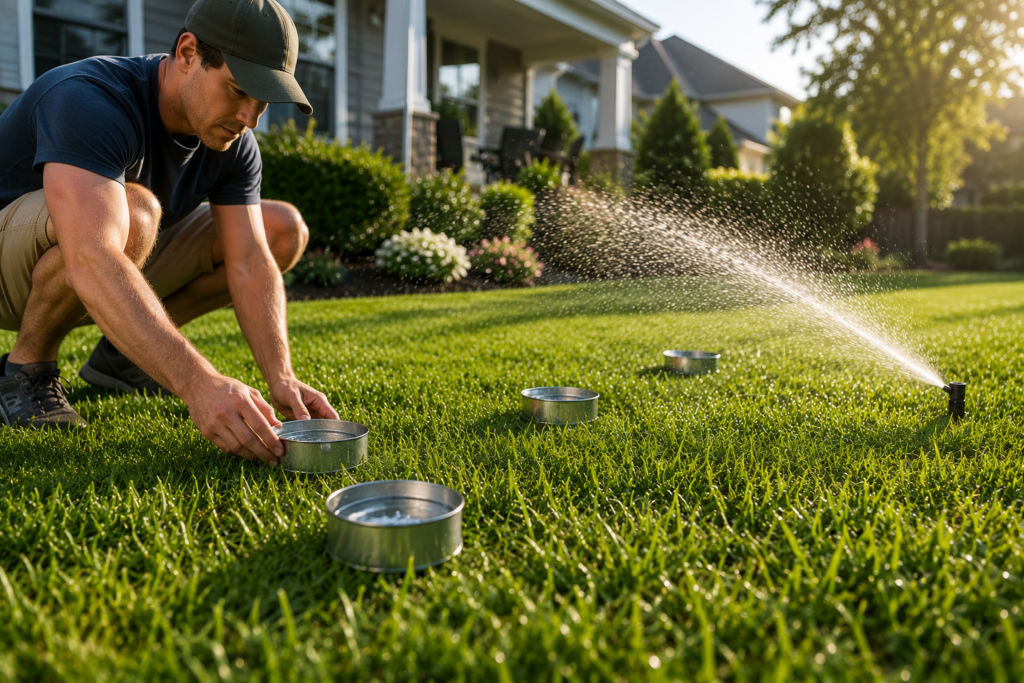
The Tuna Can Method
Place a few empty, shallow cans (tuna cans work well) around your lawn while running your sprinkler system, then time how long it takes to accumulate about an inch of water in each can. This tells you exactly how long you need to run your sprinklers to deliver your target weekly amount, rather than guessing based on time alone.
Accounting for Rainfall
A simple rain gauge helps you track how much natural rainfall your lawn has already received during the week, letting you adjust supplemental watering accordingly rather than overwatering on top of a recent significant rainfall.
The Best Time of Day to Water
Why Early Morning Wins
Watering between roughly 6 and 10 a.m. allows grass blades to dry naturally as the day warms, which significantly reduces the window of prolonged leaf wetness that fungal diseases need to develop and spread.
Why Evening Watering Is a Common Mistake
Watering in the evening leaves grass blades wet overnight, since there’s no remaining daylight or warmth to help them dry. This extended period of moisture creates ideal conditions for fungal diseases like brown patch and dollar spot to take hold.
Why Midday Watering Wastes Water
Watering during the hottest part of the day, typically late morning through mid-afternoon, results in significant water loss to evaporation before it can properly soak into the soil, making it the least efficient time to water regardless of disease considerations.
Signs Your Lawn Needs Water
Visual Cues
Grass that takes on a slightly grayish-blue tint, rather than its normal green color, is showing early signs of drought stress. Footprints or mower tracks that remain visible and don’t spring back within a few minutes indicate the grass has lost enough turgor pressure to signal it needs water soon.
The Screwdriver Test
Pushing a long screwdriver into your lawn’s soil is a simple, practical way to gauge moisture levels beneath the surface. If it goes in easily to a depth of six inches or more, your soil likely has adequate moisture; if it meets significant resistance, your lawn likely needs watering.
Choosing a Watering Method
Manual Hose and Sprinkler
The most accessible and lowest-cost option, manual watering with a hose-end sprinkler works well for smaller lawns, though it requires you to remember and manually manage watering sessions, which can lead to inconsistency over a busy season.
Fixed or Oscillating Sprinklers
These provide broader, more consistent coverage than a single hose sprinkler head, suited to slightly larger lawns, though they still require manual setup and monitoring for each watering session.
In-Ground Irrigation Systems
A permanently installed sprinkler system with multiple zones offers the most consistent, hands-off watering coverage, particularly valuable for larger properties or homeowners wanting to eliminate the daily decision-making around watering. These systems represent a more significant upfront investment and generally benefit from professional installation to ensure proper zone coverage and water pressure.
Smart Irrigation Controllers
Smart controllers connect to local weather data and automatically adjust watering schedules based on recent rainfall, temperature, and forecasted conditions, reducing both water waste and the manual oversight required compared to a standard fixed-schedule timer.
Lawn Irrigation System Comparison
| Watering Method | Best For | Upfront Cost | Consistency |
|---|---|---|---|
| Manual hose/sprinkler | Small lawns, occasional use | Lowest | Requires manual attention |
| Oscillating/fixed sprinkler | Small to medium lawns | Low | Moderate, still manual |
| In-ground irrigation system | Medium to large lawns | Higher | High, automated |
| Smart irrigation controller | Any size, water-conscious homeowners | Moderate to higher | Highest, weather-adjusted |
Watering Tips for Different Seasons
Spring Watering
As grass emerges from dormancy or ramps up growth, watering needs are generally lower than peak summer, since spring typically brings more natural rainfall in most regions. Avoid overwatering during this period, which can encourage shallow root development right as the growing season begins.
Summer Watering
This is when consistent, deep watering matters most, particularly during extended dry or hot stretches. Consider raising your mowing height slightly during peak summer heat, since taller grass shades its own roots and retains soil moisture more effectively than closely cut grass.
Fall Watering
As temperatures cool and grass growth naturally slows (for cool-season grasses) or grass prepares for dormancy (for warm-season grasses), gradually reduce watering frequency in line with the lawn’s declining active growth.
Winter Watering
For cool-season lawns in regions where grass remains at least somewhat active through winter, occasional watering during unusually dry, mild stretches can help, though overall watering needs drop dramatically. For dormant warm-season lawns, minimal to no supplemental watering is typically necessary.
Watering During Drought Restrictions
Understanding Local Restrictions
Many regions implement watering restrictions during drought conditions, often limiting watering to specific days or hours. Check your local water utility’s current guidelines, since violating restrictions can result in fines in some municipalities, and restrictions can change relatively quickly during genuine drought emergencies.
Prioritizing Watering Within Restrictions
If restrictions limit your available watering days, focus on deep, thorough watering during your permitted windows rather than trying to compensate with excessive daily amounts, since your lawn’s overall weekly total matters more than perfectly even daily distribution.
Building Long-Term Drought Resilience
Deep, infrequent watering throughout the normal growing season, well before drought conditions actually arrive, builds the deeper root systems that make a lawn genuinely more resilient when restrictions or dry conditions eventually hit.
Common Watering Problems and Solutions
| Problem | Likely Cause | Solution |
| Brown patches despite regular watering | Uneven sprinkler coverage | Check for coverage gaps, adjust sprinkler heads |
| Fungal disease appearing | Evening watering, prolonged leaf wetness | Switch to early morning watering |
| Water pooling or running off | Watering too fast for soil absorption rate | Use shorter, repeated watering cycles (cycle-and-soak method) |
| Grass staying stressed despite watering | Shallow, frequent watering habits | Switch to deep, infrequent watering schedule |
| Some areas wetter than others | Sprinkler system zone imbalance | Adjust or professionally service irrigation zones |
The Cycle-and-Soak Method for Clay or Sloped Soil
For lawns with clay soil or significant slope, applying your full weekly water amount in one long session often causes runoff before the soil can properly absorb it. The cycle-and-soak method breaks your watering session into two or three shorter cycles with breaks in between, allowing water to soak in fully before the next cycle begins, significantly reducing runoff and improving actual absorption.
Practical Buying Tips
- Consider a simple rain gauge before investing in more elaborate irrigation technology, since tracking actual rainfall is the foundation of smart watering decisions
- For larger lawns or if manual watering has become inconsistent, a basic irrigation timer offers a meaningful step up in consistency without the full cost of an in-ground system
- If installing an in-ground irrigation system, prioritize proper zone design (grouping areas with similar sun exposure and grass type together) over simply maximizing sprinkler head count
- Smart controllers are worth the added cost primarily for homeowners in regions with variable rainfall, where automatic weather-based adjustment provides genuine water savings
Common Mistakes to Avoid
- Watering daily in small amounts, encouraging shallow, drought-vulnerable root systems
- Watering in the evening, leaving grass blades wet overnight and increasing fungal disease risk
- Ignoring soil type, applying water too quickly for clay soil to absorb, resulting in runoff and waste
- Watering on a fixed schedule regardless of rainfall, rather than adjusting based on actual recent precipitation
- Overlooking sprinkler coverage gaps, resulting in some lawn areas chronically underwatered while others receive too much
Conclusion
Proper watering technique, not just watering amount, is one of the most impactful things you can do for a genuinely healthy, resilient lawn. Water deeply but infrequently, choose early morning as your watering window, and adjust your approach based on your specific soil type, grass variety, and seasonal conditions rather than following a single fixed schedule year-round. Get these lawn watering tips right, and you’ll build a lawn with deeper roots and far better natural resilience against heat, drought, and disease than frequent, shallow watering could ever produce.
Frequently Asked Questions
1- How much water does grass need per week?
Most lawns need approximately 1 to 1.5 inches of water per week, including rainfall, though this varies somewhat by grass type, soil composition, and current weather conditions.
2- What is the best time of day to water my lawn?
Early morning, roughly between 6 and 10 a.m., is best, since it allows grass blades to dry before evening, reducing fungal disease risk while minimizing water loss to evaporation.
3- How do I know if I’m overwatering my lawn?
Signs of overwatering include soggy or spongy soil, increased weed growth, fungal disease development, and shallow root systems that make the lawn more vulnerable during dry spells despite frequent watering.
4- Should I water my lawn every day?
No, daily watering typically encourages shallow root growth. Two to three deep watering sessions per week generally produce a healthier, more drought-resilient lawn than daily light watering.
5- How can I tell if my lawn actually needs water?
Look for a grayish-blue tint to the grass, footprints or mower tracks that don’t spring back quickly, or use the screwdriver test to check soil moisture a few inches beneath the surface.
6- Is it worth installing an in-ground irrigation system?
For larger lawns or homeowners wanting consistent, hands-off watering, yes, it offers more reliable coverage than manual methods, though it represents a more significant upfront investment best suited to properties where manual watering has become genuinely inconsistent.
7- What should I do if my area has watering restrictions?
Focus your permitted watering days on deep, thorough sessions rather than trying to compensate with excessive amounts, since your lawn’s total weekly water amount matters more than perfectly even daily distribution.