
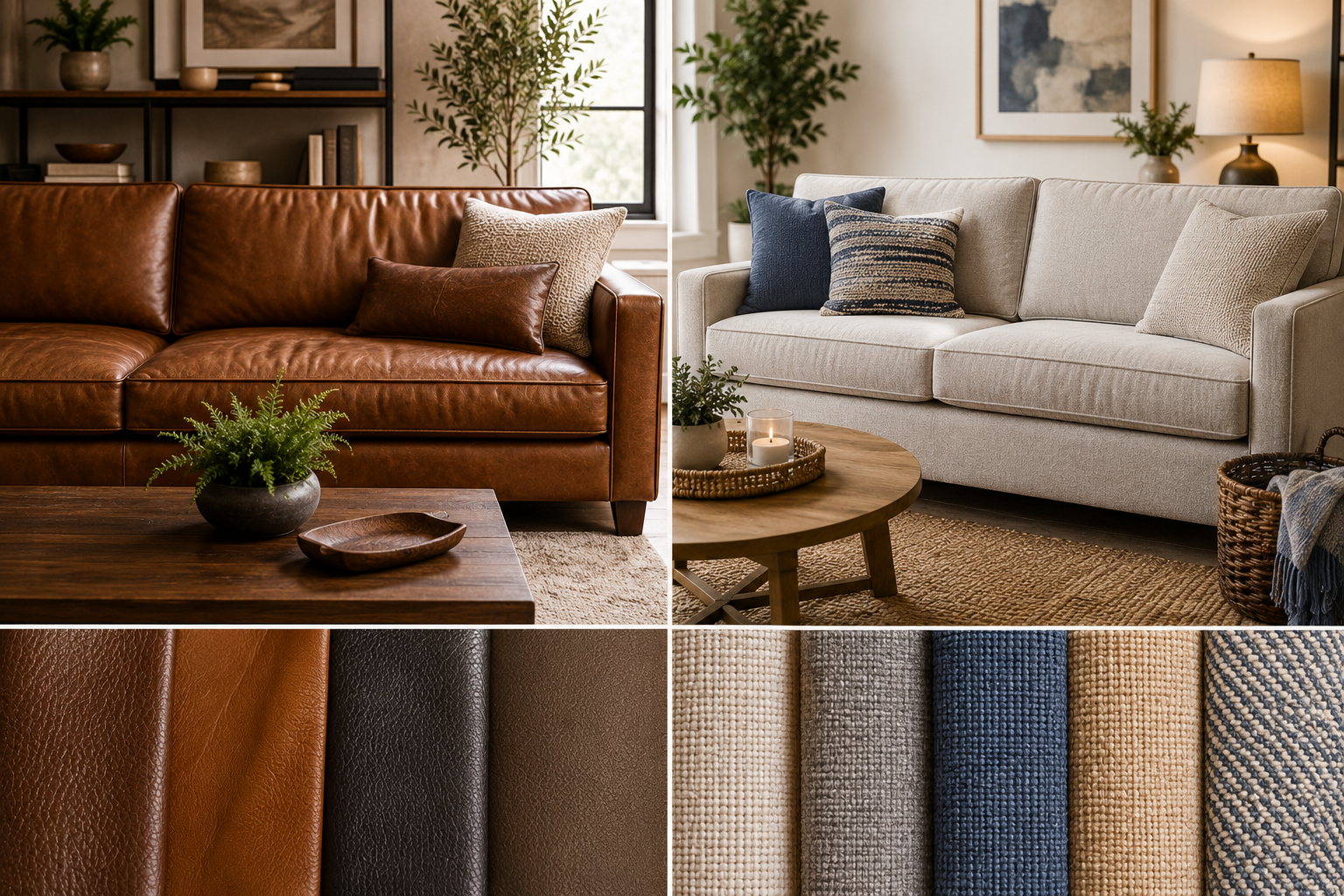
Leather or fabric is one of the first and most consequential decisions you’ll make when buying a new sofa. It affects everything from how the sofa feels day to day, to how it holds up with kids and pets, to how it performs in your climate.
Leather sofas offer superior durability, easier cleaning, and better performance for allergy sufferers, but they cost more upfront and can feel cold or sticky depending on the season. Fabric sofas offer more comfort variety, better temperature neutrality, and often lower upfront cost, but generally require more maintenance and can trap allergens more easily. There’s no universal winner the right choice depends on your household, climate, and priorities.
This guide breaks down exactly how leather and fabric compare across durability, comfort, maintenance, and cost, so you can choose the material that actually fits your life not just your Pinterest board.
Leather Sofas: What You’re Really Getting
Not all “leather” sofas are created equal, and understanding the grade of leather matters just as much as choosing leather in the first place.
Types of Leather to Know
| Leather Type | Quality | Typical Lifespan |
| Full-grain | Highest quality, most natural | 15–25+ years |
| Top-grain | High quality, slightly processed | 15–25 years |
| Bonded leather | Lower quality, leather scraps bonded together | 3–7 years |
| Faux/synthetic leather | Not genuine leather, budget-friendly | 3–7 years |
What this means for buyers: If you’re investing in leather specifically for long-term durability, full-grain or top-grain leather is worth the higher price. Bonded and faux leather look similar at first but wear out significantly faster and generally aren’t a good long-term investment.
Advantages of Leather

- Exceptional durability. High-quality leather can last 15 to 25 years or more, often outlasting the cushions and frame underneath it.
- Easy to clean. Spills wipe up with a damp cloth, and leather generally only needs light dusting or conditioning a couple of times a year.
- Better for allergy sufferers. Leather’s smooth, non-porous surface doesn’t harbor dust mites or pet dander the way fabric fibers can.
- Ages well. Quality leather develops a natural patina over time, often becoming more visually appealing as it wears in.
- Holds resale value better. Leather sofas tend to retain more value over time compared to fabric.
Drawbacks of Leather
- Higher upfront cost, especially for full-grain or top-grain leather.
- Temperature sensitivity. Leather can feel cold in winter and warm — sometimes sticky against bare skin — in summer, since it takes on the temperature of the room.
- Vulnerable to scratches. Sharp objects, including pet claws, can visibly damage the surface, especially on lower-quality leather.
- Firmer feel. Leather sofas tend to be less plush than fabric out of the box, though cushions and throws can soften the feel.
- Less color and texture variety compared to fabric options.
Fabric Sofas: What You’re Really Getting
Fabric covers a huge range of materials, from delicate natural fibers to highly engineered performance fabrics — so “fabric” isn’t really one category, but several with very different performance levels.
Types of Fabric to Know
- Natural fibers (cotton, linen) — soft and breathable, but generally less stain-resistant and more prone to wear
- Polyester and synthetic blends — durable, affordable, and resistant to general wear
- Performance fabrics — engineered specifically for stain resistance and heavy use; often rated by abrasion resistance (measured in Martindale rubs), with higher-rated fabrics standing up better to active households
- Delicate fabrics (velvet, suede, silk) — visually striking but require more careful maintenance and are more easily damaged
Advantages of Fabric
- Softer, cozier feel. Fabric is generally more comfortable to sit and lounge on directly, especially materials like cotton and linen.
- Better temperature regulation. Fabric doesn’t take on room temperature the way leather does, making it more comfortable year-round regardless of climate.
- Far more style variety. Fabric offers a much wider range of colors, patterns, and textures than leather.
- Generally lower upfront cost, particularly for non-performance fabric options.
- Performance fabrics narrow the durability gap. High-quality performance fabrics can extend fabric sofa lifespan significantly compared to standard fabric.
Drawbacks of Fabric
- Higher maintenance overall. Fabric requires more regular vacuuming and is more prone to visible staining than leather.
- Traps allergens more easily. Dust, pet dander, and pollen can settle into fabric fibers, and even regular cleaning can struggle to remove all of it.
- Shorter typical lifespan for standard fabric — often in the 7 to 10 year range, though performance fabrics can extend this.
- More vulnerable to permanent damage from pets and kids, especially delicate fabrics like velvet or silk.
- May require professional cleaning for deep or set-in stains.
Leather vs Fabric: Side-by-Side Comparison
| Feature | Leather | Fabric |
| Durability | Excellent (high-quality leather) | Good, especially performance fabric |
| Typical Lifespan | 15–25+ years (full/top-grain) | 7–10 years (standard); longer with performance fabric |
| Cleaning | Wipe clean, minimal upkeep | Requires vacuuming; stains need more effort |
| Allergy-Friendliness | High — resists dust mites and dander | Lower — can trap allergens in fibers |
| Comfort | Firmer, can feel cold or sticky | Softer, more temperature-neutral |
| Style Variety | Limited color/texture range | Extensive colors, patterns, textures |
| Pet Scratch Resistance | Vulnerable, especially lower-quality leather | Varies by fabric type |
| Upfront Cost | Higher, especially full-grain | Generally lower |
| Best Climate Fit | Climate-controlled homes | Homes with temperature extremes |
How Climate Affects Your Decision
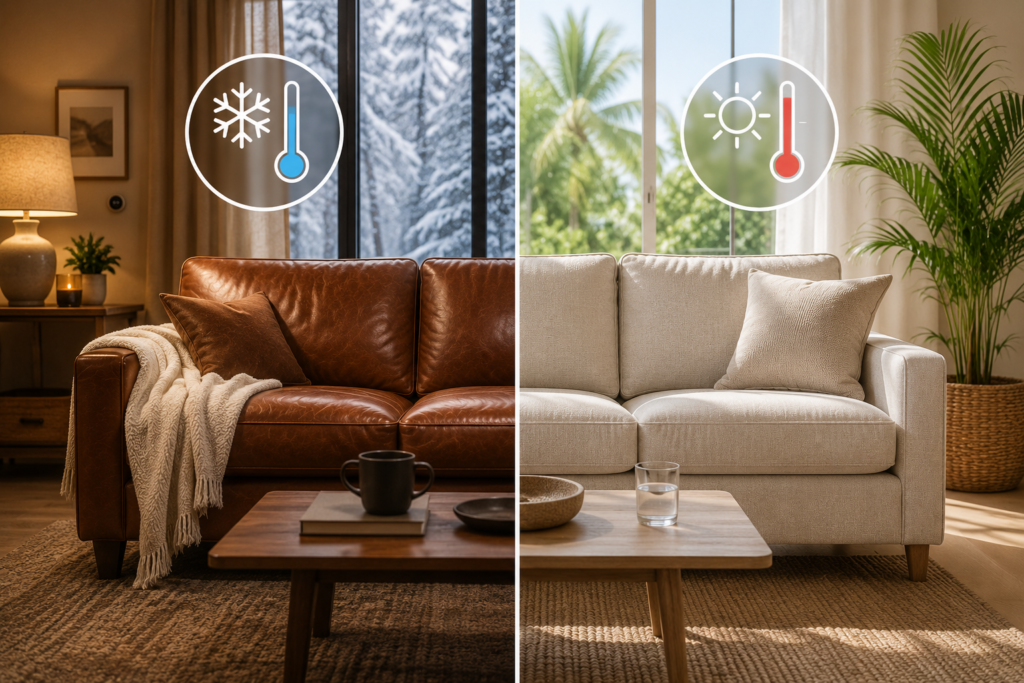
This is a detail many buyers overlook until after purchase. Leather responds directly to room temperature — it feels cold to the touch in a chilly room and can feel warm, even slightly sticky, in a hot one. In a consistently climate-controlled home, this is barely noticeable. But in homes that get genuinely cold in winter or hot in summer without heavy air conditioning, the temperature swing becomes more noticeable and, for some people, uncomfortable.
Fabric is more thermally neutral — it insulates better in winter and breathes better in summer, which is why many buyers in regions with more extreme seasonal temperature swings lean toward fabric.
How to Choose Based on Your Household
Households With Kids and Pets
Best options: Performance fabric or high-quality leather.
- Leather wipes clean easily and resists most spills, but pet claws can scratch the surface, particularly on lower-grade leather.
- Performance fabrics are specifically engineered to handle stains and heavy wear, making them a strong alternative if you’re wary of scratches.
- Traditional, delicate fabrics (velvet, silk) are best avoided in high-activity households unless reserved for a low-traffic formal room.
Allergy-Sensitive Households
Best option: Leather.
Leather’s smooth, non-porous surface doesn’t give dust mites or pet dander anywhere to settle, making it the more allergy-friendly choice. Even with regular cleaning, fabric can be difficult to fully rid of trapped allergens.
Households in Extreme Climates
Best option: Fabric.
If your home experiences noticeable seasonal temperature swings without consistent climate control, fabric’s thermal neutrality will likely feel more comfortable year-round than leather.
Design-Forward Households That Redecorate Often
Best option: Fabric.
Fabric’s wider range of colors, patterns, and textures makes it easier to update your style over shorter ownership cycles, whereas leather is more of a long-term, less flexible design commitment.
Long-Term Investment Buyers
Best option: High-quality leather (full-grain or top-grain).
If you’re looking for a sofa that improves with age and can realistically last 15 to 25 years, quality leather is generally the stronger long-term investment, assuming the higher upfront cost fits your budget.
Maintenance: What Ongoing Care Actually Looks Like
Leather Maintenance
- Wipe spills immediately with a damp cloth
- Dust and condition periodically (roughly a couple of times a year) to keep the material from drying out
- Avoid placing leather sofas in direct, prolonged sunlight, which can cause fading or drying over time
Fabric Maintenance
- Vacuum regularly to prevent dust and debris buildup
- Treat spills promptly, since some fabrics absorb liquid rather than repelling it
- Follow the manufacturer’s specific cleaning code, since incorrect cleaning products can damage certain fabrics
- Consider a stain-resistant treatment or built-in performance finish if the sofa will see heavy use
Practical Buying Advice
- Check the leather grade before buying “leather.” Full-grain and top-grain leather are genuine investments; bonded and faux leather wear out far faster despite looking similar at first.
- Look for Martindale rub ratings if choosing fabric for a busy household. Higher ratings generally indicate better resistance to wear from daily use.
- Factor in your climate, not just your style preference leather’s temperature sensitivity is a real, practical consideration in homes without consistent climate control.
- Consider a leather-fabric combination if you want elements of both some sofas pair leather on high-wear areas with fabric elsewhere for a blended approach.
- Match the material to your household’s actual daily use, not just an idealized version of how the sofa will be treated pets, kids, and heavy daily use all shift the calculus toward more durable options.
Choose Based on How You Actually Live
There’s no single right answer in the leather vs fabric debate; only the right answer for your household, climate, and priorities. If durability, easy cleaning, and allergy-friendliness matter most, quality leather is generally the stronger long-term choice. If comfort, style variety, and temperature neutrality matter more, fabric, especially a good performance fabric, is likely the better fit.
Think honestly about who uses your living room, how they use it, and what climate your home sits in before deciding. The right material won’t just look good on day one; it’ll still be functioning well for your household years down the line.
FAQ
1- Which lasts longer, leather or fabric?
High-quality full-grain or top-grain leather generally lasts longer often 15 to 25 years or more compared to standard fabric, which typically lasts around 7 to 10 years. Performance fabric can narrow this gap somewhat, but leather still tends to have the edge in raw longevity.
2- Is leather really better for allergies?
Yes, generally. Leather’s smooth, non-porous surface doesn’t trap dust mites or pet dander the way fabric fibers can, making it a more allergy-friendly option for sensitive households.
3- Does leather scratch easily with pets?
It can, particularly lower-quality leather. High-quality full-grain or top-grain leather holds up better against scratches than bonded or faux leather, but pet claws remain a real risk with any leather sofa.
4- Is fabric more comfortable than leather?
Many people find fabric softer and more comfortable to sit and lounge on directly, since leather tends to be firmer and can feel cold or sticky depending on the season. Comfort ultimately comes down to personal preference and the specific materials used.
5- Are performance fabrics worth the extra cost over standard fabric?
For households with kids, pets, or heavy daily use, performance fabric is often worth the investment, since it’s specifically engineered for stain resistance and durability, extending the sofa’s practical lifespan.
6- Can I combine leather and fabric on one sofa?
Yes, some sofas use a combination approach, pairing leather on high-contact or high-wear areas with fabric elsewhere, offering a blend of durability and comfort.