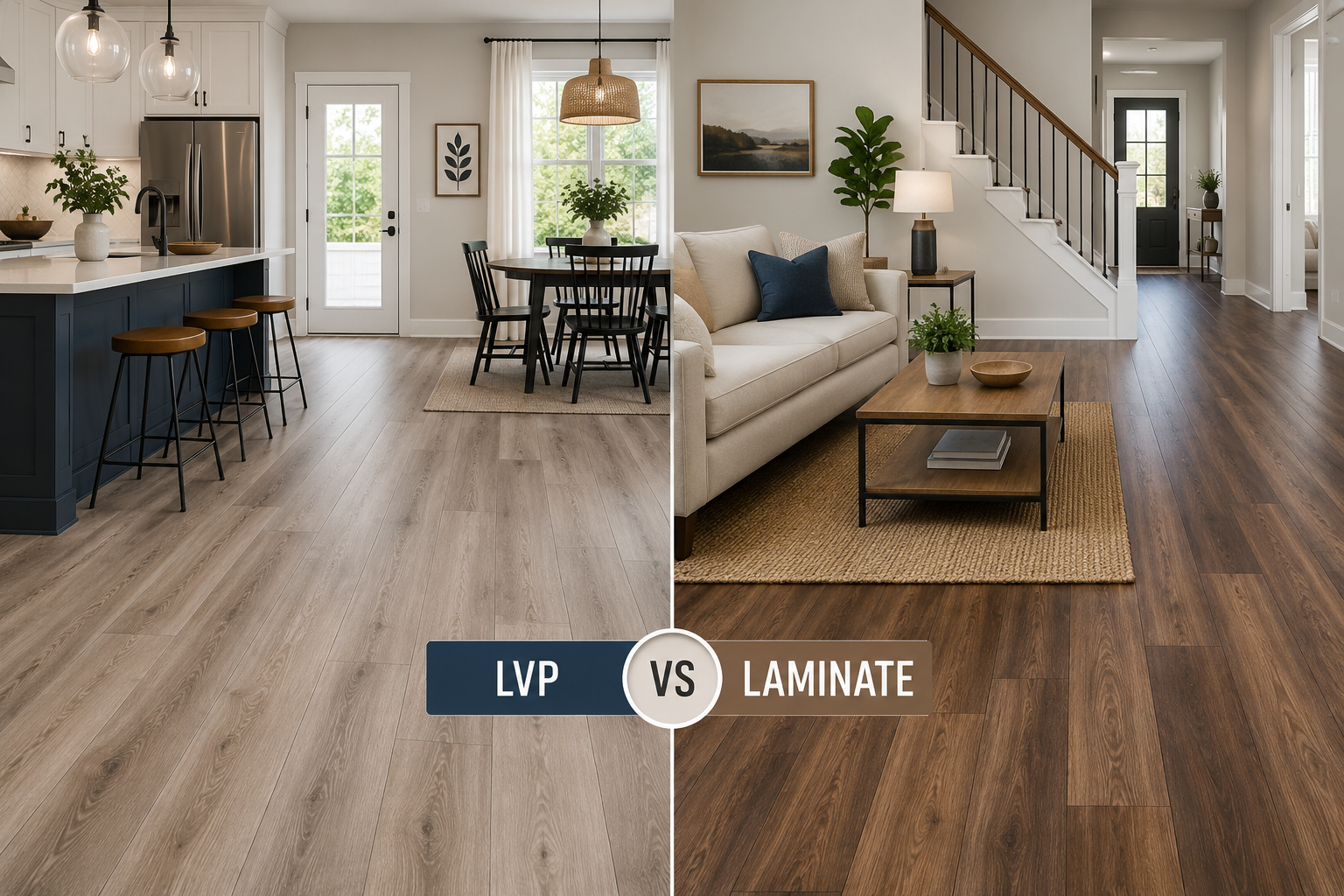
At a glance, luxury vinyl plank and laminate can look nearly identical, both mimic wood grain convincingly, both install as floating floors, and both sit in a similar mid-to-budget price range. But LVP vs laminate flooring comes down to a genuinely different core construction underneath that surface layer, and that difference matters enormously once water, dents, or long-term wear enter the picture.
This guide breaks down exactly how these two flooring types differ, where LVP’s water resistance gives it a real advantage, and where laminate still holds its own, so you can choose the right one for each specific room in your home.
Luxury Vinyl Plank vs Laminate Flooring
Luxury vinyl plank (LVP) is the better choice for any room with meaningful moisture exposure, kitchens, bathrooms, laundry rooms, and basements, thanks to its PVC-based core, which offers genuine water resistance that laminate’s fiberboard core can’t match. Laminate remains a solid, budget-friendly choice for lower-moisture living spaces, bedrooms, home offices, and living rooms, where its strong scratch resistance and slightly firmer, more traditional wood-like feel underfoot are genuine advantages. If you’re only installing one flooring type throughout a home with mixed room types, LVP’s broader water resistance generally makes it the more versatile, lower-risk choice.
Understanding the Core Construction Difference
How Laminate Is Built
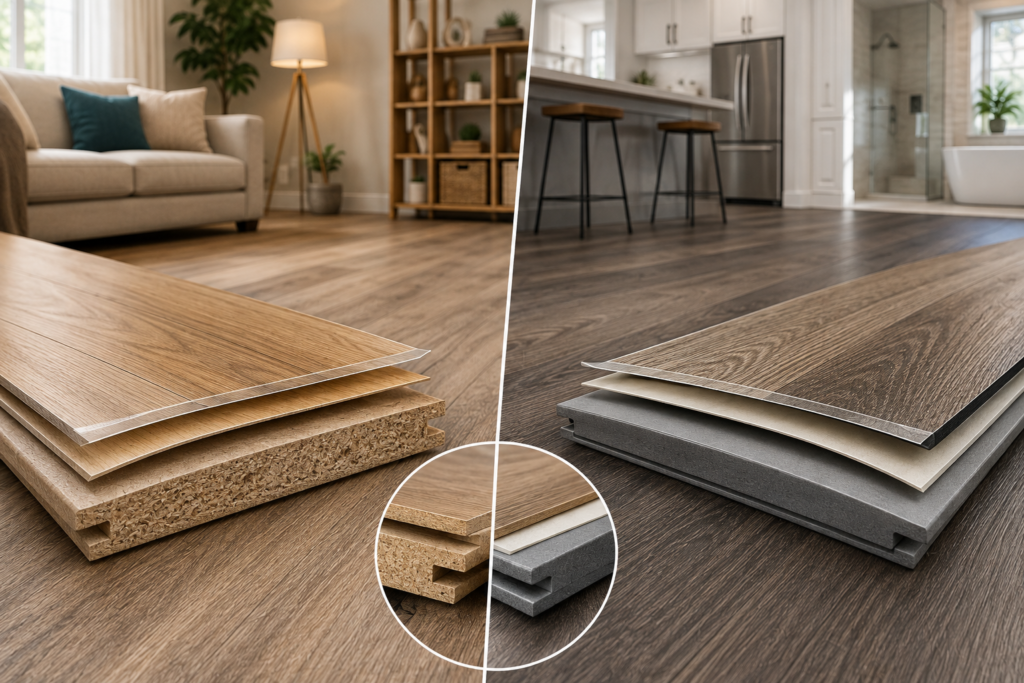
Laminate consists of a dense fiberboard core (commonly HDF, high-density fiberboard) topped with a high-resolution photographic layer designed to mimic wood grain, protected by a clear, hard-wearing top layer. This fiberboard core is essentially compressed wood fiber, which is why it remains vulnerable to swelling and warping when exposed to prolonged moisture.
How LVP Is Built
Luxury vinyl plank uses a fundamentally different, PVC-based (polyvinyl chloride) core, either flexible or rigid, depending on the specific product type. This plastic-based core doesn’t absorb water the way laminate’s wood-fiber core does, which is the core reason LVP offers genuinely superior water resistance.
WPC vs SPC Cores
Within LVP specifically, two common rigid-core types exist: WPC (wood plastic composite), which is slightly softer and more cushioned underfoot, and SPC (stone plastic composite), which is denser, harder, and generally offers the strongest dent and impact resistance of the two, along with excellent dimensional stability.
Side-by-Side Comparison
| Feature | Luxury Vinyl Plank (LVP) | Laminate |
| Core material | PVC-based (vinyl) | Fiberboard (HDF) |
| Water resistance | High to fully waterproof | Low to moderate |
| Scratch resistance | Good to very good | Very good |
| Dent resistance | Good (SPC core especially) | Moderate |
| Comfort underfoot | Softer, especially with cushioned backing | Firmer |
| Refinishing | Not possible | Not possible |
| Typical cost | Lower to moderate | Lower to moderate |
| Installation | DIY-friendly (click-lock, glue-down, peel-and-stick) | DIY-friendly (click-lock) |
| Best rooms | Kitchens, bathrooms, basements, anywhere | Living rooms, bedrooms, offices |
Is LVP Waterproof? Understanding the Claim
What “Waterproof” Actually Means for LVP
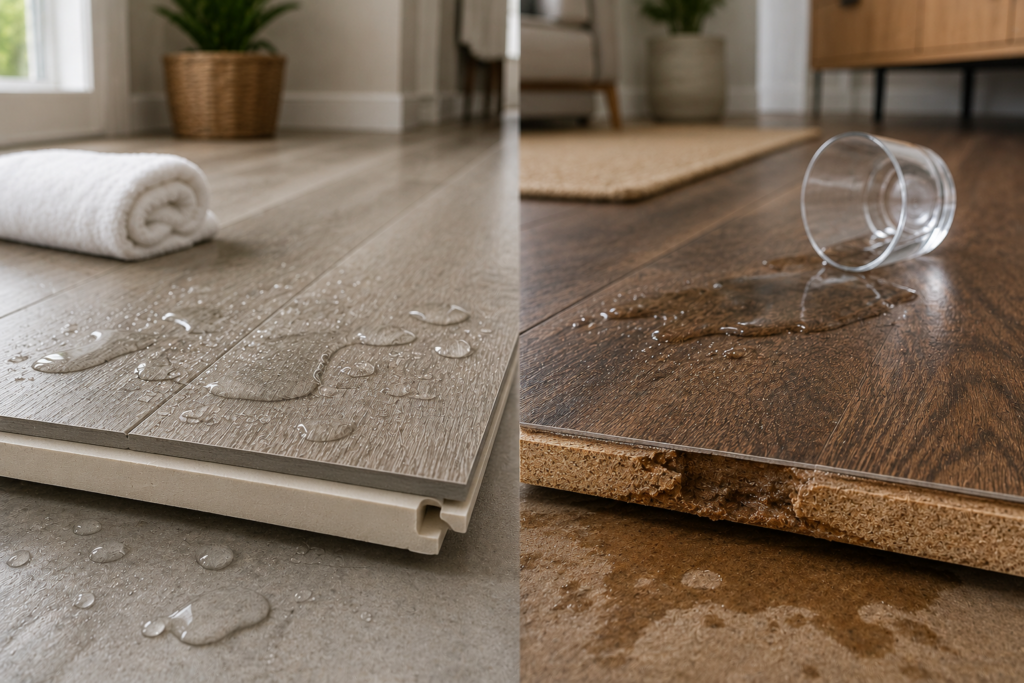
Many luxury vinyl plank products, particularly rigid-core WPC and SPC options, are genuinely marketed and engineered as waterproof, meaning the plank material itself won’t swell, warp, or degrade from standing water. This is a meaningful distinction from being simply “water-resistant.”
Where Water Can Still Be a Concern
Even with waterproof planks, water that seeps beneath the flooring through seams or edges over an extended period can potentially affect the subfloor underneath, particularly with certain installation methods. Proper installation, including appropriate underlayment and attention to seams in consistently wet areas, remains important even with genuinely waterproof LVP products.
Laminate’s More Limited Water Resistance
Even laminate products marketed as “water-resistant” generally offer meaningfully less protection than LVP, typically able to handle brief spills if cleaned promptly, but not standing water or consistent moisture exposure without risking core damage over time.
Durability and Wear Comparison
Wear Layer Thickness in LVP
LVP durability is commonly measured by wear layer thickness, expressed in mils. Thicker wear layers (typically 12 mils and above for busier households) offer better long-term resistance to scratches and general wear, particularly important for homes with pets or heavy foot traffic.
AC Ratings in Laminate
Laminate uses the AC (Abrasion Class) rating system, ranging from AC1 (light residential) to AC5 (heavy commercial). For most homes, AC3 or AC4 laminate offers strong durability suited to typical daily household use.
Comparing Scratch Resistance Directly
Laminate’s harder, more rigid wear layer often provides slightly better resistance to fine surface scratches compared to some LVP products, though high-quality LVP with a thick wear layer performs comparably well and, in the case of SPC cores, often outperforms laminate specifically in dent resistance from heavier impacts.
Comfort and Sound Underfoot
LVP’s Softer Feel
LVP, particularly WPC core products or those with an attached cushioned underlayment, generally feels softer and slightly more forgiving underfoot compared to laminate’s firmer, more rigid surface.
Laminate’s Traditional Feel
Laminate’s harder surface feels closer to genuine hardwood underfoot, which some homeowners specifically prefer for a more traditional flooring sensation, particularly in living rooms or spaces where that firmer feel matches nearby existing hardwood.
Sound Considerations
LVP with a cushioned backing layer tends to offer somewhat better sound dampening than standard laminate, worth considering for upper-floor installations in multi-story homes or condos with noise transmission concerns.
Cost Comparison
Both LVP and laminate span a considerable price range depending on quality tier, wear layer thickness or AC rating, and specific brand. Budget options in both categories are priced similarly, making direct cost comparison largely dependent on the specific product lines you’re comparing rather than one category being universally cheaper. At the premium end, high-quality SPC luxury vinyl with a thick wear layer and genuinely waterproof construction can cost somewhat more than comparable premium laminate, reflecting its superior water resistance and core durability.
Installation Comparison
Laminate Installation
Laminate almost universally uses a click-lock floating floor system, where planks snap together without nails, staples, or adhesive, resting freely over an underlayment. This makes it one of the more accessible DIY flooring options for homeowners with limited installation experience.
LVP Installation Methods
LVP offers more installation method variety: click-lock floating floor systems similar to laminate, glue-down installation for a more permanent, stable bond (often preferred in commercial or high-moisture settings), and peel-and-stick options for simpler, smaller-scale projects. This range gives homeowners more flexibility to choose an installation method matching their specific project and experience level.
Subfloor and Underlayment Considerations
Both flooring types benefit from proper subfloor preparation, ensuring a level, clean surface before installation. LVP’s water resistance makes it somewhat more forgiving of minor subfloor moisture concerns compared to laminate, though neither should be installed over a subfloor with active water intrusion issues.
Laminate Flooring Pros and Cons
Pros:
- Strong scratch resistance, particularly at higher AC ratings
- Firm, traditional hardwood-like feel underfoot
- Widely available in extensive style and color options
- Generally straightforward, accessible DIY installation
Cons:
- Limited water resistance, unsuitable for consistently wet areas
- Cannot be refinished if damaged
- Can feel and sound somewhat hollow underfoot without quality underlayment
- More vulnerable to swelling if water gets underneath through seams
LVP Pros and Cons
Pros:
- Genuine water resistance, with many products fully waterproof
- Suitable for virtually any room, including kitchens, bathrooms, and basements
- Often more comfortable and quieter underfoot, especially cushioned varieties
- Multiple installation methods available (click-lock, glue-down, peel-and-stick)
Cons:
- Cannot be refinished if damaged
- Some lower-quality products can dent under heavy furniture without protective pads
- Premium waterproof options can cost more than comparable laminate
- Softer core types (WPC) may be slightly less scratch-resistant than laminate’s harder surface
Choosing by Room
| Room | Better Choice | Why |
| Kitchen | LVP | Water resistance for spills and splashes |
| Bathroom | LVP | Essential water resistance for moisture exposure |
| Basement | LVP | Handles below-grade moisture risk better |
| Laundry room | LVP | Protection against washing machine leaks |
| Living room | Either (laminate or LVP) | Low moisture, comes down to feel preference |
| Bedroom | Either (laminate or LVP) | Low moisture, comes down to feel preference |
| Home office | Laminate | Firm, traditional feel often preferred for these spaces |
Best Flooring for Kitchens and Bathrooms Specifically
Given how frequently these two rooms come up in flooring decisions, it’s worth stating clearly: LVP is the stronger practical choice for both kitchens and bathrooms. The combination of frequent spills, splashes, and, in bathrooms, direct standing water exposure makes laminate’s more limited water resistance a genuine long-term risk in these specific spaces, regardless of how appealing its price point might be.
Maintenance Comparison
- LVP Maintenance
Requires regular sweeping and can generally be damp mopped without concern, given its strong water resistance. Spills and splashes can be cleaned up on a normal timeline without the urgency laminate requires.
- Laminate Maintenance
Also requires regular sweeping, but spills should be cleaned up promptly to prevent moisture from reaching the fiberboard core through seams or edges, a more time-sensitive maintenance consideration than LVP requires.
Environmental and Health Considerations
Both LVP and laminate are synthetic products, and it’s worth checking for low-VOC (volatile organic compound) certifications on specific products if indoor air quality is a priority for your household, since formulations and finishes vary meaningfully across brands and product lines within both categories.
Common Mistakes to Avoid
- Choosing laminate for bathrooms or basements, where its limited water resistance makes it a genuinely poor material match
- Assuming all LVP products are equally waterproof, without checking the specific product’s core type and water resistance rating
- Overlooking wear layer thickness or AC rating, ending up with flooring not suited to your household’s actual traffic level
- Skipping furniture protector pads on LVP, risking denting from heavy furniture legs over time
- Ignoring subfloor preparation, undermining both installation quality and long-term flooring performance regardless of material choice
Conclusion
The LVP vs laminate flooring decision ultimately comes down to each room’s specific moisture exposure. For kitchens, bathrooms, basements, and laundry rooms, LVP’s genuine water resistance makes it the clearly safer, more practical choice. For lower-moisture living spaces, bedrooms, offices, and living rooms, laminate remains a solid, budget-friendly option with strong scratch resistance and a traditional, firm feel underfoot. Matching your choice to each room’s actual conditions, rather than defaulting to one flooring type throughout your entire home, will give you flooring that performs reliably wherever it’s installed.
Frequently Asked Questions
1- Is LVP better than laminate for a kitchen?
Yes, generally. LVP’s PVC-based core offers genuine water resistance that laminate’s fiberboard core can’t match, making it the safer, more practical choice for kitchens where spills are common.
2- Is luxury vinyl plank actually waterproof?
Many LVP products, particularly rigid-core WPC and SPC options, are genuinely engineered and marketed as waterproof, meaning the plank material itself won’t swell or warp from standing water, though proper installation still matters.
3- Can laminate flooring get wet without being damaged?
Standard laminate has limited water resistance and can swell or warp if moisture reaches its fiberboard core through seams, so spills should be cleaned up promptly rather than left standing.
4- Which is more scratch-resistant, LVP or laminate?
Laminate’s harder surface often provides slightly better resistance to fine surface scratches, though high-quality LVP with a thick wear layer performs comparably well and often offers better dent resistance from heavier impacts.
5- Which flooring feels better underfoot, LVP or laminate?
This comes down to preference. LVP, especially with a cushioned backing, generally feels softer and warmer underfoot, while laminate offers a firmer feel closer to traditional hardwood.
6- Is LVP more expensive than laminate?
Pricing is largely comparable at similar quality tiers in both categories, though premium waterproof LVP products can sometimes cost more than comparable premium laminate, reflecting the added water resistance.
7- Can I install LVP or laminate myself?
Yes, both are generally DIY-friendly. Laminate typically uses a click-lock floating floor system, while LVP offers additional installation options including click-lock, glue-down, and peel-and-stick methods.