A mattress is one of the biggest investments in your bedroom, yet it’s often the most neglected. Most homeowners wash their sheets weekly but never think to clean or maintain the mattress underneath, even though it quietly absorbs sweat, dust, skin cells, and allergens every single night.
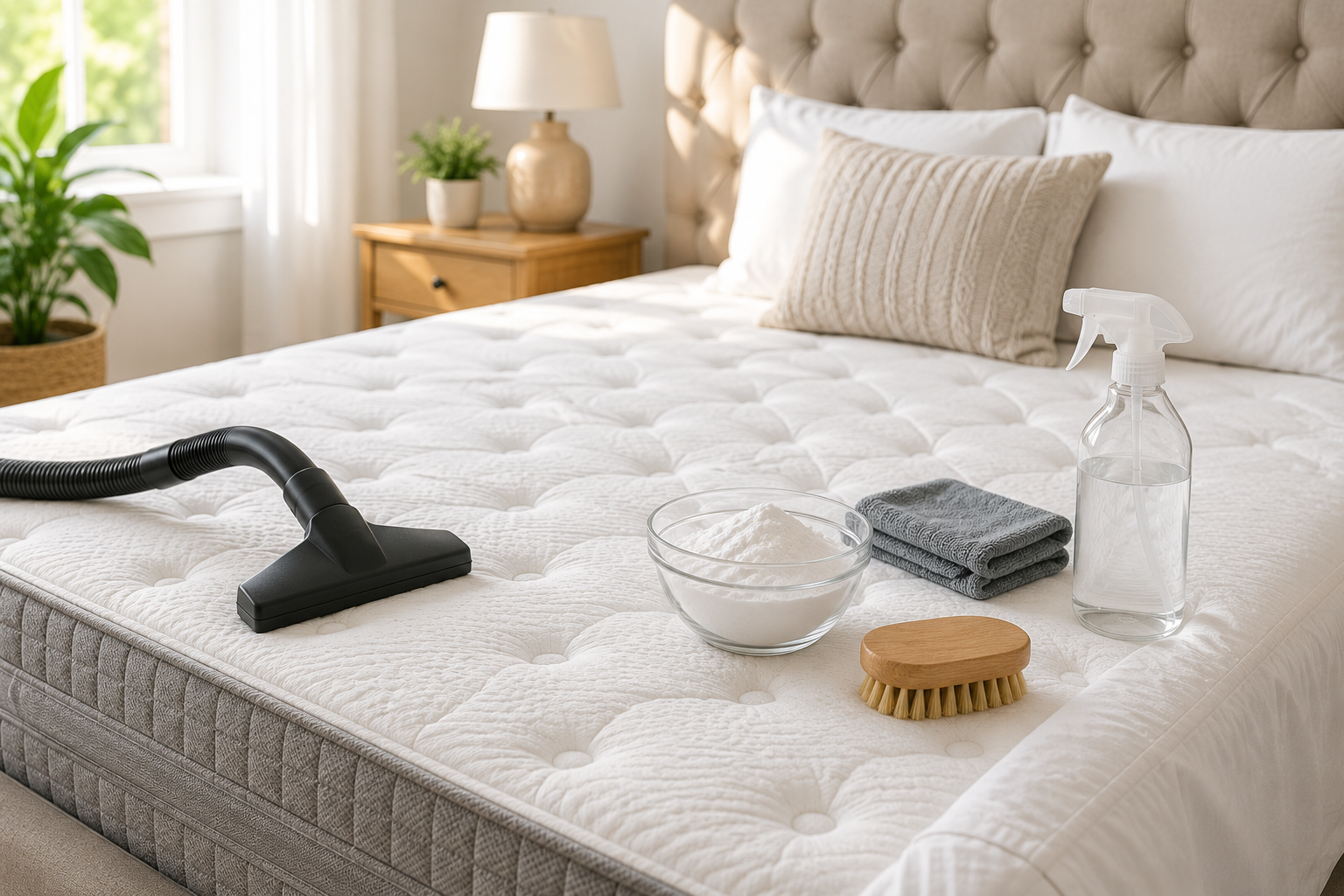
Proper mattress care means vacuuming it every 1 to 3 months, spot-cleaning stains immediately, rotating it every 3 to 6 months, using a mattress protector, and giving it proper airflow and support. Together, these simple habits can meaningfully extend your mattress’s comfort and lifespan while keeping your sleep environment cleaner and healthier.
This guide walks through exactly how to clean, rotate, and protect your mattress, plus what to avoid so you don’t accidentally damage it.
Why Mattress Maintenance Actually Matters
It’s easy to assume a mattress just sits there and doesn’t need much attention. In reality, mattresses are porous, which means dust mites, sweat, dead skin cells, and body oils gradually work their way into the fabric and foam layers over time.
Regular care does three important things:
- Improves hygiene by reducing allergens, dust mites, and odor buildup
- Preserves comfort and support by preventing uneven wear
- Extends the useful lifespan of your mattress, protecting your investment
Neglecting maintenance doesn’t just make a mattress less pleasant — it can actively shorten how long it stays comfortable and supportive.
How Often Should You Clean Your Mattress?
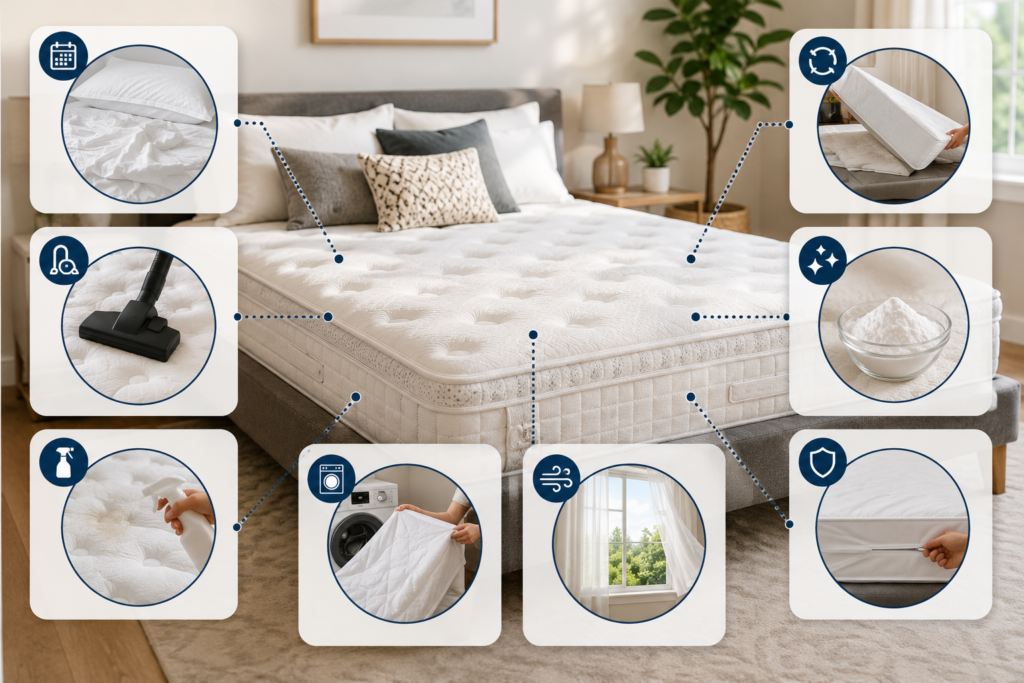
Here’s a simple maintenance schedule you can follow without overcomplicating things.
| Task | Recommended Frequency |
| Wash sheets and bedding | Weekly |
| Vacuum the mattress surface | Every 1–3 months |
| Spot-clean stains | Immediately when they happen |
| Rotate the mattress | Every 3–6 months |
| Deep clean / deodorize | Every 3–6 months, or as needed |
| Check and wash mattress protector | Every 1–2 months |
| Air out the mattress | A few times a year, especially seasonally |
If you have pets, allergies, or young kids in the bed frequently, lean toward the more frequent end of these ranges.
Step-by-Step: How to Clean Your Mattress
Cleaning a mattress isn’t complicated, but doing it correctly protects the materials inside from moisture damage. Here’s the full process.
Step 1: Strip the Bed Completely
Remove all sheets, pillowcases, and the mattress protector. Wash everything in hot water to kill dust mites and remove built-up allergens before you start on the mattress itself.
Step 2: Vacuum the Entire Surface
Using the upholstery attachment on your vacuum, go over the entire mattress in slow, overlapping strokes. Pay extra attention to:
- Seams and stitching, where dust tends to collect
- Corners and edges
- The sides of the mattress, not just the top
You don’t need a specialized mattress vacuum a standard vacuum with an upholstery or crevice attachment works fine.
Step 3: Spot-Treat Any Stains
Fresh stains are far easier to remove than set-in ones, so treat spots as soon as you notice them.
For general stains (sweat, food, etc.):
- Mix a small amount of mild dish soap with warm water, or use equal parts water and white vinegar for tougher marks.
- Dampen a clean cloth with the solution don’t soak it and gently dab the stain. Never rub, as this pushes the stain deeper into the fibers.
- Blot with a dry cloth to lift moisture, repeating as needed until the stain fades.
For biological stains (blood, urine):
- Treat these as soon as possible, since they can set quickly.
- Blot up excess moisture first, then apply a small amount of cold or sparkling water and continue blotting until the stain lifts.
- Avoid hot water on biological stains, as heat can set them permanently.
Step 4: Deodorize With Baking Soda
Baking soda is a simple, effective way to neutralize odors and draw out lingering moisture.
- Sprinkle a generous, even layer over the entire mattress surface.
- Let it sit for at least 15–30 minutes longer (several hours, or even overnight) works even better for stronger odors.
- Vacuum thoroughly to remove all the baking soda residue.
Step 5: Let It Air Out
Before putting sheets back on, allow the mattress to air dry completely this matters most if you’ve used any liquid during cleaning.
- Open windows for ventilation if possible.
- Use a fan or dehumidifier to speed up drying.
- Avoid direct heat sources like a hair dryer, as heat can damage foam layers and cause them to break down faster.
A Quick Note on “Deep Cleaning”
It’s worth knowing that you can’t truly deep clean the inside of a mattress the internal foam or coil layers can’t be saturated or washed. What you’re doing with the steps above is surface-level cleaning: removing dust and allergens, spot-treating stains, and deodorizing the fabric cover. This is normal and expected it’s simply how mattress maintenance works, regardless of brand or price.
How to Rotate (and When to Flip) Your Mattress
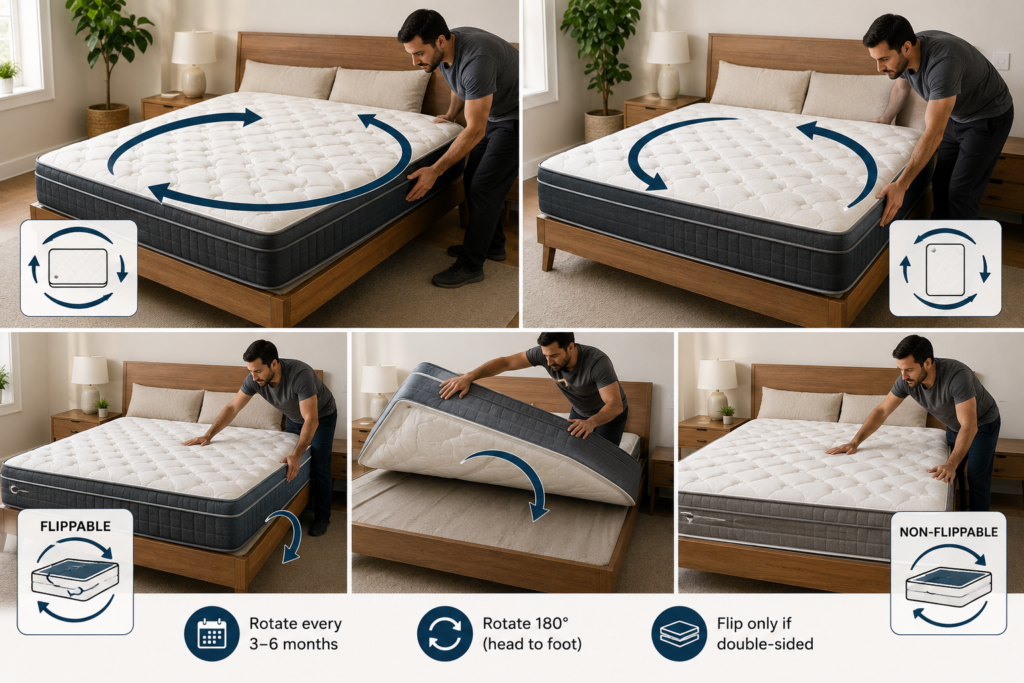
Rotating your mattress is one of the simplest habits that makes a real difference in how evenly it wears over time.
Why Rotation Matters
Sleeping in the same position, in the same spot, night after night puts repeated pressure on specific areas of the mattress. Rotating it redistributes that pressure, helping to prevent premature sagging and permanent indentations.
How to Rotate Correctly
- Strip the bed completely.
- Turn the mattress 180 degrees (head to foot), keeping the same side facing up.
- Reposition it on the foundation and remake the bed.
Recommended frequency: Every 3 to 6 months for most mattress types.
Should You Flip Your Mattress Too?
This depends entirely on the mattress design:
- Two-sided mattresses (less common today) can be flipped as well as rotated.
- Most modern mattresses including memory foam, hybrid, and one-sided innerspring beds — are built with a specific comfort layer on top and should not be flipped, only rotated.
Always check your mattress’s care label or manufacturer instructions before flipping, since flipping a one-sided mattress can damage its internal structure.
Why a Mattress Protector Is Worth Using
If there’s one product that makes the biggest difference in long-term mattress care, it’s a quality mattress protector.
What it does:
- Shields against spills, sweat, and stains before they reach the mattress itself
- Reduces dust mite and allergen buildup
- Makes cleanup dramatically easier you wash the protector, not the mattress
- Helps preserve the mattress’s warranty, since many manufacturers exclude stain-related damage from coverage
Choosing the Right Protector
| Type | Best For |
| Waterproof/vinyl-free protector | Spill protection without trapping heat |
| Cotton terry protector | Breathability and comfort |
| Cooling/moisture-wicking protector | Hot sleepers or warmer climates |
| Encasement protector (zips fully around) | Allergy sufferers, dust mite protection |
Wash your protector every 1 to 2 months, following the care label, since it takes on the bulk of daily wear so your mattress doesn’t have to.
Proper Support Matters as Much as Cleaning
Even the best cleaning routine won’t offset the damage caused by an unsupportive foundation. Mattress care isn’t just about the surface it’s also about what’s underneath.
- Memory foam and latex mattresses generally need a solid platform or slats spaced no more than about 3 inches apart.
- Innerspring and hybrid mattresses typically work on a wider range of foundations, including traditional box springs.
- Broken slats, a sagging box spring, or a missing center support bar can cause a mattress to sag prematurely, even if the mattress itself is in good condition.
Check your foundation periodically, especially if you notice sagging that seems inconsistent with the mattress’s age.
Common Mattress Care Mistakes to Avoid
A few habits can quietly shorten your mattress’s lifespan or damage it outright.
- Skipping a mattress protector. This is the single easiest way to reduce long-term staining and allergen buildup.
- Oversaturating the mattress while cleaning. Excess moisture can seep into foam and lead to mold or mildew growth inside the mattress.
- Using heat to dry stains. Hair dryers or direct sun exposure indoors can degrade foam and adhesives over time.
- Never rotating the mattress. This accelerates uneven sagging, especially for one-sided foam and hybrid designs.
- Ignoring small stains. What starts as a light mark becomes much harder to remove once it sets in.
- Jumping or standing on the mattress. Concentrated pressure in one area speeds up wear on both foam and coil systems.
- Letting pets sleep on the mattress without protection. Pet dander, claws, and accidents all accelerate wear and reduce hygiene.
Special Care Tips by Mattress Type
Different materials respond differently to cleaning and moisture, so it helps to adjust your approach slightly.
Memory Foam Mattresses
- Use minimal liquid when spot-cleaning foam absorbs moisture easily and dries slowly.
- Avoid soaking; a light dab-and-blot approach works best.
- Allow extra drying time before remaking the bed, since foam holds moisture longer than other materials.
Innerspring Mattresses
- Vacuum thoroughly along seams, where dust and debris settle around coil stitching.
- Rotate regularly to prevent uneven coil compression.
- Watch and listen for squeaking, which can signal coils beginning to wear.
Hybrid Mattresses
- Follow foam-cleaning guidelines for the comfort layer (light moisture, thorough drying).
- Rotate on the same schedule as other mattress types to protect both the coil base and foam layers.
Latex Mattresses
- Latex is naturally resistant to dust mites and mold, making it lower-maintenance overall.
- Still vacuum periodically and use a protector, since surface dust and allergens can still accumulate.
When Cleaning Isn’t Enough
Good maintenance extends a mattress’s life, but it doesn’t make it last forever. If you’re doing everything right and still noticing ongoing issues, cleaning likely isn’t the solution:
- Persistent odors that return despite deodorizing
- Visible sagging or body impressions deeper than about 1 to 1.5 inches
- Waking up with pain that improves once you’re up and moving
- Allergy symptoms that don’t improve even with regular cleaning and a protector
These are signs of structural wear rather than a hygiene issue, and they typically point toward replacement rather than another cleaning session.
Conclusion
Mattress care doesn’t require a complicated routine just a few consistent habits. Vacuum regularly, treat stains immediately, rotate every few months, and invest in a good mattress protector. Together, these small steps protect both your mattress and your sleep environment.
Think of mattress maintenance the same way you’d think about caring for any major investment in your home: a little consistent attention goes a long way. Take care of your mattress, and it’s far more likely to take care of your sleep night after night, for years to come.
FAQ
1- How often should I really vacuum my mattress?
Every 1 to 3 months is a reasonable baseline for most households. If you have allergies, pets, or young children, vacuuming closer to monthly is a good idea.
2- Can I use a steam cleaner on my mattress?
It’s best avoided for foam mattresses, since excess heat and moisture can damage the material and encourage mold growth inside the layers. Light surface cleaning methods are safer.
3- Is it okay to sleep on a mattress the same day I clean it?
Only if it’s completely dry. Sleeping on a damp mattress can trap moisture inside, which may lead to mold or mildew over time. When in doubt, give it extra airing time.
4- Do I really need a mattress protector if I already use sheets?
Yes. Sheets alone don’t stop spills, sweat, or allergens from reaching the mattress surface. A dedicated protector adds a barrier that sheets simply can’t provide.
5- What’s the best way to get rid of mattress odors?
Baking soda is a simple, effective option — sprinkle it generously, let it sit for several hours, then vacuum thoroughly. For persistent odors, repeating this process a few times often helps.
6- Does rotating a mattress really make a difference?
Yes. Regular rotation helps distribute body weight and pressure more evenly across the mattress, which can meaningfully slow down sagging and indentation in your usual sleep spot.