
Buying your first home comes with a long list of new responsibilities, and outfitting the kitchen is one of the biggest. Unlike renting, where appliances often come included, first-time homeowners frequently need to buy some or all of their kitchen appliances from scratch, all while juggling moving costs, closing fees, and everything else that comes with a new mortgage.
This guide breaks down the must-have kitchen appliances every new homeowner genuinely needs, separates true essentials from nice-to-have extras, and offers practical buying advice to help you prioritize spending without overextending your budget in those first few months.
What You Actually Need First?
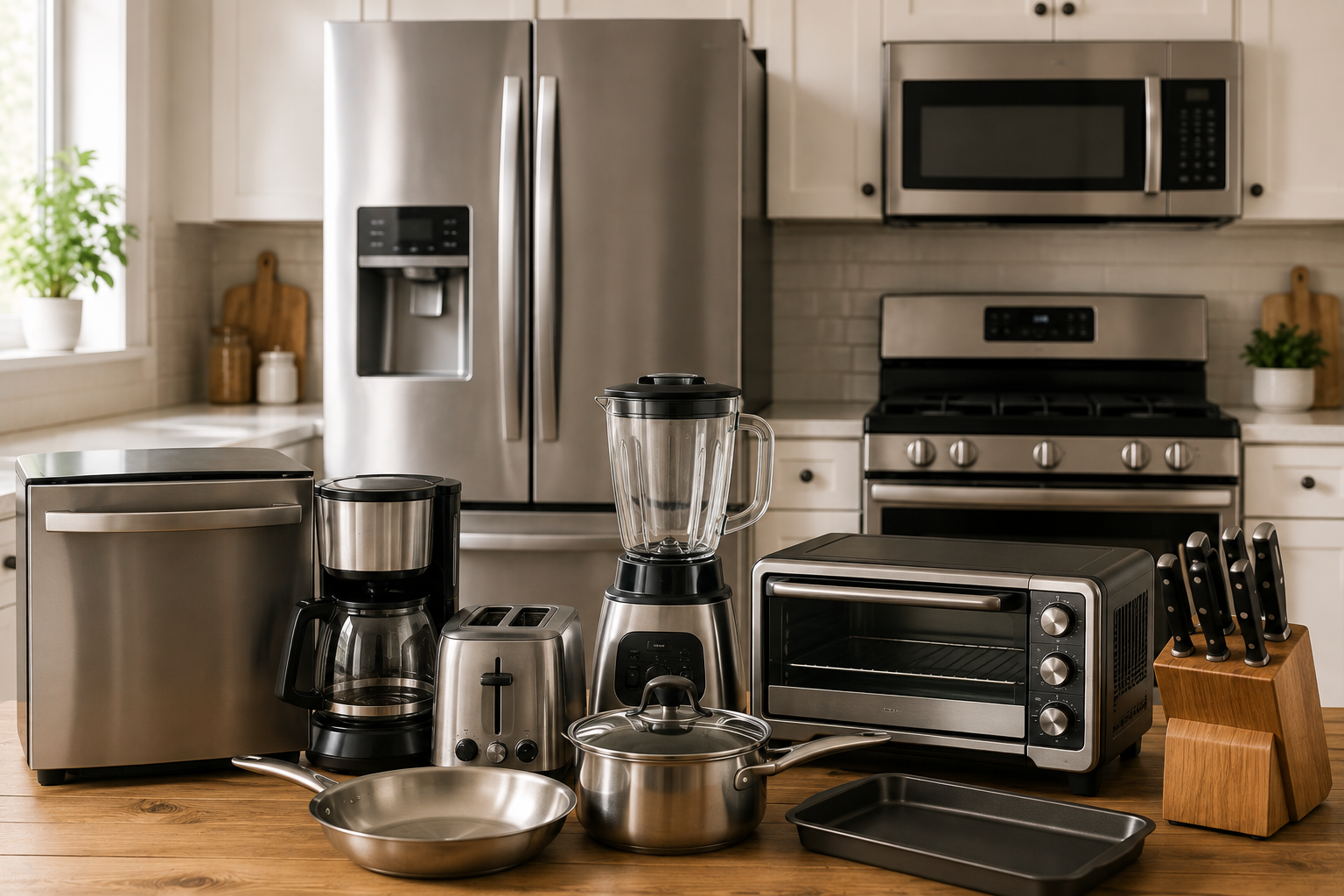
At minimum, a functional kitchen needs a refrigerator, a range or cooktop with an oven, and a microwave. A dishwasher, while common in modern homes, isn’t strictly essential if your kitchen doesn’t already have one installed. Beyond these core appliances, a handful of smaller countertop tools, a coffee maker, a toaster or toaster oven, and a basic blender, cover the vast majority of everyday cooking needs for most households. Everything beyond this core list can reasonably wait until your budget allows, rather than needing to be purchased all at once.
Confirm What’s Already Included
Before buying anything, check your home’s existing appliances carefully. Many homes, particularly resales, include a refrigerator, range, dishwasher, and sometimes a microwave as part of the sale, while others may have gaps depending on what the previous owners removed or what a builder chose to include in new construction.
Review your closing paperwork or ask your real estate agent to confirm exactly which appliances convey with the home, since assuming an appliance is included when it isn’t can lead to an unexpected, urgent purchase right after move-in.
The Essential Major Appliances
- Refrigerator
A refrigerator is non-negotiable for basic food storage and safety, making it the single highest-priority purchase if your new home doesn’t already include one. For most households, a standard-capacity refrigerator, roughly 18 to 22 cubic feet for a couple or small family, offers a practical starting point without overspending on unnecessary capacity.
- Range or Cooktop and Oven
Whether combined in a single freestanding range or split between a separate cooktop and wall oven, some form of cooking appliance is essential for daily meal preparation. A standard 30-inch freestanding range remains the most common and often most cost-effective configuration for first-time buyers.
- Microwave
While not strictly essential for survival, a microwave has become a practical standard in nearly every American kitchen, handling everything from reheating leftovers to quick meal prep. A basic countertop model is the most budget-friendly starting point, with over-the-range models worth considering later if you want to free up counter space.
The Appliance Most First-Time Buyers Debate: Dishwasher
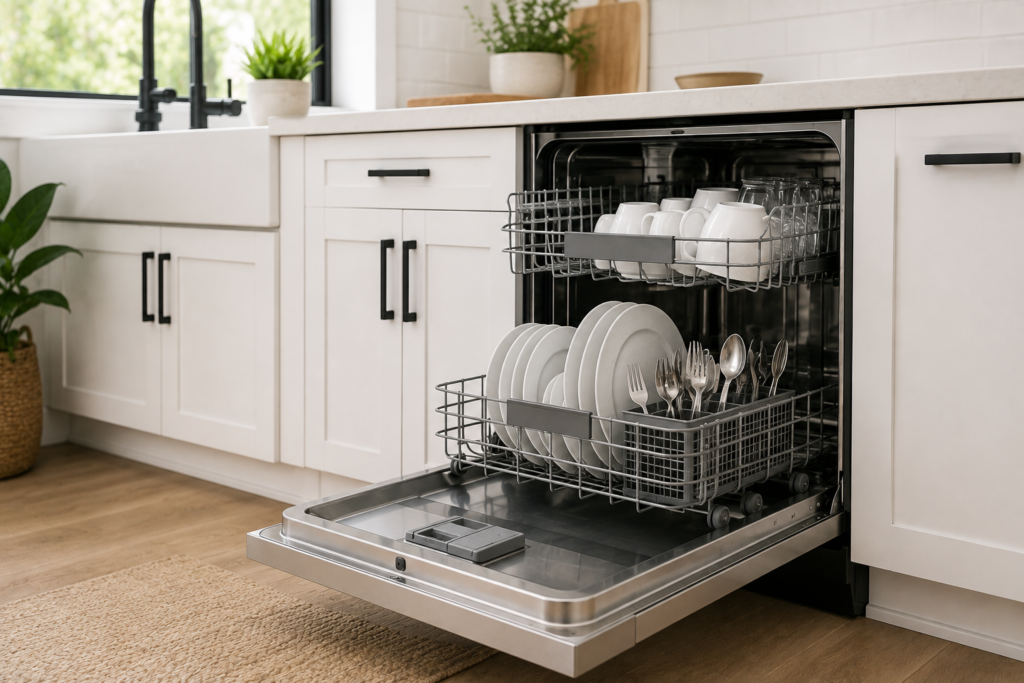
A dishwasher isn’t strictly required to run a household, hand-washing dishes remains entirely possible, but it’s become such a common convenience that most homeowners eventually prioritize it if their kitchen doesn’t already have one.
If your kitchen has an existing dishwasher cutout and connections, adding a basic dishwasher is often a relatively affordable and straightforward addition. If your kitchen lacks the plumbing and electrical setup entirely, installing a dishwasher from scratch involves more cost and complexity, and may be reasonable to postpone until your budget allows for that additional installation work.
Essential Small Appliances Most Households Actually Use
Beyond the major built-in appliances, a handful of small countertop appliances cover the vast majority of everyday cooking and food prep needs.
- Coffee Maker
For the many households that drink coffee daily, a basic drip coffee maker is one of the most consistently used small appliances in any kitchen, and a solid budget-friendly model handles daily brewing perfectly well.
- Toaster or Toaster Oven
A simple toaster covers basic bread-toasting needs, while a toaster oven offers more versatility, handling small baking and reheating tasks as well, often at a similar price point to a mid-range standalone toaster.
- Blender
A basic blender handles smoothies, sauces, and soups, common enough tasks that most households find genuine daily or weekly use for one, even a budget-friendly model.
- Basic Cookware and Bakeware
While not technically “appliances,” a starter set of pots, pans, and baking sheets is worth budgeting for alongside your appliance purchases, since a kitchen with appliances but no cookware still can’t function for daily meal preparation.
Appliances Worth Waiting On
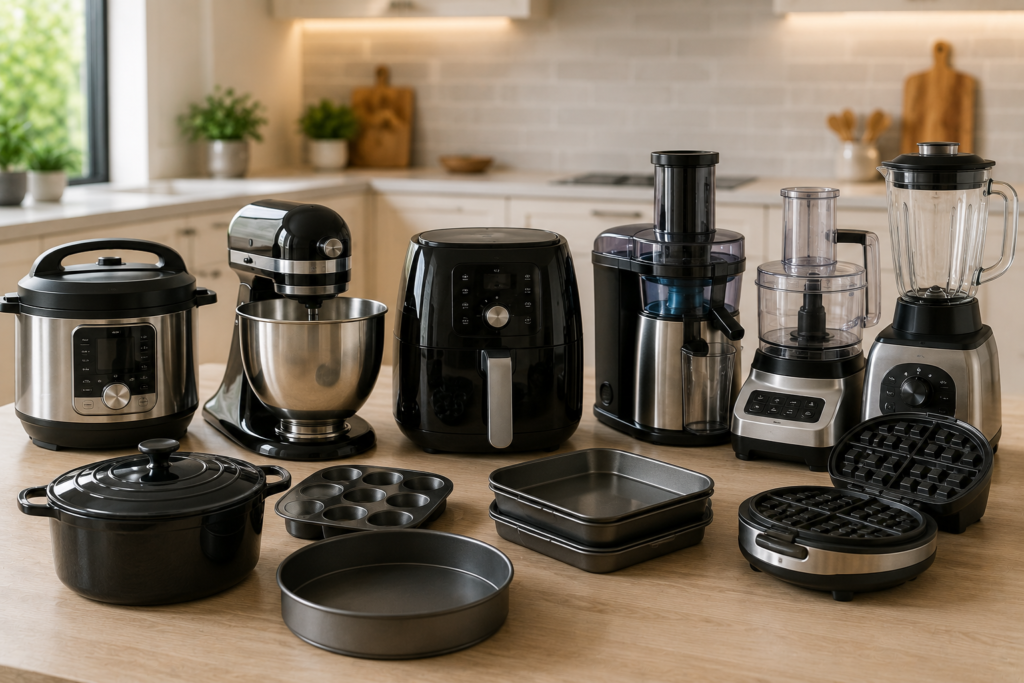
Not every appliance needs to be purchased in your first few months as a homeowner. A few categories are reasonable to postpone until your budget stabilizes or your specific cooking habits become clearer.
- Stand mixer: Genuinely useful for regular bakers, but not essential for basic daily cooking
- Air fryer: A popular convenience appliance, but overlapping in function with a standard oven for many tasks
- Slow cooker or multi-cooker: Valuable for busy schedules, but not essential for immediate move-in needs
- Second refrigerator or wine fridge: A clear “nice-to-have” rather than an early-priority purchase
- Premium espresso machine: Worth considering only once your daily coffee habits and budget are established
Prioritization Table: What to Buy First
| Priority Level | Appliance | Why |
| Immediate/Essential | Refrigerator | Required for basic food safety and storage |
| Immediate/Essential | Range/oven | Required for daily cooking |
| High Priority | Microwave | Near-universal daily convenience |
| High Priority | Basic cookware/bakeware | Needed to actually use the range and oven |
| Medium Priority | Dishwasher | Convenience, especially if cutout already exists |
| Medium Priority | Coffee maker, toaster | Daily-use small appliances |
| Lower Priority | Blender | Useful, but not urgent |
| Can Wait | Stand mixer, air fryer, multi-cooker | Valuable additions once budget allows |
| Can Wait | Second fridge, premium specialty appliances | True nice-to-haves |
Budgeting for Your First Kitchen Appliances
Setting Realistic Expectations
Outfitting a full kitchen from scratch represents a meaningful expense, and it’s reasonable to budget for this across weeks or months rather than assuming everything needs to be purchased on move-in day. Prioritizing the true essentials first, refrigerator, cooking appliance, and basic small appliances, lets you spread out spending on secondary items as your budget allows.
Buying New vs Used
Buying gently used appliances, whether through certified refurbished retailers, local marketplace listings, or estate sales, can meaningfully reduce upfront costs for major appliances, provided you verify the appliance’s age, condition, and any remaining warranty coverage before purchasing.
Buying in Bundles
Many appliance retailers offer package discounts when purchasing multiple major appliances together, such as a refrigerator, range, and dishwasher as a set. If you need several major appliances at once, it’s worth comparing bundle pricing against buying each individually, since the combined discount can be meaningful.
Timing Your Purchases
Major appliance sales, particularly around Memorial Day, Labor Day, and Black Friday, often bring meaningful discounts on major appliances. If your timeline allows some flexibility, planning larger purchases around these periods can stretch your budget further.
Matching Appliances to Your Household Size
Individuals or Couples
Smaller capacity appliances, an 18-to-22 cubic foot refrigerator, a compact or standard dishwasher, and modest-sized small appliances, generally cover daily needs without unnecessary expense on unused capacity.
Families
Larger capacity appliances become more worthwhile, a larger refrigerator, a standard 24-inch dishwasher, and small appliances sized for batch cooking or meal prep, since family-sized households genuinely use the additional capacity regularly.
Energy Efficiency Considerations for New Homeowners
As a first-time homeowner, you’re now directly responsible for your household’s utility bills in a way renters often aren’t as acutely aware of. Choosing ENERGY STAR certified appliances where possible, and verifying certification status through the official product finder by exact model number, can meaningfully reduce long-term operating costs, particularly for appliances that run continuously, like refrigerators.
Practical Buying Tips for First-Time Homeowners
- Confirm exactly which appliances convey with your home purchase before buying anything
- Prioritize essential major appliances first, then fill in small appliances and secondary items over time
- Compare bundle pricing if you need multiple major appliances at once
- Consider certified refurbished or gently used major appliances to reduce upfront costs
- Verify existing utility connections (gas, electrical, water lines) before assuming a specific appliance type will work in your kitchen
- Check for local utility rebates on energy-efficient appliances, since programs vary by region
Common Mistakes to Avoid
- Assuming appliances convey with the home without confirming through closing paperwork
- Buying everything at once, straining an already tight moving budget unnecessarily
- Overlooking existing utility connections, purchasing a gas range for a kitchen wired only for electric, or vice versa
- Underestimating cookware and bakeware costs, focusing entirely on appliances while forgetting the tools needed to actually use them
- Ignoring capacity needs, buying appliances sized for your current household without considering near-term changes like a growing family
Conclusion
Outfitting your first kitchen doesn’t need to happen all at once, and it shouldn’t come at the expense of your broader moving budget. Start with the true essentials, a refrigerator and a cooking appliance, confirm what your home already includes, and build outward from there as your budget allows. With a clear sense of what’s genuinely a must-have kitchen appliance versus what can reasonably wait, you’ll be able to settle into your new home with a functional kitchen without unnecessary financial strain in those first critical months.
Frequently Asked Questions
1- What kitchen appliances do I absolutely need when buying my first home?
At minimum, a refrigerator and a range or cooktop with an oven are essential. A microwave, while not strictly required, has become a near-universal household staple.
2- Is a dishwasher necessary for a first home?
Not strictly necessary, though it’s a common convenience most homeowners eventually add if their kitchen doesn’t already include one, particularly if the plumbing and electrical connections are already in place.
3- Should I buy new or used appliances for my first home?
Both are reasonable options. New appliances offer full warranty coverage and the latest efficiency standards, while gently used or certified refurbished appliances can meaningfully reduce upfront costs if verified carefully before purchase.
4- How much should I budget for kitchen appliances in a new home?
This varies enormously based on which appliances you need and whether you choose budget, mid-range, or premium options, but planning for major appliances as a separate line item from your moving budget helps avoid financial strain in those first few months.
5- What small appliances should I prioritize first?
A coffee maker and a toaster or toaster oven cover the most common daily small-appliance needs for most households, with a blender being a reasonable next addition.
6- Can I wait to buy a dishwasher after moving in?
Yes, particularly if hand-washing dishes is manageable for your household in the short term. It’s a reasonable appliance to prioritize once your budget stabilizes after the initial move-in expenses.
7- Should first-time homeowners prioritize energy-efficient appliances?
Where budget allows, yes. Since you’re now directly responsible for ongoing utility costs, ENERGY STAR certified appliances, particularly refrigerators that run continuously, can provide meaningful long-term savings that offset a somewhat higher upfront cost.